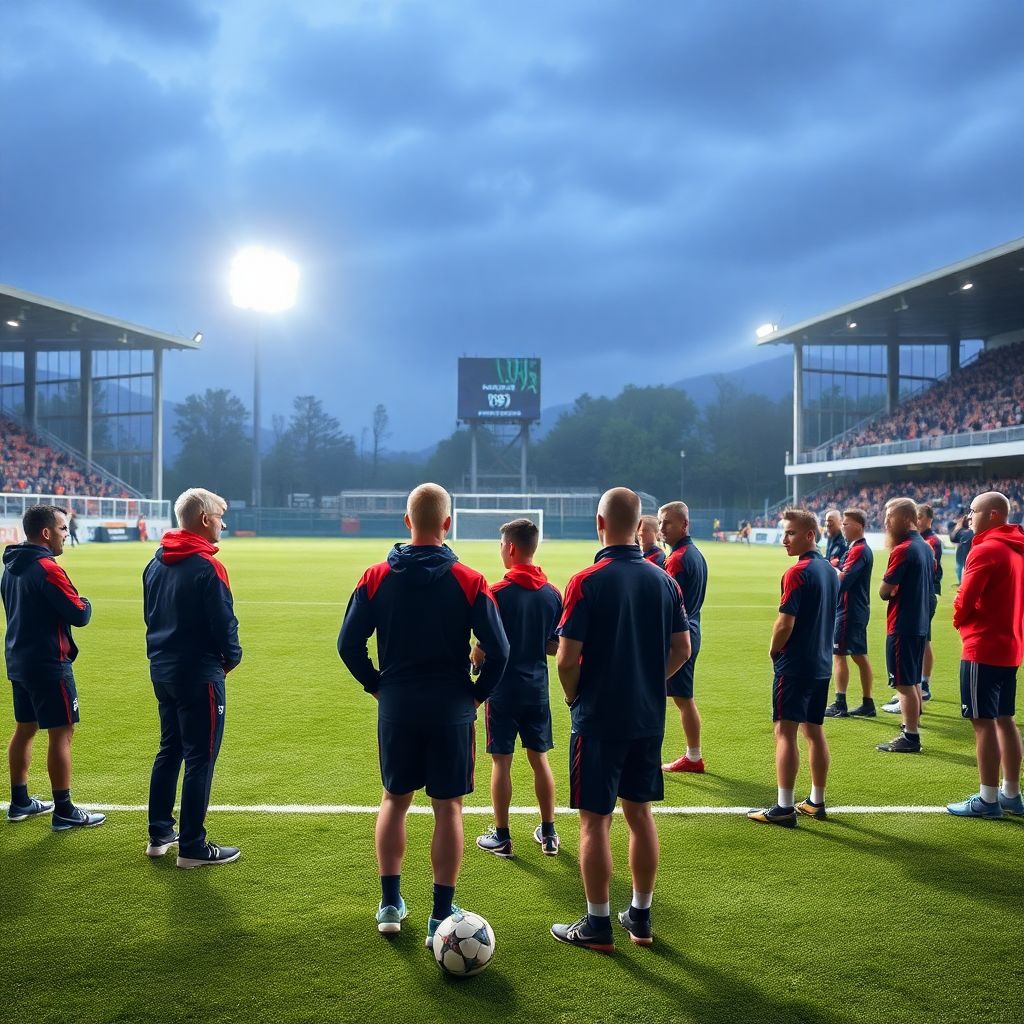
Anatolian clubs are rising because they mix smart scouting, disciplined budgeting, modern coaching and deep local support to consistently compete with Istanbul’s Big Three. To replicate this, a provincial club needs a clear long‑term plan: build youth pipelines, professionalize operations, grow diversified revenues and use data to guide recruitment and tactics.
Core insights on Anatolian clubs’ rapid ascent
- Regional clubs win by focusing on medium‑term stability instead of chasing short‑term, risky spending.
- Scouting and youth academies are treated as core assets, not side projects.
- Data informs recruitment, match preparation and injury prevention, even on modest budgets.
- Revenue is diversified across matchday, media, sponsorship and fan products, including digital.
- Local communities become active partners through stadium experience, academies and social projects.
- Tactical flexibility allows Anatolian sides to neutralize stronger squads over a long season.
- Clear governance and role definition help small clubs scale without losing control.
Historical drivers: how regional clubs disrupted Turkey’s football map
This approach suits medium and smaller Anatolian clubs that want sustainable progress rather than gambling on one promotion or one European qualification. It works best when local municipalities, business leaders and fan groups are ready to commit patiently to a shared plan.
- Checkpoint – Map your starting point: Review five recent seasons (league position, goals for/against, net spend, coaching changes) to understand performance trends and volatility.
- Checkpoint – Study successful Anatolian models: Analyse how provincial clubs built squads, coaching teams and revenue without Istanbul‑level budgets.
- Checkpoint – Define your ambition tier: Decide whether you are targeting survival, mid‑table stability, European places or regular title challenges in the Turkish Super Lig.
- Checkpoint – Align local stakeholders: Ensure city officials, sponsors and fan groups support a multi‑year roadmap instead of demanding instant miracles.
When you should not copy this model:
- If your ownership demands immediate promotion or titles and refuses a 3-5 year horizon.
- If there is no minimal financial discipline and debts grow faster than any realistic revenue plan.
- If political interference changes leadership and strategy every season.
Suggested KPIs for this phase:
- Coaching changes reduced to a maximum of one change over two full seasons.
- League position variance stabilised (for example, staying within a narrow band around mid‑table while improving points total gradually).
- Net transfer spend kept within a pre‑defined percentage of annual club revenue.
- Written strategic plan approved by board and key stakeholders before next season’s kick‑off.
Competitive playbook: scouting, youth pipelines and data-driven recruitment
This phase builds the football engine room: scouting, academy, and evidence‑based decisions. It is about putting structure behind every player contract.
- Requirement – People: Head of scouting, at least one regional scout, academy director, performance analyst (even part‑time), and a first‑team coach open to analytics.
- Requirement – Tools: Access to match video platforms, simple data dashboards, and shared databases for player and opponent reports.
- Requirement – Networks: Strong links with local amateur clubs, schools, universities and agents who understand Anatolian markets.
- Requirement – Governance: Clear process where sporting director or committee signs off on targets, with wage and age limits.
Action sub‑tasks:
- Segment scouting into age groups and regions; assign each scout a geography and yearly target list.
- Define your club “profile” for players (age bracket, positions, physical attributes, salary ranges, contract length).
- Introduce a standard report template for every watched player, combining data and qualitative notes.
- Create a shared long‑list of 3-5 realistic targets for each key position before each window opens.
KPIs for recruitment and academy:
- Percentage of minutes played by academy graduates increases season over season.
- Average age of starting eleven aligned with your strategic target (for example, younger for resale value).
- Number of signings who become regular starters within one season improves, while “failed” transfers decline.
- Net transfer income positive over a multi‑year window, proving that the club can sell as well as buy.
Revenue engineering: sponsorships, matchday income and prudent budgeting
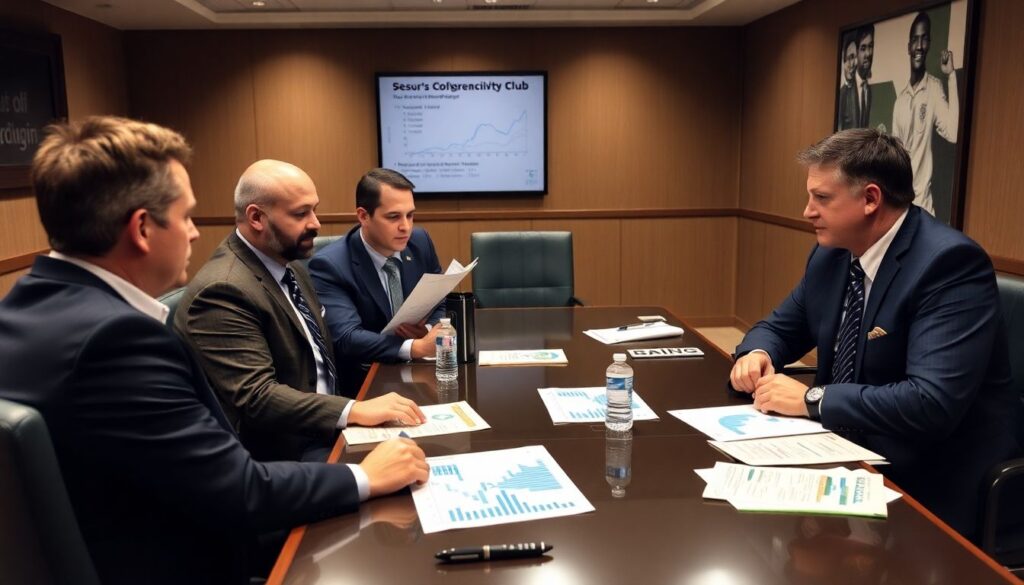
Before reshaping revenues, complete a short preparation checklist to avoid over‑promising and under‑delivering.
- Audit current income streams (tickets, broadcast, sponsors, merchandising, academy fees).
- Clarify who approves prices, contracts and marketing campaigns inside the club.
- Identify low‑risk experiments you can launch within one season (new ticket categories, simple hospitality upgrades).
- Set conservative financial targets that do not assume immediate qualification for Europe or cup finals.
- Prepare fan communication plans explaining why stability matters more than risky spending.
- Step 1 – Build a realistic season budget. Project conservative revenues and cap football spending accordingly. Separate fixed costs (salaries, stadium rent) from variables (bonuses, transfer fees) and avoid committing future broadcast income in advance.
- Step 2 – Optimise ticketing and basic matchday income. Simplify categories and pricing for Turkish Super Lig tickets Istanbul and Anatolian clubs fans might compare, making Anatolian games attractive in value. Add family, student and local business packages and improve food, beverage and parking logistics.
- Step 3 – Create entry‑level sponsorship and hospitality offers. Offer local companies naming rights to stands, training kits or digital content. Develop modest Super Lig hospitality packages for Turkish Anatolian club matches that use existing lounges or partner restaurants rather than expensive new builds.
- Step 4 – Professionalise merchandise and online sales. Ensure fans worldwide can find an Anatolian Turkish football clubs merchandise store online, with clear sizing, shipping and returns. Position your shirts alongside the best Turkish football jerseys buy online Galatasaray Fenerbahce Besiktas and Anatolian clubs, using clean product photography and secure payment options.
- Step 5 – Expand media, content and subscriptions. Negotiate fair shares from broadcast deals, and explore a club content platform that complements any live streaming subscription Turkish Super Lig including Anatolian clubs. Focus on behind‑the‑scenes videos, interviews and youth content that deepen fan loyalty.
- Step 6 – Monitor cash flow monthly and adjust. Compare actuals to budget every month, revise spending if revenues lag, and communicate early with staff and players to maintain trust.
KPIs for revenue and financial control:
- Share of total revenue from non‑broadcast sources increases over time.
- Matchday income per spectator and per home game improves every season.
- Wage‑to‑revenue ratio tracked and kept within a safe band defined by the club board.
- Number of active sponsors and total sponsorship value both trend upward without over‑reliance on a single backer.
Tactical blueprints: on-field systems that neutralize the Big Three
This section is your performance check: does your game model actually close the gap against richer clubs over a long season?
- Game model defined in writing for all phases (in possession, out of possession, transitions, set pieces) and understood by staff and players.
- Coaching staff reviews match footage of Istanbul Big Three opponents at least one week before each game.
- Pressing and defensive blocks rehearsed with clear triggers to avoid chaotic pressing that opens gaps.
- Set‑piece playbooks (offensive and defensive) practiced weekly, with specialist coaching where possible.
- Fitness and recovery plans aligned with tactical intensity, reducing muscular injuries caused by overloading.
- Rotation policy defined to keep key players fresh for high‑profile matches without sacrificing league consistency.
- Match reports after each Big Three game that identify what worked and what failed tactically.
- Flexible shapes trialled (for example, back three vs back four) and players trained in at least two roles.
- Clear protocol for in‑game adjustments (who decides, how quickly, based on which information).
- Alignment between academy and first‑team playing styles so promoted youngsters adapt quickly.
KPIs for tactical effectiveness:
- Expected goals conceded versus top opponents trends downward over time.
- Points earned against Big Three and other top‑half clubs increase across consecutive seasons.
- Number of goals from set pieces (for and against) improves following targeted training blocks.
- Injury days lost per season decline, especially for key starter players.
Community assets: stadium upgrades, academy ties and local fan mobilization
Strong community roots are a major reason Anatolian clubs can challenge the status quo, but this area is easy to mismanage.
- Investing in cosmetic stadium upgrades while ignoring toilets, access routes and safety, which shape real fan satisfaction.
- Overpricing tickets for local fans based on comparison with Istanbul derbies, instead of reflecting regional income levels.
- Launching academies without qualified coaches, safeguarding policies or educational support for young players.
- Promising player appearances and community events that are later cancelled or poorly organised, hurting trust.
- Outsourcing fan communication entirely to agencies who do not understand the club’s culture and history.
- Ignoring women’s football, disabled supporters and family sections, which limits long‑term fan growth.
- Using ultra groups only as a noise source on matchdays instead of involving them in structured consultation.
- Failing to integrate new fans (students, migrants, tourists) who may be discovering Anatolian football for the first time.
KPIs for community and fan engagement:
- Average attendance as a percentage of stadium capacity increases gradually.
- Number of community events, school visits and social projects completed every season rises.
- Proportion of season ticket holders renewing from year to year remains high or improves.
- Growth of official digital channels (followers, engagement rates, newsletter subscribers) shows sustained upward trends.
Step-by-step rollout: operational checklist to scale a provincial club
Some clubs may not be ready to implement the full Anatolian rise blueprint. These alternatives can still move you forward safely.
- Alternative 1 – Academy‑first rebuild: Prioritise youth infrastructure, coaching education and local talent identification. Suitable when budgets are limited but patience is high and your region has strong grassroots football culture.
- Alternative 2 – Tactical innovation lab: Keep budgets modest but invest in a top‑class head coach, analysts and sports science. Works when leadership is comfortable being known for a distinctive style and is willing to back coaching continuity.
- Alternative 3 – Commercial partnership model: Focus on strategic alliances with bigger clubs or international brands, sharing know‑how and sometimes players. Appropriate when your city is commercially attractive and you have credible business leadership.
- Alternative 4 – Community‑owned stability path: Transition toward fan or community ownership structures that embed long‑term responsibility. Best when there is strong supporter organisation and local trust in transparent governance.
KPIs for chosen alternative paths:
- For academy‑first: number of academy graduates in matchday squads and income from youth player sales.
- For tactical innovation: consistent playing style metrics (pressing intensity, possession patterns) and over‑performance versus wage bill.
- For partnership model: value and duration of strategic partnerships and shared projects successfully completed.
- For community‑owned: membership growth, participation in governance meetings and transparency ratings from independent observers.
Concise solutions to execution and scalability hurdles
How can a small Anatolian club professionalise without overspending on staff?
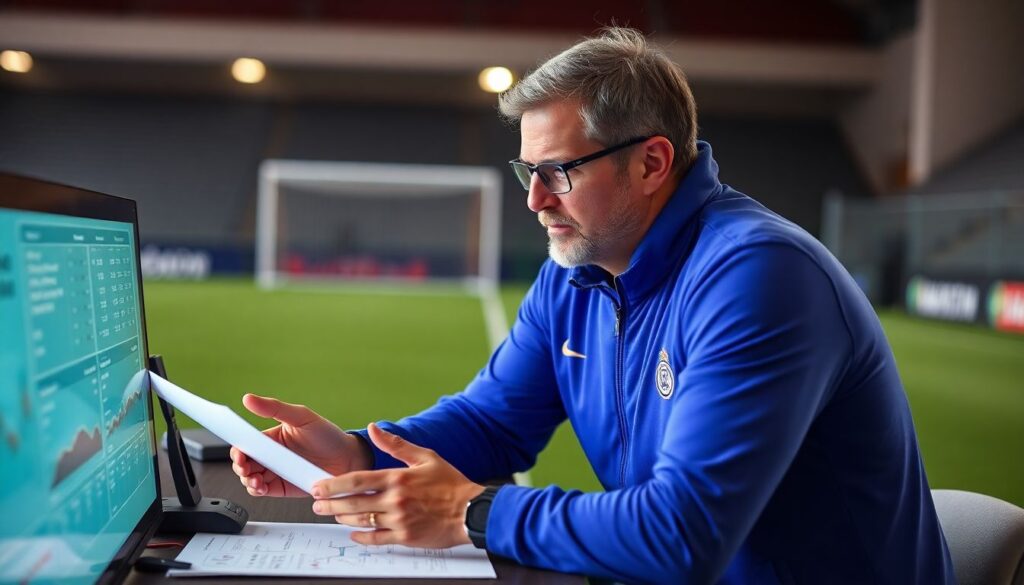
Start by defining core roles and combining them where necessary, such as a coach who also oversees analysis. Use part‑time specialists and partnerships with universities for sports science and data. Upgrade structures and processes first, then add full‑time roles as revenues grow.
What is the safest way to improve the squad without risky transfer fees?
Focus on free transfers, loans and undervalued domestic players that fit a clear profile. Invest more time in scouting and medical checks than in negotiation theatrics. Offer performance‑linked contracts and avoid long deals for older players.
How should Anatolian clubs prioritise investments between stadium, academy and first team?
Cover basic stadium safety and fan comfort first, then secure a competitive but not extravagant first‑team budget. Parallel to that, allocate a protected portion of spending to academy facilities and coaching, which will repay over the medium term through talent and transfer income.
What can be done if local sponsors are limited or cautious?
Package smaller sponsorship assets that fit modest budgets, such as training kits, matchday features or digital segments. Build long‑term relationships through hospitality and joint community projects. Explore regional or national partners who want visibility outside Istanbul.
How can the club keep fans supportive during a slow, long‑term rebuild?
Communicate your plan clearly before each season, including realistic goals and constraints. Share transparent updates via town‑hall meetings, social media and local media. Involve fans in visible projects, such as mural painting, youth tournaments or charity campaigns, so they feel part of the journey.
How do you protect the club’s identity while partnering with bigger teams?
Put written limits into every partnership agreement, preserving club colours, badge, home stadium and independent decision‑making. Focus cooperation on areas like scouting, coaching education and loans, not on rebranding. Regularly explain the partnership’s benefits and boundaries to supporters.
What metrics show that the club is genuinely closing the gap to the Big Three?

Track points per game, expected goals difference and wage‑to‑revenue ratio over several seasons. Monitor results against top‑half opponents and performance of academy graduates. If these indicators improve while finances remain stable, your trajectory is positive even before trophies arrive.