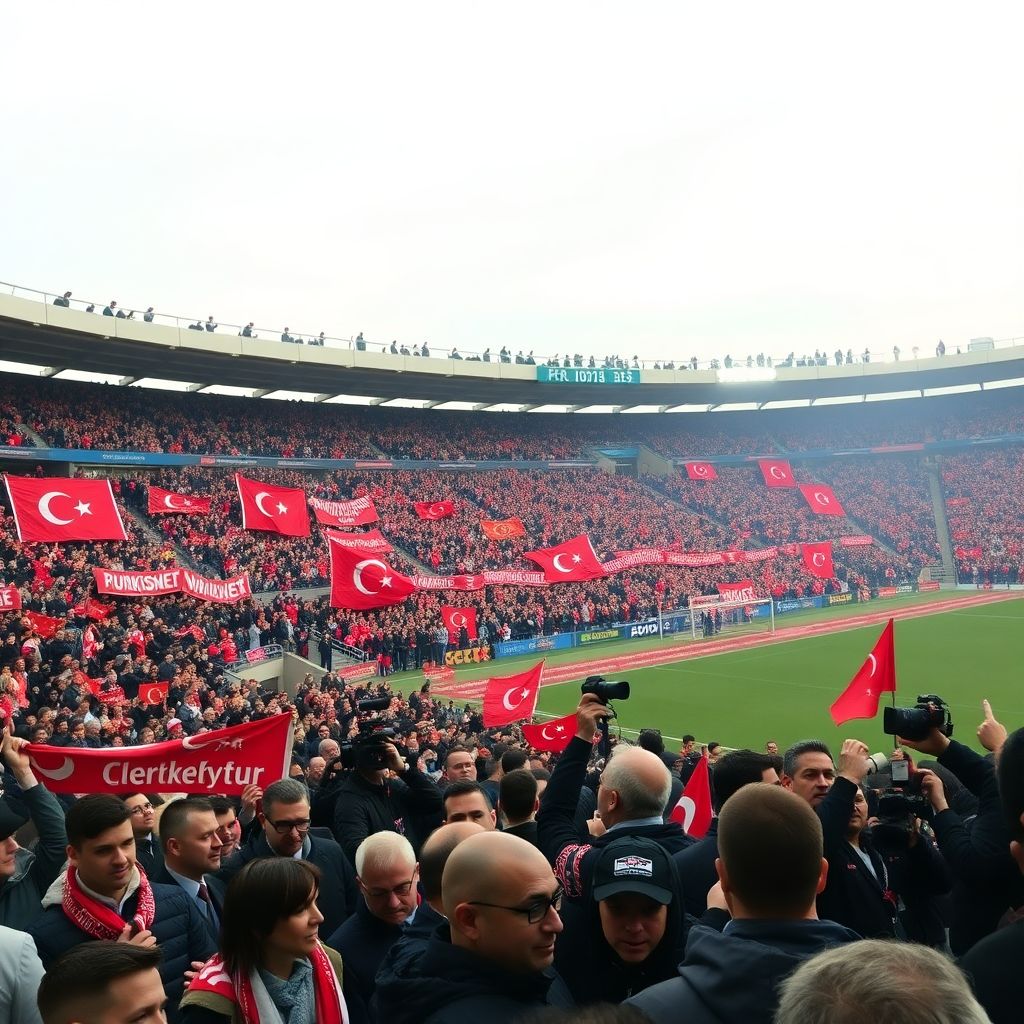
Political and social dynamics in Turkey shape football culture by binding clubs to ideologies, neighbourhoods, migration flows and power networks. Club identities emerge where state-building, class conflict, religion, nationalism, media narratives and globalisation intersect. Understanding these forces helps compare how different clubs mobilise fans, manage risks and negotiate pressure from politicians, business and communities.
Core dynamics shaping Turkish football culture
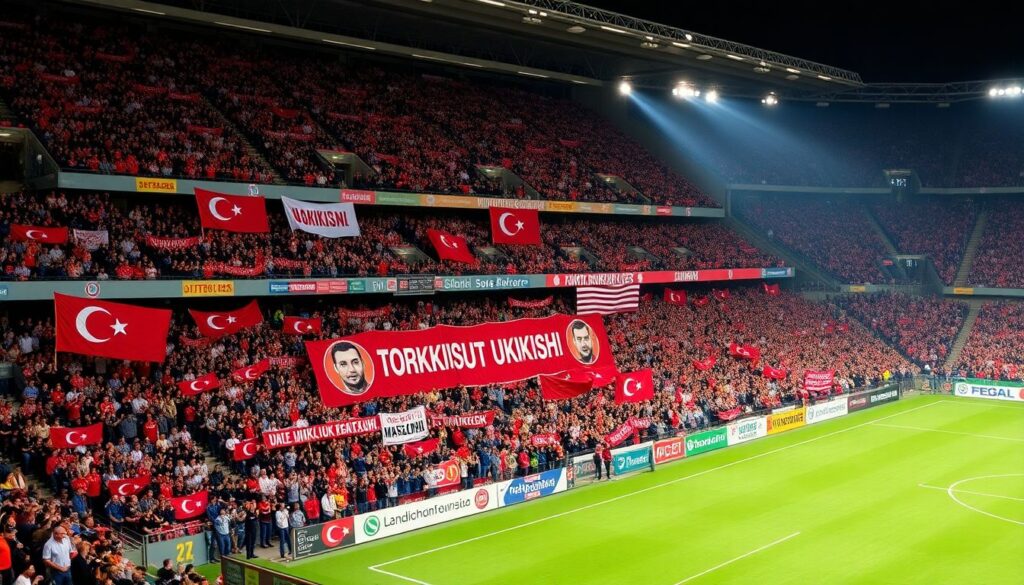
- Early Republican nation-building tied major clubs to state elites, urban modernisation and competing visions of Turkishness.
- Fan groups often mirror leftist, nationalist or conservative currents, turning terraces into visible political arenas.
- Rural-urban migration and gecekondu expansion remapped club support across Istanbul, Ankara and Anatolian cities.
- Municipalities and business elites use clubs for visibility and patronage, but also assume reputational risk.
- Media framing, symbols and ritualised derbies harden club myths and justify everyday fan choices.
- Globalisation and the diaspora export rivalries and narratives into Europe and the Gulf, reshaping identities abroad.
Historical foundations: state formation, nationalism and early clubs
In Turkey, football culture and club identities were shaped from the start by state formation and competing national projects. Early Istanbul clubs emerged under late Ottoman rule but acquired new meaning in the Republic, when they became informal arenas to debate secularism, urban modernity and different models of Turkish nationalism.
Galatasaray, Fenerbahçe and Beşiktaş each cultivated distinct relationships with state elites and middle classes. For instance, Galatasaray’s roots in an imperial lycée fed a reputation for secular, Western-oriented urbanity, while Fenerbahçe’s wartime symbolism anchored a more populist nationalist pride. These early patterns still colour how today’s fans read media coverage and political rhetoric.
In Ankara, clubs such as Gençlerbirliği historically reflected bureaucratic and middle-class layers tied to the capital’s planned development. Comparing Istanbul and Ankara shows two approaches: Istanbul’s club politics grew from commercialised, socially mixed neighbourhoods; Ankara’s rested more on bureaucratic networks. The former is easier to sustain commercially but carries higher risks of volatile street mobilisation.
For readers needing structured introductions, a carefully curated football culture in Turkey book or a turkish football history course online can help trace how state reforms, coups and party systems left their mark on clubs. The core implication: understanding contemporary fan politics requires seeing clubs as long-term products of state-society struggles, not just private entertainment companies.
Political ideologies in stands: leftist, nationalist and conservative fan identities
Political ideologies enter the stands when fan groups adopt narratives, symbols and chants associated with leftist, nationalist or conservative currents. This does not mean all fans are activists; rather, stadiums become condensed public spaces where broader conflicts and alliances are tested, dramatised and normalised.
- Leftist and anti-authoritarian currents – Some ultras emphasise social justice, anti-fascist or anti-police narratives, drawing on labour movement histories and urban protests. For example, certain Beşiktaş and Ankara groups have occasionally joined city-wide demonstrations, using football chants as protest tools. This approach is relatively easy to mobilise around big political moments but risks surveillance and bans.
- Nationalist and militaristic currents – Other groups foreground flags, military salutes and slogans about national unity and martyrs. In some Anatolian cities, local clubs become vehicles for patriotic displays that align closely with state discourse. This is convenient in terms of official support and media access, but it risks excluding minority fans and normalising hostility towards perceived internal enemies.
- Conservative and religious identities – Especially in cities transformed by conservative municipal rule, fan groups may promote mosque-oriented community work or use religious references in banners and songs. This can mobilise family-oriented support and sponsorship from conservative business networks, yet it risks politicising match-day morality debates and alienating secular supporters.
- Issue-based alliances across clubs – At times, ideologically distinct groups from rival clubs temporarily unite around specific causes, such as urban redevelopment conflicts or civil liberties. This cooperation is convenient for rapid street mobilisation but unstable, as old rivalries and ideological differences quickly resurface.
- Non-political branding as a defensive strategy – Some boards and ultra leaders try to ban overt ideological symbols to protect commercial partnerships. This depoliticising approach is easier to communicate to sponsors and foreign partners but carries the risk of underground radicalisation and accusations of selling out “authentic” fan culture.
- Media amplification of ideological labels – Broadcasters and social media often fix simple labels like “leftist fans” or “ultra-nationalists”, turning complex terraces into brandable identities. This framing is convenient for storytelling and turkey football politics documentary streaming projects, but risks exaggerating coherence and freezing fluid identities into clichés.
The practical upshot: club executives, municipalities and community organisers must decide how much ideological branding to embrace, and which risks (repression, polarisation, commercial loss) are acceptable compared with the benefits of loyal, politically energised fan bases.
Migration, urban change and the remaking of club support bases
Migration and urban transformation constantly redraw the social map of who supports which Turkish club. Large internal migration waves created new fan concentrations in gecekondu districts, satellite towns and mixed neighbourhoods where club allegiances intersect with hometown pride, class position and voting behaviour.
- Gecekondu neighbourhoods in Ankara – Peripheral districts receiving migrants from Central and Eastern Anatolia often mix allegiances between traditional “capital clubs” and hometown teams. Over time, solidarity networks from villages overlap with party branches and fan associations. The approach of aligning local clubs with migrant identities is easy to build from existing kinship ties but risks freezing rural-urban divides.
- Istanbul’s shifting working-class belts – Industrial and logistics zones on the European and Asian sides brought workers from across Turkey into rapidly growing districts. There, Fenerbahçe, Galatasaray and Beşiktaş compete with Anatolian clubs for hearts and wallets. Concentrating on megaclub brand power is commercially convenient but risks resentment among residents who want recognition for Anatolian roots.
- Urban renewal and stadium relocation – Moving a stadium or redeveloping central land can break historical ties with older working-class fans. For instance, when a club moves to a more upscale district, gentrification often pushes low-income fans towards TV consumption rather than stadium attendance. This strategy can raise short-term revenue but risks long-term erosion of organic supporter communities.
- University campuses and youth subcultures – As students from different regions converge, campus-based supporter groups develop hybrid identities, combining hometown loyalties with big-club affiliations. Organising around inclusive, multi-club fan initiatives is easy on campuses but fragile once graduates disperse and local party structures are weaker.
- Tourism-oriented fan experiences – In Istanbul, operators of a turkey football culture guided tour istanbul often weave stadium visits and neighbourhood walks through historically mixed quarters. This approach makes complex migration histories visible to visitors and can generate income, yet it risks freezing dynamic communities into folkloric “heritage” snapshots.
The core implication is that club strategies and public policies must see fan bases as moving urban mosaics. Approaches that respect neighbourhood histories and mobility patterns are harder to plan but carry lower long-term conflict risk than purely commercial segmentation.
Local power and patronage: municipal politics, business elites and club governance
Local power structures influence Turkish clubs through funding, land allocation, sponsorship and regulatory tolerance. Municipal leaders and business elites often use clubs as tools to enhance visibility, reward allies and negotiate with central authorities, which turns club governance into a delicate balancing act between sporting goals and patronage pressures.
Mini-scenarios of local political influence in practice
- Municipal leader as club saviour – A mayor intervenes to clear club debts and secure a stadium lease, gaining fan loyalty and future votes. Implementation is straightforward when parties align at local and national levels, but the club becomes dependent on electoral cycles.
- Business conglomerate branding strategy – A holding company acquires naming rights and places board members inside a club. This strengthens professional management and international marketing but blurs lines between club and corporate interests, creating reputational risk if the company enters political scandals.
- Opposition-run city vs. government-friendly federation – An opposition municipality supports a club while national football authorities are closer to the ruling party. Every refereeing controversy is then read as political retaliation. This framing is easy for mobilising fans but raises the risk of institutional deadlock and sanctions.
Advantages of patronage-based support models
- Rapid access to municipal resources, land and infrastructure without long negotiation cycles.
- Easier sponsorship deals through politically connected business networks.
- Short-term financial stabilisation of clubs in crisis, avoiding bankruptcy or relegation.
- Increased turnout and enthusiasm during elections, as clubs act as informal mobilisation machines.
Limitations and risks of politicised club governance
- Dependence on electoral outcomes: a lost election can mean sudden funding cuts or hostile oversight.
- Clientelism in hiring, transfers and youth academies, undermining meritocratic sporting development.
- Public perception that clubs are “owned” by politicians, weakening member democracy and accountability.
- Commercial partners may withdraw when partisan conflicts or corruption accusations surface.
- Fans risk criminalisation if political protests in stadiums are reframed as security threats.
Compared with more arms-length governance models, patronage-heavy approaches are easier to implement quickly but carry higher long-term risks for institutional autonomy and financial transparency.
Symbols, media and ritual: how narratives cement club identity
Symbols, media stories and ritualised practices transform scattered experiences into stable club identities. Chants, colours, logos, match-day routines and viral clips teach new generations how to feel about rivalries, politics and the city. Yet several misunderstandings distort how these elements are interpreted in debates on Turkish football.
- Myth: symbols are “just decoration” – In reality, banners, T-shirts and even galatasaray vs fenerbahce rivalry merchandise encode ideas about class, gender and nationalism. Treating them as neutral obscures how commercial actors and fan leaders steer political messages through design choices.
- Myth: derbies are ancient, unchanging feuds – Major rivalries evolved alongside TV rights, security policies and urban change. Assuming they are timeless makes it harder to experiment with de-escalation strategies or new fan engagement formats.
- Myth: media only mirrors fan behaviour – Sports media and social platforms actively select frames, highlight certain fan groups and ignore others. This co-produces phenomena later used by politicians and brands, for instance when a segment of fans is repeatedly shown as rowdy or heroic.
- Myth: political messages are always top-down – Sometimes, terrace humour, chants and tifos push narratives that clubs or parties initially resist, but later adopt once they prove popular. Underestimating this bottom-up creativity leads to clumsy censorship attempts that backfire.
- Myth: rituals can be redesigned overnight – Attempts to rebrand a club or suppress long-standing songs often fail because rituals are embedded in family traditions and local micro-cultures. Sustainable change requires gradual narrative shifts rather than sudden bans.
The practical lesson: actors who engage Turkish football-whether making a turkey football politics documentary streaming project or marketing campaigns-should treat symbols and rituals as contested political resources, not background scenery.
Globalization and the Turkish diaspora: exportation and contestation of club culture
Globalisation and migration have carried Turkish club identities into European and Gulf cities, where diaspora communities remake rivalries and affiliations under new political conditions. Supporters’ associations abroad reflect both homeland allegiances and host-country dynamics such as integration policies, workplace hierarchies and transnational media consumption.
Imagine a mini-case: in Berlin, three Turkish-run cafés show different Istanbul clubs on match days. One cultivates a conservative, family-friendly environment tied to religious networks; one leans towards left-leaning youth subcultures; the third markets itself as a neutral, betting-focused venue. The first model is easy to sustain with community backing but more vulnerable to homeland political shifts. The second is attractive to activist-minded youth but risks police monitoring during tense fixtures. The third is commercially flexible yet may struggle to build deep loyalty.
Across Europe, diaspora groups organise stadium trips, charity events and viewing parties, often drawing on materials produced for the domestic market, like a football culture in turkey book or subtitled turkish football history course online. Club strategies that support plural, locally adapted diaspora branches are harder to coordinate centrally but reduce political and reputational risks compared with rigid, one-size-fits-all identity packages.
Practical clarifications on politics’ role in club identity
Is every Turkish football club officially aligned with a political party?
No. Formal party affiliation is rare, but informal alignments through mayors, MPs, or business networks are common. Fans often perceive clubs as “close” to certain parties based on appointments, sponsorships and public statements.
Can clubs successfully depoliticise their stadiums?
They can reduce overt party symbols and extremist slogans, especially by working with fan leaders. Completely depoliticised environments are unrealistic, because football in Turkey overlaps with identity, history and local grievances.
How should foreign brands assess the risk of sponsoring a Turkish club?
They should map the club’s political ties, fan-base profile and recent controversies, not just sporting success. Comparing alternative clubs by governance transparency, fan diversity and media reputation helps balance market reach against reputational risk.
Do ideological fan identities always lead to violence?
No. Many politically coloured groups also organise charity work and local solidarity. Violence risk rises when political tension, alcohol, poor policing and provocative media frames combine around already heated derbies.
Are Anatolian clubs less politicised than Istanbul giants?
Not necessarily; they often have stronger links to municipal politics and local business. What differs is the scale of media coverage and national impact, not the presence of political dynamics themselves.
How can researchers or visitors study these dynamics responsibly?
Prioritise local partnerships, speak to multiple sides in each city, and avoid treating any fan group as fully representative. Structured resources and guided tours provide orientation, but neighbourhood-level listening is essential.
Is it safe for neutral tourists to attend big derbies?
With reputable guides, early arrival and adherence to security guidance, many visitors attend safely. Risks rise around high-stakes matches, peripheral streets and post-game crowds, so cautious route planning matters.