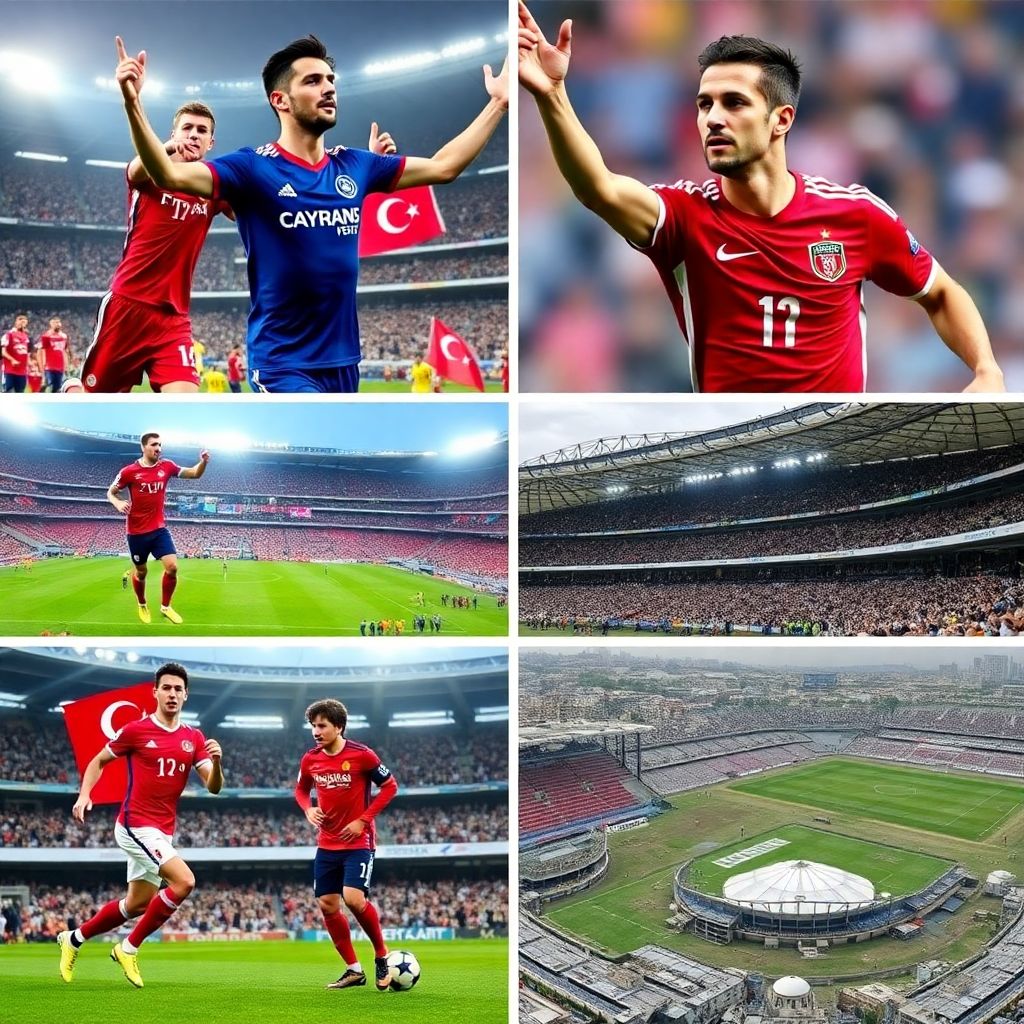
The most successful Turkish players abroad show that when talent meets early tactical education, language skills and the right club fit, Turkish footballers can be leaders in top European leagues. Their careers expose both the strengths of Turkish player development and the structural weaknesses of the Süper Lig and academy systems.
What the careers of Turkish stars abroad tell us at a glance
- The best Turkish football players in Europe usually leave early, after strong academy training and clear roles in their teams.
- Success depends less on raw talent and more on tactical flexibility, languages and mental resilience.
- Top Turkish footballers playing abroad often peak in clubs with clear game models and stable coaching.
- Frequent domestic coaching changes and short termism in the Süper Lig slow the production of export ready talent.
- A focused list of successful Turkish players overseas reveals patterns: early adaptation, strong agents and smart club choices.
- If Turkish clubs copy the best practices behind these careers, they can both improve results and generate sustainable transfer income.
Profiles: Turkey’s most impactful exports to Europe and beyond
When talking about Turkish football stars in European clubs, the focus is less on nationality and more on players who shaped their teams over several seasons. These footballers became automatic starters, influenced tactics and often represented their clubs in European competitions or title races.
Within this group, famous Turkish soccer players in foreign leagues such as Hakan Çalhanoğlu, Nuri Şahin, Arda Turan and Cengiz Ünder illustrate different success models. Some were creative hubs, others deep playmakers or wide forwards attacking space, but all adapted to high tempo, structured environments.
In definition terms, a successful export is not just a player who signs for a European club. It is someone who maintains or increases their level compared to the Süper Lig, improves key aspects of their game and leaves a clear legacy in at least one foreign club environment.
| Player (examples) | Key foreign clubs | Role and impact | Transfer fee notes |
|---|---|---|---|
| Nuri Şahin | Borussia Dortmund, Real Madrid, Liverpool | Deep playmaker, tempo and build up leader in Germany | Moves involved significant fees and loans, often reported but sometimes undisclosed |
| Arda Turan | Atlético Madrid, Barcelona | Pressing winger and creative midfielder in an intense tactical system | High profile transfer from Atlético to Barcelona with widely discussed fee range |
| Hakan Çalhanoğlu | Bayer Leverkusen, Milan, Inter | Set piece specialist, later transformed into central playmaker and regista | Fees and contract values public in principle, exact details often partially undisclosed |
| Cengiz Ünder | Roma, Marseille | Wide forward attacking depth, strong in transition phases | Initial move to Italy included sizeable fee with add ons reported in media |
If you are a Turkish academy or regional club, then you should define success abroad like this: long term starting role in a top five or stable mid level European league, clear tactical identity and measurable development in decision making and consistency.
Pathways: How youth development and transfers shaped their moves
- Early tactical schooling: Many of the best Turkish football players in Europe either grew up in structured academies in Germany, the Netherlands or Austria, or passed through the most organised Turkish academies with a focus on position specific coaching.
- Dual football cultures: A significant number had experience in both Turkish and European youth systems, combining Turkish technical creativity with European discipline, pressing habits and physical preparation.
- Timing of the first move: Successful profiles typically transferred before they were fully established stars in the Süper Lig, entering foreign leagues while still adaptable and hungry, rather than as finished products.
- Smart league selection: Instead of aiming immediately at glamour clubs, many first joined development friendly environments in Germany, Italy or France where they received minutes and individualized coaching.
- Agent and family strategy: Players who chose agents with strong networks in specific leagues and families who accepted short term sacrifices (distance, lower initial salary) usually made more stable progress.
- Language and integration: Early investment in language learning made it easier to understand complex game plans, follow video analysis and build trust with coaches.
If you run a Turkish club academy, then you should see these pathways as a template: prepare players tactically, encourage language learning and coordinate with agents who know specific markets instead of chasing any available transfer.
From concept to practice: mini-scenarios based on real career patterns
Scenario 1: A technically strong 17 year old full back in İzmir receives offers from a mid table German club and a domestic giant. If the priority is long term development and a realistic chance to join the group of top Turkish footballers playing abroad, then the German move with playing time guarantees is the smarter choice.
Scenario 2: A 21 year old Süper Lig winger wants a transfer after a breakthrough season. If he joins a European side whose style already matches his strengths (transition game, high press) and accepts a rotation role at first, then his adaptation speed and career ceiling both increase.
Adaptation: Tactical and cultural adjustments that determined success
In top European clubs, Turkish players had to adjust from games decided by individual brilliance to structures where spacing, pressing triggers and rest defence are non negotiable. Those who embraced this tactical discipline quickly became reliable options rather than luxury attackers or risky playmakers.
Culturally, moving from Turkey or Turkish communities in Europe into mixed dressing rooms meant handling media scrutiny, professional nutrition, strict time management and often colder coach player relationships. Successful players treated this as a performance environment, not a family atmosphere.
Typical adaptation scenarios include:
- Creative number 10 transforming into a hard working number 8, as seen when some famous Turkish soccer players in foreign leagues increased their defensive output to stay on the pitch.
- Wide dribblers learning when not to attack one versus one, instead recycling possession to maintain team structure against elite pressing systems.
- Deep playmakers adjusting body orientation and scanning frequency to deal with faster pressing and more complex pressing traps.
- Full backs raised in back four systems adapting to wing back roles, becoming key in build up and counter pressing phases.
- Penalty and free kick specialists balancing set piece focus with continuous contribution in open play to avoid being labeled as limited specialists.
If a Turkish player arrives in a foreign league and accepts that their position label may change, then they gain more paths to minutes and reduce the risk of being loaned out or benched permanently.
Market dynamics: Agents, scouting and transfer strategies for Turkish talent
The market around Turkish football stars in European clubs is shaped by well connected agents, clubs searching for technically gifted yet relatively undervalued talent and a constant comparison with local players and imports from South America or Africa. This ecosystem creates both opportunities and risks for Turkish prospects.
From the club perspective, Turkish players can offer cultural bridges to big fan bases and commercial value, but only if recruitment is based on game model fit rather than highlight compilations or short tournament performances.
Advantages revealed by successful exports

- Technical and set piece quality: Many Turkish midfielders and forwards arrive with strong shooting, crossing and dead ball skills, which can decide tight matches.
- Competitive mentality: Growing up in intense Süper Lig atmospheres prepares players for pressure situations in promotion battles or European nights.
- Dual nationality networks: Some players raised in European systems with Turkish roots ease registration rules and language barriers for clubs.
- Market value growth: Well chosen moves often lead to quick value increases as players prove they can perform outside Turkey.
Structural limits and recurring risks
- Overvaluation after short purple patches in the Süper Lig, leading to excessive expectations and limited patience abroad.
- Dependence on a narrow circle of agents, reducing the diversity of options and sometimes pushing players into unsuitable leagues.
- Scouting based on reputation or nationality rather than data, live observation and tactical profiling.
- Media pressure in Turkey, which can make returning too tempting after the first difficult season abroad.
If you are a recruitment analyst at a European club, then you should treat Turkish players like any other market: focus on data, live video, personality interviews and tactical fit, instead of stereotypes or short tournament impressions.
Domestic consequences: What player emigration revealed about Süper Lig
The steady emigration of talent has highlighted structural issues inside Turkish football. It exposed inconsistent coaching education, an over reliance on foreign veterans in key positions and under investment in youth minutes at the top level.
Common mistakes and myths include:
- Myth: Turkish players cannot handle tactical discipline abroad. Reality: when raised in structured systems, they thrive in organised pressing and positional play.
- Mistake: Blocking academy graduates with short term foreign signings, then complaining about the lack of exportable talent.
- Myth: Only attacking players can succeed abroad. In practice, full backs, defensive midfielders and goalkeepers with strong fundamentals have also adapted well.
- Mistake: Judging players by one or two international matches instead of continuous league performance and development trends.
- Myth: Returning from Europe always means failure. Some players come back better leaders and lift the level of domestic teammates.
If Süper Lig clubs continue to chase quick fixes and ignore youth pathways, then the gap between domestic performance and the careers of the truly successful exports will keep widening.
Lessons for policy and clubs: Practical steps to replicate positive outcomes
The careers of elite exports function like a practical manual for federations and clubs in Turkey. They show what has to be in place at age 14, 17 and 21 for a player to stand out not only at home but also among strong competition abroad.
Mini case: Hakan Çalhanoğlu’s evolution as a template
Career outline: early years in Germany, breakthrough in smaller Bundesliga sides, move to Bayer Leverkusen as a creative attacking midfielder, then transfer to Milan and later Inter where he gradually shifted into a deeper playmaking role while improving pressing and defensive positioning.
Tactical fit: his teams built around structured possession, allowing him to use long range shooting and crossing while adding new layers such as dictating tempo and participating in high pressing. This mirrored the evolution of the best Turkish football players in Europe from pure number 10s into complete midfielders.
If Turkish academies track similar profiles and intentionally train them in at least two roles (for example number 10 and number 8), then they increase both the export value and the probability of long term success abroad.
Actionable if then guidelines for Turkish football
- If you design a club academy curriculum, then include regular analysis of video from famous Turkish soccer players in foreign leagues, focusing on pressing, body shape and decision making, not only skills.
- If you manage a Süper Lig squad, then commit to guaranteed league minutes for two to three high potential youngsters each season, so they become visible to scouts building a list of successful Turkish players overseas.
- If you are a player considering a move, then choose the club where your likely role is clearly defined and explained in tactical terms, rather than the club that simply offers the highest salary.
- If you are an agent representing Turkish talent, then prioritise stable projects with compatible playing styles and language support, even if the transfer fee or wages are lower at first.
- If the Turkish Football Federation wants more exports, then it should align coaching education, youth league formats and national youth team game models with the main European pathways that have already worked for successful Turkish players.
Common practical questions about Turkish players’ success overseas
Which factors most clearly separate successful Turkish exports from those who struggle?
The main separators are tactical flexibility, language skills, willingness to change position and the patience to accept rotation early on. Pure technical talent without these elements rarely survives long in demanding foreign environments.
Is it better for young Turkish players to move abroad very early or to mature in the Süper Lig first?
There is no single rule, but players who move once they are tactically and emotionally ready, yet still young enough to adapt, tend to do best. For many, that means leaving after first team exposure in Turkey or structured youth football in Europe.
Do only attacking Turkish players succeed in foreign leagues?
No, even though attackers receive more attention. Full backs, defensive midfielders and centre backs with strong positioning and passing have also become regulars abroad when given time and the right coaching.
How important is dual nationality for Turkish players aiming at Europe?

Dual nationality can ease registration rules and cultural adaptation, but it is not essential. What matters more is tactical education, professionalism and choosing clubs that need the player’s profile.
Why do some highly rated Süper Lig stars fail after transferring to European clubs?
They often join teams whose playing style does not match their habits, face tougher competition for places or underestimate the importance of defensive work and physical conditioning. Poor off field adaptation can also limit their chances.
Can returning from Europe to Turkey still be part of a successful career path?
Yes. Some players return to reset their careers, take leadership roles and then either dominate domestically or earn a second chance abroad with greater maturity and experience.
How can Turkish clubs protect themselves when selling young talent to foreign leagues?
They can negotiate realistic sell on clauses, buy back options and development related bonuses. They should also help players choose environments where they are likely to play and improve, not only generate immediate income.