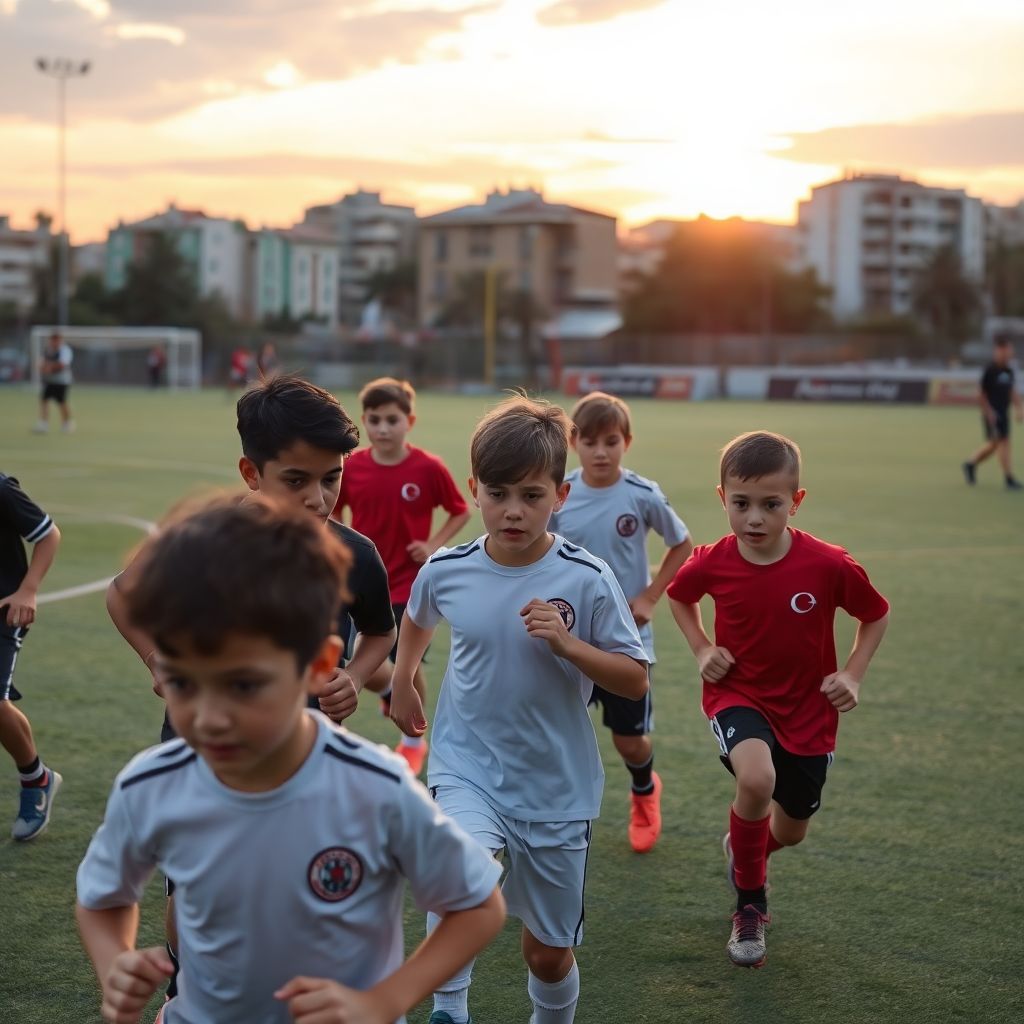
Mental toughness for Turkish youth footballers means staying focused, disciplined and emotionally stable under pressure from family, club and fans. Build it with structured football mental toughness training for youth players: regular assessments, short daily mindset drills, supportive coaching language, and access to a qualified sports psychologist for young football players in Turkey when needed.
Core resilience pillars for young Turkish footballers
- Balance between ambition, school and family expectations to prevent burnout and anxiety.
- Consistent emotional regulation skills: breathing, self-talk and simple routines before and after matches.
- Clear role definition in team tactics, so players know exactly what success looks like for them.
- Coach communication that is demanding but respectful, focused on behaviours, not personality.
- Regular reflection habits: post-training and post-match debriefs with concrete learning points.
- Access to mental coaching programs for youth football academies when signs of stress escalate.
- Club-parent alignment on realistic pathways, especially in competitive football academies in Turkey with psychological support.
Understanding pressure: cultural and competitive drivers in Turkey
This approach suits coaches, academy directors and parents working with players roughly 12-19 years old in competitive leagues or professional club systems. It also works for grassroots teams where families strongly value football as a potential career.
Avoid pushing this program in two situations:
- When a player shows strong signs of clinical anxiety, depression, eating disorders or self-harm thoughts. In such cases, pause performance-focused training and refer quickly to a licensed clinician or sports psychologist for young football players in Turkey.
- When coaches or parents are unwilling to adjust their own behaviour (chronic shouting, ridicule, threats about contracts/scholarships). Mental work with the child alone will have limited impact.
Main pressure sources in the Turkish context
- Family expectations: Football viewed as both passion and economic opportunity; frequent comparisons to famous players or older siblings.
- Club culture and media: Intense fan bases, social media criticism and strong focus on derby results, even at academy level.
- Selection and contracts: Trials at big clubs, scholarships at private schools and fear of being released create constant evaluation pressure.
- Education-sport conflict: School exams vs. training and travel; parents and teachers may send mixed messages.
Early warning signs to watch in young players
- Freezing or hiding during big games after performing well in training.
- Strong emotional swings: crying after small mistakes, anger at teammates, destroying equipment.
- Somatic complaints before matches: stomach pain, headache, nausea without clear medical cause.
- Sleep problems and loss of joy in football, expressed as “I don’t care anymore”.
Practical assessments to gauge mental toughness in youth players
Before changing training, understand current mental skills. Use simple, repeatable tools that do not stigmatise players.
Essential tools and requirements
- Short self-report questionnaire
- A 5-10 minute form with questions on confidence, response to mistakes, focus and motivation.
- Use a 1-5 scale and repeat every 8-12 weeks to track progress.
- Coach rating grid
- Simple sheet with 4-6 items: effort, body language, reaction to criticism, leadership, training focus.
- Rate after each week; keep notes on concrete behaviours, not feelings.
- Match-behaviour observation form
- One staff member notes specific moments: reaction after conceding, after mistake, when substituted, when leading or losing.
- Mark behaviours such as shoulders drop, stops communicating, keeps demanding the ball, supports teammates.
- Parent input template
- Short monthly questions: sleep, appetite, mood before/after games, school behaviour.
- Collect via email or paper; avoid discussing other players.
Basic access and setup
- Quiet space at the club where players can fill forms without teammates reading their answers.
- One staff member responsible for storing and reviewing data securely.
- Clear explanation to players and parents that this is for support, not punishment.
- Optional cooperation with a specialist running mental coaching programs for youth football academies.
Daily and weekly training protocols to strengthen resilience
Use these steps as a structured football mental toughness training for youth players. All drills are safe, low-cost and can be integrated into normal sessions.
Preparation checklist before starting the program
- Inform players that mental training is part of their regular development, not a sign of weakness.
- Decide two fixed training days per week for short mental drills (5-10 minutes each).
- Prepare a notebook or digital tracking sheet for each player or for the squad.
- Agree within staff which coach leads each drill and who collects observations.
- Set a review date every 6-8 weeks to evaluate impact and adjust.
- Design a simple weekly mental focus theme
Choose one mental toughness topic per week (e.g., “response to mistakes”, “staying calm when losing”). Introduce it briefly in the dressing room and connect it to specific behaviours in training.- Objective: Give players one clear mindset target instead of many abstract ideas.
- Time: 5 minutes at the start of the first session each week.
- Success metric: Players can repeat the weekly theme in their own words.
- Use micro-reset routines after mistakes
Teach a 3-step reset: 1) exhale slowly, 2) verbal cue (“next ball”), 3) quick scanning of pitch. Practice after planned “mistake moments” in training games.- Objective: Reduce negative spirals after errors.
- Steps: Coach signals a “reset” after a mistake; player performs the routine within 5 seconds and re-engages.
- Time: 5-10 minutes inside small-sided games twice per week.
- Success metric: Fewer visible emotional reactions; quicker return to normal positioning and decision-making.
- Implement short breathing and body-check drills
Add a very brief breathing routine at the start or end of training: 3-5 slow breaths, hand on stomach, eyes open, noticing tension in shoulders and jaw.- Objective: Build awareness of tension and a safe, portable calming tool.
- Steps: Team stands in a circle; coach guides 3-5 breaths and asks players to rate tension from 1-5 silently.
- Time: 2-3 minutes per session.
- Success metric: Players start using the same breathing spontaneously in matches or exams.
- Run weekly reflection huddles
At the end of one training per week, hold a 5-minute group reflection: each player names one thing they did well and one thing to improve next time.- Objective: Develop self-awareness and growth mindset instead of fear of criticism.
- Steps: Coach models first; then go quickly around the group with short, concrete statements.
- Time: 5 minutes, once per week.
- Success metric: Reflections become more specific (“I scanned earlier before receiving”) rather than vague (“play better”).
- Set individual process goals for key players
For older or more competitive players, define 1-2 individual process goals per match (e.g., “constant communication with back line”, “demand the ball after each mistake”).- Objective: Shift focus from uncontrollable outcomes (goals, selection) to controllable actions.
- Steps: Brief 5-minute chat before training; coach writes goals on player card and reviews after match.
- Time: 10 minutes per selected player weekly.
- Success metric: Players can describe their process goals and self-rate them post-match from 1-5.
If the club has access, integrate these steps into formal mental coaching programs for youth football academies, ensuring continuity between field work and specialist sessions.
Pre-match preparation and in-game coping techniques
Use this checklist to see whether your pre-match and in-game routines actually support mental resilience and show you how to improve mental toughness in teenage footballers without adding stress.
- Pre-match talk lasts a reasonable time and focuses on 2-3 key tactical messages plus 1 mental reminder, not long emotional speeches.
- Each player has a simple pre-match routine (music, dynamic warm-up, short breathing) agreed with staff and tested in training.
- Coaches avoid last-minute tactical overload in the tunnel or during warm-up that could increase confusion.
- Response to early mistakes is calm and instructional; no sarcastic comments, public humiliation or threats about selection.
- Bench behaviour is structured: clear roles (support, analysis) instead of negative body language and visible frustration.
- Communication keywords are pre-agreed (“reset”, “compact”, “next action”) and used consistently by coaches and players.
- Substitution protocol includes one positive point and one clear task for the entering player to reduce anxiety.
- Half-time talks include very short individual targets (one sentence per unit) rather than long emotional monologues.
- Post-match debrief is scheduled after a short cool-down, not immediately in the heat of emotions.
- Coaches monitor their own volume and tone, especially in front of parents and opponents, modelling emotional control.
Effective communication: aligning coaches, parents and sports psychologists
Clear communication around mental toughness is as important as drills. Misalignment between adults can erase player progress.
Recurring communication mistakes to avoid
- Talking about a player’s “weak mentality” in front of teammates or parents, instead of describing specific behaviours.
- Coaches asking for fearless risk-taking while parents punish every mistake and prioritise only safe, conservative play.
- Bringing in a sports psychologist for young football players in Turkey without explaining their role, creating fear and stigma.
- Sharing private player information between staff and parents without consent, or discussing one child in front of others.
- Using inconsistent language: one coach encourages expressive play, another threatens to bench players for failed dribbles.
- Expecting players to “speak up” but interrupting or mocking them when they try to express emotions or doubts.
- Parents giving conflicting tactical instructions from the stands, undermining coach authority and increasing player confusion.
- Staff ignoring cultural or family context, for example, by criticising parents harshly instead of inviting them into the process.
- Clubs advertising football academies in Turkey with psychological support but not actually integrating mental staff into daily work.
- Failing to document and review communication agreements in writing, leading to misunderstandings over time.
Simple alignment routines
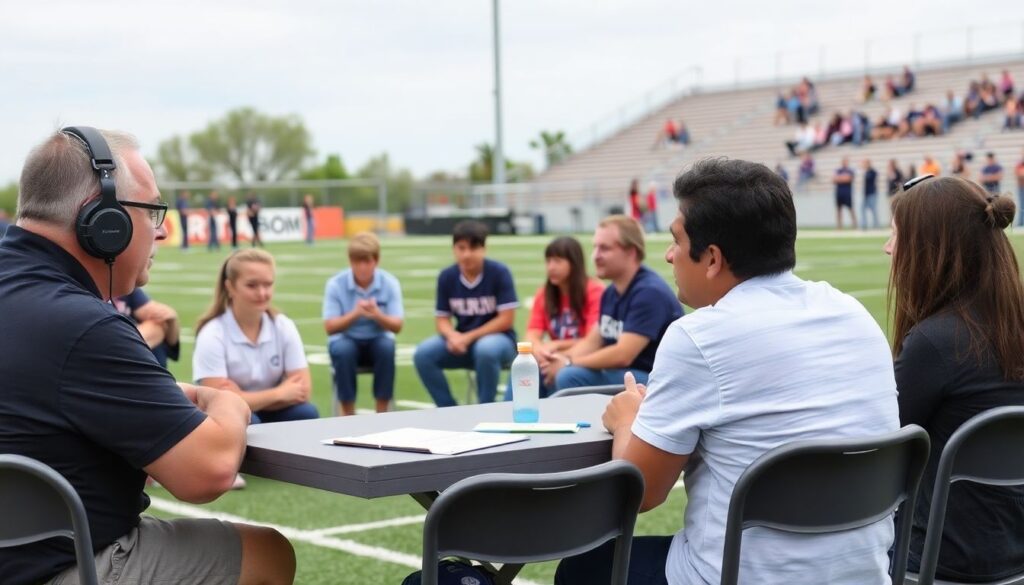
- Quarterly parent meetings focused on “how we support your child under pressure”, with clear do/don’t examples.
- Monthly coordination between head coach and mental staff to review trends and agree consistent messages.
- Short written codes of conduct for sidelines behaviour and feedback after matches.
Operational case studies from Turkish academies and measurable outcomes

When traditional training time is limited or there is no in-house psychologist, alternative structures can still support robust mental skills.
Alternative implementation paths
- Coach-led basic mental skills module
For smaller clubs without budget for specialists, head and assistant coaches run a fixed 8-10 week mental module using the drills described above.
- When suitable: Motivated coaching staff, stable squad, training at least three times per week.
- Trade-off: Less depth than expert-led work but better than no structure at all.
- Measurement: Simple pre/post self-ratings and coach observation notes.
- External workshop model
Clubs invite a specialist to deliver periodic workshops (e.g., every 1-2 months), while daily integration is managed by coaches.
- When suitable: Academies with moderate resources and openness to learning but limited full-time staff.
- Trade-off: Strong impact on education days; risk of losing momentum if coaches do not follow up.
- Measurement: Workshop feedback forms and monitoring of behavioural trends over the season.
- Hybrid club-school collaboration
For players in sport-focused schools, guidance counsellors and club staff coordinate to cover both academic and football pressure.
- When suitable: Larger cities where schools and clubs share many players.
- Trade-off: Requires strong communication systems and data protection agreements.
- Measurement: Joint tracking of attendance, academic results, and football engagement.
- Online mental support add-on
Clubs with very limited training time integrate short online modules or group calls into the week, guided by external experts.
- When suitable: Regional teams with extensive travel and inconsistent access to facilities.
- Trade-off: Less direct observation but more flexibility for families and busy teenagers.
- Measurement: Attendance rates and self-reported usefulness of sessions.
Common implementation questions for coaches and staff
How many minutes per week should we spend on mental toughness work?
Start with 10-15 minutes in two sessions per week integrated into normal football drills. Focus on quality and consistency, not long classroom-style sessions. Increase only when players and staff are comfortable.
Should mental toughness drills replace physical or technical training?
No. Integrate them into existing warm-ups, small-sided games and post-training huddles. The goal is to support performance, not compete for training time. Many drills can be done while players are already moving.
At what age can we begin structured mental training?
Basic routines such as breathing, positive self-talk and simple routines can begin around 10-11 years old. More complex tools like individual process goals and detailed reflection fit better from 13-14 upwards.
How do we handle a player who resists talking about emotions?
Avoid forcing deep conversations. Start with behaviour-focused language (“What did you do after the mistake?”) and short, concrete choices. Over time, safe routines and respectful feedback usually increase openness.
How can we involve parents without creating extra pressure?
Offer short, practical guidelines on supportive language, match-day behaviour and post-game car rides. Emphasise praising effort and learning, not only goals or selection. Invite questions but avoid criticising individual players or families publicly.
When should we seek external professional help?
Seek a qualified specialist if a player shows persistent distress, big performance drops, or signs of anxiety and depression that affect school or family life. External experts also help design club-wide programs with safe boundaries.
How do we know if our mental program is working?
Track simple indicators: attendance, self-ratings, coach observations and behavioural changes in matches. Look for improvements in recovery from mistakes, communication and consistency rather than only goals or trophies.