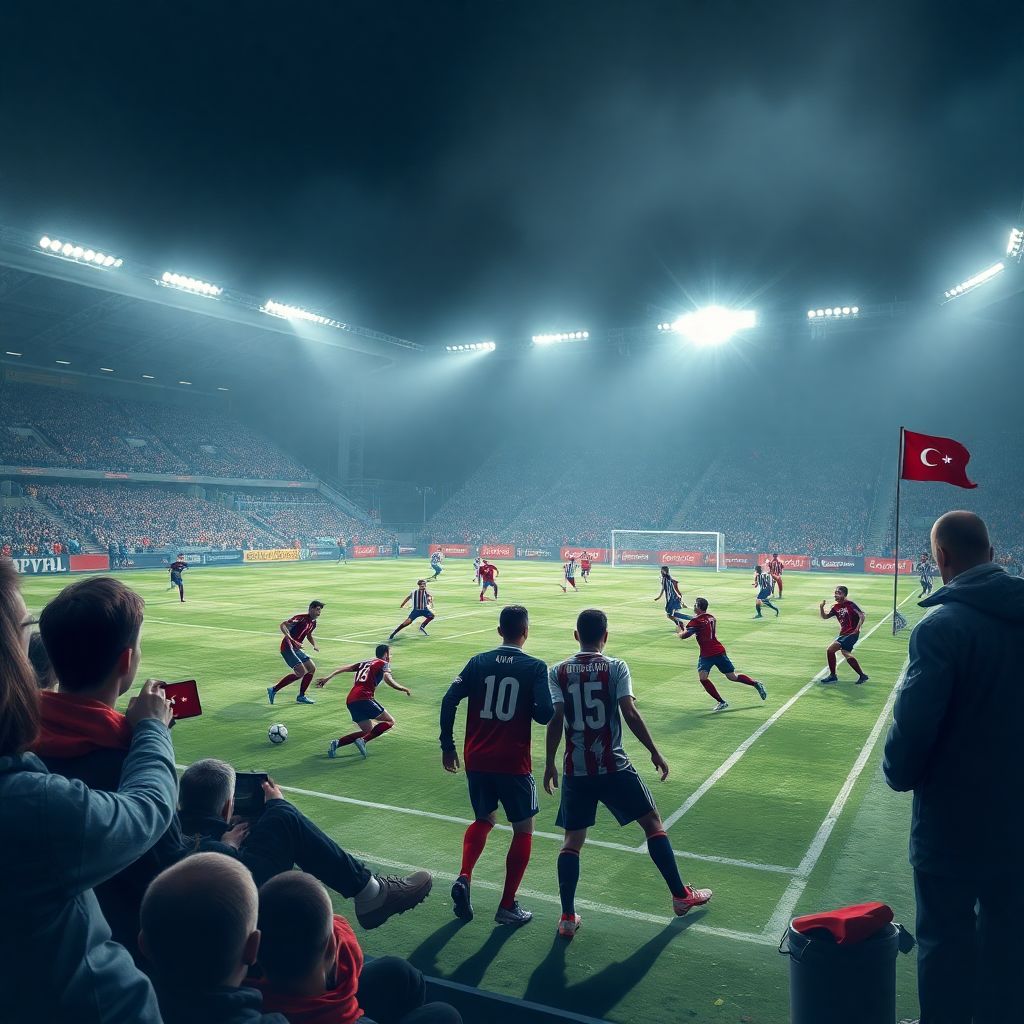
Inside TFF 1. Lig: Why This League Matters More Than You Think
Step 1. Understand What TFF 1. Lig Actually Is (And Isn’t)
TFF 1. Lig is the second tier of Turkish football, right under the Süper Lig.
But calling it just a “second division” is like calling high school “pre-university” and ignoring that it shapes most of your life.
This league is:
– A development lab for Turkey’s next generation of footballers
– A stress test for young coaches and analysts
– A pressure cooker for clubs that constantly swing between promotion dreams and relegation fears
In other words, if you want to understand where Turkey’s future national team will come from, you start with TFF 1. Lig — not with the big names already shining in the Süper Lig.
—
Step 2. See TFF 1. Lig as a Player Factory, Not Just a Competition
How the League “Builds” Players
Unlike top-tier clubs that can buy ready-made stars, most TFF 1. Lig teams are forced to develop:
– They give minutes to 18–21-year-olds
– They trust academy products and local talent
– They experiment tactically because they simply don’t have the budget for imported stars
Sports scientists often say that, for footballers, ages 18–23 are the “shaping years”.
That’s where TFF 1. Lig comes in: the league offers enough intensity, but not the toxic spotlight of the Süper Lig.
> Expert insight – youth coach (U-19, Istanbul club):
> “If a 19-year-old makes a mistake in TFF 1. Lig, he gets shouted at and then he learns.
> If he makes the same mistake in the Süper Lig, he’s labeled ‘not ready’ and might not play again for months.
> That’s the difference.”
—
Step 3. Learn Why Pressure in This League Is Perfect for Growth
The “Goldilocks Zone” of Pressure
TFF 1. Lig has a unique mix of:
– Real stakes: promotion, relegation, financial survival
– Real crowds: especially in football-mad cities with historical clubs
– Lower media hysteria: fewer cameras, fewer talk shows tearing players apart
That’s what sports psychologists sometimes call a “Goldilocks zone” of pressure: not too low (boring and unmotivating), not too high (paralyzing).
Players must:
– Handle physical games with tight marking
– Make decisions fast on poor or average pitches
– Deal with fans who are very close to the pitch and very vocal
All this creates exactly the mental resilience and game-reading ability that national team coaches later look for.
> Expert insight – performance analyst:
> “If a player can consistently perform in a cold away game in TFF 1. Lig, with fans screaming in his ear on a heavy pitch, then the jump to Süper Lig is no longer about ‘can he handle pressure?’ but only about ‘can he adapt tactically?’”
—
Step 4. Follow the Path: From TFF 1. Lig to the National Team
Why National Team Scouts Watch This League Closely
Scouts and data analysts don’t just camp out in the Süper Lig. More and more, they look at:
– Progression curves – how quickly a player improves season by season
– Adaptability – can he play different roles in different systems?
– Consistency – can he perform in both promotion battles and dead-rubber matches?
This is where TFF 1. Lig live streaming has quietly changed the game. Clubs, agencies, and even foreign analysts can now:
– Track players over multiple matches
– Collect detailed data on movement, pressing, and decision-making
– Spot under-the-radar talents before they become expensive
Instead of relying on one or two in-person scouting trips, analysts can follow a player’s entire season trajectory — and that’s huge for long-term planning.
—
Step 5. Don’t Underestimate the Role of Clubs and Local Culture
Why “Small” Clubs Aren’t Actually Small for Development
Many TFF 1. Lig teams are based in cities where football is deeply woven into daily life.
For young players, that means:
– Constant scrutiny from neighbors, friends, and local media
– Emotional support, but also social responsibility
– Strong identification with the club’s badge and history
This shapes character just as much as training sessions.
> Expert insight – sports psychologist working with a 1. Lig club:
> “You can teach technique on the training ground, but mental toughness is built in the city: how a player reacts to criticism in the café, in the street, on social media.
> In TFF 1. Lig, the city and the club educate the player together.”
—
Step 6. How Fans and the Market Quietly Drive Development
Tickets, TV, and the Business Around the League
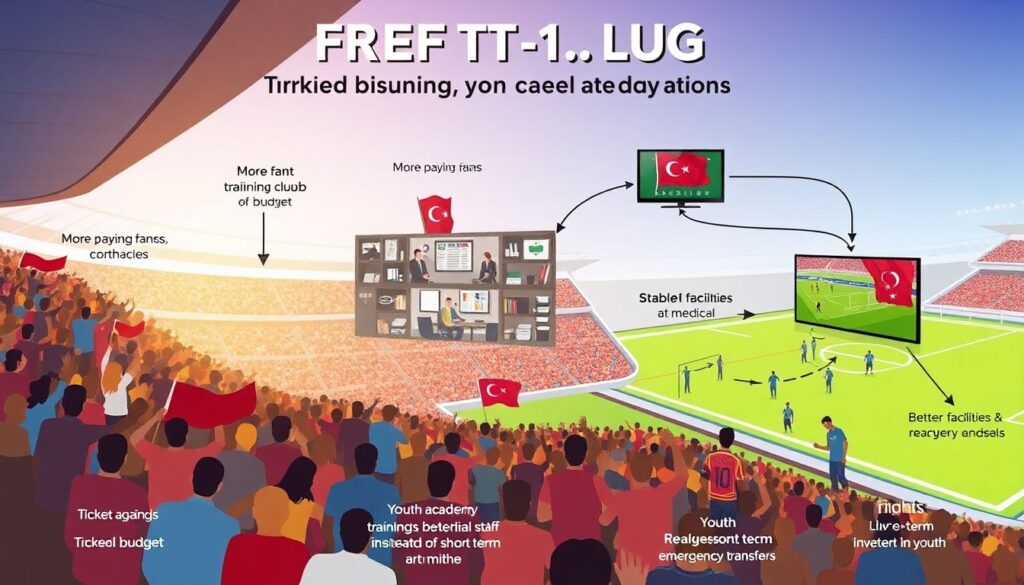
It might sound strange, but even TFF 1. Lig tickets play a role in player development.
More paying fans mean:
– More stable club budgets
– Better facilities and medical staff
– More courage to invest in youth instead of short-term “firefighter” transfers
The same logic applies to TFF 1. Lig TV rights.
When TV money flows more fairly, smaller clubs can keep their talents a bit longer, instead of selling them too early just to survive.
On top of that, TFF 1. Lig merchandise — shirts, scarves, caps — is not only about fandom. It’s a form of identity-building. A teenager wearing his local club’s shirt is more likely to dream of playing there, rather than in some distant giant club he only sees on international broadcasts.
—
Step 7. The Data Revolution: Why Analysts Love This League
From Old-School Eye Test to Modern Metrics
TFF 1. Lig has become a playground for analysts experimenting with:
– Expected goals (xG) and chance quality
– Pressing intensity and defensive actions
– Sprint data and physical output over the season
Because the league is slightly less “rigid” than the Süper Lig, coaches and analysts can test new ideas:
– Different formations
– High pressing vs. mid-blocks
– Position changes (e.g., turning a winger into a wing-back)
This experimentation directly feeds into player versatility — a trait national team coaches love.
> Expert insight – data analyst (consultant for multiple Turkish clubs):
> “TFF 1. Lig is chaotic enough to be interesting, and structured enough to be measurable.
> For development, that combination is ideal.”
—
Step 8. Common Misconceptions and Mistakes (Don’t Fall for These)
Typical Errors Fans and Even Scouts Make
Mistake 1: Judging players only by goals and assists
Many promising midfielders or defenders in TFF 1. Lig are doing the “invisible work”:
– Breaking lines with passes
– Covering spaces
– Organizing the press
If you only look at the scoreboard, you’ll miss half of the league’s real gems.
Mistake 2: Underestimating the league because it’s “only second tier”
This mindset:
– Makes clubs panic and sign aging “names” instead of trusting youth
– Pushes young players to rush transfers abroad before they’re ready
– Makes some fans blind to the quality football that actually happens there
Mistake 3: Treating every match as if it’s the same
The context matters:
– Promotion battles create a different pressure
– Relegation fights push teams into defensive shells
– Mid-season games can be more experimental tactically
—
Step 9. Smart Ways to Follow TFF 1. Lig If You’re New
For Fans, Analysts, and Bettors Just Getting Started
If you’re only now discovering the league, here’s how to approach it methodically.
Start with:
– 2–3 clubs with strong youth traditions
– Watching full matches, not just highlight reels
– Noting which young players keep getting minutes, even after mistakes
Then gradually:
– Follow a few coaches and analysts on social media
– Compare your impressions with their breakdowns
– Track how players move up to the Süper Lig or abroad
If you’re interested in TFF 1. Lig betting odds, be extra careful.
This league is unpredictable:
– Young squads are inconsistent by nature
– Weather and pitch conditions can drastically affect matches
– Motivation levels vary hugely between promotion chasers and mid-table teams
Betting without understanding squad depth, fixture congestion, and injuries in this league is a quick way to lose money.
—
Step 10. How to Watch and Experience the League Properly
Don’t Just Glance — Observe
Modern coverage means that you can often access TFF 1. Lig live streaming through official league partners or regional broadcasters. When you watch:
– Focus on off-the-ball movement, not just where the ball is
– Observe how young players react after losing possession
– Pay attention to body language in high-pressure moments
If you get the chance to attend games in person with TFF 1. Lig tickets, you’ll notice details cameras often miss:
– Constant coaching from the bench towards young players
– Micro-interactions between veterans and prospects
– The way crowds respond to effort, not just to goals
This “field research” gives you a completely different understanding of why this league is a development engine, not a sideshow.
—
Step 11. Expert Recommendations for Maximizing Development in TFF 1. Lig
What Coaches and Specialists Say Should Happen Next
Experts who work inside the league often repeat a few key recommendations.
1. More trust in youth – but structured
> *Youth academy director:*
> “It’s not enough to ‘give kids a chance’. Clubs need a clear three-year plan for every 18–20-year-old: minutes, positions, physical development, psychological support.”
2. Better coaching education at 1. Lig level
Even with limited budgets, clubs can invest in:
– Modern training methods
– Data literacy for coaches
– Collaboration with sports scientists and psychologists
3. Stable club management
> *Sports director, former player:*
> “Changing coaches every few months kills development. A young player needs a stable environment to take risks, make mistakes, and grow.”
4. Using the market smartly, not desperately
Instead of overreacting to short-term results:
– Sell players when they are ready, not when the club is desperate
– Replace them with the next wave from the academy
– Use loan deals wisely to give academy graduates real minutes
—
Step 12. Key Tips for Newcomers: How Not to Get Lost in This League
If You’re a Fan, Aspiring Analyst, or Just Curious
Do:
– Watch multiple matches from the same team to see trends
– Pay attention to how line-ups change from week to week
– Look for young players trusted in big games, not only in “easier” fixtures
Don’t:
– Judge the league by one chaotic matchday
– Dismiss a player after one bad game — development is non-linear
– Assume every older player is “blocking” youth; sometimes they are mentors, not obstacles
—
Final Thought: TFF 1. Lig as Turkey’s Football Laboratory
If the Süper Lig is the shop window, TFF 1. Lig is the workshop where most of the real crafting happens.
Here:
– Talented teenagers become professionals
– Coaches learn to manage real pressure with limited resources
– Clubs, cities, and fans collectively shape the next generation of Turkish football
Follow this league with curiosity and patience, and you’ll start recognizing future national team players years before they hit the global stage. That’s the real magic of TFF 1. Lig — it doesn’t just reflect Turkish football’s present; it quietly builds its future.