Why Turkey’s youth academies suddenly matter a lot more in 2026
If you look at Turkey’s national team in 2026 and compare it to the squads of, say, Euro 2008 or even Euro 2016, the first thing that jumps out is age. The core is younger, more tactically flexible, and much more used to structured training than the so‑called “golden generation” ever was as teenagers. That’s not an accident. Over roughly the last 10–12 years, Turkish clubs and the federation have rebuilt their youth academies from something fairly improvised into a semi‑centralised system. It’s still not as polished as Germany or France, but the direction is clear: the youth academies are no longer just places for raw talent to kick a ball, they’re becoming the pipeline that reshapes how the national team plays, recruits, and even thinks about player development.
Key terms: what we’re actually talking about
What is a “youth academy” in the Turkish context?
In Turkey, a youth academy is not just a U17 or U19 squad attached to a pro club. Formally, it’s a licensed training structure under a club or regional centre that covers age groups from roughly U10 to U19, with access to certified coaches, medical staff, sports science support and official TFF (Turkish Football Federation) competitions. A simple way to picture it is:
– Grassroots school team → local amateur club → academy (where training becomes data‑driven) → professional contract → national team candidate.
So when people talk about turkey football youth academy trials, they usually mean official or semi‑official selection days organised by these structures, where kids are observed by scouts and coaches using pre‑defined criteria instead of just personal connections or local fame, as was common in the 1990s and early 2000s.
What does “reshaping the future of the national team” really mean?
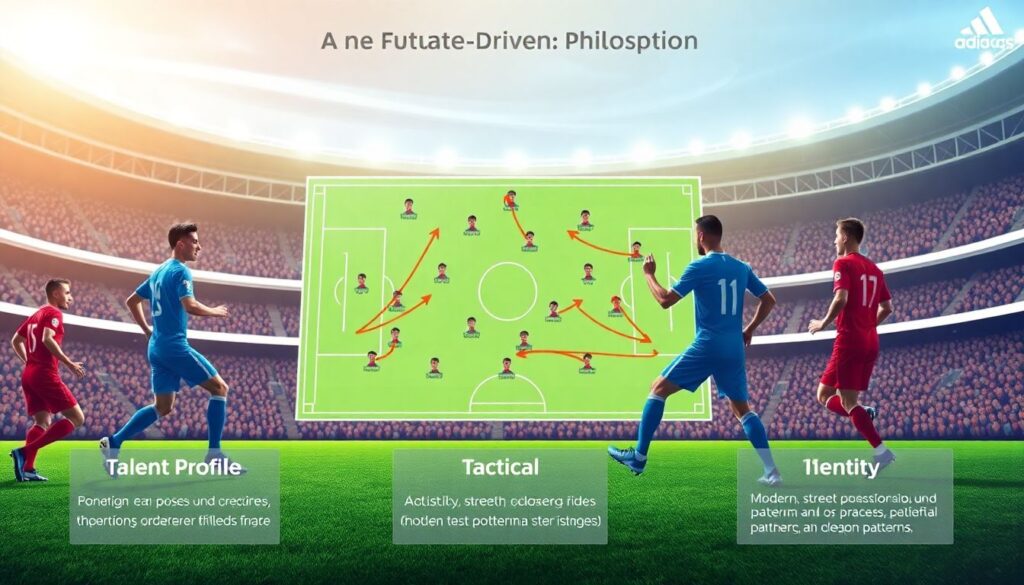
It’s easy to say “they’re changing the future”, but concretely it shows up in three dimensions:
1) Talent profile – more technically clean players, better decision‑making under pressure, fewer “street football” defects like poor spacing or tactical indiscipline.
2) Tactical identity – the national team can now press high, build from the back, or switch to transitions because players have trained those patterns since 13–14, not learned them at 23.
3) Talent sourcing – more systematic scouting, particularly for dual‑nationals and for kids outside Istanbul, Ankara, Izmir. That’s a big departure from the old era, when major clubs cherry‑picked within their own cities and missed late‑developing players in Anatolia.
From the 2000s to 2026: how we got here
The “golden generation” hangover and what it exposed
The semi‑final run at the 2002 World Cup and the dramatic Euro 2008 campaign created a myth that Turkish football naturally produced warriors and big‑game players, almost regardless of structure. The reality was less romantic: those squads were built on a few strong club environments, a unique generation, and a lot of improvisation. Youth academies of that era were uneven; some big clubs had decent facilities, but coaching curricula were inconsistent and heavily dependent on one or two charismatic coaches. Once that golden generation aged, the lack of a stable pipeline became obvious: tournament qualifications were inconsistent, and U17/U19 results rarely translated into senior success.
The post‑2014 reset and the influence of Europe
The mid‑2010s were a wake‑up call. As more Turkish players and coaches passed through Germany, the Netherlands and Spain, there was a direct comparison: Bundesliga and La Liga academies were using GPS tracking, positional games, and integrated sports psychology, while many Turkish setups still relied on long runs and small‑sided games with minimal tactical structure. Around 2015–2017, the TFF began pushing licensing standards and curriculum guidelines, inspired partly by the DFB and KNVB models. By 2020, several Super Lig clubs had hired academy directors with experience in European systems, and we began to see the first cohort of players educated under this more coherent framework reaching the U21 and senior national teams by 2024–2026.
How the new academy model works in practice
From “talent spotting” to calibrated selection
Scouting used to mean a coach watching a local tournament and picking whoever dribbled past the most opponents. It’s more systematic now. During turkey football youth academy trials at major clubs, you’ll find defined evaluation sheets: first touch quality, scanning before receiving, decision‑making in small‑sided games, and physical markers like repeat sprint ability. Instead of a yes/no verdict after a single game, kids are often invited for multi‑session observation, sometimes including basic psychological profiling. The shift is from romantic intuition to repeatable processes, which may sound dry, but it leads to fewer “lost talents” and better fits for specific playing styles.
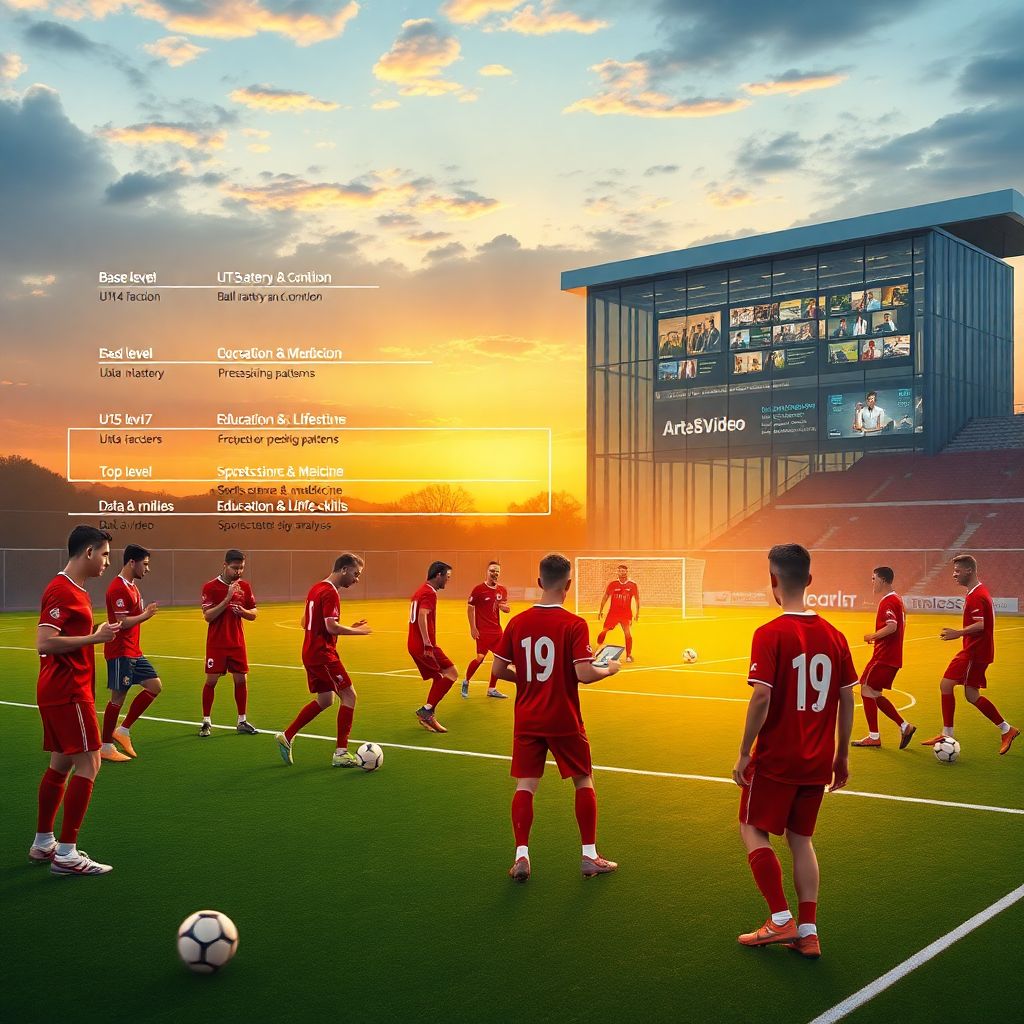
Internal “diagram” of a modern Turkish academy
Imagine a simple vertical diagram in your head:
– Top level (U19/U21) – near‑professional environment: periodisation, video analysis, detailed opposition prep.
– Middle level (U15–U17) – heavy focus on tactical behaviour: pressing triggers, build‑up patterns, rotations.
– Base level (U10–U14) – technical and cognitive foundations: ball mastery, orientation, scanning, basic principles of space.
Beneath that main stack, visualise three horizontal “support lines” crossing all age groups:
1) Sports science & medicine – monitoring growth, preventing overload.
2) Education & life skills – handling school, social media, and agent pressure.
3) Data & video – collecting performance clips and physical data from early on, so progression can be tracked instead of guessed.
That’s essentially the blueprint used by the more advanced clubs as of 2026, even if execution still varies widely across the country.
How this filters into the national team
Unified principles instead of chaos
One of the biggest wins is that the national team coach is no longer trying to blend 23 players formed in 23 completely different football “languages”. With academy coaches working off similar principles—compactness without the ball, structured build‑up, and defined pressing ideas—the Turkey senior team can switch systems mid‑game without falling apart. Players arriving from Fenerbahçe, Galatasaray or Trabzonspor academies have trained similar positional games, even if their club philosophies differ. That shared base shrinks the adaptation window in national team camps and lets coaches spend time on specific opponent prep rather than teaching fundamentals from scratch.
turkey u17 u19 national team scouting programs as the glue
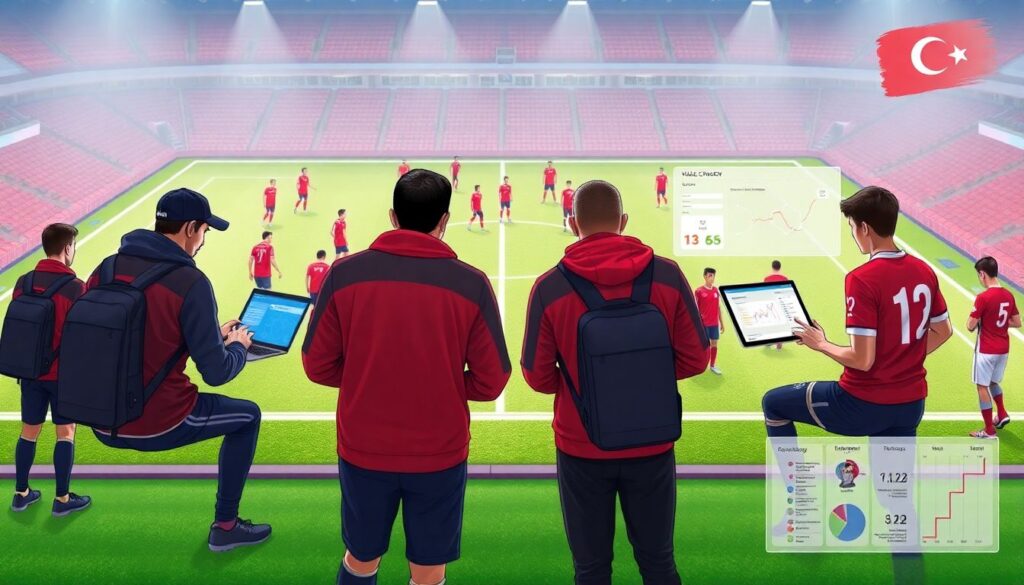
A big change after 2018 has been the more systematic turkey u17 u19 national team scouting programs, which now operate year‑round rather than just ahead of tournaments. Scouts collaborate with club academies, track players from U14 upwards and keep databases that include not just match reports but growth data and psychological notes. For dual‑nationals in Germany, the Netherlands, Belgium and even the UK, this means they are contacted much earlier, invited to camps, and given a clear vision of how they might grow into the senior team. That contrasts sharply with older stories of players only hearing from Turkey after they’d already joined another country’s youth setup.
Comparison with European benchmarks
Where Turkey is catching up
If you compare Turkey’s 2026 academy setup with Germany or the Netherlands, the gap is no longer about having or not having facilities; it’s mainly about consistency and depth. On the positive side, more Turkish academies now use video analysis for U15+ games, GPS for load monitoring, and structured curricula similar to what you’d see at mid‑level Bundesliga or Eredivisie clubs. The top clubs can reasonably compete for international youth tournaments and are no longer surprised by the intensity or tactical intelligence of their European peers.
Where gaps still remain
However, when you look at long‑term planning—coaches staying five to ten years in the same academy role, or a single club philosophy that survives multiple first‑team coaches—Turkey is still behind clubs like Ajax or Freiburg. There’s also a depth issue: elite infrastructure is mostly concentrated in big cities. Smaller Anatolian clubs may have decent intentions but lack the resources to fully implement the same level of sports science and staff. That means the national team still depends heavily on a handful of strong academies, whereas countries like France have built broader regional networks that feed the system more evenly.
Foreign players and the globalisation of Turkish academies
Why foreign kids are looking at Turkey now
Interestingly, over the last few years, some families abroad have started viewing Turkey as a viable development destination. The combination of good weather, lower living costs compared to Western Europe, and improved coaching has put a few clubs on the map among international scouts and agents. When people discuss the best football academies in turkey for foreigners, they usually mention Istanbul giants and a couple of coastal clubs that run English‑friendly programs and offer education support. These are not on the same global marketing level as, say, La Masia, but for certain profiles—especially players with Turkish roots—they’re becoming attractive stepping stones into European leagues.
professional football training camps in turkey as a gateway
Many foreign and domestic players first experience the environment through professional football training camps in turkey, which have boomed since the mid‑2010s. Clubs from Russia, Scandinavia and Eastern Europe regularly use Antalya and Belek as winter bases, and academies have copied that model for youth. Intensive 1–2 week camps with double sessions, friendly matches against local academies, and direct exposure to Turkish coaches can act as a trial by another name. For local clubs, it’s also a discreet way to scout without committing to full‑season places until they’ve seen how a player adapts to the tempo and cultural environment.
So you want in: pathway into Turkish academies
How to join turkish football academy: the realistic route
Despite the romantic stories, getting into a serious academy is mostly about structure, not luck. When people ask how to join turkish football academy, the honest answer is a combination of:
1) Playing regularly at a decent local level (amateur clubs, school leagues, regional tournaments).
2) Attending official club trials or partner‑club events where academy staff are present.
3) Having quality footage and match data (even basic stats) to share ahead of time.
Clubs still hold open trials, but more and more they prefer filtered events through regional partners or pre‑registered turkey football youth academy trials, where they can manage numbers and focus on profiles they actually need. The days of simply turning up with boots and hoping to be seen are fading, especially in Istanbul.
What coaches actually look for now
Coaches rarely select the “best player on the day” anymore. They look for underlying traits that project into professional football: scanning before receiving the ball, awareness of space, reaction to losing possession, and body language when things go badly. A winger who constantly presses after losing the ball and makes good runs even if not used may rank higher than a dribbler who scores once but disappears otherwise. This shift in selection mentality is a major reason the national team now features young players who can execute complex game plans, rather than just relying on chaotic individual brilliance.
Concrete changes visible in the 2026 national team
Playing style: from reactive to proactive
Watch Turkey’s matches in 2026 and you’ll notice that the team is far more comfortable playing through pressure than a decade ago. Centre‑backs shaped in modern academies are used to building from the back under strict constraints in training: limited touches, positional zones, strict pressing cues. Midfielders have grown up rehearsing overloads and third‑man runs instead of purely improvising. That’s why, even against higher‑ranked opposition, the team can hold the ball with purpose instead of simply defending deep and praying for counterattacks. The shift started at U17/U19 level, but it’s now fully visible in the senior setup.
Mentality and professionalism
Another change is behavioural. Young players are more accustomed to sports science routines—nutrition plans, recovery protocols, sleep tracking—and to analysing their own performance through video. This normalisation of professionalism at 15–16 years old means that by the time they reach the senior side, the step up is more about speed and pressure than about learning an entirely new lifestyle. It also reduces the risk of early burnout or career‑derailing injuries, an issue that haunted some gifted Turkish talents of earlier generations who were overplayed in their teens without proper monitoring.
Lessons from European comparisons
What Turkey has borrowed well
Turkey has done a good job of importing a few key European ideas without blindly copying everything. For instance, the emphasis on developing multiple positions for each player—full‑back/winger hybrids, midfielders who can operate both as 6 and 8—comes largely from German and Dutch influence. This has given national team coaches more tactical flexibility. Another smart borrowing is the integrated coach education pathway: academy coaches now go through more rigorous licensing and periodic refreshers, which has slowly raised the baseline of on‑field instruction.
Where originality still needs to emerge
The next step is to develop a distinctly Turkish youth development identity rather than just being “a version of Germany with more emotion”. That could mean embracing some traditional strengths—aggression, competitive spirit, comfort in chaotic games—while layering them on top of the new tactical discipline. If academies can frame those traits as controlled weapons rather than liabilities, the national team may carve out a unique profile: tactically structured but emotionally intense, instead of choosing between the two.
Challenges that could slow progress
Short‑termism at club level
The biggest danger is the enduring habit of chasing quick wins in the Super Lig. A club that invests heavily in its academy for five years can see those gains evaporate if a new president or coach decides to focus on foreign signings for instant results, cutting pathways for young locals. When that happens across several big clubs at once, the national team pipeline suffers with a 3–5 year delay. Maintaining a consistent academy philosophy despite boardroom drama is something Turkish clubs have historically struggled with.
Regional inequality and late developers
Another issue is geography. Elite facilities are clustered around major urban centres, so talented kids from more remote provinces still rely on being spotted early or moving at a young age, which is not always realistic. Late‑maturing players—physically or psychologically—remain at risk of dropping out before being fully evaluated, especially if their local environment lacks structured competition. The national scouting programs are trying to fix this with more regional events and data collection, but closing that gap will take time and investment, not just intention.
What to watch for between now and 2030
Key indicators that the model is working
If you want to judge whether this academy revolution is truly reshaping the national team, keep an eye on a few simple markers over the next four to six years:
1. Percentage of national team minutes played by academy‑trained players under 25.
2. Stability of academy directors and head coaches within top clubs.
3. Number of Turkish‑trained players starting in top‑5 European leagues.
4. Consistency of U17/U19 performances in elite UEFA youth competitions.
5. Regular graduation of at least two or three players per year from U19 squads into meaningful senior minutes at club level.
If those five indicators trend upwards, it’s strong evidence that the pyramid beneath the national team is healthy, not just surfing on one lucky generation.
Conclusion: a different kind of “golden generation”
The story of Turkish football used to revolve around individual heroes and dramatic nights. By 2026, the plot is shifting toward systems, structures and long‑term planning. Youth academies are no longer side projects; they are the central mechanism through which the national team’s style, mentality and talent pool are being engineered. The current crop of internationals is the first to fully grow up in this semi‑modernised ecosystem, and their performances hint at what a second and third wave could look like if the reforms hold.
If Turkish football can stay patient—protecting academy budgets, maintaining coach education, and expanding access beyond big cities—the future national team might not depend on one miraculous generation. Instead, it could become what many European powers already are: a predictable output of a well‑designed system, with each new cohort of academy graduates raising the bar just a little higher than the last.