
Why the Süper Lig turned into a launchpad (and not just a retirement league)
Not so long ago, many European fans saw the Turkish Süper Lig as a place where aging European stars went for one last big contract. That image was never fully accurate, but today it’s frankly outdated. Over the last 10–15 years, the league has quietly become a genuine launchpad for African and South American players who want to break into, or back into, the European spotlight.
We’re now in a reality where clubs and agents literally scan the Süper Lig African players transfer market for the next bargain gem, and where young talents from Lagos, Accra, São Paulo or Montevideo see Turkey not as the final stop, but as a strategic stepping stone.
Let’s unpack how that happened — and what actually works behind the scenes.
—
Historical background: from “big names” to “big margins”
Phase 1: The era of superstar magnets
In the late 2000s and early 2010s, the Turkish giants — mainly Galatasaray, Fenerbahçe, Beşiktaş, and later Trabzonspor — started pulling in huge names. Think:
– Roberto Carlos and Alex de Souza at Fenerbahçe
– Didier Drogba and Wesley Sneijder at Galatasaray
– Samuel Eto’o at Antalyaspor
These moves were about prestige, TV rights, and brand building, not about developing and flipping players. But there was a side effect: Latin American and African players noticed something important — big crowds, passionate atmospheres, solid salaries, and massive visibility on European screens.
It planted the seed: “If I play well in Turkey, Europe will see me.”
Phase 2: The shift to younger African and South American profiles
As finances tightened and UEFA’s Financial Fair Play rules started biting, Turkish clubs couldn’t rely on marquee veterans forever. They needed:
– Lower transfer fees
– Higher resale potential
– Players hungry to prove themselves in Europe
So the model evolved. Instead of only chasing stars, clubs began focusing on younger African forwards, box-to-box midfielders, and South American playmakers— profiles with clear upside value.
This is when we start to see Turkish Süper Lig player transfers from Africa and South America turning into a consistent pattern rather than occasional signings.
—
Basic principles: why the Süper Lig is so attractive to these players
1. A visible, competitive, but “entry-level” European stage
The Süper Lig is not the Premier League, but that’s exactly the selling point. It’s a major European competition with slightly lower entry barriers.
– TV coverage reaches scouts and analysts across Europe.
– The level is high enough to test players under pressure.
– Yet, it’s still easier to break into the starting XI than at a top-5 league giant.
For a 21-year-old winger from Ghana or Brazil, this is perfect: strong enough to prove your ceiling, not so elite that you’re buried on the bench.
2. Culture and lifestyle: easier adaptation than people think
For many African players, Turkey feels closer to home than Northern Europe, especially in terms of food, religion for many Muslim players, and general warmth in daily interactions. South American football stars in Turkish Süper Lig clubs also often highlight the family-oriented culture and emotional intensity of fans as something that reminds them of home.
That softer side matters. Players perform better when:
– They feel trusted by fans.
– They can live with extended family.
– They don’t feel completely uprooted culturally.
3. Financial structure and resale logic
The Süper Lig doesn’t have English or Spanish money, but its wage levels are usually more attractive than many mid-tier leagues. At the same time, clubs deliberately sign players with sell-on value.
For African and South American players, that means:
– Good wages compared to their home leagues
– Clear understanding: “If you perform, we’ll sell you upward”
– Agents know: Turkey is one of the most active resale hubs in Europe
This is exactly why the Süper Lig scouting hotspot for South American players has become so important for agencies in Brazil, Argentina, and Uruguay.
—
Case studies: real careers built through the Süper Lig
Drogba & the credibility effect (Ivory Coast, Galatasaray)
Didier Drogba arrived at Galatasaray in 2013 already a global superstar, not a youngster. But his move had a huge signaling effect for African and South American players: if a Champions League winner chose Istanbul, the league couldn’t be dismissed as minor.
His short spell:
– Strengthened Galatasaray’s European reputation
– Showed that Turkish clubs can pay on time and compete in the Champions League
– Made the idea of moving to Turkey more respectable in the eyes of top African talents
Sometimes the launchpad effect is indirect. Drogba didn’t use Turkey as a springboard — but he helped make the league a place others trusted as a serious platform.
Samuel Eto’o & the “smaller club, big impact” model (Cameroon, Antalyaspor)
When Samuel Eto’o joined Antalyaspor in 2015, it looked like a “semi-retirement” move. Instead, his work rate and professionalism changed how many medium Turkish clubs approached African veterans.
Eto’o:
– Scored consistently for a non-giant club
– Mentored younger African teammates
– Proved that you could build a marketable project around a charismatic African leader
This model later helped mid-table teams recruit upcoming African attackers with the promise of a leading role and big exposure.
Anderson Talisca & the “loan-to-star” blueprint (Brazil, Beşiktaş)
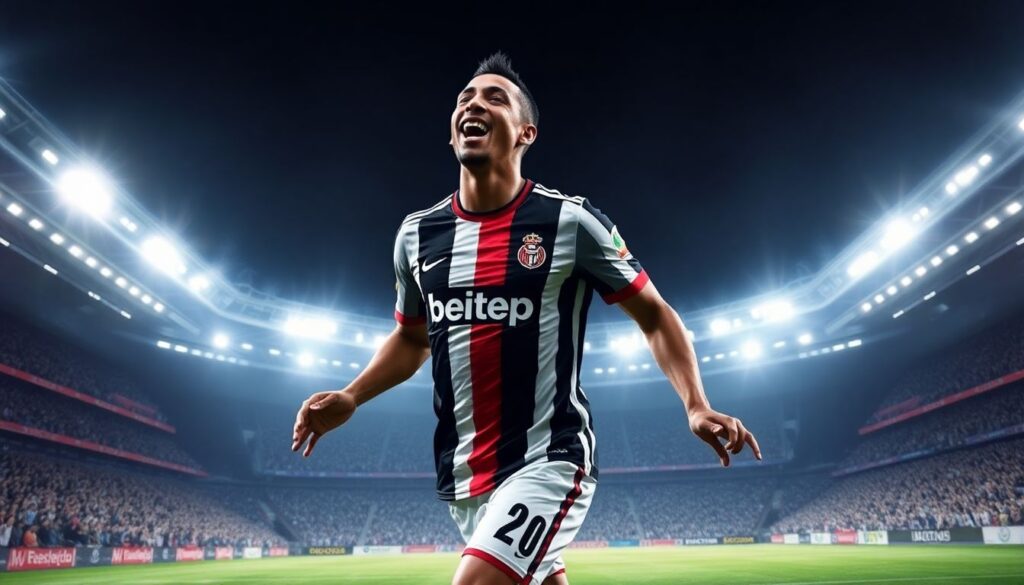
Anderson Talisca’s loan to Beşiktaş from Benfica (2016–2018) is one of the classic South American success stories. He arrived with potential but without a clear platform to fully show it.
In Istanbul he:
– Became a key figure in title-chasing teams
– Scored in big European nights (including vs. Benfica and Napoli)
– Turned into a recognisable name across the continent
Talisca’s rise through Beşiktaş proved that technical South American playmakers could thrive in a physically intense league and still keep their creativity. This is one big reason we now see more South American football stars in Turkish Süper Lig squads, especially in attacking midfield and forward roles.
Henry Onyekuru & the stepping-stone success story (Nigeria, Galatasaray)
Henry Onyekuru’s path is textbook for how the Süper Lig functions as a launchpad for African players.
– Owned by Everton but blocked by work permit issues in England
– Loaned to Galatasaray in 2018–2019
– Became a key player in title races, scored important goals, and played in Champions League nights
Onyekuru didn’t become a Premier League regular afterward, but the key is this: Turkey turned a nearly-stalled European career into something active and marketable, with subsequent transfers in Europe and the Middle East. Many African agents now point to this pattern when convincing players to accept a move to Turkey.
Fernando Muslera & the “South American leader” archetype (Uruguay, Galatasaray)
Goalkeeper Fernando Muslera joined Galatasaray in 2011, and his case is slightly different: he’s a symbol of stability.
He became:
– Captain and long-term reference point
– A key figure in multiple title-winning squads
– A bridge for other South American players arriving in Istanbul
His longevity demonstrates to young talents that Turkey doesn’t have to be just a short springboard — it can be a base where you build both a career and a personal life, while still staying on the radar of European clubs and national teams.
—
How clubs actually operate: the practical “launchpad” mechanisms
1. Scouting networks in Africa and South America
Most of the big and mid-level clubs now actively track African and South American academies, not just rely on highlight reels.
Typical mechanisms:
– Long-term relationships with local agents and intermediaries
– Trials and pre-season camps with free agents or U21 talents
– Data-backed scouting platforms cross-checked with live reports
For example, when people talk about the Süper Lig African players transfer market today, they’re talking about a fairly organised ecosystem — not random gambles.
2. Short contracts with high upside
Clubs often sign players on 3–4 year deals with:
– Reasonable wages (by European standards)
– Achievable performance bonuses
– Built-in expectation of a future transfer if they perform well
From the player’s side, the logic is simple: “Take a smaller step now, unlock a bigger move in 2 seasons.” It’s a mutual investment, not just a job.
3. Tactical roles designed to showcase skills
Coaches in Turkey understand that many imports aren’t just there to fill gaps — they’re shop windows for bigger clubs. So squads are built to highlight those players:
– Fast wingers from Africa get space to counterattack.
– South American creators get set-piece responsibility and a free role between the lines.
– Strikers are given penalty and free-kick duties to boost numbers.
This is not cynical; it’s strategic. Better numbers = better resale. And yes, European clubs know this, but they also see the consistency of performance under pressure.
—
Best African and South American talents in the Süper Lig today
By 2024, the pattern is crystal clear: the best African talents in Süper Lig 2024 are no longer just veterans topping up their bank accounts; many are in their prime or even pre-prime, with clear resale potential.
Typical profiles you see:
– Dynamic African wingers and forwards who can press high, attack space and finish — often coming from Nigerian, Ghanaian, Ivorian, and Senegalese academies.
– South American deep-lying playmakers and attacking mids whose passing range and set-piece quality immediately upgrade a team’s creativity.
– Modern full-backs and wing-backs from both regions who bring tempo and crossing ability, vital in a transition-heavy league like the Süper Lig.
These players know that if they stand out in a league followed by Italian, French, German, and even English scouts, the path to a top-5 league move is realistic.
—
What players and agents should focus on (practical takeaways)
1. Choose the right club profile, not just the highest salary
Not every Süper Lig team offers the same platform. If you’re an ambitious African or South American player, you want:
– A coach who actually plays attacking football
– A club with a track record of selling players onward
– A realistic shot at regular minutes in your best position
Big-name clubs are attractive, but for many, a slightly smaller team with guaranteed playing time is a far better launchpad.
2. Understand fan culture and pressure
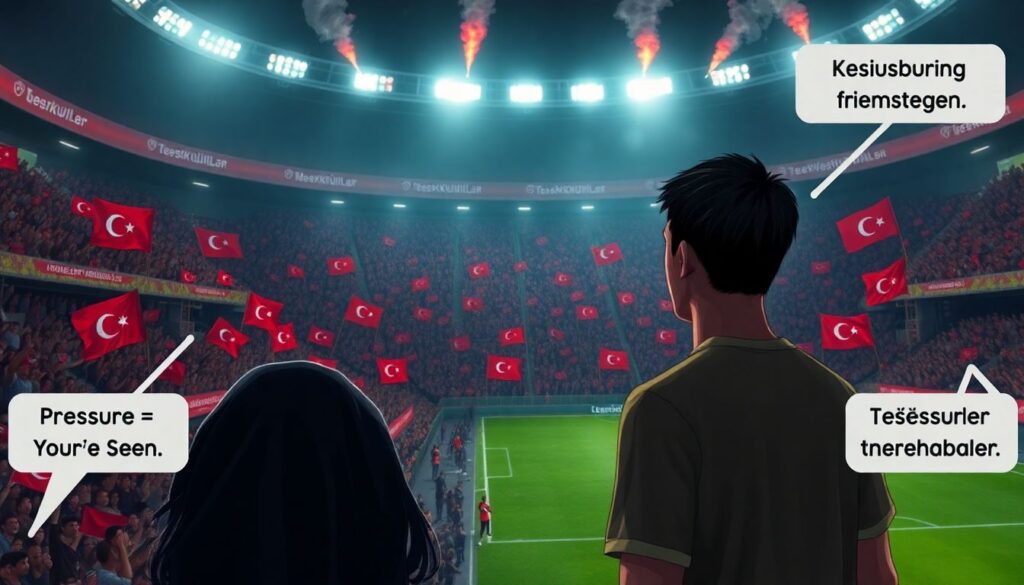
Turkish fans are emotional, loud, and incredibly demanding. That intensity can supercharge your career — or break you if you’re not prepared.
Useful mindset tips:
– Treat pressure as proof that you’re on a visible stage.
– Learn a few basic Turkish phrases early; it goes a long way with fans.
– Accept that social media reactions will be extreme, both good and bad.
3. Plan for 2–3 years, not 6 months
The Süper Lig can change your status quickly, but expecting an instant move is risky. The more sustainable path:
– Year 1: Adapt tactically and culturally, establish yourself as a starter.
– Year 2: Deliver consistent numbers, shine in big games (especially derbies and European matches).
– Year 3: Push for a smart transfer when your stock is genuinely high.
Agents who treat Turkey as a “one-season shop window only” often end up frustrated; those who plan for a medium-term stay usually secure better moves and fees.
—
Common misconceptions about the Süper Lig as a launchpad
Myth 1: “It’s just a retirement home for washed-up stars”
Reality: Yes, some big names come late in their career, but that doesn’t define the league anymore. The volume of Turkish Süper Lig player transfers from Africa and South America involving players under 26 has grown significantly.
The money and energy clubs invest in young talent would make no sense if the league were just a retirement zone.
Myth 2: “If a player goes to Turkey, top-5 leagues stop watching”
Reality: Scouts from Serie A, Ligue 1, Bundesliga, and La Liga regularly monitor Süper Lig games. Why?
– Prices are still relatively affordable compared to Premier League markets.
– Players are already adapted to European travel, climate, and match intensity.
– Big games (Istanbul derbies, title clashes) test mental strength under pressure.
If anything, performing well in Istanbul or Trabzon helps your case with top-5 league clubs.
Myth 3: “Defensive structure is too chaotic to judge players properly”
You’ll sometimes hear analysts say Turkish football is “too wild” tactically. There is more chaos than in, say, Germany — but that can be a positive filter. If a midfielder or defender can read the game, communicate, and maintain discipline in the Süper Lig, it tells scouts a lot about their resilience.
The key is: European clubs know how to adjust for context. They’re not just counting goals; they’re examining decision-making under stress, physical duels, and consistency.
—
Looking ahead: why Turkey will stay a major launchpad
The fundamentals that turned the league into a springboard aren’t going away:
– Geographical bridge between Europe, Africa, and South America
– Strong fan culture and TV exposure
– Clubs structurally dependent on smart buying-and-selling
As long as those remain, Turkey will continue to be a Süper Lig scouting hotspot for South American players and a natural destination for ambitious Africans looking for their first or second European step.
For players and agents, the logic is straightforward: if you want a league where you’re paid, seen, and seriously tested — but not buried behind superstars — the Süper Lig deserves to be high on your list.
In other words, Turkey has quietly built a reputation not just as a stage for big names, but as a launchpad where raw potential can turn into European-level proof.