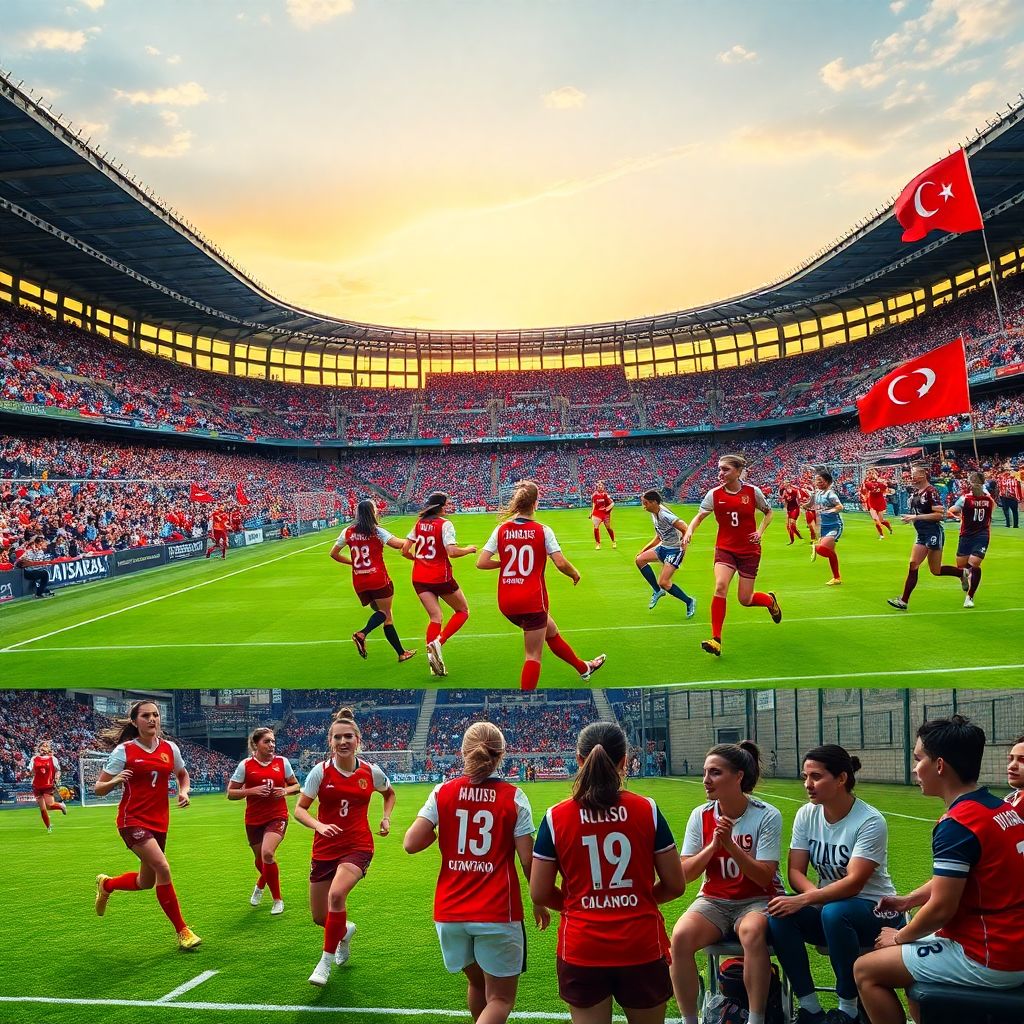
Where women’s football in Turkey stands right now

Women’s football Turkey is shifting from a niche scene to a serious project, but it’s still in a transition phase. Big men’s clubs like Galatasaray, Fenerbahçe, Beşiktaş and Trabzonspor now field women’s teams, which instantly raised visibility, facilities and media interest. The Women’s Super League became more competitive, salaries are slowly improving, and youth academies are starting to treat girls’ teams as more than marketing. At the same time, budgets are fragile and depend heavily on the men’s side doing well. Many players still juggle studies or day jobs, and regional teams outside the big cities fight just to cover travel costs. If you look past the flashy derbies and social‑media clips, you see a system that’s promising but still learning to walk before it can run.
The good news: interest is clearly growing. Turkish women’s football league tickets are easier to find, crowds are louder, and sponsors finally see more than “charity projects” when they look at women’s teams.
Typical rookie mistakes: players, coaches, clubs and fans
New players in Turkish women’s football often copy men’s tactics and tempo without adapting to their own physical profile and squad depth, so they burn out fast. A very common mistake is ignoring strength and conditioning, especially injury‑prevention work for knees and ankles; many girls train technique for hours but skip proper warm‑ups and mobility. On the mental side, rookies underestimate how emotionally tough the league can be: long away trips, social pressure, and sometimes conservative family attitudes. They react game‑to‑game instead of building consistent routines: sleep, nutrition, review, recovery. Coaches new to the women’s game may speak to players as if they’re youth boys, using criticism that kills confidence instead of building it. Clubs, meanwhile, often start a women’s section “for image”, then cut corners on staff, medical support and analysis, which blocks progress right when a group is ready to jump a level.
Fans make their own mistakes too. People show up only to derbies, then complain there’s “no atmosphere” at smaller games. Others rely on random clips instead of actually trying to watch Turkish women’s football live streaming from start to finish, so they never see tactical growth or young talents emerging.
Different approaches to developing women’s football in Turkey
Right now you can clearly see three main development approaches. First is the “big badge” model: men’s super‑clubs invest in women’s teams, leverage their brands and stadiums, and attract sponsors; this gives instant visibility and usually higher training standards, but can make smaller, historic women’s clubs disappear in the shadow. Second is the “community club” approach, where local sides focus on long‑term youth development, school partnerships and social projects, often with minimal budgets; they build loyalty and produce tough, resilient players but struggle to keep their stars when big clubs call. Third is the “university and academy” model: mixing education with high‑level training, sometimes in cooperation with municipalities, which is great for life after football but often lacks top‑tier competition. None of these paths is perfect; the future strength of the game will depend on combining them smartly instead of pretending one model can solve everything.
If you’re a young player or parent choosing a path, compare not only the badge, but coaching quality, medical support and minutes on the pitch; sometimes a smaller community club beats the “glamour” option for actual development.
Technology in women’s football: helpful tools and hidden traps
Technology has finally entered Turkish women’s football properly: GPS vests, video‑analysis platforms, basic data dashboards, and of course social‑media promotion. The positives are obvious: GPS and heart‑rate data help prevent overload, analysis software lets coaches cut clips to explain positioning, and streaming platforms allow fans abroad to follow the women’s super league Turkey fixtures in real time. For players, sharing highlights online can bring scholarships or transfers they’d never get otherwise. But there are downsides beginners often miss. Cheap or poorly used GPS can give misleading numbers, and inexperienced staff may chase “high distance” instead of smarter movement. Analysts can drown coaches in statistics without context. Clubs may spend on gadgets but skip hiring a qualified physio. And social‑media pressure, especially on young women, can be brutal: a bad game quickly turns into online harassment. Technology is a tool, not a magic fix; what matters is having people who know how and when to use it.
New players often obsess over gear and highlight reels before mastering basics like scanning the pitch, first touch under pressure, and clear communication with teammates; no app can replace those foundations.
How to choose clubs, tools and learning paths

When you’re picking between the best women’s football clubs in Turkey or deciding which apps and platforms to use, treat it like a long‑term investment, not a weekend decision. Start with your main objective: are you aiming for a professional career, a scholarship abroad, or simply high‑level amateur football alongside studies? For ambitious players, joining a top‑flight club that regularly faces strong opposition and travels a lot might be worth sacrificing comfort, as long as you actually get minutes. For others, a stable mid‑table team with a good coach and education support can be smarter. On the tech side, beginners should choose one video‑analysis tool they can actually maintain: record games, watch them weekly, take notes. Don’t pay for four platforms you’ll open twice a season. Parents should look beyond promotional posts: visit training, speak to older players, and quietly check how injuries are handled. Reliable medical care and a clear communication culture are better predictors of a healthy environment than fancy promo videos.
Fans have choices too: whether you buy Turkish women’s football league tickets regularly or follow mostly online, staying consistent—same team, same competition—helps you understand the league’s rhythm and not just isolated big matches.
Comparing fan experiences and watching options
Matchday experience in women’s football is changing fast. Going to the stadium gives you raw atmosphere, direct interaction with players, and a sense of community that the men’s game has partly lost. It’s usually cheaper and safer, ideal for families. On the other hand, not every city offers easy access, and scheduling can clash with work or studies. Online viewing has opened new doors: many league and club channels now let you watch Turkish women’s football live streaming with commentary and replays, so you can follow several teams at once. The trade‑off is emotional: it’s easier to get distracted at home, to scroll your phone during a game and never fully connect. A smart approach is mixing both: live games for nearby fixtures, streaming to keep up with rivals and young talents elsewhere. For the ecosystem, a combination of solid stadium attendance and stable online numbers is exactly what broadcasters and sponsors look for when deciding future investment.
New fans sometimes try to follow “everyone at once”, burn out, and then stop watching; it’s more sustainable to pick one or two clubs plus the national team and build from there.
Trends toward 2026 and growth potential
Looking toward 2026, several trends are shaping where women’s football in Turkey might go. First, youth development: more schools and municipalities are starting girls’ leagues at U12 and U14 levels, which will raise the technical base dramatically within a few years. Second, professionalism: clearer contracts, minimum standards, and better medical protocols are being discussed, which should make careers slightly less fragile. Scheduling is also improving; organizers are trying to spread women’s super league Turkey fixtures to avoid clashing with big men’s games, so TV and streaming slots are more favorable. Another key trend is internationalization: more foreign players and coaches arrive, while Turkish players head to leagues in Europe and back, bringing new ideas. If stakeholders avoid the classic mistakes—short‑term thinking, underfunding staff, and ignoring grassroots—the growth potential is huge. The national team’s results will matter too: one strong qualifying campaign can shift media narratives overnight and convince hesitant sponsors that they’re late, not early, to the party.
The next step for everyone—players, clubs, media and fans—is consistency: show up, train smart, use tech wisely, and treat women’s football not as a side project, but as a central, long‑term part of Turkey’s sporting identity.