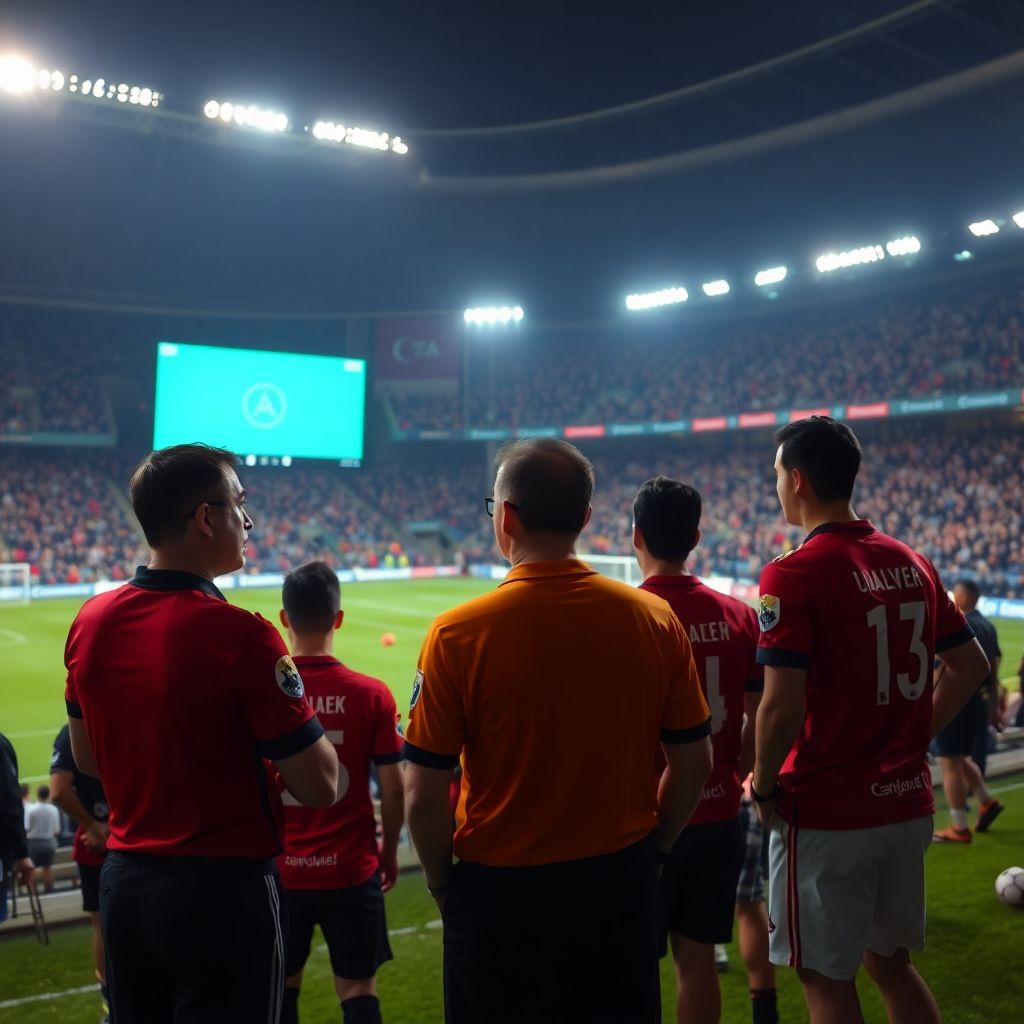
VAR in Turkey has modestly improved refereeing standards in Süper Lig and TFF 1. Lig, mainly by reducing clear, match‑changing errors and forcing more consistent foul and handball thresholds. However, delays, communication gaps and uneven implementation between leagues mean VAR is a support tool, not a cure, and lower tiers still rely on lighter, cheaper alternatives.
Snapshot of VAR’s measurable effects
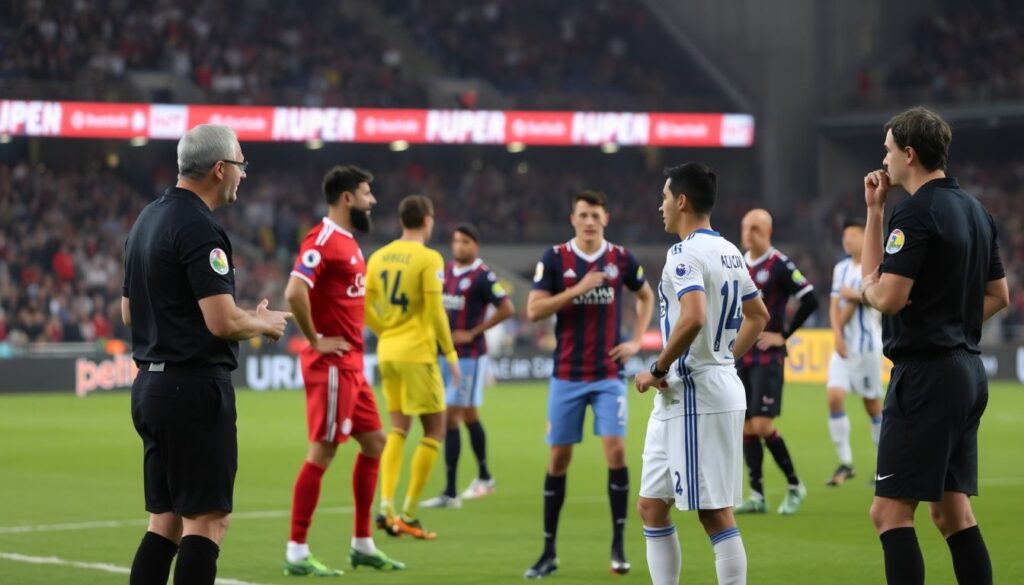
- Clear reduction in obvious, match‑deciding errors in offside, penalty and red‑card situations, especially in Süper Lig.
- More consistent interpretations in repeated scenarios, though grey‑area fouls remain controversial.
- Longer stoppage time and more fragmented match rhythm, particularly after complex incident checks.
- Greater pressure on referees’ communication skills: how they explain VAR usage shapes club and media reactions.
- Implementation differences between Süper Lig and TFF 1. Lig influence trust; resources and stadium tech matter.
- For smaller leagues with limited budgets, “VAR‑lite” models and enhanced assistant roles offer partial benefits without full costs.
Rollout and technical framework in Turkey
In Turkey, VAR was introduced first in Süper Lig as a centrally operated system, then expanded to TFF 1. Lig. The core definition follows IFAB: a video assistant team supports the referee on four areas only – goals, penalty decisions, direct red cards and mistaken identity. Everything else remains fully on‑field.
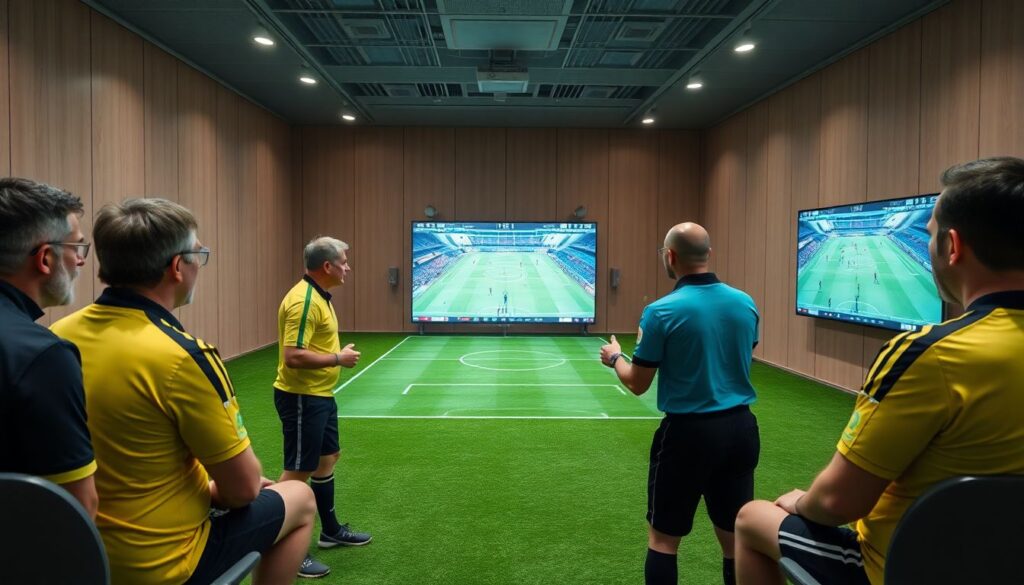
Technically, VAR technology implementation in Turkish football leagues relies on multiple broadcast camera feeds routed to a central replay room. There, VAR and AVAR officials can review incidents in real time or slow motion, then recommend an on‑field review. Referees use a pitch‑side monitor to confirm or change their original decision.
The VAR in Turkey Super Lig analysis usually focuses on how well this workflow is applied: clarity of communication, consistency in the “clear and obvious error” threshold, and integration with local broadcasting realities. In some stadiums, limited camera angles or connectivity constraints still reduce the system’s effectiveness.
Officials often summarise the framework as: “Referee stays the decision‑maker; VAR is a safety net.” This principle is important for maintaining the spirit of the game and preventing over‑intervention, especially in a high‑pressure environment like the Turkish top flight.
- VAR scope is limited to four critical decision types; it does not re‑referee the entire match.
- Centralised replay rooms and multiple camera feeds underpin the Turkish setup, with stadium infrastructure as a key constraint.
- On‑field referees retain final authority; VAR recommendations are advisory, not mandatory.
- Implementation quality varies by venue and division, affecting overall reliability and perception.
Quantitative outcomes: errors, overturn rates and game metrics
Even without exact numbers, Turkish Super Lig VAR statistics and reports highlight several repeat patterns. Overturns cluster around tight offside calls, handball penalties and serious foul play. These are the areas where camera evidence most clearly corrects human perception and angle limitations.
To structure a professional analysis of VAR decisions in Super Lig and TFF 1. Lig, clubs and analysts typically track a set of consistent metrics. The comparative table below shows how these metrics qualitatively shifted from the pre‑VAR era to current practice.
| Metric | Pre‑VAR Süper Lig | Post‑VAR Süper Lig | Post‑VAR TFF 1. Lig |
|---|---|---|---|
| Overturned key decisions | No formal overturn mechanism | Regular overturns on offsides, penalties, reds | Less frequent, but present in televised matches |
| Penalty awards | Occasional missed or soft penalties unnoticed | More correctly given and occasionally revoked after review | Improved detection where camera coverage is sufficient |
| Straight red cards | High dependence on referee angle and courage | Greater willingness to upgrade yellows to reds when replays show intensity | Similar pattern but with fewer camera angles to confirm |
| Average added time | Shorter, with fewer long stoppages | Longer, especially after complex multi‑angle reviews | Moderate increase, depending on match broadcast resources |
| Estimated decision accuracy | Reliant solely on on‑field crew and assistants | Noticeable improvement in major incidents, still debate in grey areas | Improved but more uneven across fixtures and venues |
- Track overturned decisions by type (offside, penalty, red card) rather than only by total count.
- Separate “clear factual corrections” (offside lines, ball in/out) from “subjective re‑evaluations” (fouls, handballs).
- When judging impact of VAR on refereeing standards in Turkey, compare big‑error frequency before and after, not just raw foul or card totals.
- For clubs with limited analysis staff, focus on a small dashboard: penalties, reds, and goals disallowed or awarded after VAR.
Referee development: training, communication and decision consistency
VAR has reshaped how referees prepare, decide and communicate. Training in Turkey now emphasises both technical use of the system and soft skills – explaining decisions calmly under pressure. Referees must know when to invite VAR help and when to stand firm to avoid “re‑refereeing” every contact.
Typical application scenarios include tight offside lines on goals, penalty‑area challenges where contact and intensity are unclear, potential violent conduct off the ball, and mistaken identity in yellow or red card situations. In each case, the referee’s cooperation with the VAR team is crucial for fast, credible outcomes.
Refereeing instructors in internal sessions often stress: “If you need 10 slow‑motion angles, it is usually not a clear and obvious error.” This mindset aims to keep the bar high for intervention and protect flow, especially after criticism from clubs that feel over‑scrutinised by VAR replays.
- Training now covers decision‑making with a “VAR shadow”: referees rehearse how incidents will look on replay.
- Communication protocols (hand signals, explanations to captains) reduce confusion when a check turns into an on‑field review.
- Consistency improves as referees review their own matches with VAR clips, identifying repeated judgment patterns.
- Lower‑resource leagues can adapt by using shared video review sessions even without live VAR during games.
Matchflow and managerial tactics after VAR
VAR inevitably changes matchflow. Players and coaches in Süper Lig quickly learned that celebrations after tight goals may be delayed, and tactical fouls near the box carry higher risk because every contact is reviewable. At the same time, some teams use stoppages to regroup tactically and rest under pressure.
Coaches increasingly factor VAR into risk management: encouraging more penalty‑box entries because fouls are more likely to be detected, or instructing defenders to avoid marginal holding that may look worse in slow motion. In TFF 1. Lig, where coverage is more uneven, this tactical shift is visible but less pronounced.
Advantages for flow and tactics
- Reduces “invisible” fouls and handballs; defenders know replays can expose subtle infringements.
- Allows coaches to adjust shape during VAR stoppages, especially late in games.
- Discourages time‑wasting and simulation that would be obvious on replay.
- Offers analytical feedback: clubs can review how often tactical fouls survive VAR scrutiny.
Constraints and side effects
- Breaks rhythm, with multiple reviews in intense derbies leading to fragmented matches.
- Players may theatrically demand VAR, misunderstanding that only the referee can initiate checks.
- Supporters in stadiums cannot always see angles shown to VAR, increasing frustration.
- Lower‑tier games without full VAR can feel “less protected”, feeding perceived inequality.
- Integrate VAR expectations into tactical planning: penalty‑box behaviour, pressing intensity, and set‑piece routines.
- Use video from VAR‑affected incidents in team meetings to adjust player decision‑making.
- Prepare substitutes to exploit rest periods during long checks without losing focus.
Public trust, clubs and media: acceptance versus backlash
Public discussion around VAR in Turkey is intense. The impact of VAR on refereeing standards in Turkey is often evaluated not only through data, but through club statements and media debates. Fans expect perfection, and any perceived bias can shift criticism from referees to the technology itself.
Some stakeholders point out that VAR exposes, rather than creates, inconsistencies already present in refereeing culture. When similar incidents receive different outcomes from different crews, social trust declines. Transparent explanations and post‑match reports are therefore as important as the underlying technology.
- Mistaking VAR for an automated system; in reality, humans still interpret the same laws with the same cultural biases.
- Assuming every contact in the box “must” be checked, leading to unrealistic expectations and constant appeals.
- Believing that more camera angles always mean fairer outcomes; interpretation remains subjective in many fouls.
- Overlooking resource gaps: TFF 1. Lig and lower tiers cannot mirror Süper Lig infrastructure instantly.
- Ignoring constructive Turkish Super Lig VAR statistics and reports in favour of single controversial episodes.
- Encourage publication of simplified VAR summaries after matchdays to show where and how it intervened.
- Clubs should align internal communication: criticise specific procedures, not the existence of VAR itself.
- For media, balance highlight reels of controversies with data‑based season‑long context.
Illustrative matches: pivotal VAR interventions in Süper Lig and TFF 1. Lig
Concrete incidents show how VAR affects outcomes. A common Süper Lig example is a late winning goal initially ruled offside, then allowed after line‑drawing confirmed the attacker was onside. Analysts include such clips in VAR in Turkey Super Lig analysis to show how one correction can reshape title or relegation races.
In TFF 1. Lig, a typical case is a penalty first given for light contact, then overturned after on‑field review because replays showed the defender touched the ball. For promotion‑chasing teams, this type of intervention can prevent unjust defeats and builds confidence when applied consistently across rounds.
For clubs and federations with limited budgets, full VAR in every stadium may be unrealistic. Alternatives include shared regional replay hubs, partial deployment only in televised matches, increased use of additional assistant referees on goal‑lines, or post‑match review panels that can still suspend players and publicly acknowledge major errors.
- Use real match clips in coaching and referee education to turn abstract VAR protocols into practical learning.
- Document borderline incidents and their outcomes to check long‑term consistency within and across seasons.
- For lower‑resource competitions, prioritise critical fixtures (promotion, relegation, play‑offs) for any available VAR‑style support.
- Combine technology with transparent sanctions and acknowledgements to maintain trust even when mistakes occur.
Self‑check for clubs, referees and analysts
- Do you evaluate VAR using season‑wide patterns and data, or only through a few emotional matches?
- Have you integrated VAR‑specific scenarios into tactical, coaching and referee training sessions?
- Are you realistic about resource limits, exploring VAR‑lite or post‑match review alternatives where full systems are impossible?
- Do your public statements separate human error from technological process, helping maintain long‑term trust?
Practical clarifications and recurring concerns
Does VAR in Turkey make referees better or just less wrong?
VAR primarily makes referees less wrong in big, factual decisions rather than transforming their overall skill. It reduces obvious mistakes on goals, penalties and red cards, but day‑to‑day game management, foul detection and personality remain core referee qualities developed through training and experience.
Why do some similar incidents get different VAR outcomes?
Many incidents involve subjective interpretation of force, intent or impact. Different referee crews may set the “clear and obvious” bar slightly differently, especially under crowd and match‑context pressure. Consistency improves as referees share clip libraries and review Turkish Super Lig VAR statistics and reports collectively.
Is VAR equally strong in Süper Lig and TFF 1. Lig?
No, implementation conditions differ. Süper Lig generally enjoys better stadium infrastructure, more cameras and more experienced VAR crews. TFF 1. Lig benefits from the same protocol, but variation in coverage and resources means the level of certainty and speed can be lower in some fixtures.
Can clubs publicly request VAR checks during games?
No, the protocol allows only the referee to initiate a VAR check. Coaches and players may protest or gesture, but the VAR team independently reviews incidents and communicates with the referee. Excessive appeals can even lead to disciplinary action for unsporting behaviour.
What can smaller leagues do if they cannot afford full VAR?
They can adopt a staged approach: start with enhanced video recording, post‑match review panels, extra assistant referees and pilot VAR in selected venues or critical matches. This incremental model mirrors VAR technology implementation in Turkish football leagues, scaled to available budgets.
Does VAR remove all controversy from Turkish football?
No, it shifts controversy. Fewer debates focus on offside and unseen violent conduct, while more focus on interpreting handballs, soft penalties and the length of reviews. Professional analysis of VAR decisions in Super Lig shows that some level of disagreement is inherent in any subjective sport.
How should analysts fairly judge VAR’s impact over a season?
Analysts should track all interventions, not only the dramatic ones, and categorise them by type and outcome. Combining this with traditional performance data creates a balanced view of whether VAR improved or harmed overall fairness, rather than relying on isolated, high‑profile mistakes.