
Global Tactical Shifts: From Slow Build-Up to Hyper-Detailed Game Plans
Историческая справка: как мы дошли до нынешнего безумия
In the 1990s and early 2000s, top teams mostly relied on fixed formations, star players and a clear “number 10”. Tactical analysis world football trends was more about intuition than data: a coach watched a few games, made notes on paper and that was it. With the rise of pressing, Guardiola’s positional play and Klopp’s gegenpressing, the game turned into a chess match. Video, GPS and detailed reports slowly replaced gut feeling, and by the mid‑2010s even mid‑table clubs were dissecting every phase of play frame by frame.
Базовые принципы: почему всё крутится вокруг пространства
Modern trends boil down to one core idea: control space, not just the ball. Elite sides squeeze the pitch with high pressing, compact 4‑4‑2 or 4‑3‑3 blocks and ultra-flexible full-backs. Instead of rigid roles, coaches use zones and “triggers” to start pressing or dropping. What used to be described with “attack well, defend well” is now broken into phases, rest-defense structures and micro-roles. That’s why a modern football tactics course online usually starts with principles like overloading one flank, creating a free man, and protecting the box in transition.
Key Tactical Trends Shaping 2026
1. Вариативный прессинг и управление ритмом
In 2026 the hype isn’t just “press like crazy”, but “press smart and change speeds”. Top sides mix high pressing with mid-blocks and occasional deep defending to lure rivals in. The goal is to control tempo: accelerate after regaining the ball, then slow down with secure possession. Turkish football clubs tactical analysis increasingly focuses on these rhythm shifts, because in European competitions, chasing all game is suicidal. Successful coaches teach players when not to press just as carefully as how to press, using clear cues tied to passes, touches and body orientation.
2. Инвертированные фулбеки и гибкие структуры
Full-backs now often move inside, forming a double pivot or even acting as extra playmakers. This creates numerical superiority in midfield and frees wingers to attack the last line. You’ll see nominal 4‑3‑3s morphing into 3‑2‑5 or 2‑3‑5 shapes with the ball, then snapping back into compact lines without it. For Turkish clubs, copying the shape is easy; the hard part is teaching timing and distances. Here football analytics software for clubs plays a big role, tracking how often players arrive in zones too early or too late and adjusting training.
How World Trends Hit Turkish Clubs
Примеры реализации в Турции: от «бесшабашного» футбола к структуре
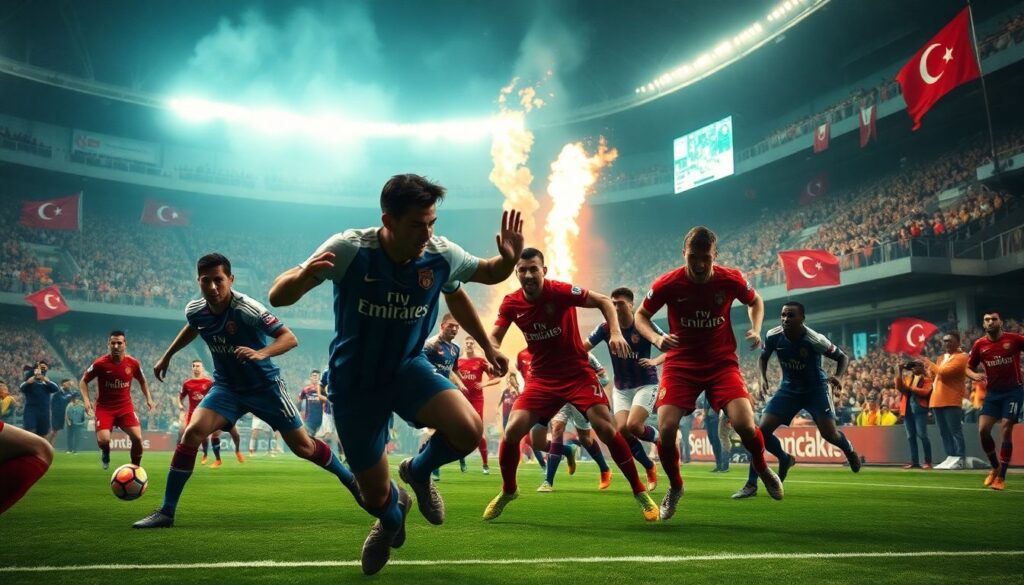
Historically, the Süper Lig was known for chaos: wild transitions, emotional games, huge gaps between lines. Over the last five to seven years, especially by 2026, bigger Turkish sides have started hiring analysts and foreign assistants to close that gap. When they prepare for Europe, turkish football clubs tactical analysis now includes tailored pressing schemes, rest-defense planning and set-piece routines. You can see this in how top Istanbul clubs defend after corners: instead of everyone charging forward, two or three players stay compact behind the ball, ready to stop counters.
Технологии и аналитика: как цифры меняют тренировочный процесс
The big step forward is invisible to fans: data rooms inside training grounds. Clubs use tracking systems and detailed dashboards to monitor runs, pressing intensity and compactness. Football analytics software for clubs helps turn raw numbers into usable coaching clips: “here’s where your line was too high”, “here’s when the winger didn’t tuck in”. In Turkey this culture is still developing, but 2026 already looks different from 2016. Analysts and fitness coaches now sit next to the head coach, influencing line-ups, substitutions and even individual skill work.
Basic Principles Coaches in Turkey Are Adopting
От схем к принципам: что объясняют игрокам
Rather than saying “we play 4‑2‑3‑1 and that’s it”, modern staffs explain guiding rules. Players learn how to orient their body when pressing, when to close passing lanes instead of charging, and how to support the ball carrier. Professional football coaching tactics training in Turkish clubs is slowly shifting from endless 11‑versus‑11 games to targeted drills: small-sided games with conditions, pattern work with pressing triggers, and video-led correction. The idea is to give players a toolbox of solutions, not just a single game plan that collapses under pressure.
Роль стандартов и переходов
Set pieces and transitions used to be treated as “extras” in Turkey; now they’re part of the main script. Coaches design corner routines, pre-planned free‑kick combinations and structured counter-attacks. In European matches, Turkish teams increasingly score from rehearsed patterns: recovering the ball, finding the free full-back, using a third‑man run. This mirrors broader tactical analysis world football trends, where expected goals from corners and counters are measured, compared and refined week by week. The clubs that embrace this mindset stop relying solely on individual brilliance to rescue tough games.
Common Misconceptions Around Modern Tactics
Мифы болельщиков и даже тренеров
One widespread myth is that modern tactics kill creativity. In reality, good structure frees creative players from constant firefighting in defense. Another misconception: copying a top European club’s formation guarantees success. Without the same training load, player profile and tactical education, the shape becomes an empty shell. Fans also believe more running always means better pressing, but elite teams actually run smarter, not just more. A solid modern football tactics course online often starts by busting these myths before diving into shapes, models of play and analytics tools.
Ошибки внедрения в турецком контексте
In Turkey, the rush to “be modern” sometimes leads to surface-level changes: analytics staff are hired, GPS vests appear, but there’s no consistent methodology. Coaches may demand high pressing without adjusting fitness work or squad depth, so teams fade after 60 minutes. Others rely heavily on imported terminology, confusing players with buzzwords. To avoid this, professional football coaching tactics training needs to be adapted to local realities: player habits, climate, congested schedules and intense fan pressure, rather than blindly imitating what works in England or Germany.
Looking Ahead: Tactical Forecast for 2026–2030
Куда всё движется в мире и что ждёт Турцию

From 2026 to 2030, expect tactics to become even more individualized. Instead of one game plan for all, top clubs will tailor pressing and build-up to specific players on the pitch, using live data and smarter wearables. For Turkish sides, the big opportunity is to invest in staff education and blended learning: combining local coaching schools with a modern football tactics course online and internships abroad. If they align youth academies, analytics and first‑team training, Turkish teams can move from reactive underdogs in Europe to proactive, tactically fluent contenders.