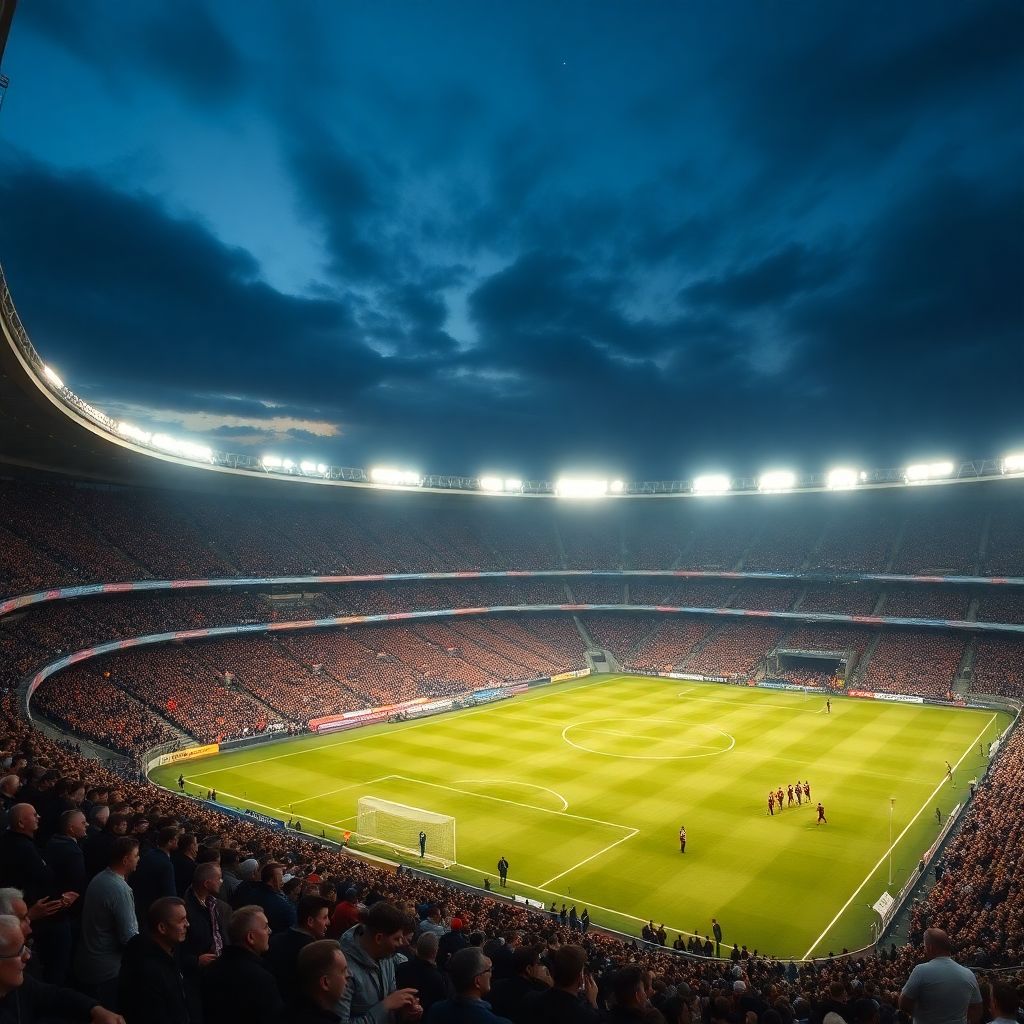
Anatolian clubs are professional Turkish football teams based outside Istanbul that increasingly challenge the traditional dominance of the Istanbul “big three”. Their rise is driven by better financial discipline, serious investment in academies, modern stadiums, and strong local identity. This shift is reshaping competition, fan culture, and revenue distribution in the Turkish Super Lig.
Strategic overview: why Anatolian clubs are reshaping Turkish football
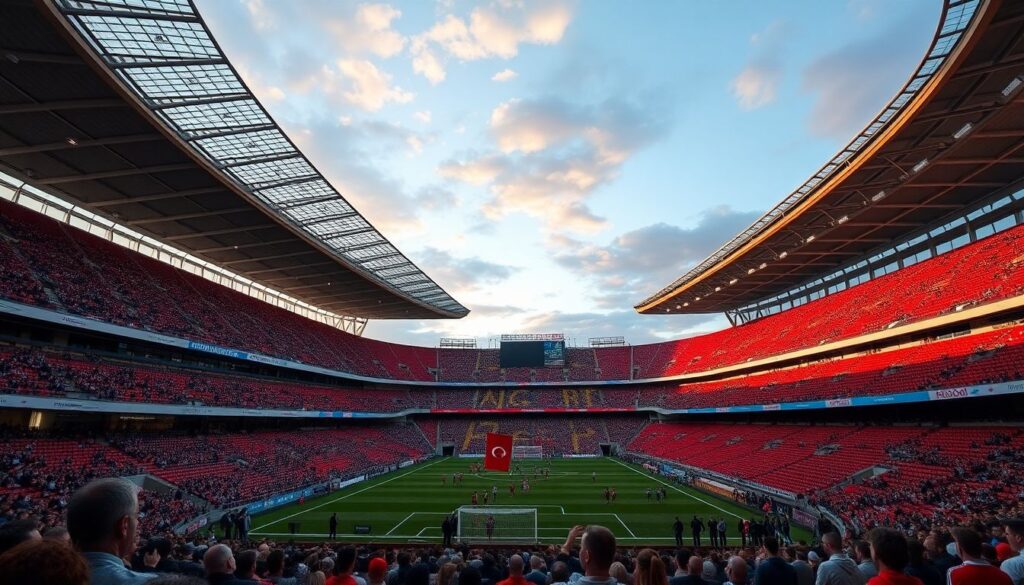
- Anatolian clubs professionalised their structures, moving from municipal dependence to mixed ownership and clearer governance.
- More sustainable budgeting contrasts with the high-wage, short-term thinking common at some Istanbul giants.
- Local academies and regional scouting now produce first-team players instead of relying mainly on expensive transfers.
- New stadiums and better matchday experiences make turkish super lig tickets outside Istanbul more attractive to neutral fans and tourists.
- Distinct tactical identities (high pressing, compact defending, counter-attacks) help smaller squads compete with richer sides.
- Municipal backing and fan-owned initiatives build social capital that attracts focused turkish football club sponsorship opportunities.
Historical evolution: how football developed outside Istanbul
For decades, Turkish football was defined by Istanbul’s big clubs, while Anatolian sides filled the league but rarely shaped its narrative. “Anatolian clubs” now usually refers to provincial teams such as Trabzonspor, Konyaspor, Sivasspor, Kayserispor, Bursaspor or smaller emerging sides that have built stable top-flight presence.
The turning point was a gradual one: improved transport, local universities, and expanding media coverage made football a central identity marker for many Anatolian cities. With fans less willing to support distant Istanbul teams, local clubs began to professionalise, use modern coaching methods and lobby for a fairer share of super lig tv rights and streaming revenues.
Unlike Istanbul clubs, which grew out of early-20th-century elite institutions, most Anatolian teams were founded by workers, municipalities or local businessmen. This grassroots origin created tight community links, but also long-term financial constraints. Their rise has therefore been about finding ways to compete without simply copying the high-spend model of Istanbul rivals.
| Dimension | Istanbul giants | Typical Anatolian club |
|---|---|---|
| Historical base | Elite schools, major companies, national fanbase | Municipalities, local industry, regional fanbase |
| Revenue focus | Mass merchandising, big sponsorships, European bonuses | Matchday, regional sponsors, academy sales |
| Risk profile | High wages, frequent coaching changes | Smaller budgets, more stable technical staff |
Financial frameworks: sustainable revenue and ownership models in Anatolia
Anatolian clubs that avoid boom-and-bust cycles usually follow a few disciplined financial patterns instead of chasing quick glory. The core idea is to diversify revenue while keeping fixed costs, especially wages, under strict control. This approach reduces relegation risk and makes slow, compound growth possible.
- Hybrid ownership with clear responsibilities
Many Anatolian teams combine municipal support, local business investors and membership structures. The safer models separate political influence from daily operations, with professional boards, audited budgets and defined decision-making rules. - Realistic wage-to-income ratios
Rather than matching Istanbul salaries, they cap player wages relative to projected income from super lig tv rights and streaming, tickets and sponsorships. Incentives are performance-based (appearances, bonuses, resale clauses) rather than guaranteed long contracts. - Matchday and local economy integration
Revenue comes from turkish super lig tickets, local catering, parking and hospitality packages bundled with the wider city experience. Safer planning means conservative attendance forecasts and variable-cost agreements with suppliers. - Transfer trading as a core business line
Profitable Anatolian clubs treat scouting and player development as a primary revenue engine. They buy or develop undervalued talent, give it playing time, then sell to larger Turkish or European clubs with sell-on percentages. - Focused, regional sponsors instead of one “magic deal”
Instead of hoping for a single huge sponsor, they build a portfolio of medium-sized turkish football club sponsorship opportunities across shirt, sleeve, training kit, academy, and digital assets. - Conservative debt and infrastructure spending
Stadium and training ground investments are phased and often co-funded with municipalities or state programmes, avoiding large FX-denominated loans tied to optimistic sporting targets.
Practical mini-scenarios of financial models in action
Consider a mid-table Anatolian side planning the next three seasons. Management locks in multi-year local sponsorships, projects conservative income from super lig tv rights and streaming, and then sets a strict wage cap at a safe percentage of that figure. Any unexpected transfer income is used to pay down debt and upgrade the academy, not to chase a short-term superstar signing.
Another club redesigns its stadium use: instead of leaving it idle on non-matchdays, it hosts concerts and regional events, collaborates with organisers of turkey football tours anatolian clubs, and ties premium turkish super lig tickets to city tourism packages. This spreads risk and builds a long-term local football tourism brand.
Youth pipelines: regional academies, scouting networks and player pathways
Outside Istanbul, youth development is not a luxury; it is the only reliable way to compete. Successful Anatolian academies function as multi-layered systems, connecting grassroots clubs, schools and professional environments into clear, realistic pathways for players, coaches and even analysts.
- City and regional academy hubs
Larger Anatolian clubs operate central academies with satellite centres in nearby towns and districts. This reduces travel barriers, keeps children tied to their local identity and enlarges the talent pool beyond a single city. - Partnerships with schools and universities
Study-friendly timetables, scholarship agreements and housing solutions make it safer for families to accept academy offers. Clubs that ignore education often lose promising players when school pressure intensifies. - Structured pathway to the first team
Clear stages (U14, U16, U19, reserve, loan, first team) are communicated to players and parents. Performance criteria and timelines are realistic, with regular feedback sessions that reduce frustration and agent-driven conflicts. - Regional scouting respecting local cultures
Scouts know that a 16-year-old from a small Anatolian town faces different social pressures than a peer from Istanbul. They factor in family expectations, travel constraints and military service obligations when planning integration. - Safe transition through loans
Instead of pushing youth directly into the Super Lig, many clubs loan them to 1. Lig or 2. Lig teams with compatible playing styles. Loan agreements specify minimum minutes, position, and tactical role to avoid wasted seasons. - Secondary careers and staff development
Not every academy player becomes a professional. Some are channelled into roles as coaches, analysts or operations staff, preserving football knowledge inside the Anatolian ecosystem.
Tactical evolution: distinctive playing philosophies emerging from Anatolian teams
Anatolian clubs have developed tactical blueprints that align with their financial and recruitment realities. Instead of trying to dominate possession like richer clubs, they favour compact structures, intense work-rate and transitional play. Modern coaches blend local toughness with international trends in pressing and data analysis.
Competitive advantages of Anatolian tactical models
- Fit to budget and squad depth: Disciplined mid-block defending and quick counters require fewer technically elite players, so the wage bill can stay controlled without losing competitiveness.
- Clear identity for recruitment: Scouts search for players who fit a defined style (e.g., fast wingers, mobile defensive midfielders), reducing transfer mistakes and speeding adaptation.
- Tough home-ground profiles: Many Anatolian cities create intimidating, high-energy atmospheres. Compact tactical setups exploit this, turning home stadiums into difficult destinations for bigger teams.
- Flexibility against stronger opponents: Well-drilled low blocks, set-piece routines and counter-press triggers allow underdogs to upset heavyweight Istanbul sides in single games.
- Coach development platform: Ambitious Turkish coaches can test modern ideas without the extreme media pressure of Istanbul, then move upwards with a clear tactical track record.
Structural and contextual limitations to recognise
- Ceiling in ball-dominant games: Systems built on defending deep can struggle to break down low blocks when Anatolian clubs are favourites, especially at home against smaller teams.
- Player fatigue and injury risk: High-intensity pressing without deep squads can lead to burnout over long seasons, particularly when adding European matches.
- Coach turnover disrupting identity: If boards panic after short winless runs, frequent changes break tactical continuity and erode the advantages of a defined style.
- Limited appeal for certain player profiles: Some technically gifted players may prefer clubs promising a possession-heavy style to showcase individual skill.
- Media narrative bias: National media attention still focuses on Istanbul, so Anatolian tactical innovations are sometimes underreported, affecting recognition and awards.
Local ecosystems: stadiums, community engagement and municipal support
Modern Anatolian clubs operate as regional institutions, not just teams. Their stadiums, fan projects and municipal links create a football ecosystem that drives both sporting and social outcomes. However, several recurring mistakes and myths can limit the impact of this ecosystem.
- Myth: a new stadium alone guarantees success
Safe growth requires aligning stadium size with realistic demand, transport access and pricing. Overbuilt arenas with expensive maintenance can trap clubs in debt, even if turkish super lig tickets initially sell well. - Mistake: ignoring non-matchday usage
Leaving stadiums idle most of the week wastes potential revenue from concerts, community events and football tourism. Partnering with operators of turkey football tours anatolian clubs can turn facilities into year-round attractions. - Myth: municipal money can always fill budget gaps
Political cycles change quickly. Overreliance on municipal subsidies encourages risky spending. Safer models treat municipal help as seed funding for long-term projects, not a permanent operating budget. - Mistake: weak community communication
Clubs sometimes underestimate the power of transparent communication about ticket pricing, academy access and membership. Poor communication fuels rumours and reduces willingness to buy anatolian football clubs merchandise or long-term season passes. - Myth: social media followers equal real engagement
Digital reach without on-the-ground projects (school visits, grassroots tournaments, open training sessions) can be shallow. Sustainable clubs invest in face-to-face relationships that turn casual fans into life-long supporters. - Mistake: neglecting security and inclusivity
Failing to ensure safe, family-friendly stadium experiences limits attendance, especially for women and children. Clear safety protocols, visible stewarding and inclusive fan policies are non-negotiable foundations.
League and continental impact: promotion, competitiveness and European ambitions
The rise of Anatolian clubs changes both competitive balance and external perception of Turkish football. More teams capable of challenging for European places means a more unpredictable title race and a broader base of clubs representing Turkey internationally.
Imagine a scenario where a well-run Anatolian club finishes in the top four and qualifies for European competition. Its safe progression roadmap might look like this:
- Stabilise domestically: Keep core staff and key players, avoid risky wage inflation, and protect league position as the first priority.
- Phase European ambition: Target group-stage qualification bonuses as a bonus, not as a required budget line. Rotate smartly to avoid league burnout.
- Leverage visibility: Use European exposure to renegotiate regional turkish football club sponsorship opportunities and expand online fan shops for anatolian football clubs merchandise.
- Invest in depth, not just stars: Improve squad depth, sports science and data analysis instead of making one headline signing that breaks the wage structure.
- Feed the academy cycle: Channel part of the additional income back into youth facilities and coaching education, ensuring that European qualification is a repeatable outcome, not a one-off spike.
Over time, if multiple Anatolian clubs follow this cautious blueprint, the Turkish Super Lig becomes less dependent on Istanbul brands alone. The league’s external narrative evolves from a “three-club show” to a multi-centre competition, which in turn supports higher-value negotiations around super lig tv rights and streaming packages.
Critical questions about scaling Anatolian clubs’ success
How can Anatolian clubs grow without risking financial collapse?
The safest path is to limit fixed costs (especially wages), build multi-year sponsorship portfolios, and treat transfer income as a bonus for infrastructure and debt reduction. Budgets should be based on conservative projections, with European or cup bonuses used only for long-term investments.
What is a realistic European ambition level for a well-run Anatolian club?
Consistent qualification for European competitions is possible over time, but must never be built into the base budget. A realistic approach is to target stable mid-table or upper-mid-table finishes first, then treat European runs as episodic opportunities to strengthen infrastructure and the academy.
How important are academies compared with signing foreign players?
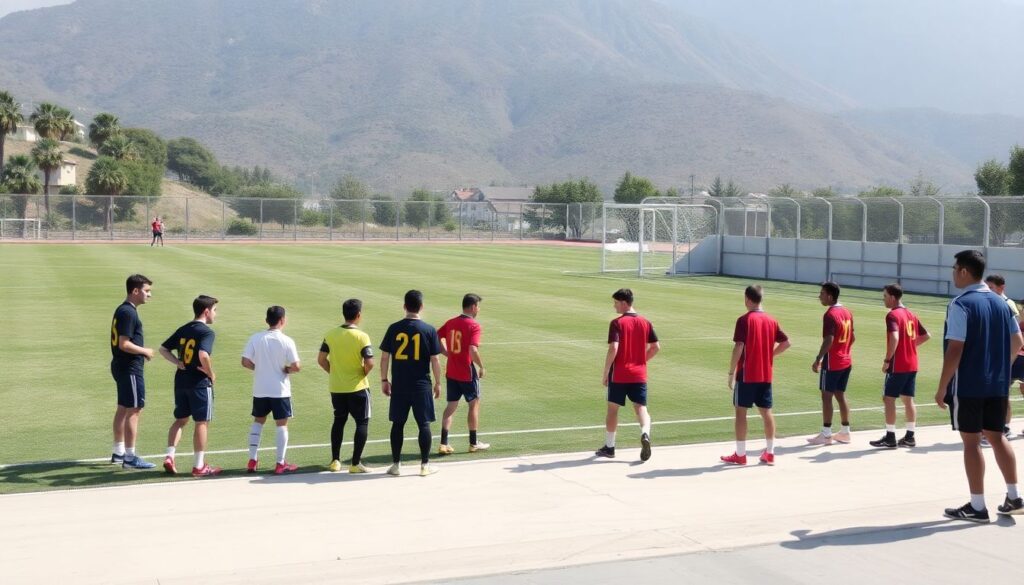
For Anatolian clubs, academies are strategically more important than for wealthier teams, because they reduce transfer costs and create assets for resale. Foreign signings should complement academy products, filling tactical gaps rather than replacing local development.
Can a possession-dominant style work for a smaller Anatolian club?
It can, but requires higher technical quality and deeper squads, which increases costs and risk. Many successful Anatolian coaches start from a compact, transition-focused model and gradually add controlled possession as resources and player profiles improve.
What role should municipalities play in club management?
Municipalities are most helpful as infrastructure partners and early-stage supporters, not as day-to-day decision-makers. Their involvement is safest when limited to co-funding facilities, transport and community projects, while professional management handles recruitment, budgeting and sporting strategy.
How can smaller clubs attract sponsors in a market dominated by Istanbul brands?
They should position themselves as targeted regional platforms, offering strong local loyalty, lower cost per impression and authentic storytelling. Bundling stadium naming rights, academy support and digital campaigns in one package often appeals to mid-sized local companies.
Is it realistic for Anatolian clubs to build international fanbases?
Yes, but usually in niche segments: diaspora communities, tactical football enthusiasts and travellers joining turkey football tours anatolian clubs. English-language content, reliable online ticketing and easy access to turkish super lig tickets are practical steps toward that goal.