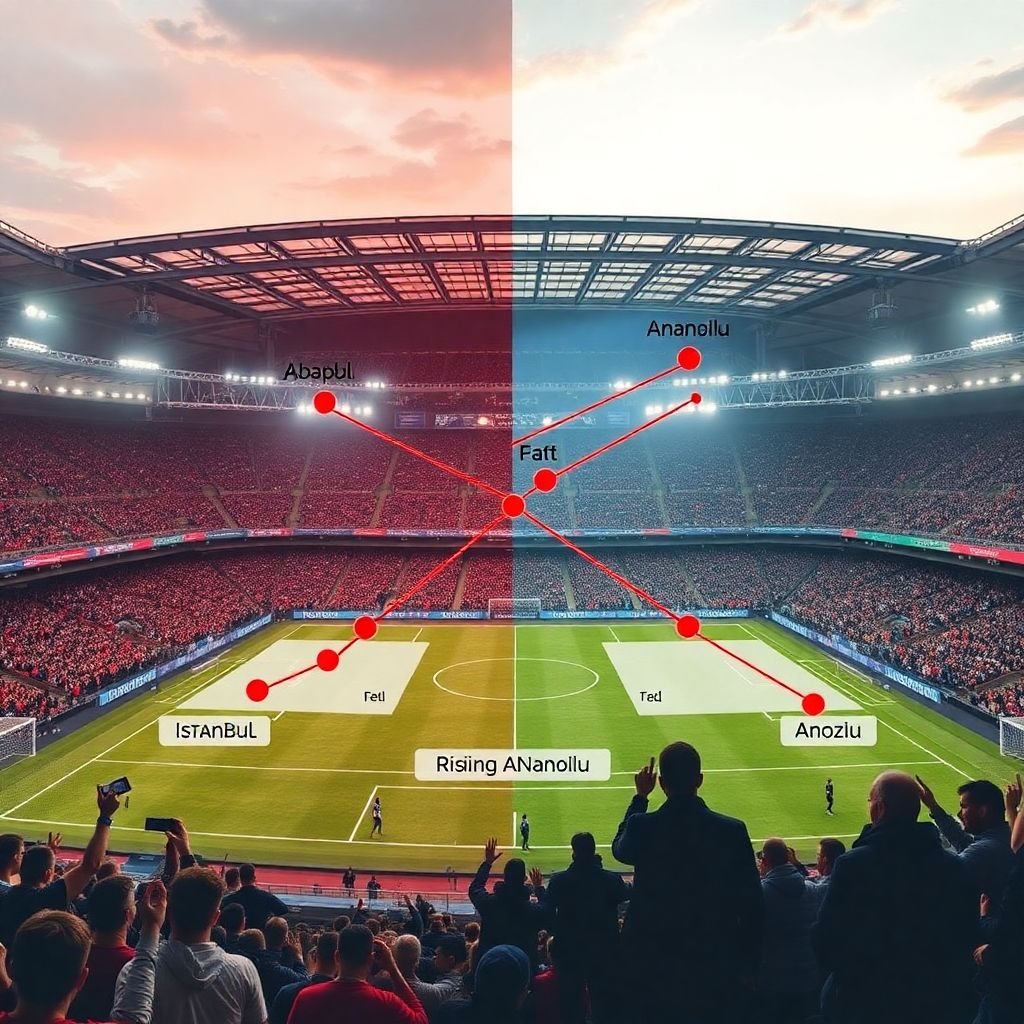
Anadolu clubs are non-Istanbul teams like Trabzonspor, Bursaspor, Sivasspor and Başakşehir that have grown from regional outsiders into consistent Turkish Super Lig challengers. Their rise combines smarter finances, youth development, modern tactics and strong local fanbases. If you understand these engines, then you can predict and leverage future power shifts in Turkish football.
Debunking common myths about Anadolu clubs
- If you still think only Istanbul’s “big three” decide titles, then you ignore how Trabzonspor, Bursaspor and Başakşehir have already broken that monopoly and forced continuous tactical and financial adaptation.
- If you assume Anatolian clubs are “selling clubs” only, then you miss that many now extend contracts early and insert smart release clauses to control timing and price of exits.
- If you believe regional fanbases are too small to matter, then you underestimate how full stadiums in Trabzon, Konya or Sivas turn home games into high-pressure, high-value events.
- If you treat them as temporary fairy tales, then you overlook long-term investments in academies, data scouting and infrastructure that make their success repeatable, not accidental.
- If you see them as financially fragile, then you miss the shift toward diversified income: better TV deals, targeted sponsorship and matchday strategies tied to local economies.
Historical evolution of Anatolian clubs beyond Istanbul
The common mistake is to think Anadolu clubs “suddenly appeared” in the title race. In reality, their rise is the result of decades of gradual professionalisation, from the early Trabzonspor successes in the 1970s to modern, company-backed structures like Medipol Başakşehir.
In Turkish football, “Anadolu clubs” usually means teams based outside Istanbul, especially in cities such as Trabzon, Bursa, Konya, Sivas, Kayseri and Gaziantep. If you use the term precisely, then you separate them from Istanbul’s traditional giants (Galatasaray, Fenerbahçe, Beşiktaş) while still recognising that some, like Başakşehir, are in the Istanbul region but culturally grouped with Anadolu challengers.
If you map the evolution in phases, then three stages stand out: first, isolated title challenges (Trabzonspor’s early dominance); second, one-off breakthroughs (Bursaspor’s title); third, sustained top-four pushes and European runs (Başakşehir, Trabzonspor again, plus regular dark horses like Konyaspor or Sivasspor). Each stage added confidence and bargaining power to these clubs.
If you analyse this evolution, then look beyond trophies; track infrastructure projects, academy reforms, and local government or corporate support. Those “hidden” changes explain why Anadolu clubs can now keep key players longer and negotiate better in both the domestic and international markets.
Financial engines: sponsorships, ownership and sustainable budgets
A frequent myth is that Anadolu clubs only survive on short-term municipal money. In practice, the more stable ones mix several income streams and reduce dependency on a single patron, even if city support still matters in many regions.
- Ownership and governance structures
If club decisions are dominated by short-term political cycles, then budgets swing wildly and planning suffers. If boards professionalise, separate daily management from politics, and publish basic reports, then sponsors and players trust multi-year projects more. - Sponsorship portfolios
If a club relies on one shirt sponsor, then a single contract dispute can break the season. If it builds layered deals (main sponsor, sleeve, back, training kit, youth partners), then it spreads risk and can negotiate better local rates, especially in industrial cities like Bursa or Konya. - Broadcast and prize money
If you treat TV income as “guaranteed cash” to fill old debts, then you stay stuck. If you ring‑fence part of broadcast revenue for strategic spending (data scouting, coaching, academy), then you turn national and turkey football tv rights streaming money into long-term competitiveness. - Player trading model
If a club sells its best talent at the first offer, then it remains a feeder. If it times sales after key seasons, adds sell‑on clauses and targets undervalued foreign markets, then it becomes a net value creator like some recent Trabzonspor or Alanyaspor deals. - Matchday and fan revenue
If ticket prices copy Istanbul levels without considering local income, then stadiums stay half‑empty. If clubs price smartly, link campaigns to turkish super lig tickets demand, and combine sales with food, transport and family zones, then they monetise passion without losing accessibility. - Merchandise and regional brands
If you ignore the local identity, then shirts and scarves become generic products. If you highlight regional symbols and run targeted online shops for anadolu turkish football club merchandise, then even smaller clubs can turn identity into steady cash.
Youth academies, scouting pipelines and talent retention strategies
The lazy claim is that Anadolu teams rely only on cheap veterans discarded by big clubs. In reality, most successful projects combine upgraded academies, regional scouting and selective foreign signings, all tied to a clear game model.
- Local academy focus
If you treat the academy as a cost centre, then coaches and facilities stagnate. If you position it as the core of the project, then you justify investing in full‑time staff, proper pitches and education support, turning cities like Trabzon or Sivas into continuous talent sources. - Regional scouting rings
If scouting stops at the city border, then you miss cheaper talent in nearby provinces. If you build regional networks (Black Sea, Central Anatolia, Southeast), then you discover players before Istanbul clubs and negotiate from a position of strength. - Smart foreign recruitment
If foreign signings come only through agents without data checks, then wage bills inflate for minimal impact. If scouts use video, analytics and trial periods to target underused markets, then foreign players complement, rather than block, local youth. - Pathway to the first team
If youngsters see loan after loan without clarity, then they push to leave. If coaches communicate concrete “if…, then…” steps (if you hit X minutes with the B team, then you train with the first team; if you hit Y, then we renew on improved terms), then retention improves dramatically. - Contract and retention policy
If extensions wait until the final year, then agents gain leverage. If clubs renew promising players early with performance bonuses and release clauses aligned to European markets, then they avoid panic sales and keep a stable core longer.
Tactical identities and coaching innovations shaping results
Many observers still think Anadolu clubs must “park the bus” against Istanbul sides. The reality is more diverse: some defend deep, others press high, and a few like Başakşehir or Alanyaspor have led league trends in positional play and build‑up patterns.
Strategic advantages Anadolu clubs can gain
- If you cannot match big clubs’ individual quality, then you must outplay them in structure: scripted pressing traps, rehearsed restarts and specific game plans for each opponent.
- If your squad is younger and more energetic, then a high‑octane pressing style, especially at home, can create chaos that neutralises superior technique.
- If you have a data‑friendly coaching staff, then you can exploit set pieces, opponent weak zones and substitution patterns better than more conservative big‑club coaches.
- If your coach stays for several seasons, then a consistent playing identity emerges, making it easier to recruit exactly the profiles that fit your system.
Structural and contextual limitations to consider
- If squad depth is shallow, then constant pressing becomes unsustainable across league and cup; rotation and load management must be planned carefully.
- If your best players are regularly sold, then complex tactical systems may collapse when key roles change; simpler core principles travel better between line‑ups.
- If refereeing standards and pressure environments vary, then highly aggressive tactics risk more cards away from home, demanding backup game plans.
- If budget restricts analytics staff, then copying “big data” models of richer clubs without adaptation wastes resources; targeted, smaller data projects work better.
Stadium development, regional fanbases and socio-cultural impact
A widespread myth is that only Istanbul derbies generate real atmosphere or commercial impact. In practice, modern provincial stadiums and deeply rooted local identities have turned many Anadolu home grounds into intense, commercially relevant venues.
- If clubs treat new stadiums as photo opportunities, then they become empty shells. If stadiums are integrated into matchday routines (transport links, local food, fan groups), then they anchor city life and strengthen long-term loyalty.
- If regional rivalries are ignored, then marketing misses stories that fans care about. If campaigns frame games as “Black Sea pride” or “Central Anatolia clash”, then passion and attendance rise without extra costs.
- If you see fans only as customers, then engagement stays shallow. If you include supporter groups in decisions about stands, choreography and anthem culture, then you get organic noise that TV directors love and sponsors value.
- If merchandising copies Istanbul designs, then local fans feel second‑class. If creative departments mix club colours with regional symbols (mountains, seas, industries), then demand for scarves and shirts – including those wanting to buy trabzonspor jersey online – grows beyond the city.
- If gambling and hospitality are left entirely to third parties, then clubs lose control of narrative. If they set clear policies around how people bet on turkish super lig matches or purchase VIP packages, then they align revenue with responsible fandom.
Measurable effects on Turkish league dynamics and the big clubs’ responses
The mistake is to view Anadolu success as isolated “Cinderella” stories. In reality, every strong season from Trabzonspor, Bursaspor, Başakşehir or others has forced Istanbul clubs to adjust recruitment, coaching choices and even how they price turkish super lig tickets and memberships.
If you look at league dynamics as a system, then Anadolu strength has three big effects: it squeezes mid‑table comfort (more clubs fighting for Europe), it punishes complacency at big clubs, and it raises the tactical bar across the league.
One simplified “if…, then…” mini‑case illustrates the cycle:
- If an Anadolu side like Trabzonspor builds a stable spine (goalkeeper, centre‑back, holding midfielder, striker) and appoints a coach for at least two seasons, then it can target consistent top‑four finishes instead of one‑off peaks.
- If that consistency yields European qualification and stronger TV visibility, then sponsors upgrade deals, matchday demand rises, and the club can invest more in analytics, medical staff and academies.
- If investment improves player development and recruitment, then the squad depth approaches that of big clubs, creating real title challenges and credible alternatives for ambitious players who might otherwise choose Istanbul.
- If big clubs lose titles or Champions League spots to Anadolu rivals, then they re‑evaluate their own models: fewer short‑term “star” signings, more attention to coaching fit, and sometimes copying tactical or scouting ideas pioneered in Anatolia.
If you are a practitioner – coach, analyst, or executive – then reading these patterns correctly lets you anticipate which Anadolu projects are about to peak and where the next power shift in Turkish football may come from.
Concise answers to frequent practitioner doubts
How do I quickly judge whether an Anadolu club’s rise is sustainable?

Check three things: ownership stability, academy integration and coach tenure. If there is a clear project tying these together for at least two seasons, then the rise is more likely to be structural, not just one lucky transfer window.
Why are some Anadolu clubs better at selling players than big Istanbul teams?
They often identify and play young talents earlier, accept realistic fees and insert sell‑on clauses. If you see a pattern of timely sales followed by smart reinvestment, then you are looking at a club that understands player trading as a core business.
Can an Anadolu club realistically plan to win the league, not just reach Europe?
Yes, but only if it synchronises a strong spine, a tactically competent coach and a two‑to‑three‑year financial plan. If any of these three is missing, then the target should be sustainable top‑four finishes rather than an immediate title push.
What should big clubs learn from successful Anadolu projects?
They can copy clear game models, better use of data in scouting, and more patient coaching policies. If big clubs keep changing coaches every few months, then Anatolian teams with stable identities will continue to exploit that chaos.
How important are regional fans compared with national TV audiences?
Both matter, but for Anadolu clubs the regional core is irreplaceable. If local fans disengage, then TV interest, sponsors and national relevance collapse quickly. If the local base is strong, then national exposure becomes a multiplier, not a lifeline.
Do betting and streaming trends change how Anadolu clubs plan?
Indirectly, yes. If turkey football tv rights streaming deals and betting interest grow around high‑energy Anatolian matches, then these clubs gain leverage in negotiations and more data about their audiences, which can guide scheduling, marketing and style of play.