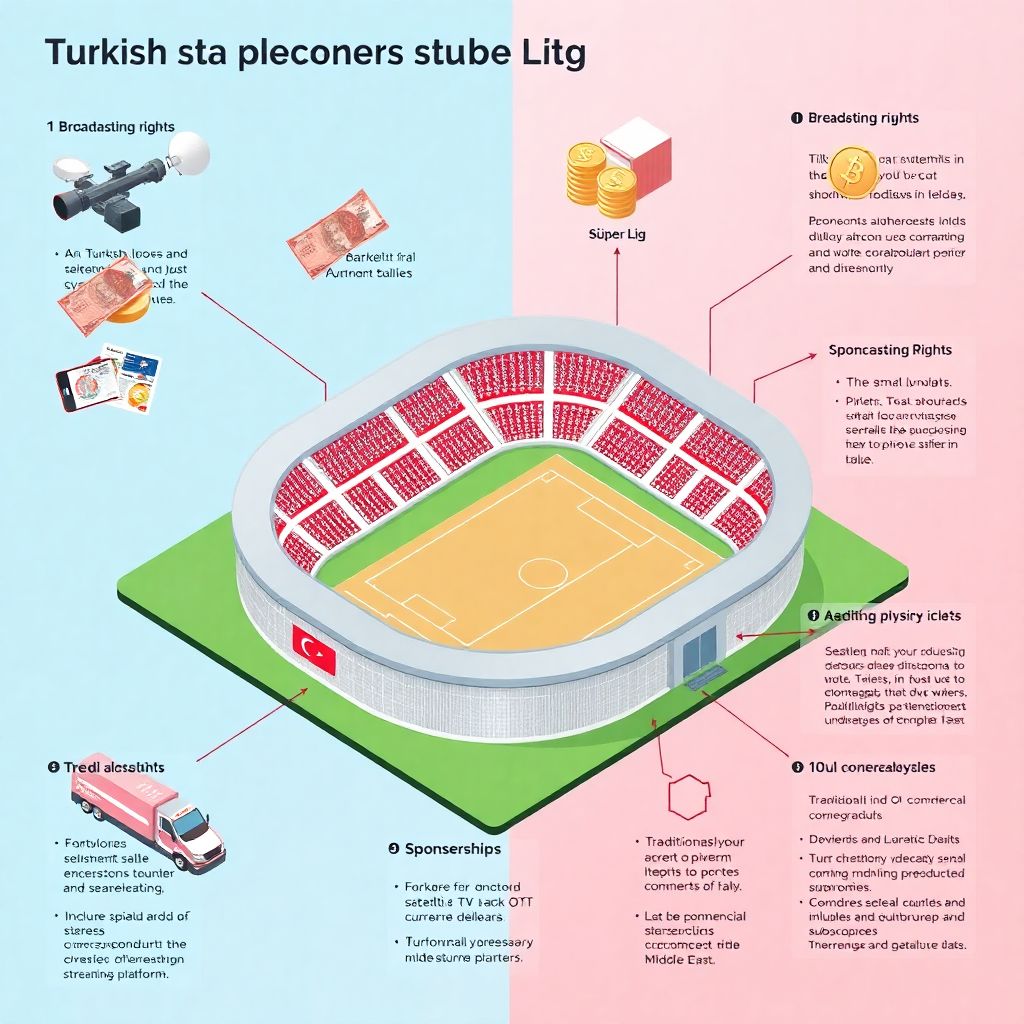
Тhe economic story of football in Turkey is a lot bigger than 90 minutes on the pitch. Over the last three years it has turned into a live case study of how media money, global sponsors and fragile club finances can push a league either toward sustainable growth or deepening debt. Let’s walk through the key parts of this puzzle in a conversational but evidence‑based way.
Broadcasting rights: from golden goose to volatile asset
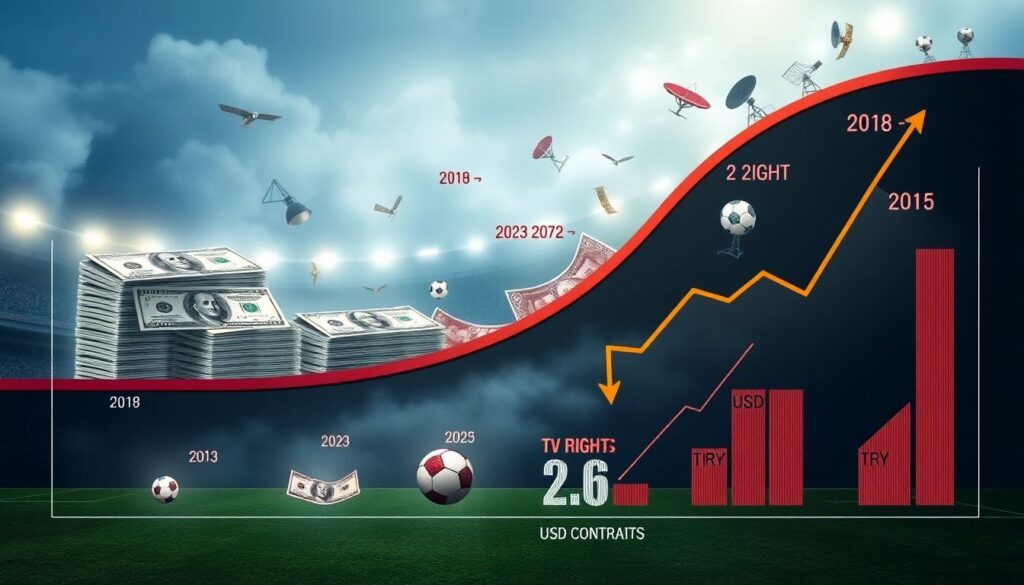
If you want to understand the economic power of the game, you start with TV money. The turkish football broadcasting rights market went through a rollercoaster between 2023 and 2025. After the big dollar‑denominated beIN/Digiturk deal of the late 2010s, the league moved to lira‑based contracts. In nominal lira terms, revenues looked stable or even rising slightly, but once you convert them to euros or dollars, the value of turkish football tv rights revenue dropped sharply compared with a decade ago. According to public reports from the Turkish Football Federation and club financial statements, total domestic broadcasting income for Süper Lig clubs in 2023/24 hovered in the low hundreds of millions of dollars equivalent, down significantly (often estimated in the range of 40–50%) versus the peak era, even though payouts in lira increased year‑on‑year.
The last three seasons show a clear pattern: each new contract tries to correct the previous imbalance, yet inflation and currency shifts erase a big part of the gain. Between 2022/23 and 2024/25 the headline value in lira has risen, but in real terms clubs complain that the money buys fewer foreign players, fewer academy investments and leaves less margin for debt service. This tension shapes the entire turkish football broadcasting rights market in 2026: the league has to balance affordability for local broadcasters with the need to generate enough hard‑currency income to remain competitive in Europe.
Centralised vs club‑driven media strategies: comparing approaches
Turkey currently follows a classic centralised model: the league sells rights collectively, distributes the pot, and negotiates with one or a few major broadcasters plus some digital players. This is efficient for a mid‑sized league because it simplifies bidding and raises bargaining power. But it also locks every club into the same framework, regardless of whether you are a global brand like Galatasaray or a smaller Anatolian side. Over the last three years, several big clubs have openly debated whether a more club‑driven or hybrid model – selling certain rights individually, especially international or digital content – could unlock more value.
If we compare that to the Premier League, where centralisation is strong but global demand is massive, Turkish clubs have less leverage abroad. Nevertheless, some are experimenting. They launch club OTT apps, special YouTube content, and region‑specific partnerships. A hybrid approach might mean: centralised domestic TV, but club‑owned international YouTube and streaming rights for friendlies, pre‑season tours, or behind‑the‑scenes series. The economic logic is simple: standardise the “commodity” product (live league games) and personalise the premium niche content around each club’s brand, especially for diaspora fans in Germany, the Netherlands or the Middle East.
Technologies in broadcasting: pros and cons for fans and finances
On the technology side, Turkish football has slowly moved from a classic satellite‑TV model toward multi‑platform distribution. Over the last three seasons, more matches have been simulcast via IPTV and OTT apps; highlight clips and short‑form content dominate social media. This brings clear advantages: younger viewers can watch on mobile, audiences become more measurable, and advertisers like the granular targeting. At the same time, the infrastructure is still patchy. Not every region has reliable broadband, and some fans complain about buffering, device restrictions and fragmented subscriptions.
From a financial viewpoint, new broadcasting technologies cut both ways. On the plus side, digital distribution lowers marginal costs and opens the door to international micro‑subscriptions: a fan in Berlin can legally access Turkish games without a big cable package. On the minus side, piracy is widespread, and small OTT platforms struggle with scale. For clubs that rely heavily on turkish football tv rights revenue, the risk is that technology shifts the audience faster than business models adapt. The upside is real – think dynamic ad insertion, interactive data overlays, betting integrations – but the transition phase can be painful, especially when clubs have already budgeted future income that may not fully materialise.
Sponsorships: where brands and emotions meet spreadsheets
If TV is the backbone, sponsorships are the blood flow of the system. The turkey super lig sponsorship deals have grown more sophisticated between 2023 and 2025. Shirt front deals, sleeve sponsors, stadium naming rights and official betting partners now come packaged with digital content obligations and data‑driven performance metrics. Big Istanbul clubs have secured multi‑year contracts with airlines, financial services, crypto and fintech brands, while mid‑table teams lean more on local conglomerates and construction firms.
Statistically, sponsorship income has been the most resilient revenue line in the last three years. While broadcasting in hard currency struggled, many deals were indexed to inflation or revisited annually. Industry analysts estimate that for top‑four Turkish clubs, commercial and sponsorship revenue now often equals or exceeds TV money, especially when you add in European competition bonuses. For smaller clubs, however, the picture is different: the gap between a Champions League regular and a relegation battler widened significantly between 2022/23 and 2024/25, and sponsorship is one of the main drivers of that inequality.
Comparing domestic and international sponsorship strategies
There are two broad sponsorship playbooks in Turkish football. The first is domestically focused: clubs partner with Turkish banks, telecoms, construction companies or retailers that want national exposure and a patriotic halo. This strategy is stable, culturally embedded and easier to negotiate. The second is outward‑looking: target global brands who see Turkish football as a gateway to regional markets in the Middle East and Europe. These partners often demand stricter reporting, brand‑safety guarantees and integrated digital campaigns in multiple languages.
In practice, most big clubs operate a mix of both. The trade‑off is clear. Domestic sponsors may offer long‑term loyalty but limited foreign currency inflow. International sponsors might pay more in hard currency but are more sensitive to political risk, crowd behaviour and UEFA sanctions. Over the last three years, the clubs that invested in professional commercial departments, data analytics, and high‑quality international content are the ones that managed to tilt their portfolio toward the second group, which will matter even more in 2026 as competition for global sports marketing budgets intensifies.
Club finances: growth, debt and the valuation puzzle
When you zoom out to turkey football club finances and valuation, the numbers reveal both potential and fragility. On the one hand, attendance figures for top clubs rebounded strongly after the pandemic, and matchday income grew in nominal terms between 2022 and 2025. Transfer sales of emerging Turkish talents to Europe – particularly to Italy, Germany and the Premier League – injected periodic cash spikes into balance sheets. On the other hand, most big Süper Lig clubs still carry heavy legacy debt, often to domestic banks, with interest payments that eat into operating profits.
Publicly available financial reports show that wage‑to‑revenue ratios at several major clubs have frequently exceeded the 70% threshold that UEFA considers risky. Over the last three seasons, a recurring pattern appears: a strong year in Europe or a big player sale briefly improves the balance sheet, then ambitious transfer spending erodes the cushion. As a result, valuations of Turkish clubs look low relative to their fan base size and media visibility. For foreign investors searching for undervalued assets, that gap is exactly why some are considering to invest in turkish football clubs – but only if better governance and cost controls can be guaranteed.
Different ownership and investment models: which works better?
Right now, Turkey mostly runs on a member‑owned, association‑style model: fans elect presidents, and boards change frequently. This structure protects cultural identity but makes long‑term financial planning difficult. By contrast, in leagues like Serie A or La Liga, you increasingly see private equity funds, foreign billionaires and multi‑club ownership groups. Each approach has trade‑offs. Member‑owned clubs are accountable to supporters and less likely to be flipped for profit, yet they often fall into short‑term populism: big transfers before elections, underinvestment in infrastructure.
Private or hybrid ownership can professionalise management, improve transparency and bring in capital for stadium upgrades, academies and digital projects. However, it can also trigger fan resistance if supporters feel the club is being “financialised” or detached from its roots. Turkey has started to experiment with partial stock‑market listings and limited outside ownership in a few clubs, but not yet at the scale seen in England or Italy. Over the next few years, expect more active debate on whether a controlled opening to private investors – especially those willing to invest in turkish football clubs with long‑term horizons – could stabilise the financial ecosystem.
Technologies off the pitch: data, VAR and fan engagement
Economics is also shaped by how clubs use technology behind the scenes. VAR and goal‑line tech are now standard, but the real frontier is data analytics and fan‑engagement platforms. On the positive side, advanced scouting tools and performance data should, in theory, help clubs buy smarter and cut down on expensive transfer mistakes. In several cases between 2023 and 2025, Turkish clubs that built modest, data‑heavy recruitment departments managed to identify undervalued players from Scandinavia, Africa or lower European leagues and later sell them on at a profit.
The downsides are less obvious but very real. Technology is not cheap; the licenses, staff and infrastructure create new fixed costs. If the club’s culture does not genuinely integrate analytics into decision‑making, you end up with a shiny dashboard that presidents ignore when a popular agent offers a “big name” signing. On the fan side, apps and digital memberships can deepen loyalty and create new revenue streams, but they also risk over‑monetising supporters with constant upsell attempts. The clubs that will win in 2026 are those that treat tech as a tool for better sporting and financial choices, not as a marketing buzzword.
Pros and cons of key economic approaches
To make this more concrete, consider a few of the main strategies clubs and the league are weighing right now, with their advantages and drawbacks:
1. Maximising short‑term TV deals
Pros: higher immediate cash flow, easier budgeting, more money for transfers.
Cons: deep dependence on one broadcaster, vulnerability to renegotiations, less incentive to build alternative revenue.
2. Diversifying into international digital audiences
Pros: new markets, direct fan relationships, hard‑currency income, higher global visibility.
Cons: up‑front tech and content costs, uncertain payback, fierce competition for screen time.
3. Aggressive transfer trading model
Pros: potential high profits from player sales, quicker balance‑sheet repairs.
Cons: sporting instability, pressure on academies, risk if global transfer market slows.
4. Stadium and matchday modernisation
Pros: more recurring income (events, hospitality), better fan experience, stronger brand.
Cons: heavy capital expenditure, long payback periods, dependence on local regulations and financing conditions.
Each club in Turkey has to choose its mix based on size, fan base, political environment and access to credit. There is no one‑size‑fits‑all solution, but there is a clear trend away from blind reliance on a single revenue source.
Recommendations: how to choose the right economic strategy

So what does all this mean in practical terms for decision‑makers? For league and federation officials, the main recommendation is to think of the turkish football broadcasting rights market not as a one‑off auction, but as part of a broader media ecosystem. That means designing contracts that allow more flexible digital sublicensing, investing in anti‑piracy measures, and tying a part of the distribution formula to long‑term development metrics such as academy output or financial discipline rather than only league position.
Clubs, meanwhile, need to accept that sustainable growth in 2026 will come from balance rather than gambling on single jackpots. In plain language: spend a bit less chasing the last superstar, and a bit more on youth development, analytics, stadium experience and international content. When evaluating offers to invest in turkish football clubs, both domestic banks and foreign investors should look beyond headline revenues and ask tough questions: Is wage‑to‑turnover under control? Are governance structures transparent? How diversified is the club’s sponsorship base? Those that pass these tests deserve higher valuations and better financing terms; those that fail will remain trapped in a cycle of debt and short‑termism.
Trends toward 2026: where Turkish football economics is heading
Looking forward, a few big trends are likely to shape the next phase. First, expect more experimentation with flexible scheduling and streaming‑friendly kick‑off times, aimed at capturing audiences in Europe and the Gulf. This could gradually lift international turkish football tv rights revenue, even if domestic contracts remain under pressure. Second, sustainability rules – from UEFA’s new financial regulations to domestic licensing – will push clubs to clean up their books. That should slowly improve turkey football club finances and valuation metrics, especially if inflation eases and interest rates normalise.
Third, sponsorship will get smarter. Brands will demand better data on how turkey super lig sponsorship deals translate into sales and engagement, which will reward clubs that have invested in CRM systems, segmentation and content production. And finally, fan ownership and voice are unlikely to disappear; instead, they will need to coexist with more professional, semi‑corporate management models. If Turkey can align its passionate football culture with modern financial discipline and intelligent use of technology, the economic power of the sport could become not just a story of survival, but a genuine growth engine well beyond 2026.