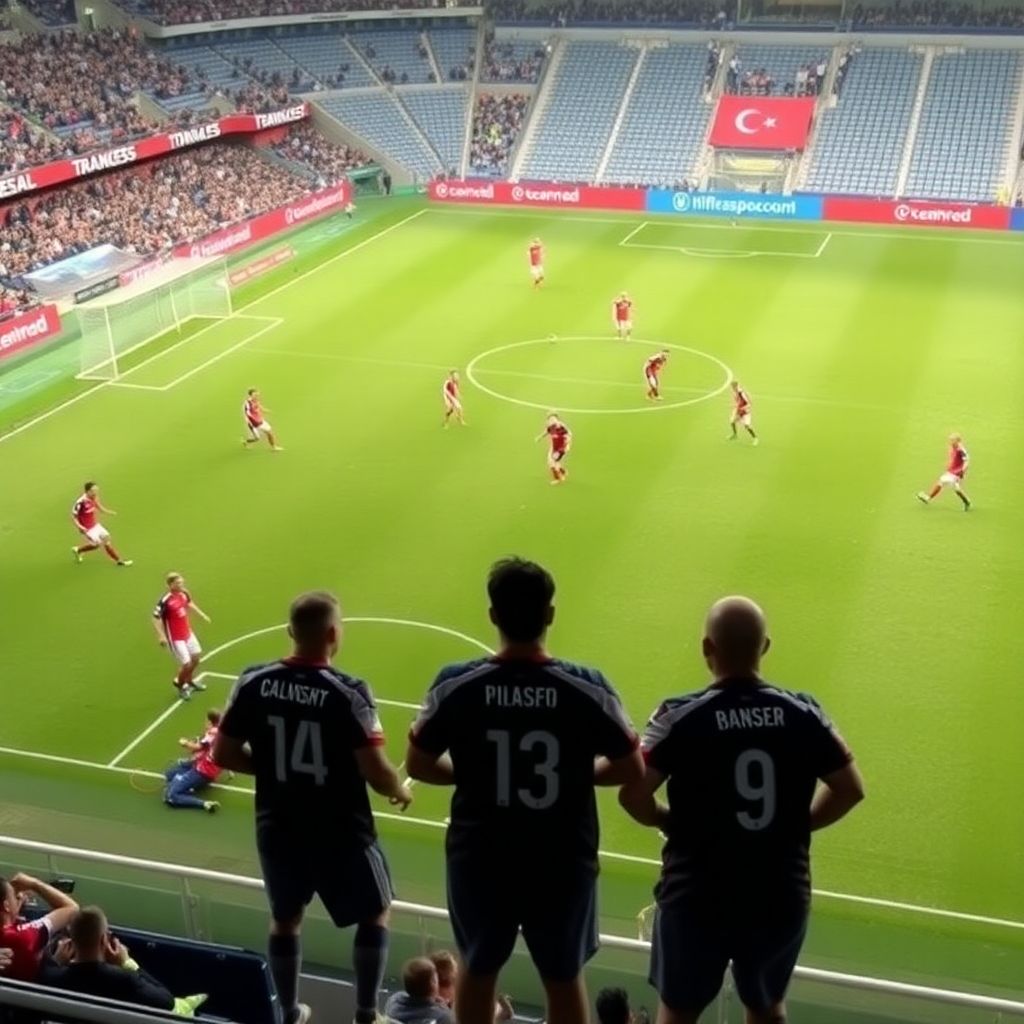
The tactical evolution of the Turkish National Team across the last three qualifying cycles is a shift from reactive deep blocks and isolated counters toward a higher press, more structured build-up and clearer roles in midfield. You can track this change by comparing height of press, width usage, and set-piece organization across cycles.
Myths vs Evidence: What Really Shifted in Turkey’s Tactical DNA
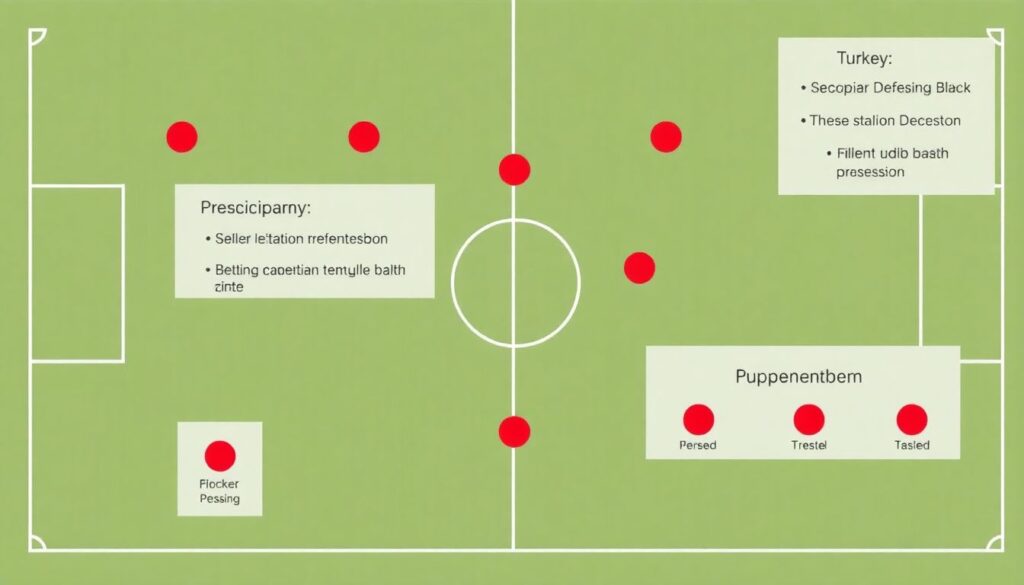
- Myth: Turkey still defends mainly in a low block. Reality: medium-to-high pressing phases are now a standard part of match plans, especially in home qualifiers.
- Myth: Attacks are purely counter-based. Reality: build-up patterns from the back and planned overloads in half-spaces are visibly more common.
- Myth: Fullbacks only provide width. Reality: one or both fullbacks now often invert to support central circulation and second-ball control.
- Myth: The team always uses a classic double pivot. Reality: the balance now alternates between a single regista and different double-six interpretations.
- Myth: Set-pieces are improvised. Reality: rehearsed routines for corners and indirect free-kicks are a clear feature in recent euro qualifiers.
- Myth: Coaching changes reset everything. Reality: each coach layers new ideas on an existing framework, creating an identifiable Turkey football team playing style evolution.
From Deep Block to High Press: Formation Trends Across Three Cycles
Across the last three qualifying campaigns, the Turkish National Team has moved from conservative 4-2-3-1 or 4-1-4-1 shapes with a deep line to more flexible structures that support a higher press. In earlier cycles, spacing between lines tended to be large, with the striker and number 10 operating far from the defensive block.
In the most recent turkey national team tactics euro qualifiers, the team more frequently compresses vertically, turning the nominal 4-2-3-1 into a 4-4-2 or 4-4-1-1 without the ball. The first line jumps onto opposition centre-backs, while a compact midfield line screens passes into the pivot. This makes the turkey national football team tactical analysis very different from older footage where the front line waited passively.
With possession, the base shapes remain familiar on paper, but the functional roles differ. The pivot often drops between centre-backs, fullbacks push high or invert, and one attacking midfielder slides into the half-space to create a 3-2-5 layout in settled attacks. This evolution is central in any tactical analysis turkey national team 2024 content, where the emphasis is on flexible occupation of zones rather than rigid positions.
The practical boundary of this evolution is context: against top-tier opponents, Turkey still mixes phases of deeper defending with bursts of higher pressing. However, even in these matches, counter-pressing triggers and a desire to regain the ball earlier in the pitch have clearly increased compared with previous qualifying cycles.
Transition Play: Rebalancing Counterattacks and Constructive Build-up
The core change in transition is not abandoning counterattacks, but structuring them and combining them with calmer possession phases. The mechanics can be broken into recurring patterns.
- First pass after regain. Earlier cycles often saw an immediate vertical ball toward the striker. Now the first pass is more frequently into the nearest free midfielder, who then decides whether to switch, recycle or accelerate play.
- Wide outlet vs central bounce. In recent turkey national team match analysis and statistics, you will notice more deliberate choices: breaking to the winger in space when the opponent’s fullback is high, or bouncing centrally through the pivot when the flank is closed.
- Counter-pressing triggers. When Turkey loses the ball in the attacking third, the nearest three or four players often sprint toward the ball rather than dropping immediately. The trigger is usually a backwards or square pass by the opponent.
- Structured rest-defense. During long possession spells, at least two players (usually a centre-back and the pivot, or a fullback and centre-back) stay behind the ball to control opposition counters. This is a clear evolution from earlier, more chaotic rest-defense structures.
- Tempo shifts. The team now alternates deliberate slow phases (circulating across the back line) with short, explosive vertical combinations. This makes the turkey football team playing style evolution easier to spot: the ball is not simply forced forward at the first opportunity.
- Decision focus on the second touch. Coaching appears to stress clarity on the second touch after regain: control on the first, then either play forward, sideways to secure, or back to reset. This reduces unforced giveaways in transition moments.
Wide Threats and Inverted Fullbacks: How Flanks Were Reconfigured
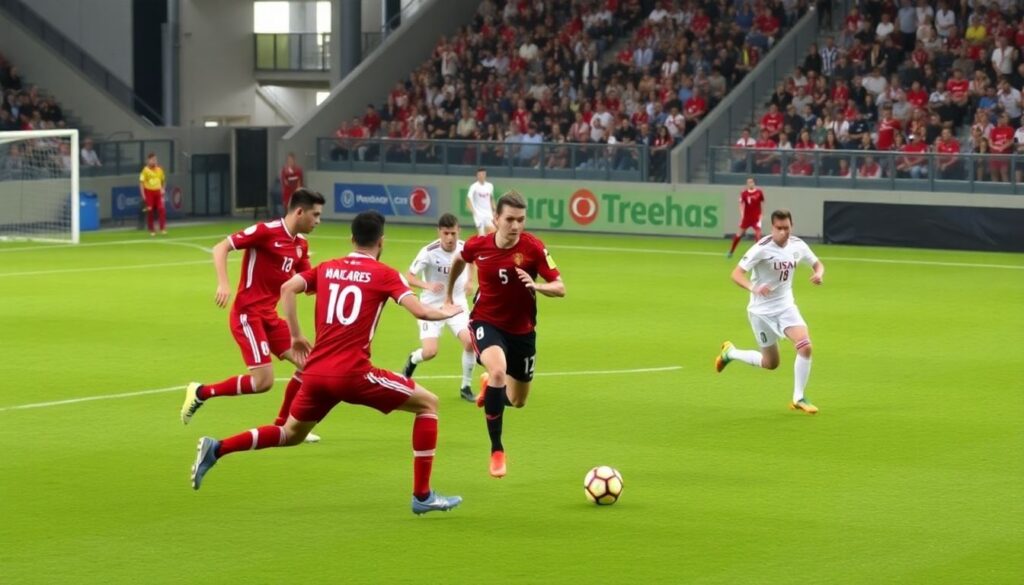
The flank game has shifted from a predictable pattern of overlapping fullbacks and traditional wingers to a more varied approach combining wide isolation, underlapping runs and inversion. Understanding where this applies helps you read modern turkey national football team tactical analysis correctly.
- Home matches vs compact blocks. Against deep opponents in qualifiers, one fullback typically holds width high, while the opposite fullback inverts into midfield. This creates a stable three-player base behind the ball and keeps continuous wide threat on at least one side.
- Away games against stronger sides. The fullbacks are more conservative, but inversion still appears in short phases to help the pivot when building through pressure. Wingers start slightly narrower to be closer to counterattack channels if possession is lost.
- Late-game chasing scenarios. When behind on the scoreboard, both fullbacks often push aggressively, with one winger moving into the half-space to avoid occupying the same vertical lane. This creates crossing overloads without clogging the flank.
- Protecting a narrow lead. In the final minutes, a fullback may invert simply to add an extra central body for clearances and second balls, while the winger stays wide as an outlet for clearances and counterattacks.
- Asymmetric roles for key players. In some matches, the fullback on the side of the more creative winger stays deeper, letting the winger receive 1v1, while the far-side fullback underlaps or overlaps aggressively to surprise the back line.
Midfield Pivot: The Rise of the Single-Regista and Double-Six Variants
The midfield is where the most visible structural evolution appears. Earlier cycles leaned heavily on a flat double pivot, while recent campaigns toggle between a single playmaking pivot (regista) and different interpretations of a double six, depending on the opponent and available personnel.
Benefits of the new pivot structures
- Clearer first pass options from the back line, especially when the regista drops between centre-backs.
- Better control of second balls, as one six can step higher while the other screens counters.
- More consistent occupation of the half-spaces by attacking midfielders, since the pivot(s) provide stability behind them.
- Greater flexibility to switch between 4-3-3 and 4-2-3-1 mid-game without substitutions.
- Improved link between press and possession: the same players who lead counter-pressing are structurally positioned to receive after regain.
Limitations and risks of these variants
- A single regista can be easily targeted by man-oriented presses, forcing hurried passes or turnovers.
- When both sixes in a double pivot drop too deep, the gap to the attacking line becomes large, making progression harder.
- Rotations between fullbacks and midfielders require strong communication; mistimed movements leave the central lane unprotected.
- Player profiles must fit the roles: using two purely defensive sixes can reduce creativity and passing angles.
- Frequent in-game structure switches can confuse less experienced players, leading to positional errors.
Set-Piece Evolution: Practical Routines and Risk Management
Dead-ball situations show a clear move toward rehearsed patterns, yet several myths overshadow the actual picture. Differentiating typical mistakes from misconceptions clarifies what really changed.
- Mistake: Overloading the near post without timing. Crowding the near post is common, but without staggered runs, teammates block each other and make clearances easy.
- Mistake: Weak rest-defense on attacking corners. Leaving only one player back against two or three opposition runners exposes the team to counters, especially when centre-backs both attack the box.
- Mistake: Predictable free-kick delivery. Repeating the same inswinger toward the tallest player simplifies the defender’s task and reduces the value of set-pieces over a qualifying campaign.
- Myth: Turkey does not practice short corners. Recent footage shows clear short-corner routines designed to pull out one or two markers before crossing from a better angle.
- Myth: Zonal marking is new. Hybrid systems (zonal line plus man-markers on key threats) have appeared sporadically even in older cycles; the difference now is consistency, not the basic idea.
- Myth: Long throws are never used tactically. While not a primary weapon, long throws into crowded zones around the near post do appear situationally against opponents who struggle with aerial duels.
Coaching Footprints: How Different Managers Engineered Systemic Change
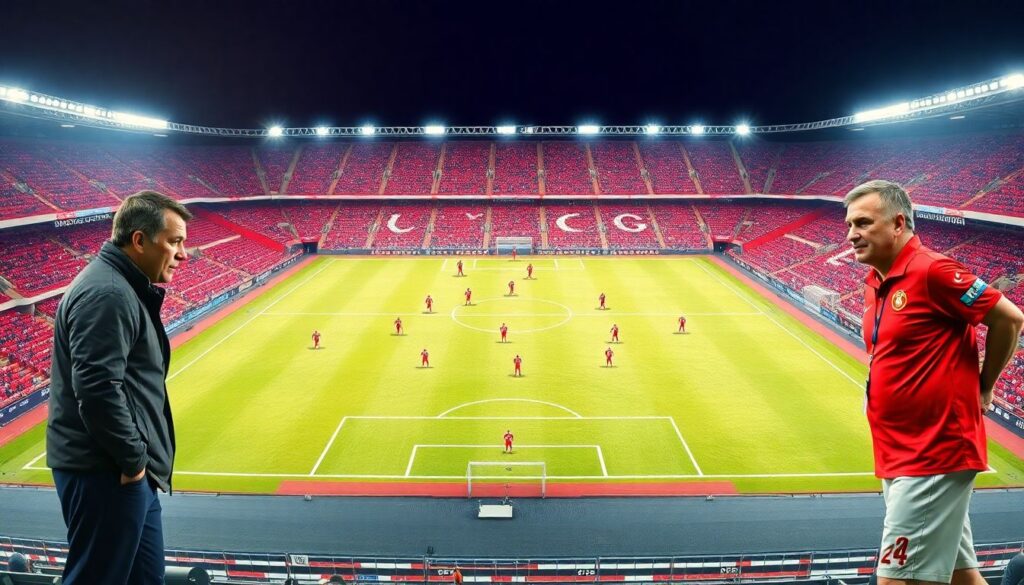
Each coaching era in the last three qualifying cycles added layers rather than starting from zero, which is why serious turkey national football team tactical analysis focuses on patterns that persist across different staff.
A simple way to understand these footprints is to watch three representative qualifiers, one from each cycle, and check how the same structural questions are answered differently.
- Lining up: note the base formation on paper (for example 4-2-3-1 or 4-3-3) and then write down what it looks like in possession and without the ball.
- Pressing choices: observe where the first press starts (goalkeeper, centre-backs or pivots) and how often the team steps up vs drops off.
- Flank management: record which fullback inverts more, who holds width and who typically appears in the half-space.
- Midfield balance: identify whether there is a single clear regista or a more equal double-six, and how high the attacking midfielder starts.
- Set-piece behavior: watch two or three corners and free-kicks for repeated routines, not isolated actions.
This kind of systematic turkey national team match analysis and statistics review underpins any serious tactical analysis turkey national team 2024 article and highlights a coaching-through-cycles evolution more than a complete identity reset.
Short algorithm to check if a match reflects the recent evolution
- After the match, ask: where was the average defensive line – closer to halfway or the box? If mostly higher, it aligns with the newer pressing approach.
- Count (roughly) how many attacks started with a calm first pass into midfield instead of a direct long ball. More structured first passes indicate modern build-up priorities.
- Check flank roles: did at least one fullback invert into central spaces at times? If yes, that supports the current flank and midfield model.
- Review 3-4 set-pieces: do you see repeated corner or free-kick patterns? Consistent routines point to the updated set-piece work.
- Compare these observations with an older qualifier: if you notice more compact pressing, varied build-up and clearer rest-defense now, the tactical evolution is present in the result you are analysing.
Concise Clarifications on Persistent Tactical Misconceptions
Does Turkey still rely mainly on deep defending and counters in qualifiers?
No. Deep defending and counters are still tools, but recent turkey national team tactics euro qualifiers show more frequent medium and high pressing, plus longer structured possession phases.
Is the formation change mostly cosmetic, or does it affect roles?
It affects roles. On paper shapes look similar, but in modern turkey football team playing style evolution the pivot, fullbacks and attacking midfielders use more coordinated movements and rotations.
Have fullbacks really started to invert regularly?
Yes, especially in home qualifiers and matches where Turkey sees more of the ball. Fullbacks step inside to support build-up, leaving wingers or advanced midfielders to hold width.
Is the regista role always preferred over a double pivot?
No. The single regista is used when Turkey needs more control and short passing, while the double-six variants appear when extra defensive stability or pressing support is required.
Are set-pieces still a weakness for the Turkish National Team?
Set-pieces are no longer purely reactive. There are clearer attacking routines and more structured rest-defense, though individual execution still determines outcomes.
Did new coaches completely change the tactical identity every cycle?
No. Each coach kept core ideas like compactness and vertical threat, while adjusting pressing height, build-up patterns and specific player roles.
Can a fan perform useful turkey national football team tactical analysis without advanced data?
Yes. By systematically observing pressing height, midfield structure, flank behavior and repeated set-piece patterns, you can build meaningful insights even without detailed statistics.