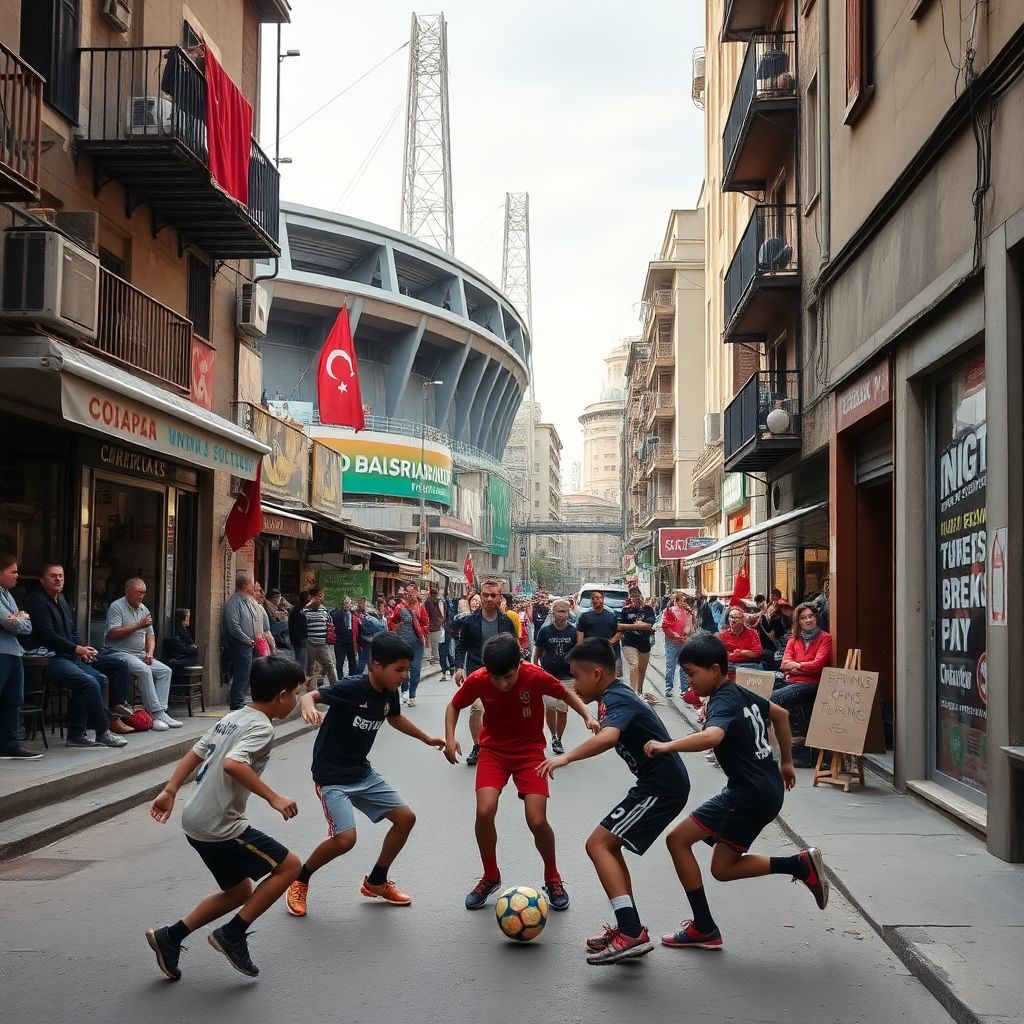
Urban football in Turkey is the full ecosystem from street games in tight alleys to packed Super Lig stadiums. Kids learn skills in informal play, move into neighborhood clubs, and the best reach professional academies. Cities like Istanbul, Izmir, Antalya, and Gaziantep shape this path through spaces, clubs, fan culture, and matchday economies.
Urban Football: Core Observations
- Street and courtyard games teach creativity, toughness, and social rules long before formal coaching starts.
- Neighborhood clubs act as the main bridge from informal play to professional academies and Super Lig clubs.
- Public squares, school yards, and municipal pitches are key football infrastructure, not just stadiums.
- Matchdays drive powerful micro-economies for vendors, transport, and small businesses in Turkish cities.
- Fan culture in Istanbul, Izmir, Antalya, and Gaziantep is deeply tied to neighborhood and civic identity.
- Urban planning decisions on parks, lighting, and transport directly shape who can play and who can attend games.
Street Roots: Informal Play and Local Rituals
Urban football in Turkey starts on the street: in back alleys, parking lots, school yards, and apartment courtyards. Kids organize their own games, set flexible rules, and play with whatever ball and space are available. These informal matches build technical skills, communication, and resilience without any formal structure.
Local rituals form around these games. In Istanbul, Izmir, or Gaziantep, one block might always host the game, an older teen becomes the referee, and a small shop keeps the ball overnight. Teams are built around buildings, schools, or even stairwells. The social rule is clear: anyone nearby can be pulled into a game, but respect for older players and residents is non‑negotiable.
Street football also links directly to professional dreams. Kids imitate moves they see during Istanbul derbi match tickets Galatasaray Fenerbahce Besiktas clashes on TV, copy players' celebrations, and argue about line‑ups. This constant feedback between what happens on TV, in stadiums, and in the street helps cities "live and breathe" the game every day, not only on weekends.
For city planners and community leaders, the key is simple: protect and improve these informal spaces instead of pushing all football into paid, fenced facilities. Good lighting, safe surfaces, and basic maintenance can turn existing courtyards and school yards into stable, low‑cost football hubs.
Neighborhood Clubs and Talent Pipelines
Between the street and big stadiums stand neighborhood clubs. They translate chaotic, creative street play into regular training, competitions, and a visible pathway toward the professional game. In most Turkish cities these clubs are run by volunteers, ex‑players, and local business owners who sponsor kits and equipment.
- Scouting from the street: Coaches watch school games, local tournaments, and even casual street matches to invite promising kids to training.
- Basic structure and discipline: Clubs introduce fixed training days, simple tactics, fitness routines, and clear codes of conduct.
- Local leagues and exposure: Youth teams play city and regional leagues, where professional scouts can watch several clubs in one day.
- Links to professional academies: Strong neighborhood clubs develop informal partnerships with Super Lig academies in Istanbul, Izmir, or Antalya, sending their best talents for trials.
- Support off the pitch: Clubs help with transport to training, equipment sharing, and sometimes academic support to keep kids in both school and football.
- Community funding models: Membership fees, small local sponsors, and municipal grants cover pitch rental, referees, and travel costs.
This pipeline is also visible to visitors. When travelers book football travel packages to Turkey Super Lig games, many agencies now combine top‑flight fixtures with neighborhood youth matches or training visits, showing how grassroots and elite levels connect inside the same city.
Mini scenarios: From alley games to club jerseys
Istanbul: A boy from Kadiköy plays every evening on a tight side street. A local coach walking home notices his ball control and invites him to a neighborhood club session. After a season of U13 league football, he is recommended for a bigger club's academy across the Bosphorus.
Izmir: A girls' group at a coastal school uses a dusty basketball court for football at recess. A PE teacher forms a school team and finds a women's neighborhood club. The club arranges weekend friendlies and later enters a regional league, giving the girls real competition.
Gaziantep: Community leaders convert an unused parking lot into a small artificial pitch. Kids from surrounding blocks join a new club that trains there three nights a week. Within two years, the club has teams in multiple age groups and regular visits from regional scouts.
Public Space, Identity, and Football Infrastructure
Football in Turkish cities happens across a spectrum of spaces, each shaping how people play and gather.
- School yards and courtyards: In dense Istanbul or Gaziantep neighborhoods, school yards double as community pitches after class. Simple changes like keeping gates open for evening hours turn them into low‑cost hubs.
- Municipal artificial pitches: Many cities build fenced, lit astro‑turf fields inside parks. These can be rented by amateur teams, used for youth leagues, and serve as safe evening spaces for teenagers.
- Stadiums and training grounds: Big arenas in Istanbul, Izmir, and Antalya are symbolic landmarks. They host league matches, concerts, and sometimes public events or tours. The best stadium tours in Turkey for football fans show locker rooms, tunnels, and club museums, reinforcing the emotional bond with the club.
- Waterfronts and promenades: Coastal cities like Izmir and Antalya use seafront promenades for casual ball games and 3v3 courts. These visible spaces normalize women and mixed‑gender groups playing football.
- Commercial "halı saha" complexes: Private five‑a‑side pitches fill the gap when public space is scarce. Night‑time leagues for workers, students, and migrant communities keep football active until late.
- Fan gathering spots: Certain squares, cafes, or streets become regular meeting points before and after games. They are critical for big‑screen broadcasts when turkish football tickets istanbul matches are sold out or too expensive.
City leaders can map these spaces and then add small, practical upgrades: lighting, benches for families, ball‑friendly surfaces instead of sharp gravel, and clear rules for ground sharing with other sports.
Matchday Economy: From Vendors to Sponsors
When a city match kicks off, a whole temporary economy appears around it: food stalls, shuttle buses, scarf sellers, and media crews. Even second‑tier games in Izmir or Gaziantep bring predictable waves of customers to nearby kebab shops, tea gardens, and small markets.
At the top level, Istanbul clubs generate spending from turkish football tickets istanbul matches, stadium tours, hospitality packages, and merchandising. Visitors buying Istanbul derbi match tickets Galatasaray Fenerbahce Besiktas also pay for hotels, taxis, and restaurants. This makes football a serious economic driver, not just entertainment.
Upsides for cities and communities
- Regular matchdays give local vendors and small businesses reliable peak hours.
- Stadium areas can be planned as mixed‑use zones with cafes, gyms, and shops active all week.
- Clubs can partner with municipalities on public campaigns (health, environment, education) reaching large audiences.
- Travel agencies offering football travel packages to Turkey Super Lig games bring international visitors beyond the usual tourist areas.
- Community projects on non‑match days (open trainings, youth tournaments) keep facilities useful year‑round.
Constraints and risks to manage
- Traffic congestion and parking pressure around stadiums during peak hours.
- Noise, crowding, and litter impacting residents who live close to arenas.
- Informal vending without health checks or safety standards for cooking equipment.
- Economic dependence on one club: if results or league status drop, nearby businesses suffer.
- Ticket pricing that excludes local youth, pushing them to risky, unregulated viewing spaces.
City planners can respond with controlled street closures, dedicated public transport lines, clear vending zones, and resident‑only parking schemes around stadiums on matchdays.
Fan Culture and Civic Identity in Turkish Cities
Supporter groups in Turkish cities are deeply tied to neighborhoods, politics, and everyday life. However, outsiders often misunderstand this culture or reduce it to loud derbies and ultras.
- Myth: Football identity is only about big clubs. In Izmir, Antalya, or Gaziantep, city pride often centers on local clubs even when residents also follow Istanbul giants. Local derbies in lower divisions can matter more emotionally than some high‑profile TV games.
- Myth: Fan groups are purely aggressive. The same ultras who create intense atmospheres also organize blood donations, earthquake relief, animal shelter support, and book drives. This social role is often invisible to casual observers.
- Error: Ignoring women and family supporters. Women and children attend many matches, especially in new stadiums with better facilities. Planning for safe transport, clean toilets, and family sections is essential, not optional.
- Error: Treating fans as a security problem only. Over‑policing can push fans away from stadiums and into uncontrolled environments. Dialogue with supporter groups usually works better than one‑way bans.
- Myth: Merchandise is only about official club stores. In practice, fan identity mixes official shirts with locally made items. Still, many fans ask where to buy turkish football club merchandise online that is both official and fairly priced; clubs and leagues can use this demand to fight counterfeits.
- Error: Overlooking migrant and minority supporters. Migrant communities bring their own chants, food, and traditions, enriching fan culture and sometimes reviving smaller neighborhood clubs.
Recognizing these dynamics helps cities cooperate with fan groups on safety, inclusion, and charity initiatives instead of treating them as a single, risky block.
Policy, Planning, and Managing Football’s Urban Impact
To manage football's impact in Turkish cities, the focus should be on a simple loop: understand how people actually use space, adjust rules and infrastructure, then evaluate and repeat. A short case example from Antalya shows how this can work.
Mini‑case: Antalya coastal neighborhood
- Problem: Kids play football on a busy seaside promenade, causing conflicts with cyclists, runners, and cafes.
- Step 1 – Map use: Municipal staff observe evening activities for two weeks, noting peak hours, age groups, and conflict points.
- Step 2 – Create alternatives: City converts a nearby underused parking strip into two small 5‑a‑side courts with lighting and soft fencing.
- Step 3 – Adjust rules: New signage marks "ball‑free" zones during certain hours on the main promenade and directs kids toward the new courts.
- Step 4 – Involve clubs: A local club uses the courts twice a week for open trainings, giving structure and role models without excluding casual players.
- Step 5 – Review: After a season, city reviews noise complaints, injuries, and user satisfaction, then adds benches and shade for parents.
Simple policy pseudocode for any Turkish city
{
  "step_1": "List all football spaces: streets, school yards, halı sahas, stadiums",
  "step_2": "Check who uses each space: age, gender, time of day",
  "step_3": "Identify conflicts: noise, traffic, safety",
  "step_4": "Add low-cost fixes: lights, markings, opening hours, benches",
  "step_5": "Coordinate with clubs, schools, fan groups for shared use",
  "step_6": "Review every season and adjust access or design"
}
Applied consistently in Istanbul, Izmir, Antalya, or Gaziantep, this approach keeps the full chain alive: from alley games to neighborhood clubs, and finally to stadiums, tours, and professional matches that define how cities experience football.
Practical Questions About Urban Football in Turkey
How can visitors get turkish football tickets istanbul matches without agencies?
Use official club websites, mobile apps, or league ticketing platforms, and register for the national ID‑linked ticket system in advance. For big derbies, plan weeks ahead; for regular league matches, sales often open closer to matchday but still sell quickly.
What are the best stadium tours in turkey for football fans?
The major Istanbul clubs offer popular stadium and museum tours, often including dressing rooms, tunnels, and trophy rooms. Check each club's official site for schedules and language options, and combine tours with a neighborhood walk to see local fan culture.
Are football travel packages to turkey super lig games worth it?
Packages can simplify logistics by bundling tickets, hotels, and sometimes city tours, which is useful for first‑time visitors or big derbies. Experienced travelers may save money by booking flights and hotels themselves and buying tickets directly from clubs.
Where to buy turkish football club merchandise online safely?
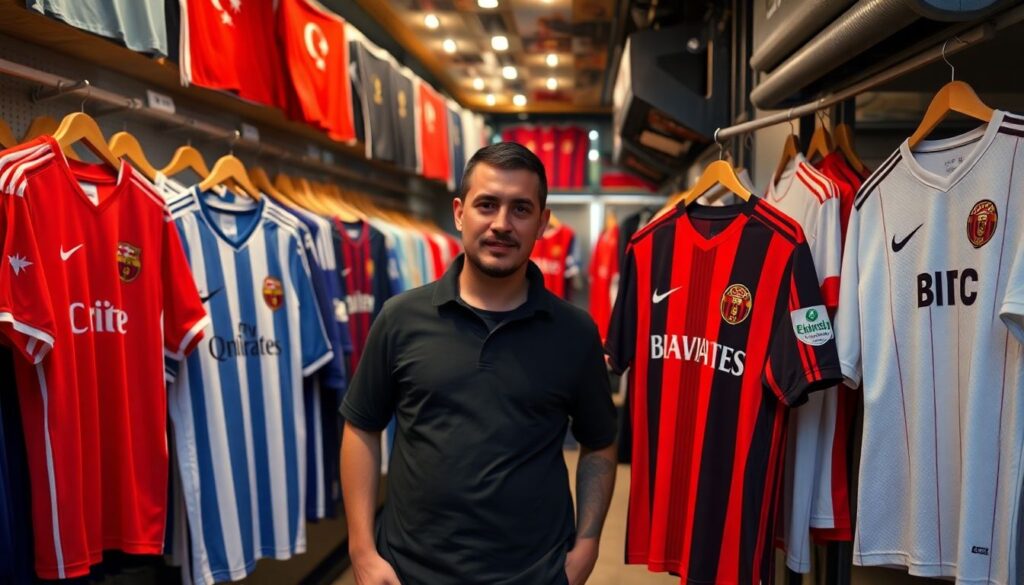
Use official club stores, league‑approved platforms, or well‑known Turkish e‑commerce sites with clear licensing details. Avoid very low prices and suspicious marketplaces; counterfeit shirts are common and usually lower quality.
How early should I arrive for Istanbul derbi match tickets Galatasaray Fenerbahce Besiktas games?
Arrive several hours before kick‑off due to heavy security checks and traffic. Use public transport where possible, follow police and steward instructions, and expect a long but energetic pre‑match build‑up around the stadium.
Can tourists join local street or amateur games in Turkish cities?
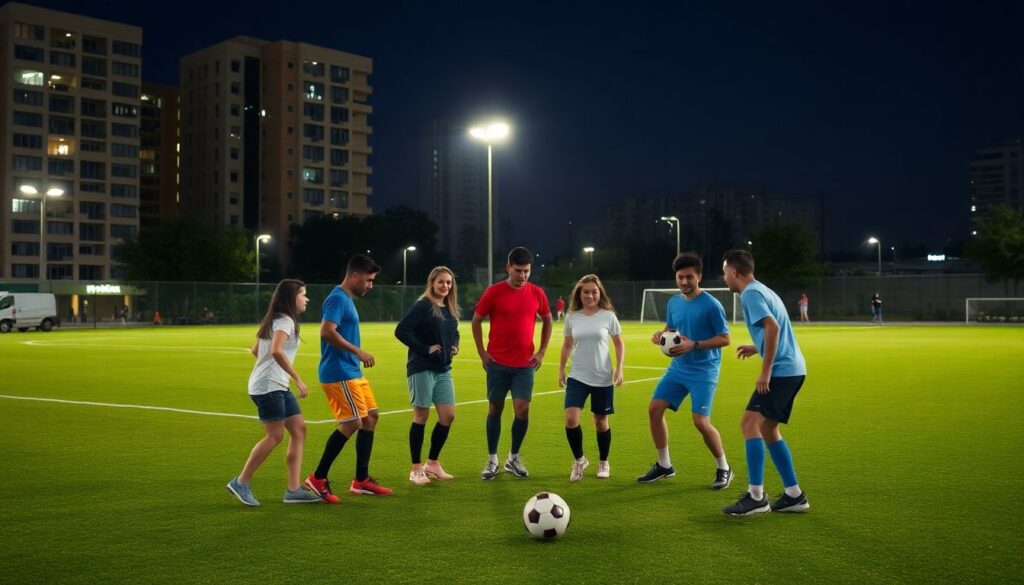
In many neighborhoods, people welcome polite visitors who ask to join and respect local rules. For a more organized option, book evening five‑a‑side sessions at commercial pitches or join amateur leagues that accept short‑term players.
How do cities balance residents’ comfort with intense fan activity?
Typical tools include matchday traffic plans, resident‑only parking, designated fan walking routes, and clear quiet hours. Dialogue with supporter groups often helps reduce noise and litter while keeping the atmosphere alive.