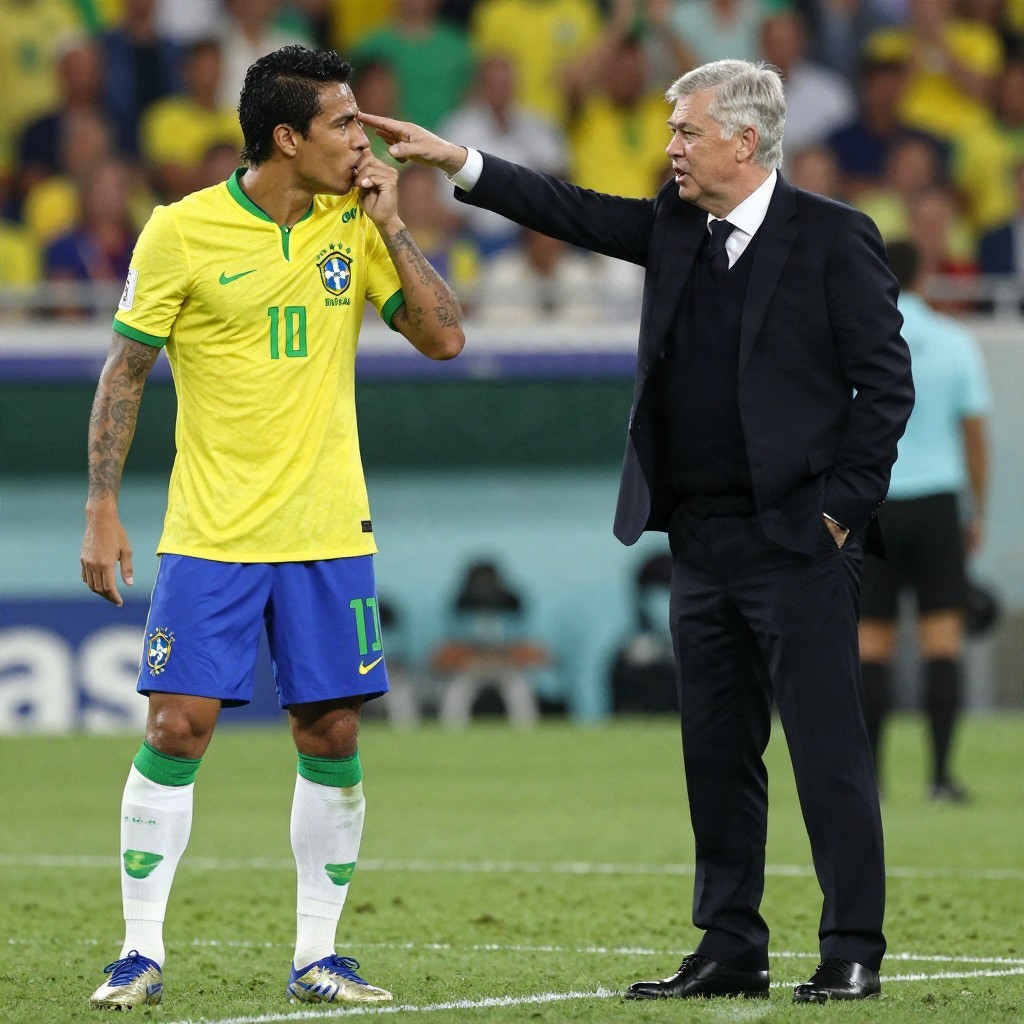
“Ancelotti Must Be Sacked”
Brazilian football legend Romário has called for Carlo Ancelotti to be dismissed after Brazil’s 3-2 friendly defeat to Japan, arguing that the Italian coach has yet to prove he is suited to leading the national team.
The loss brought fresh scrutiny of Brazil’s performance under Ancelotti. Romário, a former star of the national side, responded with a forceful demand that Brazilian Football Confederation president Samir Xaud end the coach’s tenure.
“Ancelotti, it’s over. Pack your things and go,” Romário said. He acknowledged the manager’s achievements at club level, describing him as one of the greatest coaches in world football, but insisted that those credentials had not been matched by his work with Brazil.
“Nobody is questioning what you achieved in the past,” Romário said. “You showed what you could do with clubs. But so far, you haven’t shown that you deserve this job with the Brazil national team. Enough is enough.”
Romário has previously argued that Ancelotti should be removed. Following the defeat to Japan, he sharpened that criticism and directed a public appeal to Xaud, who also serves as a senator.
“Samir, you are young, you are Brazilian, and I believe you want what is best for our football,” Romário said. “But now is the time to show that you have the courage to make a decision. Sack Ancelotti. Wearing the Brazil shirt is no joke. We cannot risk throwing away another World Cup. The time to act is now.”
The result against Japan was a friendly, rather than a competitive tournament match, but Romário’s response makes clear that he sees it as part of a broader concern about the direction of the national team. His comments place pressure on the federation to assess not only the scoreline, but also whether the team is progressing under its current coach.
A single defeat does not, by itself, establish whether a manager should be dismissed. Friendly matches are often used to test players, combinations and tactical approaches. However, they also offer a chance to evaluate how effectively a team carries out its plans against international opposition. For Brazil, the 3-2 loss has become a focus for debate over both performance and leadership.
Romário’s central argument is that success with elite clubs does not automatically guarantee success with a national side. International coaches work with players for limited periods, making clear tactics, quick adaptation and consistent selection especially important. Results and performances across a series of matches are therefore likely to matter more than any one game.
His appeal also raises a question for Xaud and the federation: whether to continue backing Ancelotti or to make a change before the next major challenge. Keeping a coach can provide stability and time to build a system; replacing one may satisfy demands for immediate action, but would also require the federation to identify a successor and give that person sufficient time to prepare the team.
For supporters, the concern behind Romário’s remarks is the prospect of another disappointing World Cup campaign. His warning that Brazil cannot afford to “throw away” another tournament reflects the high expectations attached to the national team and the pressure that accompanies every setback.
The federation has not been quoted here as announcing a decision on Ancelotti’s future. For now, Romário’s statements remain a prominent call for dismissal, made in the wake of Brazil’s defeat to Japan. Whether the result leads to a change in the coaching position will depend on the federation’s assessment of the team’s performances and its plans for the months ahead.