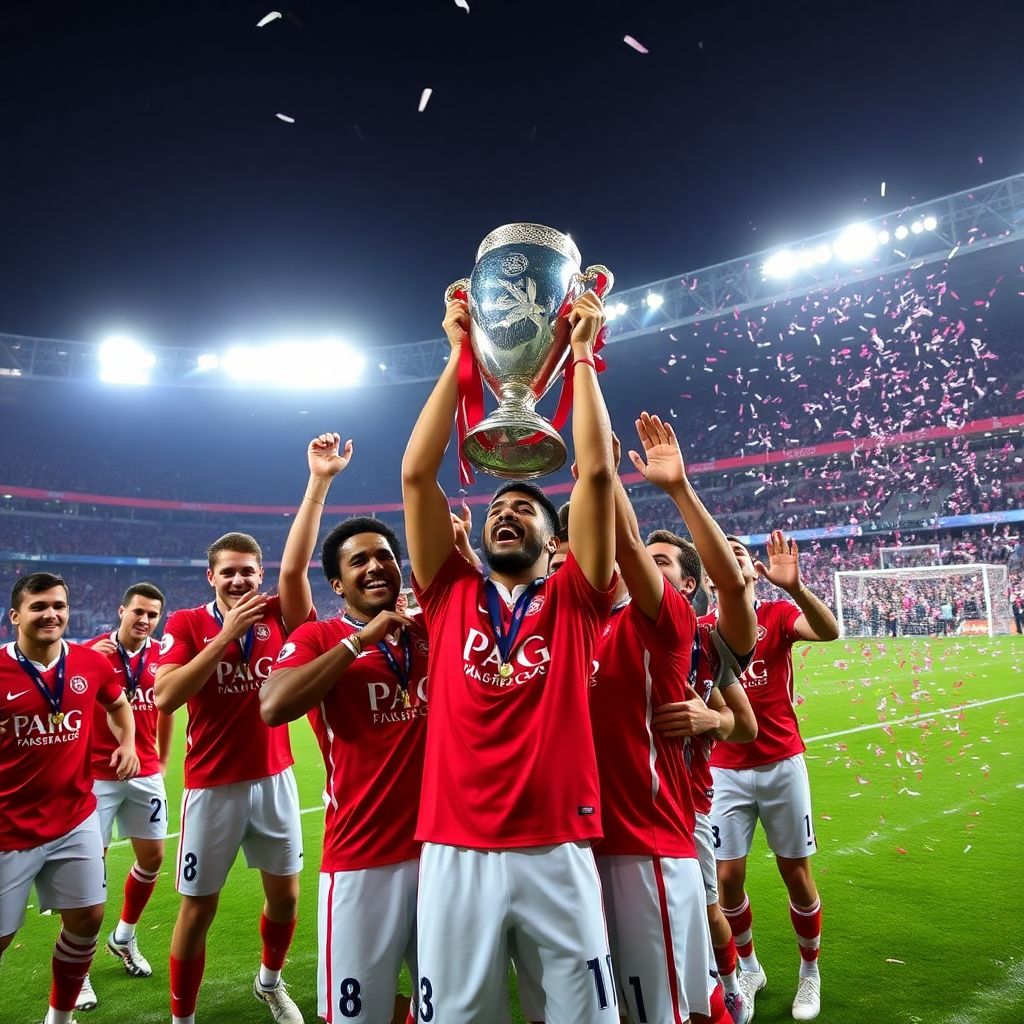
Marquinhos: We Have To Keep On Winning
Paris Saint-Germain captain Marquinhos underlined that the team cannot afford to relax after lifting yet another European trophy. Fresh from winning the 2026 UEFA Super Cup, the Brazilian defender stressed that this early-season success must be only the beginning, not the peak.
Speaking after PSG’s victory in Salzburg, Marquinhos admitted that the preparation period had been far from ideal, yet the squad still found a way to respond on the pitch. According to him, starting the campaign with a major international trophy sends a powerful message both inside and outside the club.
He pointed out that winning the Champions League and immediately following it up with the UEFA Super Cup is more than just a statistic; it is a reflection of how hungry the club remains. In his words, this “double” is evidence of the ambition that drives both the institution and the players every single day. Even with limited training time before the match, PSG showed resilience, adapted to the circumstances and coped with the pressure of another final.
For Marquinhos, lifting another trophy at the dawn of the season “feels really good” because it sets a tone of excellence. Yet he insists this feeling should not lull anyone into complacency. The defender stressed that the desire to win has to keep growing if PSG want to leave a deeper mark in football history and in the legacy of the club. Simply repeating past successes is not enough; the team wants to expand its place in the game’s collective memory.
A central element in this mentality, he explained, is the coach’s relentless approach. The technical staff constantly remind the players to forget what they have already achieved and to focus on what still lies ahead. The message in the dressing room is clear: if PSG truly intend to keep writing history, they must continue to win. No trophy guarantees the next one, and no achievement should become a comfort zone.
When asked whether winning still excites him after so many titles in his career, Marquinhos was unequivocal. He said there are still records to chase and new frontiers to cross. Every cup matters to him, regardless of its position in the hierarchy of competitions. For the captain, the greatest satisfaction comes from giving joy to the supporters who travel, spend money, and make sacrifices to follow the team. Seeing them smile in the stands remains, in his view, the most rewarding part of being a professional footballer.
He emphasised that matches and trophies are not just internal milestones for players and staff; they are moments shared with tens of thousands of fans in the stadium and millions watching around the world. The group views each final as a chance to repay that loyalty. Victory, then, is not only about medals and statistics but about an emotional connection with those who identify with the club’s colours.
Akliouche: A Club Built on Work, Humility and Relentless Ambition
New signing Maghnes Akliouche also spoke after the Super Cup success, offering insight into the environment he has found at PSG. The winger described arriving at a club where the core principles are clear: hard work, humility and a constant urge to win again and again. For him, these values define what Paris Saint‑Germain stand for today.
Akliouche explained that he immediately sensed the weight of expectations inside the team. Even for a newcomer, there is no time to simply marvel at the star‑studded dressing room or the club’s recent record; from the first day, the message is about contributing, improving, and aligning with the collective mentality. Everyone is expected to train intensely, to stay grounded despite fame, and to approach each new match as a fresh challenge.
Asked whether lifting a trophy so quickly after joining the club already turned his thoughts towards the Champions League, Akliouche chose a pragmatic angle. He insisted that the squad cannot jump ahead mentally. Their next priority is the French Super Cup, which he described as a demanding encounter that will require full concentration and energy. In his view, the right way to handle success is to immediately refocus on the upcoming task instead of dreaming too far ahead.
The winger also hinted at how difficult it is to adapt to a team that lives permanently in the spotlight. At PSG, he suggested, there are no “small” games. Every competition is treated seriously because each title reinforces the club’s stature and nourishes the habit of winning. For a young player like Akliouche, this environment can be intense, but it is also ideal for growth: you either embrace that standard or you fall behind.
Zaire‑Emery: A Brilliant Start Is Only the Beginning
Midfielder Warren Zaire‑Emery, one of the most promising talents in European football, echoed the sense of collective satisfaction while keeping his feet firmly on the ground. Reflecting on the UEFA Super Cup victory, he highlighted how difficult finals always are. In such matches, minor details and mental strength often decide the outcome, and this PSG side has learned to handle those fine margins.
Zaire‑Emery described the team as “simply magnificent” and insisted that they must keep pushing. He reminded everyone that there is yet another trophy to target shortly, underlining that the team’s mindset revolves around continuity: success must flow from one match to the next, one competition to the next. For him, the key takeaway from this start to the season is that PSG are beginning their campaign well, and “that is the most important thing.”
He also dwelled on the emotional side of winning. Lifting a cup, he said, generates unique sensations that are hard to express fully. The joy in the dressing room, the fireworks, the celebrations with fans – these are memories that players cherish for a lifetime. What PSG want now is to keep experiencing such occasions together, to multiply these special nights and strengthen the bonds between teammates.
When questioned how the squad manage to stay driven after collecting so many trophies in recent years, Zaire‑Emery revealed a simple but powerful motto: if there is a cup to be won, PSG will be there, chasing it. The players do not feel “full” or satisfied; they are never tired of winning. That same hunger, he added, characterises their coach as well. The technical staff demand the same intensity regardless of the competition’s name or the opponent’s status.
He concluded that this shared mindset is what makes the group “truly great.” The players know they are living through a remarkable period in the club’s history, and they are determined to extend it. For them, the path forward is clear: keep working, keep improving and refuse to slow down.
A Culture of Winning, Not Just a Series of Wins
The comments from Marquinhos, Akliouche and Zaire‑Emery paint a consistent picture: PSG are not treating these trophies as isolated triumphs, but as steps in building a long‑term winning culture. The focus is less on celebrating a single night and more on establishing a standard that must be met season after season.
In this culture, talent is only one component. Discipline, daily work and humility are emphasised as non‑negotiable qualities. Even world‑class stars are expected to accept rotation, tactical changes and high physical demands. Younger players, meanwhile, are encouraged to learn from veterans like Marquinhos, who personify commitment and resilience.
This mindset also helps them navigate difficulties. Marquinhos’ admission that the team had not trained as much as usual before the Super Cup illustrates how preparation is not always perfect. What makes the difference, though, is the ability to adapt, to maintain concentration, and to trust the system even under sub‑optimal conditions. For elite teams, overcoming adversity often defines their legacy more than easy victories do.
The Role of the Coach in Sustaining Motivation
All three players referenced the coach’s role in sustaining hunger and focus. Behind every trophy, there is a manager who refuses to let the group relax. Constantly asking players to forget the past is not about undervaluing previous titles; it is about preventing satisfaction from turning into stagnation.
Training sessions in such an environment are usually intense and highly structured. Tactical requirements are demanding, and mistakes are analysed detail by detail. This might seem harsh from the outside, but it is precisely what keeps a successful squad from slipping into bad habits. For players used to winning, the greatest danger is believing that victories will come automatically.
The coaching staff’s job is to challenge that assumption every day. By setting new goals, rotating the squad intelligently, and giving responsibility to emerging talents like Zaire‑Emery, the coach ensures that competition remains high and everyone feels accountable. In this way, motivation is not left to chance; it is managed and nurtured.
Fans as the Emotional Fuel of the Team
A recurring theme in Marquinhos’ and Zaire‑Emery’s comments is the importance of the supporters. Modern football can sometimes seem driven by financial and commercial factors, yet for players on the pitch, the most immediate and powerful connection remains the crowd.
The captain’s remark that the greatest pleasure is seeing the fans smile captures how players interpret their role: they are performers, but also representatives of a collective hope. Supporters travelling long distances to finals create an atmosphere that can push a team over the line in tight games. The noise, the chants and the colours in the stands form part of the team’s energy.
For PSG, whose fanbase has grown globally in recent years, every trophy win is also a message to that wider community. Each cup becomes proof that the project is moving forward, that the club is not merely famous but genuinely successful on the field. This, in turn, deepens the bond between fans and players and reinforces the sense of a shared journey.
Young Players Thriving Under Pressure
Another important aspect of PSG’s current phase is the integration of young talents into a squad full of experienced stars. Zaire‑Emery’s composure in speaking about finals and trophies reveals a maturity beyond his years. Being exposed early to such high‑stakes matches accelerates development but also tests character.
For a youngster, adapting to a dressing room like PSG’s means learning how to deal with pressure as something normal rather than exceptional. Training daily with top‑level teammates, competing for places, and being asked to perform in decisive games all contribute to building a strong mentality. This blend of youth and experience can be decisive in maintaining intensity across a long season.
Akliouche’s arrival adds another promising profile to this mix. By embracing the club’s principles of work and humility, he has the opportunity to grow within a structure that demands a lot but offers the chance to fight for major titles every year. For ambitious young players, there are few better environments to test themselves.
Looking Ahead: From Super Cup to the Rest of the Season
Although the UEFA Super Cup is an important achievement, none of the players interviewed treated it as an endpoint. Their eyes already turn towards the French Super Cup and the long sequence of domestic and European matches to come. Each competition will present different tactical challenges and physical demands.
Maintaining the current level will require rotation, careful management of minutes, and a constant renewal of focus. The season is long, and injuries, suspensions or dips in form are inevitable. What will matter is how the squad responds collectively when adversity arrives. The foundation laid by this early trophy can help foster confidence, but it is only a starting point.
If PSG manage to keep the balance between ambition and humility, between star quality and work ethic, they will again be among the favourites for every title they contest. For now, though, the message from inside the camp is simple and clear: enjoy the victory, thank the fans, then turn the page and prepare to win again.
In the words and attitudes of Marquinhos, Akliouche and Zaire‑Emery, one common conviction stands out: success at PSG is never viewed as a final destination. It is a stage on a much longer road. As long as there is another trophy to chase, they intend to be there – and to keep on winning.