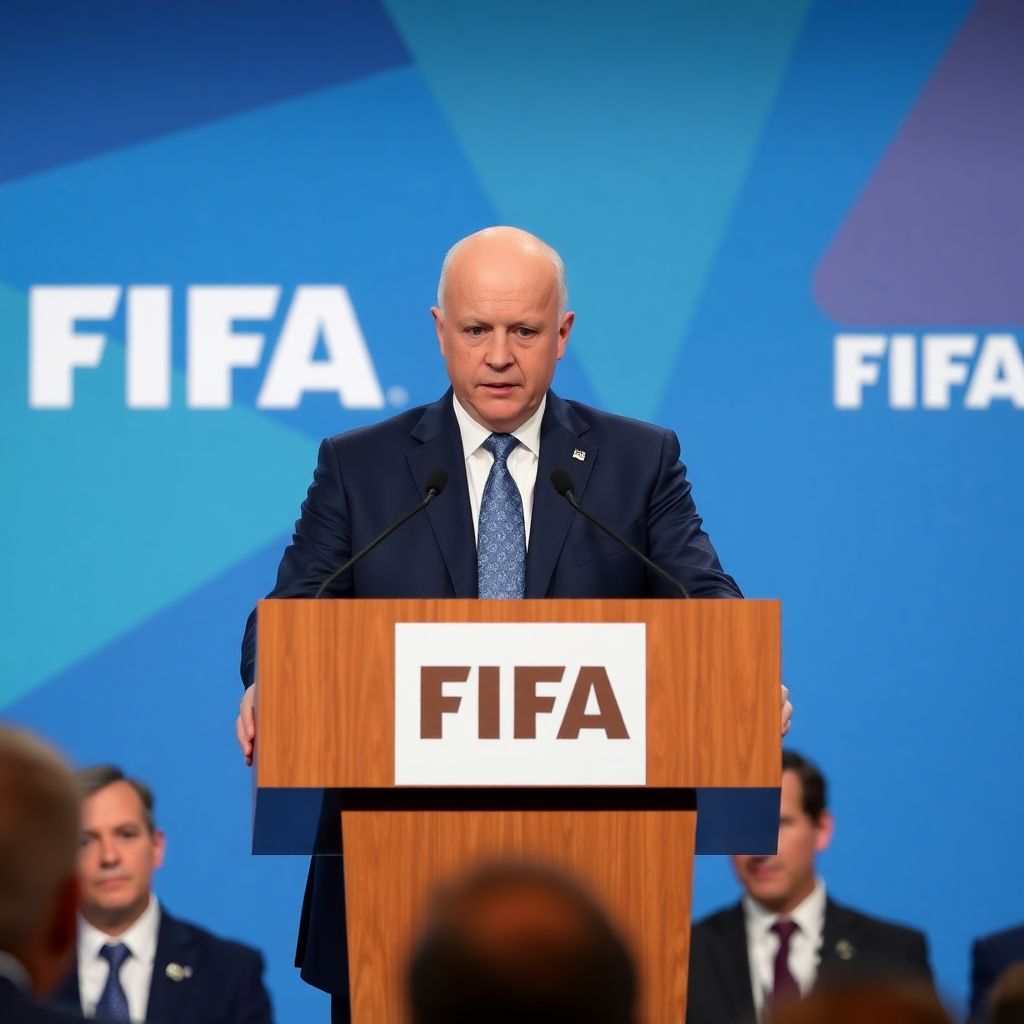
Infantino’s World Cup investment plan scrapped
FIFA has officially shelved president Gianni Infantino’s controversial project to open World Cup shares to private investors, confirming that the proposal will not move forward after months of internal debate and global backlash.
The initiative, known as the “FIFA Forward Enterprise” project, was designed to attract private capital by selling a stake in future World Cup revenues. According to Infantino, the idea was to create a new financial backbone that would allow FIFA to channel more funds into football development, especially in countries with limited resources and infrastructure.
In a statement published on FIFA’s official channels, Infantino explained that the project was always conditional on wide support within world football’s decision‑making structures.
He stressed that the plan was never intended to bypass FIFA’s members:
“The FIFA Forward Enterprise project aimed to build a foundation to further strengthen our member associations and our sport globally, particularly in countries that need support the most. From the outset, we made it clear that this plan would only be implemented after a consultation process with FIFA member associations, the FIFA Council, the confederations and broader stakeholders, and only if it received the backing of a majority of our members.”
However, as consultations unfolded, divisions deepened. Infantino admitted that, regardless of how much support the project still had in some quarters, it was becoming clear that the plan was generating fractures rather than unity.
“After carefully listening to all views, we have seen that this project, irrespective of the level of support, has led to divisions that run contrary to the objectives originally set,” he noted.
Infantino underlined that FIFA’s core mission is to bring the game together, not to create fault lines within it:
“Our goal has always been to unite and to improve, and that will remain our focus. As a result, this proposal will not be implemented. In the coming days and weeks, I intend to bring all relevant parties back around the table, guided by our shared passion for football and our commitment to keeping the game growing, especially in countries that need our support the most.”
A deeply split football world
The idea of inviting private investors into the World Cup’s commercial structure quickly turned into one of the most divisive issues of Infantino’s presidency. Many saw it as a radical shift away from FIFA’s traditional model, where revenues from major tournaments are fully controlled by the governing body and then redistributed through development programs and solidarity payments.
European football authorities were among the harshest critics. The European confederation made it clear that the plan crossed a red line. It warned that as long as the project was on the table, its national teams would not take part in FIFA competitions. That statement alone dramatically raised the political stakes and made it difficult for FIFA to claim any kind of consensus.
Elsewhere, reactions were mixed but largely skeptical. The confederations of North and Central America and Asia voiced strong reservations, openly criticizing the idea of partially handing the World Cup’s commercial future to private investors. In contrast, the African and Oceania confederations adopted a more cautious line, calling for further consultation rather than an outright rejection, but they also did not give unqualified support.
Internal pressure and a high‑profile resignation
Opposition was not limited to regional bodies. The plan also triggered significant resistance inside FIFA itself. The most striking example came when Carlos Cordeiro, a senior adviser to Infantino, chose to resign in protest.
In his resignation letter, Cordeiro argued that the strategy to sell a share of World Cup rights to private investors represented an unacceptable risk to the organization’s long‑term independence. He warned that the proposal could place FIFA’s future “in jeopardy” by tying its most valuable asset too closely to commercial interests that might not align with the broader objectives of global football development.
His departure sent a powerful signal that doubts over the project were not simply external or political, but also rooted within FIFA’s own leadership circle.
Why the project was so controversial
At the heart of the dispute lay a fundamental question: who should control football’s most lucrative event, and for whose benefit?
Supporters of the concept argued that partnering with major investors could secure long‑term, guaranteed funding streams, insulating FIFA from financial shocks and enabling more ambitious development programs around the globe. They insisted that, with proper safeguards, private money could coexist with FIFA’s social and sporting mission.
Critics, however, saw significant dangers. They warned that once private investors gained a stake in World Cup revenues, they would inevitably push for higher profits, which could lead to pressure for more tournaments, expanded formats, or commercial decisions that might not serve the interests of players, fans, or smaller football nations. There were also concerns that such a move could reduce FIFA’s flexibility in deciding how to allocate funds, weakening its ability to respond to crises or to prioritize grassroots development.
Another fear was symbolic but powerful: that opening the World Cup to private capital would be perceived as “selling off” part of the game’s heritage, turning a global cultural event into a quasi‑corporate asset.
What cancellation means for FIFA’s future
By officially abandoning the plan, Infantino is attempting to close a chapter that had the potential to escalate into a full‑blown governance crisis. The decision reduces the immediate risk of boycotts, institutional stand‑offs, and further high‑profile resignations.
However, shelving the project does not resolve the underlying challenge. FIFA still faces the same strategic dilemma: how to finance the continuous expansion of global football – from women’s competitions and youth tournaments to infrastructure, refereeing, and development programs – without compromising independence or over‑relying on a limited set of sponsors and broadcasters.
The episode is likely to influence how future proposals are crafted and communicated. Internal and external scrutiny around any major commercial reform will now be far more intense, particularly when it touches the World Cup.
Possible alternative paths
In the wake of the cancellation, attention is shifting to what might replace the abandoned project. Several options are likely to be explored:
– Strengthening existing development programs such as the current funding mechanisms, with tighter oversight to ensure money reaches regions that need it most.
– Seeking more diversified sponsorship and broadcasting deals, instead of semi‑privatizing World Cup revenues.
– Expanding commercial activities around other FIFA events in a more controlled way, keeping full ownership while trying to boost income through better marketing and digital products.
– Building more transparent financial structures so that member associations can see clearly how World Cup revenues are generated, managed, and redistributed.
These approaches would aim to deliver some of the financial benefits that the private investment plan promised, without ceding structural control over the competition itself.
The balance between money and mission
The rise and fall of the World Cup investment proposal highlights a tension at the core of modern football governance: the need to generate ever‑greater revenues to sustain the global game versus the obligation to protect its integrity and universality.
FIFA’s leadership now faces the task of rebuilding trust after a proposal that many stakeholders viewed as a step too far toward commercialization. Going forward, the organization will be judged not only on how much money it brings in, but on how transparently decisions are taken and how fairly resources are shared across the football world.
Infantino has framed the retreat from the project as a reaffirmation of FIFA’s unifying mission. Whether that message is fully accepted will depend on what concrete alternatives are proposed and how inclusive and open the next round of discussions proves to be.
For now, the message is clear: the World Cup will not be opened to private investors, and FIFA is once again solely responsible for steering the financial and sporting future of its flagship tournament.