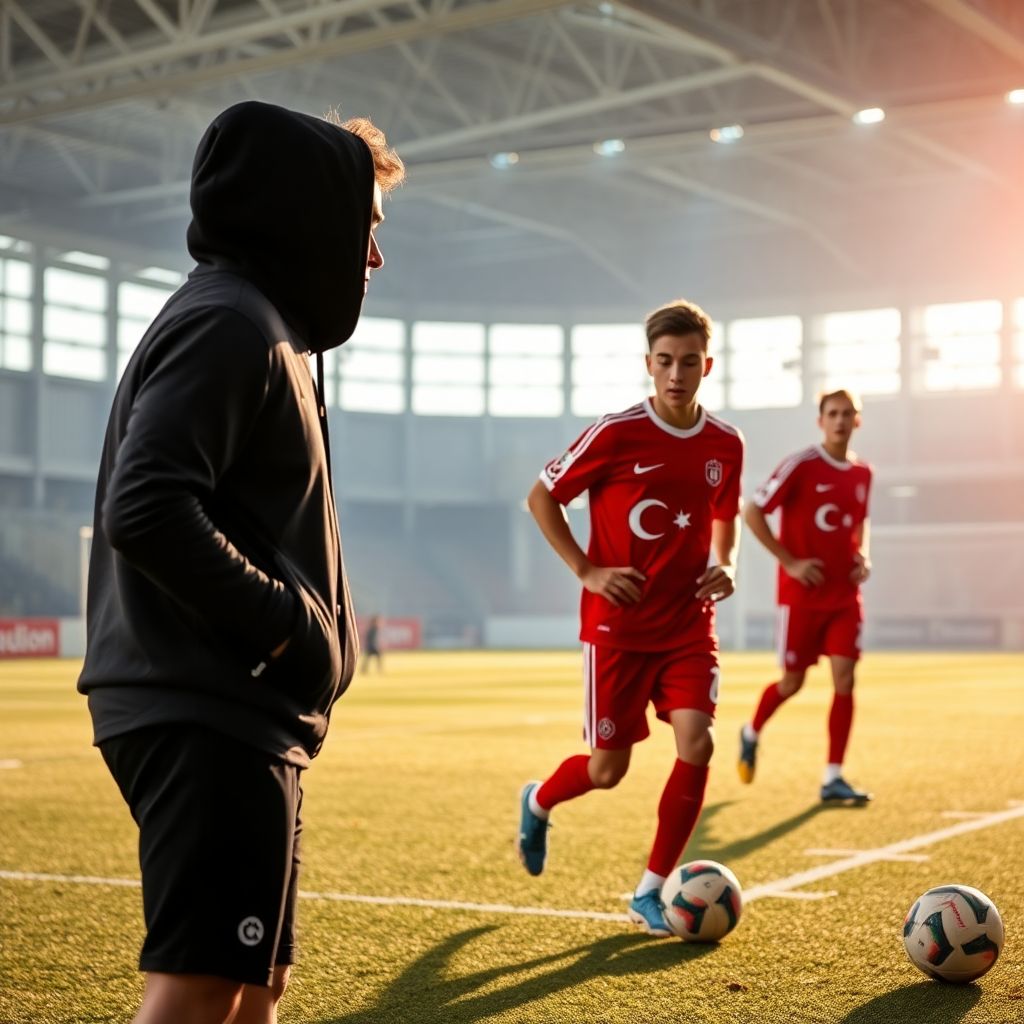
Turkey’s youth academies are structured club-run systems that scout local children early, give them long-term coaching, education and life support, then showcase the best in domestic and international competitions. Clear pathways, better facilities and more foreign links now allow Turkish talents to graduate from local streets and schools to major European leagues.
Essentials: how academies convert local talent into pros
- Early talent ID through school, regional and open turkey football academy trials.
- Age-specific coaching plans linking technique, tactics, physical and mental skills.
- Education, accommodation and welfare support around daily training.
- Sports science, data tracking and injury prevention integrated into routines.
- Showcase via national leagues, youth Cups, international tournaments and loans.
- Transfer networks connecting clubs, agents and European scouts.
The structure of Turkish youth academies: governance and funding
In Turkey, youth academies are mainly owned and governed by professional clubs, from Süper Lig down to lower divisions. The Turkish Football Federation (TFF) sets minimum standards for age groups, staff qualifications and competition formats. Each club then designs its own internal structure, usually from U8 or U9 up to U19.
Governance typically flows from the club board to a sporting director or academy director, then to head of coaching and age-group coaches. Clear reporting lines matter: they decide who signs a player, who promotes him to the first team, and who is accountable if development stalls. Good academies publish written philosophies and development frameworks.
Funding comes from a mix of club budgets, sponsorship, solidarity payments from transfers, and sometimes local municipality support. Larger clubs also monetise international clinics and professional football training camps in turkey, which both grow the brand and subsidise academy costs. Smaller clubs often rely on selling one or two players to sustain their programmes.
For a practical example, a mid-table Süper Lig club might allocate a fixed percentage of first-team wage budget to the academy, link bonuses to number of homegrown minutes played, and create a joint committee (board member + academy director + head coach) that reviews academy progress every month.
Talent identification and grassroots scouting networks
Turkey’s talent ID system mixes organised leagues, informal street football and structured scouting. Grassroots networks are crucial, because many future pros start in small neighbourhood clubs or school teams without big reputations. Strong academies build wide, simple-to-follow pipelines that parents and local coaches can understand.
- Local club and school scouting – Academy scouts regularly watch regional youth leagues, school tournaments and friendlies. They maintain relationships with PE teachers and local coaches who recommend standout kids.
- Open and semi-open trials – Many clubs run annual or seasonal turkey football academy trials, often promoted on social media. Serious academies pre-screen candidates with basic tests (speed, coordination, small-sided games) instead of just crowded 11v11 matches.
- Regional partner clubs – Larger academies sign cooperation deals with small community clubs. Partner coaches follow a simple curriculum, and their best players are invited to joint training days or short-term trials.
- Data and video sharing – Even without advanced tech, clubs can ask partners to send basic match videos. Scouts then shortlist players to visit. This is especially helpful for remote regions and reduces travel costs for families.
- Late developers and re-entry – Better academies keep “shadow lists” of players they liked but did not sign yet. They revisit them after a season, so late physical growth or position changes are not missed.
- Transparent communication with parents – After each trial, parents should receive clear yes/no answers and brief feedback. This builds trust and keeps doors open for later opportunities.
Actionable idea: map your city by districts, assign each scout 2-3 districts, and require a short monthly report (3-5 standout players, 2-3 interesting teams, 1-2 school events to revisit).
Coaching methodologies and player development pathways
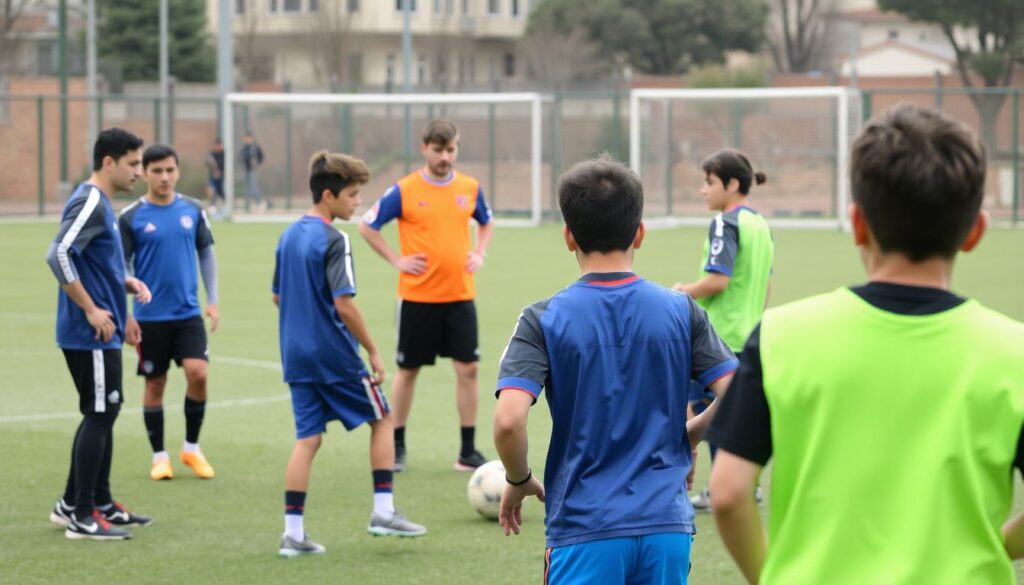
Coaching in Turkish academies is moving from pure result-focused training to player-centred development. Strong clubs adapt international best practices to local realities: passion for the game, intense crowds and often technical street football backgrounds. The challenge is to align all age groups under one clear pathway.
- Foundation stage (U8-U11) – Focus on fun, coordination, ball mastery and 1v1/2v2 situations. Simple rules: lots of touches, many small-sided games, minimal tactical instructions. Example: a session with repeated 3v3s where each team must complete three passes before scoring.
- Youth development stage (U12-U15) – Introduce basic team principles: pressing triggers, building from the back, positional roles. Video clips from first-team matches help kids see the club style they are growing into.
- Professional preparation stage (U16-U19) – Focus on position-specific details, physical conditioning, psychology and game management. Players learn how to handle pressure, media and agents, and how to maintain habits around recovery, sleep and nutrition.
- Individual development plans (IDPs) – Each serious academy player should have a 6-12 month plan with 3-5 key objectives (e.g., weak foot, decision speed, aerial duels). Coach and player review it every 6-8 weeks with video and simple metrics.
- Transitions between squads – Clear rules are needed on when a player trains “up” with older age groups or with the first team. For example: two strong performances in a row plus positive training reports trigger a trial week with the older squad.
- Coach education and alignment – Regular in-house workshops keep all coaches on the same page. One practical tool is a shared “club game model” document that describes preferred formations, build-up patterns and pressing schemes in simple diagrams.
For families wondering how to join turkish football club youth academy structures, understanding these stages helps them judge if training is age-appropriate and not just focused on winning weekend matches.
Facilities, sports science and performance monitoring
Facilities and sports science are no longer luxuries; they directly affect development and injury risk. Turkish academies vary widely, from one shared pitch and basic gym to full training centres with indoor halls, GPS, nutrition staff and on-site schooling. Even with limited budgets, some core elements can be implemented.
Benefits of modern facilities and sports science
- Dedicated training pitches allow age groups to train at optimal times with enough space for small-sided and full-pitch work.
- Simple gyms with free weights and functional equipment support safe strength development and injury prevention.
- Basic sports science (wellness questionnaires, RPE scales, simple jump tests) helps coaches adjust loads and avoid overtraining.
- Video rooms and analysis tools let players review games, understand tactical feedback and take responsibility for their growth.
- On-site medical rooms ensure quick treatment of minor injuries and structured return-to-play protocols.
Limitations and practical constraints
- Smaller clubs may lack budget for full-time sports scientists or GPS systems; overcomplicated tech can distract from coaching basics.
- Shared pitches with first teams or community usage can lead to poor pitch quality and restricted training times.
- Without good communication, data collection (wellness apps, tracking) can feel like extra work for players and staff.
- Imported methods from big European clubs may not match local schedules, school demands or climate, leading to burnout.
- Facilities alone do not create pros; poor session design in a great centre still wastes talent.
Internationally, the best football academies in turkey for international players usually advertise their facilities, sports science support and language assistance clearly, which can be a useful benchmark for local parents assessing standards.
From local to global: transfer pipelines and international exposure
Turning academy graduates into global stars requires visibility beyond domestic youth leagues. Strong Turkish academies build intentional exposure: international tournaments, friendly games against foreign clubs, and strategic use of agents and scouting networks. Misunderstandings about this process often create frustration for families and players.
- Myth: “If my child is talented, European clubs will find him automatically.” – Reality: visibility is built. Clubs must send players to tournaments, share video, and maintain relationships with international scouts and agents.
- Myth: “Foreign trials guarantee a contract.” – Many foreign “trial packages” are just paid camps. Without prior scouting interest or strong video, chances of signing are low; focus first on consistent performance at home.
- Myth: “Staying in Turkey blocks a global career.” – A growing number of players move from Turkish clubs to top European leagues. Stable minutes in the domestic league plus strong European competition performances are powerful shop windows.
- Mistake: ignoring education and language skills – Players who speak at least basic English or another European language adapt faster abroad. Parents and clubs should support this from early teens.
- Mistake: changing clubs too often – Constant transfers between academies for short-term promises damage continuity. One clear pathway in a serious club is usually better than many quick moves.
- Mistake: confusing commercial camps with professional pipelines – Some turkey soccer academies for foreign students provide genuine pathways, others offer mainly tourism. Check if they have real partnerships with pro clubs and documented player promotions.
Action tip for clubs: build a simple international calendar (1-2 tournaments or friendly tours per year) and maintain a clean video archive, so interested scouts can easily evaluate your best players.
Measuring success: KPIs, career outcomes and economic impact
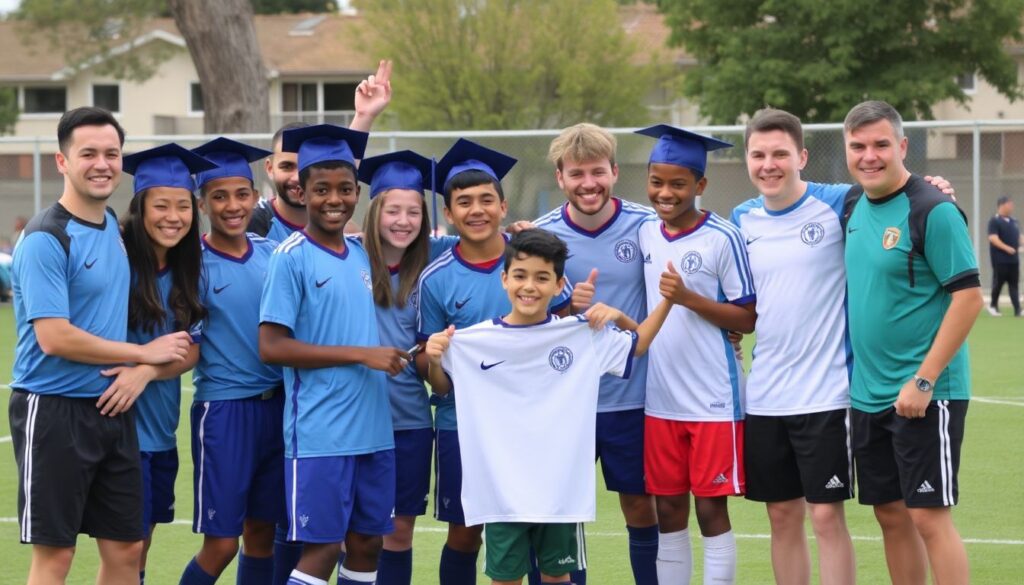
Success for a youth academy is not just one big sale; it is a steady flow of players into the first team and professional levels, plus positive community impact. Because numbers are sensitive and vary widely, it is more practical to focus on simple, trackable indicators over several seasons.
A straightforward approach is to define 5-7 academy KPIs and review them annually. Examples include: minutes played by homegrown players in the first team, number of academy graduates in professional leagues, school graduation rates, and net transfer income from academy players. Each club can set its own targets according to ambition and budget.
Here is a mini “pseudo-algorithm” that any academy director in Turkey can adapt without advanced software:
{
  "season": "2025-2026",
  "homegrown_first_team_players": 6,
  "homegrown_minutes_share": "track monthly",
  "academy_pro_contracts_signed": "count U19+ who sign anywhere",
  "positive_transfers": "list players sold or loaned with fees",
  "education_outcomes": "percentage completing school per age group",
  "injury_days_per_player": "monitor trend, aim to reduce"
}
By keeping this structure simple and consistent, a club can quickly see if investments in coaching, facilities and turkey football academy trials are turning into real careers and financial returns. It also allows better communication with boards, sponsors and local authorities.
End-of-article checklist for actionable next steps
- Map your scouting: do you cover schools, local clubs and regional partners systematically, with regular reports?
- Review coaching: does each age group follow a clear, written game model and individual development plan process?
- Audit facilities and sports science: list what you have, what you truly use, and one low-cost improvement per year.
- Clarify pathways: can every player and parent explain how first-team promotion or loans are decided?
- Define 5-7 KPIs: track them every season and adjust your budget and staff decisions based on these numbers.
Practical clarifications for clubs, coaches and parents
How can a parent evaluate if an academy is serious and not just a business?

Check if the academy has licensed coaches, written training plans per age, links to an official club and clear schedules. Ask how many players have moved to professional or semi-professional levels, and whether school education and welfare are part of the programme.
What should a young player expect at turkey football academy trials?
Expect basic physical tests, small-sided games and simple technical drills, usually over one or two days. Coaches look for decision-making, attitude and game understanding, not just tricks. Arrive rested, hydrated and on time, and bring both boots and running shoes.
Are professional football training camps in turkey useful for development?
They can be helpful for extra training and exposure if run by credible clubs or coaches. However, they should complement, not replace, regular club training. Always check coaching qualifications, training intensity and whether there are real links to professional teams.
How do turkey soccer academies for foreign students fit into the system?
Some operate as residential programmes combining schooling, Turkish football culture and links to local clubs. For foreign students, they can be a gateway into the local system, but it is important to verify club partnerships, visa support and academic quality before committing.
What is the realistic path from a youth academy to a big European club?
Most players first earn minutes in Turkish professional leagues, then move abroad after proving themselves over several seasons. Consistent performance, strong physical and mental habits, plus language skills, usually matter more than short trial trips or highlight videos.
How to join turkish football club youth academy structures without contacts?
Monitor official club websites and social media for open trial dates, and register early. Play regularly for a local club or school team, so you are match-fit and can provide recent game footage. Persistence across several trial cycles is often necessary.
Which age is best to start in an academy environment?
Children can join structured environments from early primary school ages, but the intensity should match their stage. For most, the key is regular training, enjoyment and good coaching; selection pressure and professional routines increase gradually from around U14-U15 onwards.