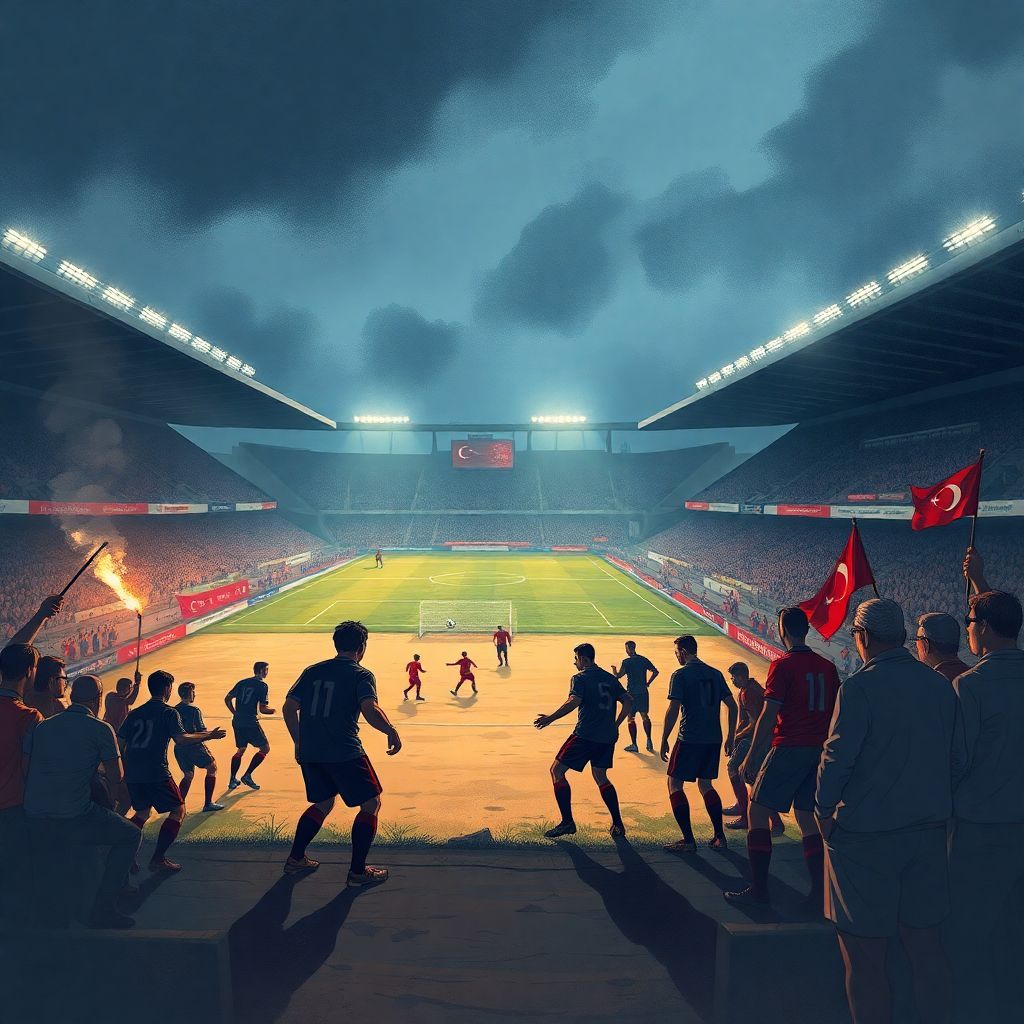
The 1. Lig as a pressure simulator, not a “minor league”
If you watch enough Turkish football, you realise pretty quickly that the TFF 1. Lig isn’t a quiet backwater. It’s more like a stress test for clubs that dream of the top flight. Crowded calendars, heavy pitches, tense away days in smaller stadiums – all of that shapes how TFF 1. Lig prepares clubs for Super Lig intensity. The jump in speed and media noise is real, but many of the habits that keep teams alive upstairs are learned one division below, long before the first night under big‑city floodlights.
Competitive structure and psychological pressure
League format as a built‑in stress test
The format itself piles on pressure. Two direct promotion spots and a mini‑knockout for the last ticket mean the margin for error is tiny. Every spring, we see TFF 1. Lig teams promotion to Super Lig decided by one goal, or even one late penalty. That kind of constant jeopardy forces coaches to manage nerves as much as tactics. Players learn to handle “must‑win” scenarios almost weekly, which is exactly what awaits them in relegation battles or European qualification races one level higher.
Play‑offs as a dry run for knockout football
The play‑off phase is basically a crash course in high‑stakes football. Two‑legged ties, VAR decisions under the microscope, national TV coverage – it all mimics cup semi‑finals in the top tier. Demand for Super Lig promotion playoffs TFF 1. Lig tickets shows how emotionally charged these games are, especially in cities that have waited a decade for a return. Clubs that navigate this gauntlet arrive in the Süper Lig with recent experience of managing travel, recovery, and game‑to‑game tactical tweaks under extreme tension.
Player development: from rough edges to top‑flight profiles
Tactical schooling and role flexibility
On the pitch, the league acts as a tactical laboratory. Many coaches switch between back threes and back fours in the same season, forcing defenders and midfielders to adapt roles quickly. That flexibility is crucial later, when a newly promoted side suddenly has to park the bus away at a title contender. The best TFF 1. Lig players transfer to Super Lig not just because of dribbling or finishing, but because they’ve already survived in systems where they press high one week and sit deep the next, often in front of demanding home crowds.
Data, scouting and individual growth
Clubs have become far more data‑driven. Tracking sprint volume, pressing intensity and expected goals is now standard, and that aligns with how Süper Lig recruitment departments work. This shared language makes it easier to scout and integrate signings from below. For players, it means feedback is more concrete: they can see how many duels they win or which zones they underuse. That narrows the gap between the two levels and shortens the adaptation period when a youngster is suddenly facing international‑level opponents.
Statistical trends and performance patterns
What the numbers say about “promotion readiness”
If you look at recent seasons, certain patterns repeat. Promoted sides that already play with a compact block and efficient transitions tend to survive longer than those relying purely on dominance in possession. Over a five‑year window, survival odds increase significantly when a champion concedes fewer than a goal per game in 1. Lig, even if their attack is only above‑average. The lesson is clear: defensive stability carries over better than raw attacking volume, and sporting directors are adjusting their squad building to reflect that.
Comparing different club strategies through results
We can roughly split promoted teams into three profiles: continuity projects that trust their 1. Lig core, aggressive spenders who overhaul half the squad, and hybrid models keeping a spine while upgrading key positions. Historically, the continuity and hybrid approaches deliver more stable mid‑table finishes, while the “spend big, change everything” model is hit‑and‑miss. Clubs that rip up the dressing room often lose the internal hierarchy and chemistry that carried them through the promotion race, and the numbers on early‑season points show that clearly.
Economic aspects: budgets, transfers and media money
Financial shock of promotion and how clubs prepare
Economically, promotion is both a jackpot and a trap. Broadcast revenue jumps multiple times, but so do wage expectations and agent fees. The smarter sides use their 1. Lig seasons to build lean structures first: renegotiating contracts, limiting short‑term loans, and investing in academy staff instead of just older free agents. That way, when the TV money arrives, it funds durable growth—like training facilities and analytics departments—instead of short‑lived vanity signings that become dead weight if relegation strikes.
Transfer market: selling and buying at the same time
A curious tension appears the moment promotion is secured. Other clubs circle around your best talent, while you’re simultaneously trying to recruit upgrades. It’s common to see the best TFF 1. Lig players transfer to Super Lig rivals rather than stay with their promoted teams, especially if they can join a more established side. Financially disciplined clubs anticipate this: they renew key contracts early, insert sell‑on clauses, and have ready‑made replacements identified, often from regional leagues or undervalued foreign markets.
Media, branding and the digital bridge to the Süper Lig
Growing audience and modern fan engagement
The days when second‑tier games were invisible are gone. Broadcasters and betting companies have fed demand for TFF 1. Lig live streaming for Super Lig fans who want to track future opponents or emerging stars. For clubs, that visibility is both a branding tool and a rehearsal: media teams learn to produce better content, handle criticism, and manage narrative around the team. By the time promotion happens, the communication department is less likely to panic after a bad run or a controversial refereeing mistake.
Commercial partnerships and local economies
Sponsors increasingly treat 1. Lig exposure as a stepping stone to national relevance. Local businesses sign short‑to‑medium deals with clauses that boost payments if the club goes up. That creates an ecosystem where regional economies are directly tied to sporting success. Matchdays stimulate hospitality, transport and retail, while training base expansions bring construction and service jobs. In short, the financial footprint of aspiring clubs steadily grows, transforming them from community projects into regional economic actors even before the first Süper Lig kick‑off.
Different approaches to building a “Süper Lig‑ready” club
Three main models and how they handle pressure
Looking across recent seasons, you can see three broad approaches. Each deals with the pressure of moving up—and staying up—in a different way: some lean on youth, others on veteran stability, and some gamble on fast external investment. The success rate isn’t random; it’s deeply tied to how clearly each club defines roles, culture and risk tolerance. Below is a closer look at these models and how they react when results turn against them for the first time after promotion.
- Youth‑driven model: invest heavily in academy, accept short‑term inconsistency for long‑term stability.
- Veteran‑heavy model: sign experienced pros with relegation‑fight experience, sometimes at higher wage cost.
- Investor‑push model: rapid squad inflation, foreign signings and ambitious targets in a short window.
Youth vs. experience: two contrasting philosophies
The youth‑driven route focuses on selling players upwards and reinvesting. It’s sustainable, but the risk is that a young squad may freeze under the bright lights of a packed derby. Veteran‑heavy teams, meanwhile, cope better with pressure swings and hostile atmospheres, but their wage bills can become rigid if results dip. In pressure moments—late‑season six‑pointers, injury crises—the experienced dressing room usually holds shape better, yet the youth model has higher upside if a golden generation clicks at the right time.
Matchday environment and fan expectations
Stadium pressure as a rehearsal for the big stage
Smaller doesn’t mean quieter. Many 1. Lig stadiums are cauldrons, with fans viewing promotion as a civic duty. This social pressure prepares squads for the volume and scrutiny of major Süper Lig arenas. Players learn to perform with ultras behind their own bench, but also to cope when they are booed off after a poor home draw. Captains and coaches who develop rituals—early warm‑ups, structured media time, quick debriefs—carry those routines upstairs, where noise and criticism are magnified.
Ticketing, logistics and crowd management
Behind the scenes, operations staff learn to scale up. Peak demand for big games, particularly late‑season derbies, forces clubs to modernise ticketing, policing plans and hospitality offers. When they later have to manage all‑sold stadiums every second week, the learning curve is less brutal. The logistical experience gained at this level turns into a competitive advantage, limiting chaos on matchdays and letting football staff focus on the pitch instead of panicking about access control or away‑end incidents.
Forecasts: where the 1. Lig is heading
Rising parity and the end of “yo‑yo comfort”
Looking ahead, the gap between lower Süper Lig and the 1. Lig is likely to shrink further. More tactical sophistication, better sports science and improved scouting mean that promoted sides will arrive better prepared but also face stronger competitors in their own division. The era of easy “yo‑yo clubs” that bounce up and down on structural advantage alone is fading. Instead, we’ll probably see more tightly packed tables and survival hinging on smarter mid‑season adjustments rather than simply spending a bit more money.
Impact of technology and internationalisation
Another clear trend is the growing internationalisation of squads and staff. As data platforms spread, it becomes easier for Turkish clubs to find undervalued players abroad and for foreign investors to identify sleeping giants. Combined with better fitness tracking and tactical analysis tools, this raises the bar for everyone. Promotion will still be a prize, but surviving after it will demand not just passion and local backing, but a level of planning and professionalisation that used to be reserved for only the top few clubs.
Broader impact on Turkish football
Talent pipeline and national team benefits
A stronger 1. Lig doesn’t just help clubs; it feeds the national pool. Players get minutes in high‑intensity games earlier, and coaches are tested against varied tactics. When these footballers eventually reach the national team or transfer abroad, they carry years of experience dealing with pressure and expectation. That, in turn, makes the domestic league more attractive to broadcasters and sponsors, creating a loop where money and attention filter down, encouraging more professional behaviour even at historically modest clubs.
Audience growth and long‑term industry health
The ecosystem around the second tier is also maturing. Interest in Super Lig promotion playoffs TFF 1. Lig tickets, fantasy football, and social media chatter has grown steadily, giving casual fans a reason to follow the entire pyramid instead of just the big three or four. This broader interest base insulates Turkish football from shocks to any single club and makes rights packages more valuable. Over time, that should translate into better infrastructure, safer stadiums and more stable careers for players and staff across all levels.
Conclusion: promotion as a process, not a moment
Why the path through 1. Lig matters more than ever
Viewed from a distance, promotion looks like a single moment—a final whistle, a pitch invasion, a bus parade. In reality, the 1. Lig functions as a multi‑year preparation course in finance, tactics, psychology and logistics. The clubs that treat it like that, instead of a temporary inconvenience, arrive in the Süper Lig with fewer illusions and more tools. For them, the pressure doesn’t disappear, but it becomes manageable, because they’ve already faced a slightly smaller version of it every week on the road to the top.