
The future of the Turkish National Team looks broadly positive, with genuine positional depth emerging in goal, central defence and wide attacking roles, but more fragile pipelines at defensive midfield and centre-forward. Over the next decade, sustainable success will depend on managing generational turnover, integrating diaspora talent and aligning tactics with the real profile of available players.
Snapshot: concise conclusions on Turkey’s decade-long squad trajectory
- Positional depth is healthiest in goal, at centre-back and in wide attacking roles; true ball-winning defensive midfielders and penalty-box strikers remain structurally scarce.
- Short term (1-3 years): core of the Turkey national team is already in or entering peak age, so stability rather than radical overhaul is the key selection principle.
- Mid term (4-6 years): academy output and diaspora scouting will define whether Turkey can rotate squads efficiently between tournaments without major performance dips.
- Long term (7-10 years): success depends less on one “golden generation” and more on building an evidence-based talent ID model, including a living Turkey national team future stars scouting report.
- Supporter behaviour (following youth games, analysing data, not just checking Turkey national team Euro 2028 odds) increasingly shapes which narratives gain traction around players.
- Commercial touchpoints such as how people buy Turkey national football team tickets, choose from a Turkey national football team jerseys shop, or find a live stream Turkey national football team matches are also data points that feed federation planning.
Mythbusting prevailing narratives about Turkey’s talent pipeline
Myth statement: “Turkey either has a golden generation or it has nothing.” The reality is more nuanced: the squad is a layered pipeline of overlapping age bands, with strength and fragility varying sharply by position.
When analysts talk about the “talent pipeline” of the Turkish National Team, they are describing the flow of players from youth levels, domestic leagues and the diaspora into the senior squad over time. For practical planning, this needs clear time horizons: short (1-3 years), mid (4-6 years) and long (7-10 years).
Rather than thinking in absolute terms (“world-class” vs “no talent”), it is more accurate to map:
- Quantity – how many players are realistically selectable for the senior team in a given position group.
- Quality tiers – starters at top-5 leagues, strong roles in mid-level European leagues, Super Lig standouts, and developmental prospects.
- Trajectory – whether a group is ageing out, at peak, or still climbing, and how often new names emerge from U17-U21 levels.
In practice, this perspective lets coaches and analysts answer concrete questions: Where can we rotate without losing quality? Which roles need targeted dual-national outreach? When do we phase out veterans? It also gives context to fan discussions that often revolve around Turkey national football team tickets, matchday squads and the immediate emotional highs and lows of results.
Goalkeeping outlook: generational turnover, contenders, and timelines
Myth statement: “Once the current number one declines, Turkey will face a goalkeeping crisis.” Evidence from club roles and youth pathways suggests a steadier transition with multiple viable options.
- Short-term stability (1-3 years, confidence: high)
Established keepers playing regularly in strong leagues or European competitions should remain first-choice options. The priority is continuity, plus 1-2 rotation keepers exposed to competitive qualifiers and friendlies. - Bench and rotation roles (1-3 years, confidence: medium-high)
Second and third keepers need real minutes at club level, not just a seat on the national bench. Practical approach: prefer keepers starting regularly in a slightly weaker league to backups in a top league. - Mid-term challengers (4-6 years, confidence: medium)
Younger goalkeepers currently in U21s or just breaking into Super Lig squads are the mid-term challengers. They should be integrated via training camps, non-crucial qualifiers and friendlies broadcast on live stream Turkey national football team matches that give selectors and analysts footage against senior opposition. - Technical and physical profile (across all horizons, confidence: high)
Modern Turkish keepers are increasingly judged on distribution, ability to hold a high line, and dealing with crosses under pressure. Federation goalkeeper coaches must align training themes with how the senior team wants to build from the back. - Diaspora and dual nationals (4-6 years, confidence: medium)
Some keepers developed in Germany, the Netherlands or other European systems have distinct strengths (e.g., footwork, aerial control). Systematic tracking of their club minutes and advanced stats is more important than last-minute recruitment panics. - Long-term experimentation (7-10 years, confidence: medium-low)
At U15-U17 levels, experimentation with taller profiles, sweeper-keeper styles and different training methodologies will define the next decade. This is where the federation must be bolder than clubs, which often remain risk-averse.
Backline analysis: centre-backs, full-backs and structural depth
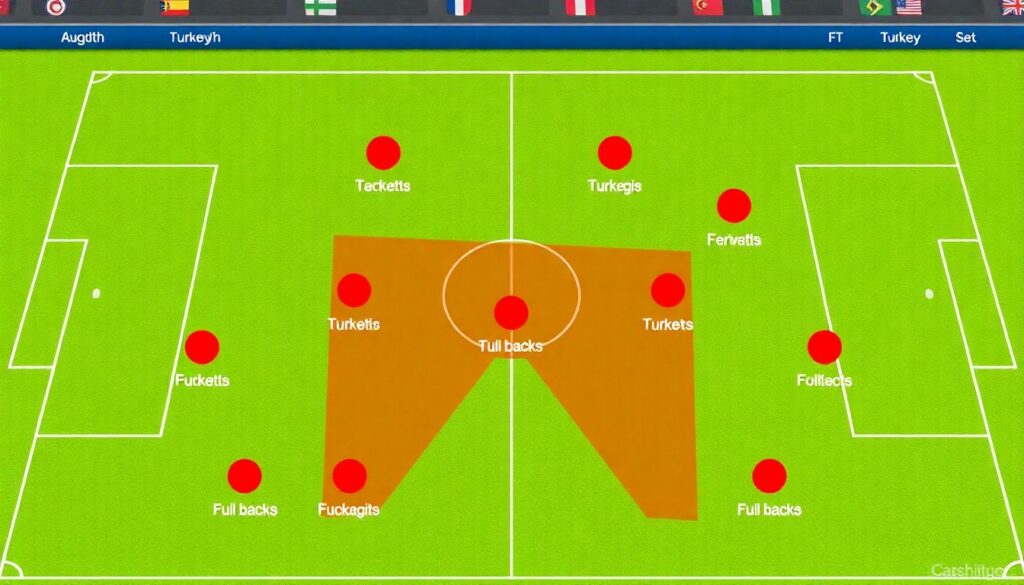
Myth statement: “Turkey always produces great centre-backs but never enough full-backs.” The current reality is closer to balanced depth, with different risk profiles on each side of the back line.
Positional application is easiest to see when broken into scenarios: tournament football, qualifiers, in-possession systems and emergency injury situations. The table below summarises the structural picture and practical depth for the main position groups.
| Line / Role | Current core (short: 1-3 yrs) | Near-term prospects (mid: 4-6 yrs) | Long-term outlook (7-10 yrs) | Depth confidence | Practical selection note |
|---|---|---|---|---|---|
| Goalkeepers | Established number one plus 1-2 experienced backups | Young Super Lig/U21 keepers pushing into senior picture | U17-U19 talents with modern distribution skills | High | Rotate backups in friendlies; prioritise club minutes over club brand. |
| Centre-backs | Physical, aerially strong starters with European experience | Ball-playing centre-backs developing in Turkey and abroad | Taller, faster profiles shaped for high defensive lines | High | Pair one destroyer-type with one passer to match modern build-up demands. |
| Full-backs / Wing-backs | Attacking-minded full-backs comfortable as auxiliary wingers | Converted wingers and youth-trained wing-backs | Positionally flexible players (full-back/CB or full-back/winger) | Medium | Against elite rivals, use more conservative profiles on at least one flank. |
| Central midfielders | Technically solid 8s and deep playmakers | Box-to-box profiles with better athletic range | DM/CB hybrids or high-press specialists | Medium | Pair creators with a genuine ball-winner in tough away qualifiers. |
| Forwards / Wingers | Flexible wide forwards and link-up strikers | Inside forwards and second strikers from top academies | Pressing forwards tailored to data-led systems | Medium-high | Rotate by role, not just by “best names”, to protect structural balance. |
Typical practical scenarios for applying this backline depth map include:
- Qualification campaigns
Use the highest-confidence centre-back pairing and at least one stable full-back, rotating only when opponents are clearly weaker. Data from qualifiers is more predictive than individual friendlies for long-term planning. - Major tournaments
With congested schedules, having three playable centre-backs and at least three trusted full-backs is critical. Selection must balance peak ability with robustness (injury record, recovery capacity). - High-pressing vs low-block game plans
For a high line, prioritise centre-backs with recovery pace and full-backs comfortable defending large spaces. For low blocks, aerial dominance, clearances and set-piece defending matter more. - In-game tactical switches
Coaches should favour players who can shift between back four and back three without substitution (e.g., a full-back who can tuck into a back three or a centre-back who can step into defensive midfield). - Injury or suspension crises
Backup full-backs and CB/FB hybrids become decisive. This is where a deeper Turkey national team future stars scouting report-covering fringe players in smaller leagues-can prevent last-minute improvisation.
Midfield futures: creative hubs, defensive anchors and role scarcity
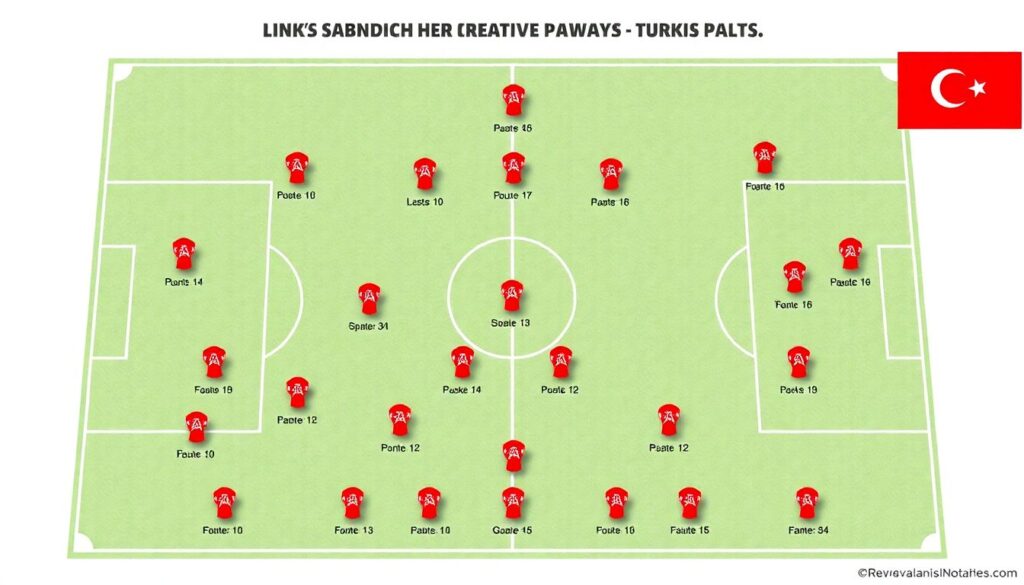
Myth statement: “Turkey has endless playmakers in midfield, so the centre of the pitch is automatically secure.” In reality, creative eights and deep playmakers are relatively plentiful, while true ball-winners and athletic all-rounders are rarer.
From a practical standpoint, building a decade-long strategy for the Turkish midfield means separating advantages (roles with multiple candidates across age bands) from structural gaps (roles that remain thin even after scouting the diaspora).
Positional advantages and emerging strengths in midfield
- Creative playmakers (confidence: high)
Turkey continues to produce technically gifted central players who can dictate tempo, carry the ball under pressure and contribute to attacking phases. Many are also comfortable playing as advanced 8s or as “free eights” supporting the front line. - Deep-lying passers (confidence: medium-high)
There is a steady flow of midfielders who can receive from centre-backs, switch play and break lines with passes. The main task is to improve their defensive awareness and pressing triggers rather than technical ability. - Set-piece contribution (confidence: medium)
Several midfielders provide quality from corners and free kicks, which helps compensate when the team faces low blocks and needs alternative paths to goal.
Structural limitations and long-term risks in midfield
- Ball-winning defensive midfielders (confidence: medium-low)
True destroyers-players who relish duels, intercept passes and protect the backline over large spaces-are in short supply. Over a decade, this can force tactical compromises or conversion of centre-backs into midfield roles. - Top-end athleticism and range (confidence: medium)
Some midfielders lack the pace and stamina to play intense pressing systems for 90 minutes, especially in back-to-back games at tournaments. Conditioning, not just talent, should drive selection. - Two-way box-to-box profiles (confidence: medium-low)
The most valuable international profile-capable of contributing in both boxes, pressing, passing and arriving late in scoring zones-is relatively rare. These players should be treated as strategic assets and given accelerated development plans. - Role clarity in youth development (confidence: medium)
Many youth players are used “everywhere in midfield”, which delays specialist habits. Clear positional tracks (6, 8, 10) at U15-U19 level would improve readiness for senior tactical systems.
Forward projection: strikers, wide attackers and tactical adaptability
Myth statement: “Turkey has no real strikers, only wingers playing up front.” The true picture is a mix of hybrid forwards, a few classic number 9s, and an ongoing adaptation to modern, fluid front threes.
Common mistakes and myths around projecting the next decade of Turkish forwards include:
- Confusing shirt number with role
Assuming that a player is a pure striker because they wear 9 or 10 ignores their actual tendencies. For example, some “strikers” naturally drift wide or drop deep, which can be beneficial if the team is set up accordingly. - Overrating youth-scoring records
Big goal numbers at U17 or U19 level often come from physical advantages that disappear in senior football. A practical scouting filter: prioritise movement quality, decision-making and finishing variety over raw youth tallies. - Underusing data from smaller leagues
Forwards starring in less-watched competitions-often the kind you rarely see live unless you specifically search beyond mainstream channels used to live stream Turkey national football team matches-can be very efficient. Ignoring them because of league prestige is a lost opportunity. - Expecting a “hero striker” to solve structural issues
No centre-forward can compensate for a disconnected midfield or uncoordinated pressing. Over the next decade, Turkey’s forwards must be evaluated on off-ball work, pressing intelligence and link-up play, not just goals. - Neglecting set-piece value
For a nation with tall centre-backs and good set-piece delivery, forwards who attack crosses and second balls aggressively add outsized value. This is especially critical in tight qualification games that underpin realistic Turkey national team Euro 2028 odds and beyond. - Ignoring role rotation in tournament planning
Relying on one main striker for all group and knockout games is risky. Coaches need at least two contrasting profiles (e.g., target man and mobile presser) who can start without a major tactical rewrite.
Supply chain for talent: academies, diaspora recruits and transfer-market signals
Myth statement: “If a player is not in a big Istanbul club academy, they will not reach the national team.” In practice, the modern Turkish squad draws from a much wider ecosystem: provincial clubs, foreign academies and later-blooming professionals abroad.
A practical way to understand Turkey’s talent supply chain is to follow one hypothetical player from youth to senior national team level. This also shows where fans, analysts and even data from commercial touchpoints-such as sales in a Turkey national football team jerseys shop or spikes in search for Turkey national football team tickets-interact with scouting and selection decisions.
Mini case study: a diaspora full-back from age 14 to the national team
- Local academy and early data (age 14-16)
A Turkish-origin full-back develops in a German or Dutch academy. Early indicators: sprint speed, endurance, willingness to overlap, and tactical understanding. Federation scouts track him via video, match reports and contact with youth coaches. - Dual-national attention (age 16-18)
As he signs a first professional contract, both the local federation and Turkey invite him to youth camps. This is when a clear Turkey national team future stars scouting report becomes crucial: it should outline his strengths, weaknesses and potential role in Turkey’s tactical framework, not just note his passport. - Youth national team integration (age 18-20)
He plays for Turkish U19 or U21 sides in competitive matches. Performance here matters more than club reputation. Video from these games, which serious fans might watch more than they live stream Turkey national football team matches, feeds into positional depth charts for future cycles. - Club breakthrough and transfer signals (age 20-23)
Regular minutes in a top-two division, followed by interest from higher-level clubs, signal that he can handle stronger opponents. For federation analysts, each transfer and new contract is a data point in projecting long-term readiness. - Senior call-ups and role testing (age 22-25)
He is introduced into senior squads in friendlies and lower-pressure qualifiers. Coaches test him at both full-back and wing-back, and track how well he connects with existing centre-backs and wingers. - Public perception and commercial echo (age 23+)
Good national team performances raise his profile. Fans buy his shirt from a Turkey national football team jerseys shop, and his image appears on marketing for Turkey national football team tickets. While commercial success doesn’t determine selection, it shows that a player has become a face of the project, which can influence leadership dynamics in the squad.
This pathway illustrates why systematic, evidence-based tracking beats anecdotal judgments. Over a decade, Turkey’s competitive advantage will come from recognising such profiles early, planning their integration, and aligning club, federation and data resources.
Evidence-based answers to selection, scouting and projection questions
How should fans interpret short-term results when judging the future of the Turkish National Team?
Single results, positive or negative, are a poor guide to decade-long prospects. Focus on age profiles, club roles, and whether the playing style fits the dominant strengths of current and upcoming players.
Which positions need the most strategic attention in the next 5-10 years?
Ball-winning defensive midfielders and reliable, adaptable centre-forwards are the main structural concerns. These roles should be prioritised in youth development, diaspora scouting and conversion experiments from neighbouring positions.
How can a regular supporter practically follow emerging national team talent?
Track youth internationals (U17-U21), minutes for young Turks in Super Lig and abroad, and credible analytical pieces or a Turkey national team future stars scouting report. This gives a better picture than transfer rumours alone.
Do big-club players always deserve priority in national team selection?
No. For international football, role fit, match readiness and tactical discipline often matter more than club size. A starter at a smaller club can be a better choice than a bench option at a giant.
What is the realistic role of data and odds in understanding Turkey’s medium-term outlook?
Metrics behind markets that set Turkey national team Euro 2028 odds-such as recent performance, age curves and opposition strength-can inform expectations, but they are not scouting tools. Use them as context, not as a replacement for positional analysis.
How do commercial aspects like tickets and jerseys connect to long-term planning?
Patterns in demand for Turkey national football team tickets, viewing figures when people live stream Turkey national football team matches, and shirt sales by player help the federation understand engagement. That information supports investment in academies and marketing for specific regions or demographics.
What can coaches at amateur and youth level do to help the national pipeline?
Develop clear positional habits, especially for scarce roles like holding midfielders and pressing forwards, and emphasise decision-making under pressure. Recording and sharing basic performance data also supports later-stage scouting.