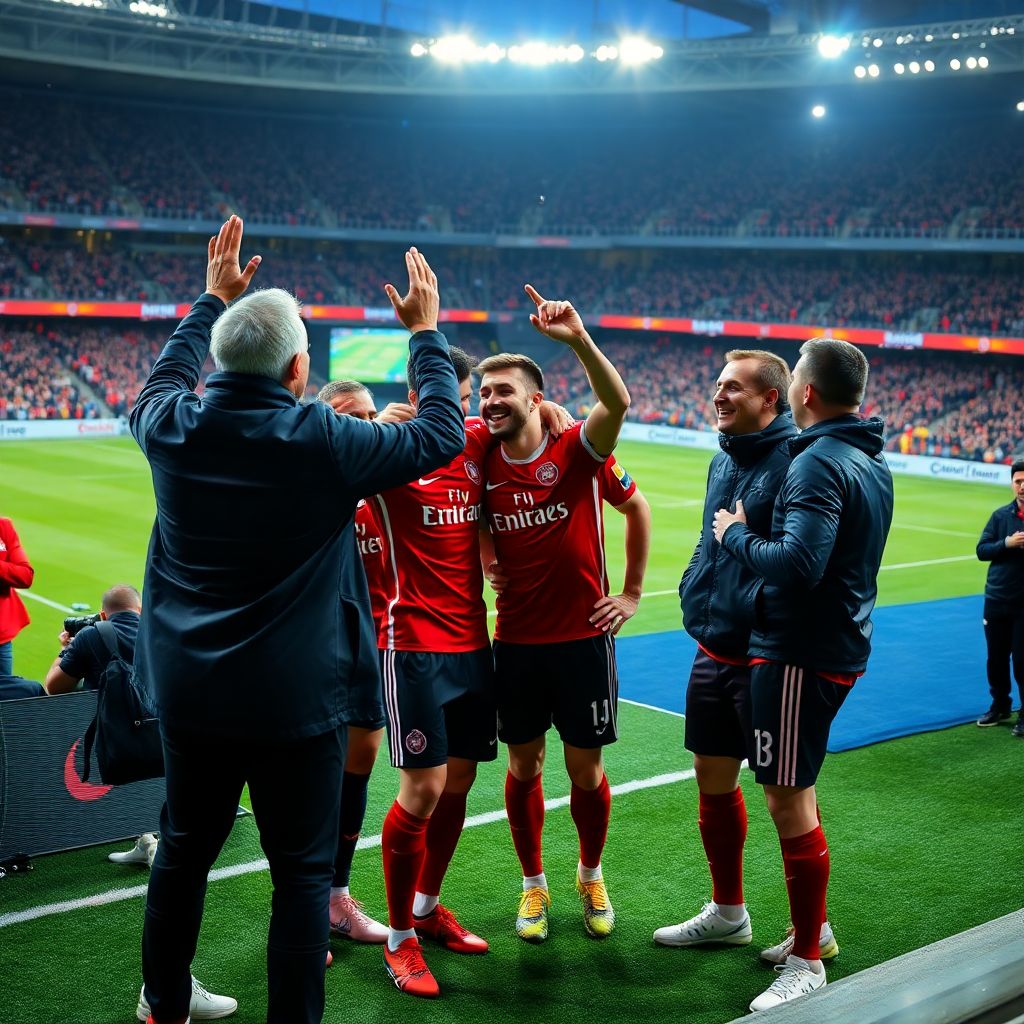
Turkish football players in European leagues succeed when technical quality from local academies is combined with smart transfers, tactical flexibility and strong off‑field support. This page defines what “success” really means, shows recurring patterns behind success stories of Turkish footballers abroad, and turns them into concrete checklists for coaches, agents and performance analysts in Türkiye.
Executive snapshot: defining success patterns of Turkish exports
- Most long‑term success stories of Turkish footballers abroad follow an early move from a strong domestic academy into a clear tactical role at a mid‑tier European club, not directly into a super‑club.
- Players who adapt positionally, for example moving from classic number ten to hybrid eight or wide playmaker, tend to last longer in top divisions.
- Stable minutes and progressive metrics such as key passes, box entries and defensive actions per game predict sustainable careers better than highlight goals or viral moments.
- Language learning, nutrition support and family integration are consistent, if underrated, factors in the journeys of top Turkish football talents playing in Europe.
- Well‑timed loans, buy‑back clauses and performance‑based bonuses reduce risk for both clubs and Turkish players moving abroad.
- Academies and agents that track data, design clear role profiles and plan multi‑year pathways place more players into the group of best Turkish players in Premier League and La Liga.
Breakthrough trajectories: youth academies to Europe’s top divisions
In this context, a “breakthrough trajectory” describes the repeatable path a Turkish player takes from a local pitch in Türkiye to a stable role in a major European league. It covers academy development, first‑team exposure in Süper Lig or lower domestic tiers, initial transfer abroad and consolidation of status in a foreign squad.
For Turkish football players in European leagues, the decisive phase is often the first foreign contract. The difference between simply “moving abroad” and building a decade‑long career lies in four elements: quality of academy schooling, clarity of tactical role, match minutes in the first foreign season and quality of integration support around the player.
Typical breakthrough trajectories can be grouped into three broad types. The first is the “early migrant”, leaving Türkiye as a teenager into a strong European academy. The second is the “domestic product”, becoming a key Süper Lig starter before a move to a bigger league. The third is the “dual‑culture” player, raised in a European country with Turkish roots and choosing Türkiye for national team level.
All three types can be seen in success stories of Turkish footballers abroad. The practical lesson for clubs and agents in Türkiye is to define which route best fits a specific player’s technical profile, physical maturity and personality, instead of chasing generic transfer news Turkish players to European clubs without a clear long‑term plan.
Case‑study micro‑timeline: Creative midfielder export
- Local phase: Develops in a big İstanbul academy with strong focus on first touch, scanning and combination play.
- Domestic breakthrough: Earns a starting role as advanced midfielder in a possession‑oriented Süper Lig side.
- Initial move: Transfers to a mid‑table club in a top five league, recruited to link midfield and attack.
- Role refinement: Shifts into a deeper playmaking role, improving defensive positioning and pressing intensity.
- Consolidation: Becomes central to build‑up, trusted in European competition and renewed on improved terms.
Case‑study micro‑timeline: Attacking full‑back export
- Local phase: Converted from winger to full‑back in a regional academy, emphasis on overlapping and crossing.
- Domestic breakthrough: Gains reputation in Türkiye for high running volume and aggressive forward runs.
- Initial move: Joins a development‑focused club in a major league, where full‑backs are key to chance creation.
- Adaptation: Learns compact defensive line behaviour, pressing triggers and inverted movement into midfield.
- Consolidation: Recognised as reliable starter, occasionally used on both flanks depending on game plan.
Case‑study micro‑timeline: Dual‑culture centre‑back
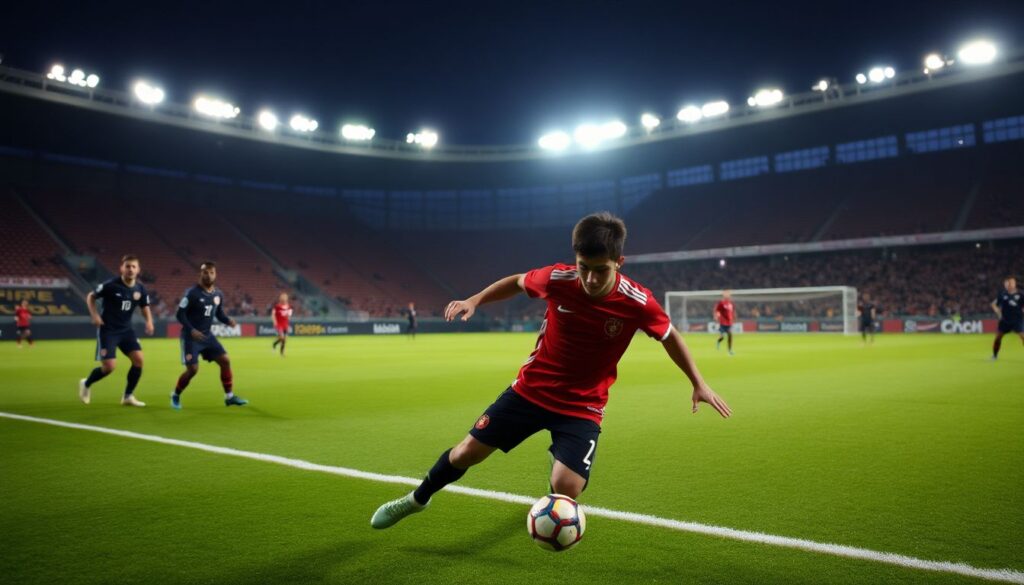
- Local phase: Trains in a European academy system, exposed early to structured build‑up and high pressing.
- National identity: Chooses Türkiye at youth international level, building visibility with Turkish scouts.
- First senior steps: Loans to lower‑tier club, facing direct, physical football and aerial challenges.
- Top division promotion: Earns move or promotion into top division squad, first as rotation option.
- Consolidation: Forms stable partnership, trusted in high‑pressure fixtures and international competitions.
Tactical adaptations: positional shifts and role evolution abroad
Tactical adaptation is the ability of a player to adjust position, responsibilities and decision‑making to the demands of a new league. For Turkish exports this is often the decisive difference between a short‑term stay and a sustained presence among the best Turkish players in Premier League and La Liga.
- Re‑profiling of classic tens into eights or wide playmakers. Many creative Turkish midfielders develop domestically as free tens. Abroad, they must contribute to pressing, cover larger spaces and participate in deeper build‑up. This requires improved endurance, defensive discipline and faster release of the ball.
- Transformation of wingers into modern wing‑backs or full‑backs. Attack‑minded wide players often extend their careers by learning the defensive side of the game. In back‑three systems, wing‑backs must manage the entire flank, timing overlaps, underlaps and recovery runs.
- Central defenders as first playmakers. Many European coaches want central defenders who can break lines with passes, not only clear the ball. Turkish centre‑backs who invest in scanning, body orientation and vertical passing find more opportunities abroad.
- Forwards adding pressing and link‑up. Strikers leaving Türkiye must press centre‑backs, guide opposition build‑up and combine with teammates between lines. Pure penalty‑box finishers face reduced demand unless they can also provide hold‑up play and off‑ball movement.
- Defensive midfielders expanding passing range. Traditional destroyers are less common in top clubs. Turkish sixes who can switch play, receive under pressure and play one‑touch combinations adapt more easily to fast European midfields.
- Goalkeepers as extra outfielders. Keepers are expected to start attacks and support high defensive lines. Comfort with both feet, calmness under pressure and communication in a foreign language become essential.
Performance analytics: key metrics that signal sustainable success
To understand which Turkish football players in European leagues are truly thriving, performance analysts look beyond simple goals and assists. Sustainable impact is visible in a cluster of technical, tactical and physical indicators tracked over multiple seasons.
Below is a qualitative comparative table of typical player archetypes and the season‑by‑season patterns that usually signal stability or growth. Values are intentionally descriptive rather than numeric, making them easier to adapt to different scouting systems.
| Player archetype | League context | Appearances trend | Goal or assist contribution | Key passes or box entries | Defensive actions involvement | Interpretation for analysts |
|---|---|---|---|---|---|---|
| Creative midfielder | Top division, mid‑table club | From irregular to regular starter across seasons | From occasional to steady contribution | Consistently high and rising | Moderate but improving | Adapting to tempo, adding work rate without losing creativity. |
| Attacking full‑back | Top division, European competition participant | Stable starter after settling period | Low, focused on assists and pre‑assists | High crosses and final‑third entries | High recoveries and tackles wide | Trusted in both phases, essential for width and transition defence. |
| Pressing forward | High‑tempo league | Rotation to starter in demanding schedule | Steady, sometimes streaky | Moderate chance creation via layoffs | Very high pressing and duels | Valued for off‑ball work, needs finishing consistency to reach elite level. |
| Ball‑playing centre‑back | Build‑up oriented team | Stable starter across campaigns | Minimal direct goal impact | High progressive passes and switches | High interceptions, controlled duels | Key to structure, career longevity likely if injuries are managed. |
In practice, analysts in Türkiye can create dashboards for top Turkish football talents playing in Europe that combine minutes, role stability and trend lines for progressive actions. The aim is not to label a season as good or bad in isolation, but to read whether the player is steadily becoming harder to replace.
Mini‑scenarios for usage:
- Club analyst in Süper Lig: Compare a domestic player’s output with similar Turkish exports to justify a move abroad or another season at home.
- Agent: Use trend data to target clubs whose tactical profiles match a client’s proven strengths.
- National‑team staff: Monitor how players’ roles abroad evolve to adjust their usage in international matches.
Club integration strategies: language, training and off-field support
Technical ability brings a Turkish player to Europe, but integration keeps the player there. Clubs that treat Turkish signings as full people, not only assets, reduce adaptation time and protect their investment. For the player, soft factors such as language and housing are as concrete as tactical meetings.
Positive integration levers that boost success
- Structured language learning. Early, intensive language lessons increase tactical understanding, improve dressing‑room relationships and reduce isolation.
- Cultural mentoring. Assigning a staff member or senior teammate familiar with Turkish culture helps bridge everyday differences, from food to communication style.
- Family support. Help with visas, schooling for children and housing stability allows the player to focus on training and matches.
- Role clarity from coaching staff. Regular feedback sessions about expectations and performance avoid confusion, especially for players shifting position.
- Individual physical programmes. Tailored conditioning adjusts the player to the intensity of a new league, reducing injury risk.
- Media and social‑media guidance. Coaching around public communication reduces off‑field distractions and pressure.
Constraints and risks that must be managed
- Language barriers for coaches and staff. Without translators or bilingual staff, even good tactical ideas may not reach the player clearly.
- Short‑termism in squad planning. If a player is signed without a defined pathway, loan chaos and bench time often follow.
- Over‑reliance on compatriot groups. Large clusters of compatriots can be helpful, but may slow wider integration if not managed.
- Pressure from fan expectations. High‑profile arrivals from Türkiye may face unrealistic demands, especially when framed as the next big star.
- Mismatch of playing style. A club that changes coach or philosophy shortly after the transfer can leave the player mis‑cast.
Transfer mechanics: fees, loan paths and market timing
Understanding transfer mechanics is central for agents and clubs in Türkiye who want more than headline‑driven moves. The goal is not only to appear in transfer news Turkish players to European clubs, but to engineer moves that fit the player’s development arc and the buying club’s strategy.
- Myth: Highest fee equals best move. A record sale can trap a player at a club that overpaid and expects instant impact. More moderate fees tied to achievable bonuses often create healthier pressure and development space.
- Myth: Direct jump to elite club is always ideal. For most players, a step into a mid‑tier or development‑minded club is better. There, they can play regularly, adjust tactically and earn a later move to a giant.
- Myth: Loan spells signal failure. Well‑planned loans can provide tailored playing time, exposure to different tactical systems and psychological growth. The problem is not the loan itself, but unclear objectives and poor club choice.
- Mistake: Ignoring squad depth charts. Joining a club with several established players in the same role makes minutes unlikely. Serious due diligence on existing squad structure is essential.
- Mistake: Underestimating work permit and passport issues. Administrative barriers can delay integration. Agents must plan these aspects as carefully as salary or contract length.
- Mistake: Timing moves only around big tournaments. While international exposure helps, rushing transfers based solely on short tournaments can lead to unstable club fits.
Development takeaways: actionable recommendations for academies and agents
Successful stories of Turkish players abroad are rarely accidents. They are designed through aligned work of local academies, proactive agents and receiving clubs. The objective is to convert potential into repeatable, exportable quality, not just to produce one‑off stars.
Mini‑case: Designing a pathway for a creative midfielder
- Academy stage: Build strong fundamentals under pressure: first touch, scanning every moment, short‑long passing blend, pressing triggers.
- Pre‑export stage: Secure domestic first‑team minutes in a role that resembles how the player will be used abroad, even if that means deeper positioning.
- Transfer design: Target a club that values possession and gives creative freedom between the lines, with clear plan for language and role coaching.
- First seasons abroad: Focus objectives on minutes, tactical understanding and physical adaptation, not immediate superstar status.
Mini‑case: Building a profile for an attacking full‑back
- Academy stage: Train both as winger and defender to expand versatility; stress crossing on the run and recovery sprints.
- Pre‑export stage: Gain domestic experience in systems that demand high full‑back involvement in attack.
- Transfer design: Choose leagues that traditionally use offensive full‑backs so that the player’s strengths are maximised.
- First seasons abroad: Emphasise defensive fundamentals and tactical positioning to earn coach trust.
Mini‑case: Planning for a ball‑playing centre‑back
- Academy stage: Encourage comfort on the ball, passing through lines and calmness under pressure, not only clearances.
- Pre‑export stage: Ensure exposure to high defending line and organised pressing structures.
- Transfer design: Target clubs known for structured build‑up, where centre‑backs start attacks regularly.
- First seasons abroad: Focus on tactical communication and partnership building with fellow defenders and goalkeeper.
Short usage scenarios for Turkish stakeholders
- Youth academy director in Türkiye: Use the archetypes and timelines here to audit your academy pathways and align training with realistic European role demands.
- Agent representing a young Turkish winger: Map which leagues heavily use attacking wing‑backs, then pitch the player explicitly as a future wing‑back, not only as a winger.
- Performance analyst at a Turkish club: Benchmark your players’ trends against the qualitative table to identify which profiles are closest to successful exports.
- National‑team coach: Adjust tactical plans based on how your Europe‑based players are used weekly at their clubs, avoiding role conflicts.
Export readiness checklist for academies, agents and players
- Defined player archetype and realistic target leagues are documented before any negotiation starts.
- Recent match data shows stable or improving impact beyond goals and assists, aligned with the target role.
- A clear integration plan exists for language, housing and family, supported by the buying club.
- Loan and buy‑back options are structured around development milestones, not only financial goals.
- All parties share long‑term perspective, prioritising minutes and learning over short‑term headlines about the best Turkish players in Premier League and La Liga.
Practical clarifications for coaches, agents and analysts
How can a Turkish club use European success stories in player development plans?
Clubs can map their academy players against the archetypes described here, then align training and match roles with how successful Turkish exports are used abroad. This turns abstract dreams of playing in Europe into concrete skill and role targets.
What should agents prioritise when pitching Turkish players to European clubs?
Agents should present a clear tactical profile, performance trends and a realistic pathway rather than only highlights. Showing where the player fits in the squad, how they have already adapted to similar roles and how off‑field integration will be supported makes deals more convincing.
How do analysts in Türkiye evaluate if a player is ready to move abroad?
Analysts compare performance over multiple seasons, looking for stable minutes, consistent impact in key actions and adaptability across systems. They also consider psychological indicators such as resilience in big matches and ability to follow complex game plans.
Are mid‑tier European leagues a better first step than elite competitions?
For many players, yes. Mid‑tier leagues often offer more minutes, patient development and tactical teaching. Once a player proves consistent impact there, a move to a bigger club or league becomes more sustainable.
How important is language learning for Turkish footballers abroad?
Language is central for tactical understanding, social integration and leadership. Players who learn the local language quickly tend to gain coach trust faster, understand detailed instructions and feel more comfortable in the dressing room.
Can late movers from Süper Lig still build strong European careers?
Yes, as long as physical condition, tactical adaptability and mentality are high. Late movers often bring maturity and leadership; the key is choosing a club and league where their strengths remain relevant for several seasons.
How should success be defined beyond goals and assists?
Success includes stable selection, contribution to team structure, adaptability to different roles and positive influence on team results over time. Defensive work, pressing, build‑up involvement and leadership are equally important indicators.