Why the Super Lig Feels Different the Moment You Land
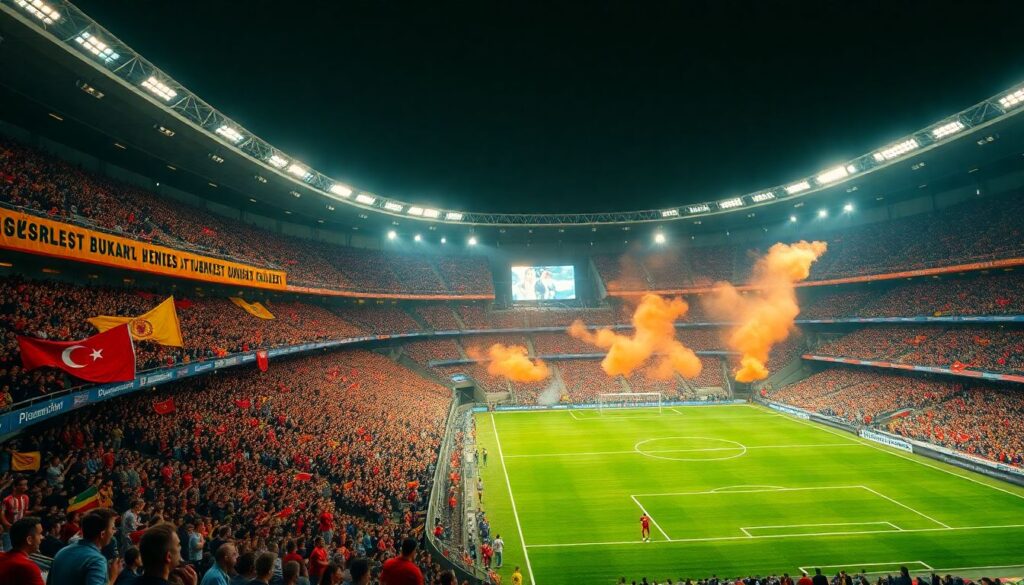
The first thing global stars say when they arrive in Türkiye is usually not about tactics, but about noise. The Turkish Süper Lig is a top‑flight league where atmosphere isn’t background — it’s an active variable. By “atmosphere” here we mean a mix of crowd volume, choreography, social media pressure, and non‑stop coverage that turns every league game into a mini‑derby. In more “controlled” environments like the Bundesliga or Premier League, players talk about tempo and systems. In Istanbul, Izmir or Trabzon, they start with flares, drums, and the feeling that the stadium is practically on the pitch, compressing space and time for any new arrival thinking they’ll get a calm adaptation period.
When analysts talk about “turkish super lig foreign players adaptation”, they are not just describing on‑field adjustments. They are capturing a whole onboarding process where players must relearn what “home” and “away” mean. An away night in Kayseri in January combines icy pitches, swirling wind and a stadium chanting 90 minutes, even if their team is 10th. The rhythm of the league is also different: TV slots stretch from early evening to late night, Ramadan changes daily routines, and the news cycle runs 24/7 around the big three in Istanbul. For many stars used to quieter mid‑table fixtures abroad, this intensity is the first real shock to the system.
Defining the Core Concepts: Culture, Tactic and Tempo
Before diving deeper, a couple of working definitions help. “Football culture” here means the bundle of rituals, media narratives, fan expectations, and unwritten locker‑room rules that shape how a league feels from the inside. “Game model” is the coach’s blueprint: preferred formations, pressing triggers, build‑up patterns, and roles. “Tempo” is not only running speed; it’s how fast decisions must be made under pressure. In Türkiye these three elements collide. A club might sign a Brazilian playmaker expecting samba flair, but within weeks he’s learning that the game model requires aggressive counter‑pressing and the culture demands visible passion in every duel, even in the 89th minute of a 3–0 win.
In more “algorithmic” leagues like the Premier League, game models dominate and culture adapts around them. In Türkiye, the equation flips: culture often bends tactics. This matters for how foreign players adapt to turkish football culture; new arrivals discover that a “good performance” is rated not just on data like xG or pass completion but on perceived fight, gestures toward the crowd, and willingness to chase hopeless balls. A winger might complete seven dribbles but get criticized for avoiding tackles. A centre‑back who thunders into early challenges energizes everyone, even if his passing range is limited. Understanding this cultural weighting system is the first invisible homework for any imported star.
From Rio to Istanbul: Why Brazilians Keep Coming Back
There’s a special chapter for brazilian footballers in turkish super lig history. From classic No.10s to modern inverted wingers, Brazilians keep gravitating toward Türkiye because the league offers a familiar blend: emotional crowds, open games, and coaches who still value improvisation. For many, it feels closer to Série A back home than to, say, the rigid positional play often demanded in top European leagues. Brazilian players are raised on the idea of “jogo bonito” — expressive, risk‑taking football — but also on the reality of physical, sometimes chaotic matches. The Süper Lig merges both, so a Brazilian playmaker doesn’t feel as alien as he might in a hyper‑structured northern European setup.
Still, adaptation is no walk in the park. Language barriers are real, winter temperatures are a shock, and travel within Türkiye (with flights, bus rides, and varying pitches) can sap energy. Many Brazilian players describe a “three‑step” arc: first month is emotion — new crowd, new anthem, new city view over the Bosphorus. Next three months are confusion — tactical instructions through interpreters, unfamiliar food routines, and questions about refereeing styles. After that, the ones who succeed lean into local life: learning simple Turkish phrases, discovering where to eat feijoada or churrasco in Istanbul, and building micro‑communities with fellow South Americans and local teammates who share similar humor and music tastes.
Text Diagram: Typical Brazilian Playmaker Role in a 4‑2‑3‑1
Imagine a simple vertical sketch. At the bottom, a back four: two centre‑backs, two full‑backs slightly wider. Above them, two holding midfielders in a horizontal line. Ahead, a band of three: left winger, central playmaker, right winger. At the top, a lone striker. The Brazilian usually stands in that central “3” position, floating between lines.
[Diagram description:
GK
CB —— CB
LB —— RB
DM —— DM
LW —— AM (Brazilian) —— RW
ST]
Their adaptation task: in Türkiye, this “AM” is asked not only to create but to press the opposition pivot aggressively, especially after a turnover. Coaches now insist that even the most gifted Brazilian must cover the opponent’s deepest playmaker, turning a luxury role into a two‑phase job: artist with the ball, destroyer without it.
Pressing, Duel Culture and Why Training Feels Like a Match
A key tactical term for the modern Süper Lig is “pressing” — organized collective pressure to win the ball back quickly. But sub‑concepts matter. “Counter‑press” (or “gegenpressing”) is the surge toward the ball immediately after losing it. “Duel culture” describes how much value fans and coaches attach to winning individual physical battles. In Türkiye’s top flight, duel culture is extreme: sliding tackles that might draw groans in Spain bring roars here. Training sessions mimic that tone. Foreign players expecting calm tactical drills are surprised by how often small‑sided games escalate to derby‑level intensity, with staff tolerating it because they believe it prepares the squad for hostile stadiums.
Comparing this to La Liga, where space management and positional discipline dominate, the Süper Lig is more vertical and more emotional. That doesn’t mean it’s tactically primitive; since the early 2020s, many coaches imported high‑pressing schemes from Germany and Italy, blending them with local passion. The new trend as of 2026 is hybrid pressing: the team alternates between ultra‑aggressive phases and compact mid‑blocks, depending on game state. New arrivals must recognize cues: one arm raised from the captain might mean “jump and press,” while a downward hand signal means “drop and wait.” Players coming from leagues with constant high pressing must recalibrate to this more situational, emotionally driven rhythm.
ASCII Diagram: Hybrid Pressing Trigger
Visualize a 4‑4‑2 defensive shape as two staggered lines. The ball moves wide to the opponent’s full‑back. At that moment, the near striker curves his run, blocking the pass back to the centre‑back, while the near winger sprints up to trap the full‑back. The rest of the block shifts across five meters.
[Diagram description:
——— W ———— ST* (curved run)
— CM — CM — W* (sprint) —
FB — CB — CB — FB(ball) —]
The “*” marks the pressing trigger. Foreign attackers must internalize both the geometry and the timing, knowing that arriving one second late can turn a perfect trap into a wide‑open counter for the opponent.
Inside the Locker Room: Language, Rituals and Social Media Heat
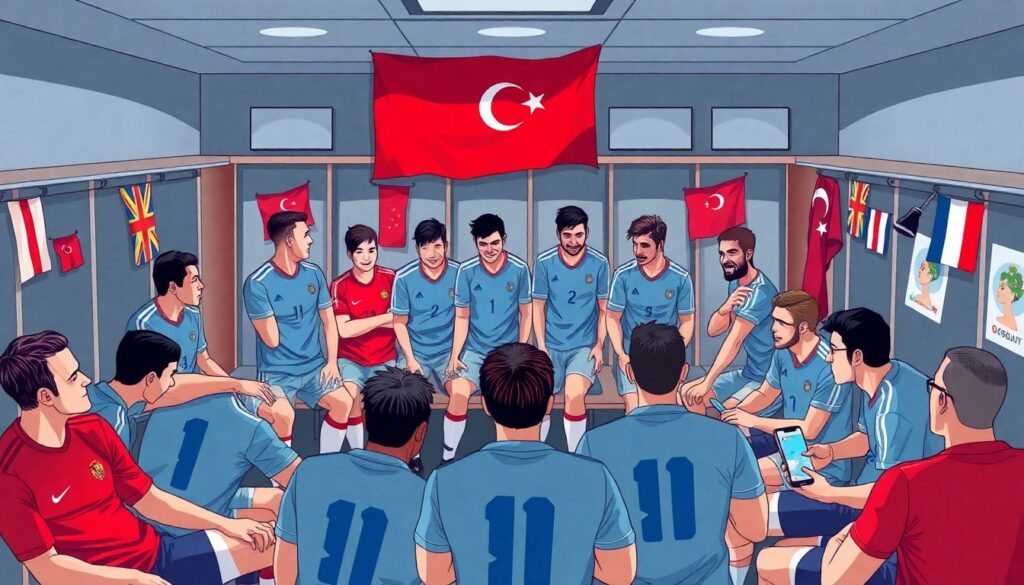
Tactics are only half of how foreign players adapt to turkish football culture. The other half lives in the dressing room and online. Language splits can create micro‑groups: Turkish speakers in one corner, Spanish‑Portuguese cluster in another, sometimes French or English speakers elsewhere. Successful clubs now hire full‑time interpreters and cultural liaisons whose unofficial role is to explain nuances — why a particular chant matters, what a hand gesture from fans really means, how local media headlines might sound harsher than they are. This soft infrastructure has grown noticeably since the early 2020s as clubs realized talent alone isn’t enough if the human connection fails.
If you want to visualize the pressure system, imagine another diagram, but social. At the center sits the player’s phone. Around it, concentric circles: inner circle is family and agents on WhatsApp; next circle is teammates and club staff on group chats; outer circle is fans, journalists, and pundits on Instagram, X, and YouTube. In Türkiye, that outer circle speaks louder than in most places. A missed penalty on Sunday becomes three days of debate shows and fan‑run spaces. Experienced pros now pre‑plan digital routines: deleting certain apps on match day, using media managers, or agreeing with family not to tag them in heated discussions. For younger imports, figuring this out early can be the difference between steady adaptation and burnout.
Analytics, GPS and the New Scientific Layer of Adaptation
Another modern trend, especially in 2026, is the huge rise of performance analytics in Turkish clubs. GPS vests, tracking cameras and data platforms are no longer reserved for Champions League giants. Terms like “high‑intensity runs,” “pressing efficiency,” and “load management” appear in daily reports. For foreign stars used to performance culture elsewhere, this feels familiar, but the way it’s applied is specific. Staff might say: you ran less than in your previous club, but you engaged in more duels and sprints, which is exactly what we need here. Adaptation becomes measurable: analysts can show that after six weeks, a player’s high‑intensity actions in cold away fixtures finally match his warm‑weather home performances.
If we sketched this, imagine a simple graph. Horizontal axis: weeks since arrival. Vertical axis: combined index of sprints, high‑intensity accelerations, and duels. The curve starts low, bumps up in week three (fitness shock), dips when fatigue hits, then gradually climbs as the player learns pacing. Coaches now integrate this data into language classes and tactical sessions, telling new signings: “your numbers show you press well in the first 30 minutes, but Turkish games stay wild until the 90th — let’s plan your positioning so you’re not dead by minute 70.” Data becomes a translator between what the league demands physically and what the player believes he’s delivering.
Who Thrives and Why: Profiles of Successful Imports
Talk about the best international players in turkish super lig over the last decade and you’ll notice common traits. They’re not just technically gifted; they’re adaptable extroverts. They accept noise rather than fight it, enjoy engaging with fans, and show visible emotion on the pitch. From a tactical angle, multi‑role players thrive — full‑backs comfortable as wing‑backs, pivots who can drop between centre‑backs or step high, wingers able to play both touchline‑wide and as inside forwards. The league’s game states change fast; a calm 4‑2‑3‑1 can morph into a 2‑4‑4 siege in the last 15 minutes. The imports who succeed are those happy to “break the shape” when the coach waves everyone forward.
Contrast this with some struggling imports from more system‑heavy environments, where players are taught never to leave their zone. In Türkiye, a centre‑back who suddenly surges into midfield in the 88th minute can become a cult hero if it leads to a goal, even if the analytics department groans. This doesn’t mean chaos wins; it means that the league rewards controlled risk. Agents increasingly brief clients about this before signing: if you are comfortable living inside a rigid tactical grid, this might not be your ideal destination. If you like improvising under pressure, and you’re ready to communicate with fans using heart as much as feet, your odds rise dramatically.
Micro‑Example: Adapting a Deep‑Lying Playmaker
Take the role of a “regista” — a deep‑lying playmaker who dictates tempo from near the centre‑backs. In Italy or Spain, their main metrics are progressive passes and control of rhythm. In Türkiye, that same player must factor in incoming presses from three directions, unpredictable bounces on some pitches, and opponents happy to foul early. Coaches often shift such players five meters higher up the pitch or give them a muscular partner — a “destroyer” in a double pivot whose job is to absorb duels. The imported regista learns to release the ball half a second faster and to use clip passes into channels more often, because holding onto the ball to “paint the perfect pass” is a direct invitation to a crunching tackle and, possibly, a viral clip of getting dispossessed in front of a roaring end.
Transfers, Hype and the Moving Target of 2026
By 2026, the rhythm of super lig transfer news international stars has settled into a predictable but intense pattern: early summer waves of rumours linking big‑name veterans from Europe’s top five leagues, followed by a second wave of younger, data‑scouted talents from South America, Africa and Eastern Europe. Clubs now combine old‑school “YouTube scouting” with serious analytics and psychological profiling. They study how a player handled hostile derbies elsewhere, how many leagues he’s already lived in, even how he responds to criticism online. The recruitment question has shifted from “Is he good enough?” to “Will he survive, then enjoy, this environment?”
There’s also more self‑awareness inside Turkish clubs. They know their league sits in a sweet spot: financially attractive but still a stepping stone for some, a final big stage for others. Sporting directors openly frame this in negotiations: “You’ll have Champions League or Europa stage nights, you’ll play in front of some of the world’s loudest fans, and if you adapt fast, doors stay open.” For turkish super lig foreign players adaptation, this honesty helps: players arrive with fewer illusions and more concrete preparation. The net effect is that we see fewer short‑term flops and more medium‑term contributors who embrace the unique mix of emotion, chaos, and modern tactics that defines Turkish football in the mid‑2020s.
Practical Playbook for New Global Stars
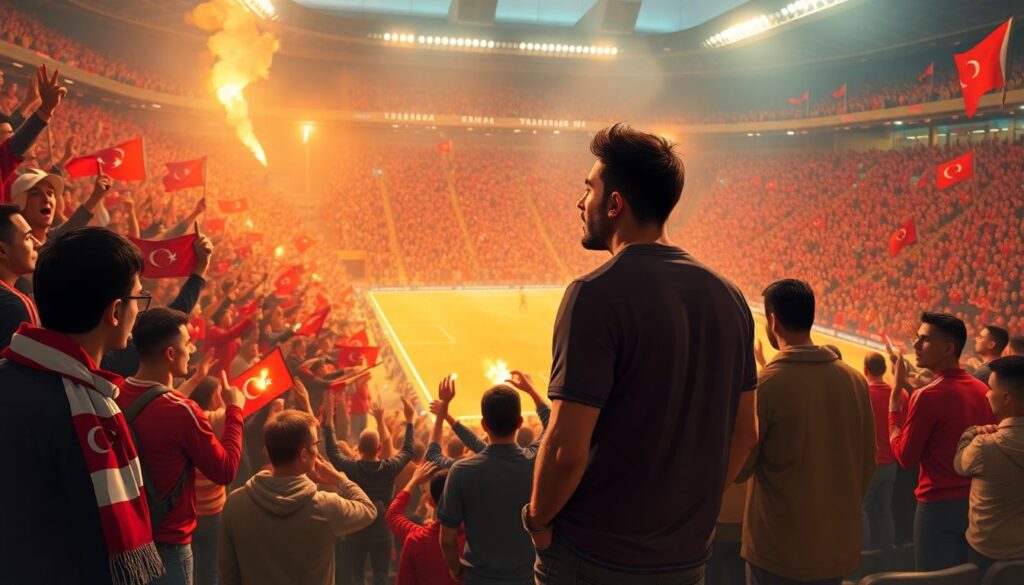
Pulling it all together, the adaptation path for a new star in Türkiye follows a rough sequence. First, respect the culture: watch derby games from the stands, listen to fans’ songs, understand why a mid‑table clash can feel like a cup final. Second, master the basics of language — even ten Turkish phrases change how teammates and supporters see you. Third, align with the game model: learn the specific pressing triggers, your role in transition, and what “acceptable risk” means to your coach. Fourth, manage your body and mind with modern tools: GPS feedback, recovery routines, and healthy distance from social media storms.
In the end, how foreign players adapt to turkish football culture is less about surviving 90 minutes and more about embracing a full ecosystem. The ones who do it well turn that intensity into fuel: they use the roaring stands to power late sprints, the aggressive duels to sharpen their edge, and the emotional roller coaster to remind themselves why they fell in love with the game. For a Brazilian dribbler, a European metronome or an African box‑to‑box runner, Türkiye offers a demanding but rewarding lab, where football is still allowed to be loud, slightly wild, and deeply human — and where adaptation, once complete, often turns into genuine attachment.