Why Foreign Players in the Süper Lig Became Such a Hot Topic
If you follow Turkish football even чуть-чуть, you already know: debates around foreign players never stop. One side says they raise the level of the league. The other insists they “kill” local talent. Reality, как обычно, сложнее.
To unpack whether foreign players in the Süper Lig are a boon or a barrier for local players, we need to look at rules, money, youth academies, and what experts inside the game actually recommend.
—
Key Terms — Let’s Talk the Same Language
What Do We Mean by “Foreign Player”?
In the context of Turkish football:
– Foreign player: Any player who does not hold Turkish citizenship and is not registered as “local” under TFF rules.
– Local / homegrown player: Usually a Turkish citizen trained at a Turkish club for a minimum number of years before a certain age (often between 15–21, depending on the regulation).
So when we argue about “foreigners”, we’re essentially arguing about squad spots that could, theoretically, go to a Turkish youngster instead.
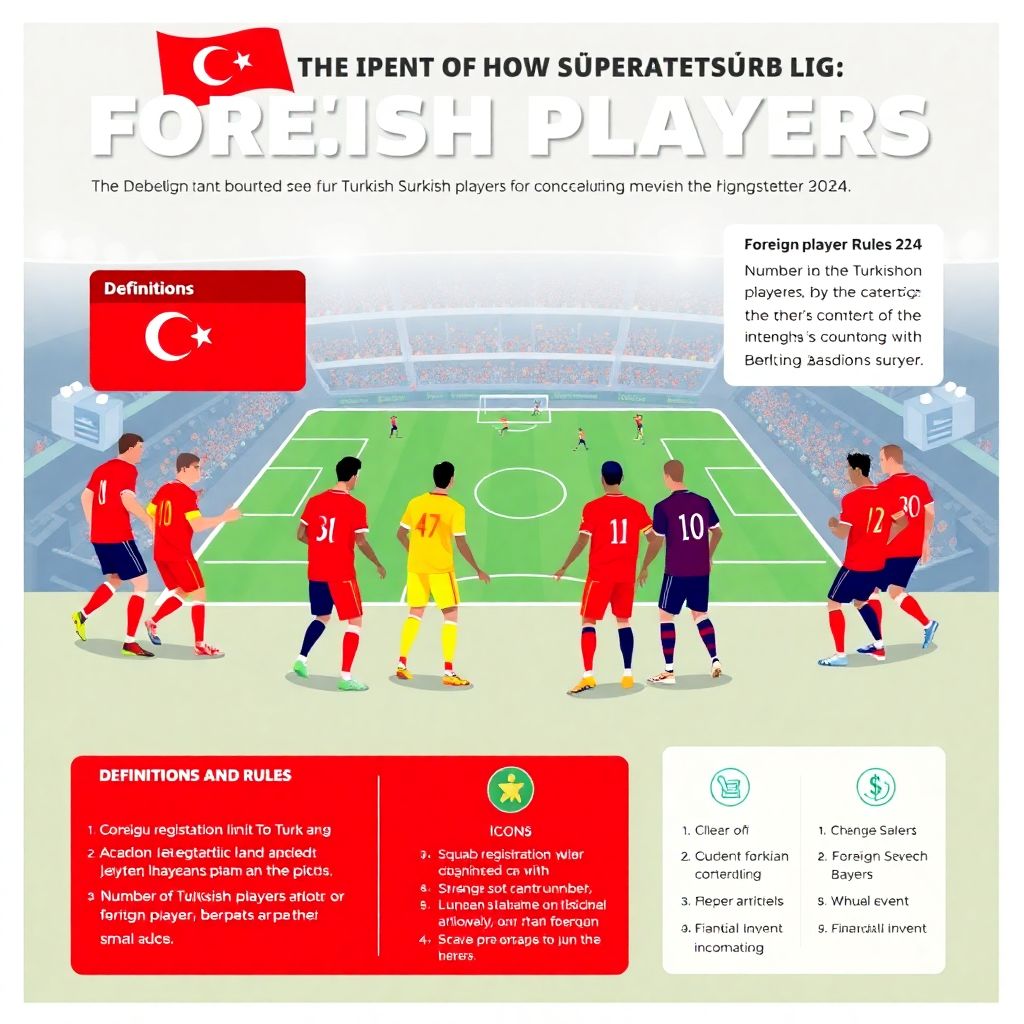
Super Lig foreign players rule 2024 — What’s Actually in Place?
The Super Lig foreign players rule 2024 isn’t just “x number of foreigners allowed”. It’s a package of policies that cover match-day squads, registration quotas and financial side-effects.
In simple terms, the Turkish Super Lig foreign player limit and regulations usually look like this (with slight season-to-season tweaks):
1. Maximum number of foreign players you can register in your main squad.
2. Maximum number of foreign players you can field at the same time in a match.
3. Various incentives or penalties connected to how many locals you use — for example, financial rewards or youth development bonuses.
Rules change frequently, but the direction over the last decade has swung back and forth between opening and closing the doors, which creates uncertainty for clubs and players.
—
Why Clubs Want Foreign Players So Much
Raising the Level (At Least in Theory)
One frequent argument: to be competitive in Europe, you need quality. And top quality is often foreign.
When people talk about the best foreign players in Turkish Super Lig history, they mention names like Alex de Souza, Didier Drogba, Wesley Sneijder, Fernando Muslera. These players didn’t just sell shirts; they changed how their teams played and how youngsters saw the game.
Long, but important point:
Foreign players can bring:
– Different tactical schooling (e.g., pressing habits from Germany, positional play from Spain).
– Professional habits around nutrition, recovery and training loads.
– Higher internal competition for training spots and minutes.
Short version: they often drag the overall level upward — if signed intelligently.
Money Talks: Salary Budgets and Risk
Another key piece: the Super Lig clubs salary budget for foreign players.
Clubs often allocate a huge chunk of their wage bill to attract experienced foreigners. This creates a few side effects:
– Less budget left for long-term academy projects.
– Pressure to use the expensive foreigner “because we’re paying him so much”.
– Short-term thinking: sign a 30+ year-old foreign star now, worry about local development later.
So yes, foreign players can be a sporting upgrade — but they can also lock clubs into unsustainable wage structures if there’s no long-term plan.
—
Are They Blocking or Boosting Local Talent?
Simple Argument: More Foreigners = Fewer Minutes for Locals
This is the classic, intuitive logic:
– Squad has 14 foreigners, 10 locals.
– Coach wants results *now*.
– Experienced foreign guys start.
– Turkish youngsters watch from the bench.
From this angle, foreign players *look* like a barrier. The link is very direct: each additional foreign spot might be one less first-team chance for a promising 19-year-old from the academy.
Less Obvious Argument: Foreigners Can Accelerate Development
Flip side: training every day against better, more experienced foreigners can speed up learning.
Imagine a young Turkish centre-back going up daily against a savvy 32-year-old foreign striker who knows every trick in the book: how to draw fouls, how to time runs, how to shield the ball. That education is priceless.
This is why many coaches quietly admit: a higher level of foreign players forces local guys to either adapt and improve — or fall behind. From a purely sporting perspective, that’s harsh but efficient.
—
Impact on Turkish Football Academies
Where Foreigners Help — Indirectly
The impact of foreign players on Turkish football academies is not as linear as “more foreigners = dead academies”. Academies benefit when:
– Foreign players raise league standards, pushing clubs to modernize coaching methods.
– Clubs use foreigners as short-term solutions while building clear development pathways behind them.
– Young players watch high-level foreigners daily and copy their habits: diet, gym work, tactical learning.
In some big clubs, you can see this: U17 and U19 teams are coached with more modern, European-style structures precisely because the first team competes with and against top foreigners.
Where Foreigners Hurt — Directly
Here’s the painful part: if you can always “fix” a problem position by importing a 28-year-old foreign player, you have less incentive to:
– Build a coherent academy curriculum.
– Align youth tactics with first-team tactics.
– Give a 19-year-old 800–1000 minutes per season to grow, even if he makes mistakes.
Several academy directors have quietly admitted that their main enemy isn’t foreign players themselves, but the *addiction* to quick solutions. As one youth coach in Turkey put it in an interview in 2023:
> “When you can sign a foreign left-back in January, nobody wants to suffer through three months of a young local making beginner’s errors.”
—
Comparing the Süper Lig with Other Leagues
Premier League: Almost No Limit, But Strong Academies
England has extremely loose rules on foreigners compared to the Turkish Super Lig foreign player limit and regulations. Yet the Premier League still produces tons of local stars (Saka, Foden, Trent Alexander-Arnold).
Why?
– Massive investment in academies.
– Strict youth coaching standards.
– Clear pathways: loans to lower leagues, U23 competitions, data-driven tracking of progress.
So foreigners didn’t kill English talent; they pushed standards higher while the system protected youth development.
Bundesliga & La Liga: Balance and Identity
Germany and Spain don’t obsess over fixed foreign quotas as much as Turkey does. Instead, they focus on:
– Strong national identity and playing philosophy.
– Financial rules that encourage long-term planning.
– Rewarding clubs that develop and sell local players.
Compared to that, the Süper Lig’s frequent rule changes make long-term strategy hard. Every time the foreign player limit shifts, clubs have to re-balance squads, sometimes at the cost of academy plans.
—
Text-Based Diagrams: How the Dynamics Work
Diagram 1: Club Decision-Making Loop
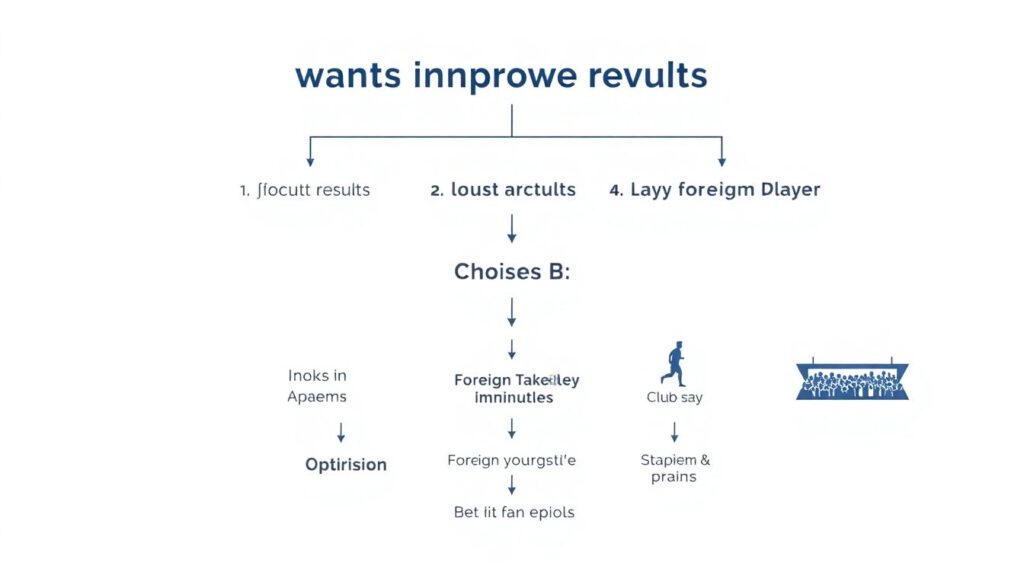
Imagine a simple flow, like a vertical diagram:
Club wants to improve results
↓
Looks at options
↓
Option A: Invest in academy (slow, uncertain payoff)
Option B: Buy foreign player (fast, visible, fan-pleasing)
↓
Chooses Option B
↓
Foreign takes key minutes
↓
Local youngster doesn’t play
↓
Club says, “We have no local ready”
↓
Next season… repeats the same logic
This loop shows why even good foreign players can unintentionally block systemic growth.
Diagram 2: When Foreigners Help Development
Another vertical diagram, this time in a “best practice” scenario:
Sign a quality foreign player in key position
↓
Define local understudy (young Turkish player)
↓
Daily training: youngster learns from foreign mentor
↓
Planned rotation: 10–20 minutes, cup games, low-pressure matches
↓
After 1–2 seasons, youngster ready for bigger role
↓
Foreign player leaves or rotates to backup role
This version uses foreigners as catalysts rather than roadblocks.
—
Expert Recommendations: How to Turn a “Problem” into an Advantage
What Coaches and Directors Suggest
People working inside the game tend to move away from the yes/no question about foreigners and talk about *conditions*. Summarizing several coaching and technical director opinions, three main recommendations keep showing up:
1. Stabilize the rules
Constantly changing regulations make smart planning almost impossible. Experts argue for a fixed foreign player framework over at least 5 seasons, so clubs can align scouting, academy work and finances.
2. Tie foreign quotas to academy use
Many technical directors like the idea that:
– Clubs that give a minimum number of minutes to U21 Turkish players get *slightly more* freedom for foreigners or financial bonuses.
– Those that ignore youth development lose some benefits.
3. Quality control, not pure quantity control
Several coaches argue that a smaller total number of foreigners is not necessarily better if they’re low-level. They’d rather have:
– Fewer, but clearly above-league-average foreign players.
– Harder registration rules for older players (e.g., 30+ foreigners must be clear starters or internationals).
– Incentives to sign younger foreigners with resale value and mentoring potential.
Practical Club-Level Tips (Numbered List)
From a club’s technical staff perspective, here’s how to balance foreigners and locals more intelligently:
1. Define “development slots” in the squad
Before transfers, mark 3–5 positions where minutes are guaranteed for Turkish U23 players, no matter which foreigners arrive.
2. Pair each key foreign player with a local understudy
For every foreign star (CB, DM, winger, etc.), assign a local youngster who trains in the same unit, reviews video with him, and gets planned minutes.
3. Use data to protect youth minutes
Track total minutes given to academy graduates per season. Set an internal minimum (for example, 3000–4000 combined minutes) and treat it like a KPI, just as important as league position.
4. Plan exit routes for foreigners before signing
When you sign a foreigner, already have a 2–3 year exit scenario and identify which local player should replace him. This prevents endless blocking of pathways.
5. Integrate academy coaches with first-team staff
Instead of working in silos, have regular tactical meetings where academy coaches understand first-team needs and adapt their training accordingly.
—
So, Boon or Barrier?
If you strip away emotions, foreign players in the Süper Lig are neither heroes nor villains. They’re tools.
– With unstable rules, short-term spending, and weak academy planning, foreigners *do* become a barrier, simply by filling every important role year after year.
– With stable regulations, targeted recruitment, and protected development paths, foreigners become a boon: they lift standards, teach professionalism, and push local players to a higher level.
The real conversation Turkey needs isn’t “how many foreigners should be allowed?” but “under what rules and incentives will foreigners and locals together build a stronger, more sustainable Süper Lig?”