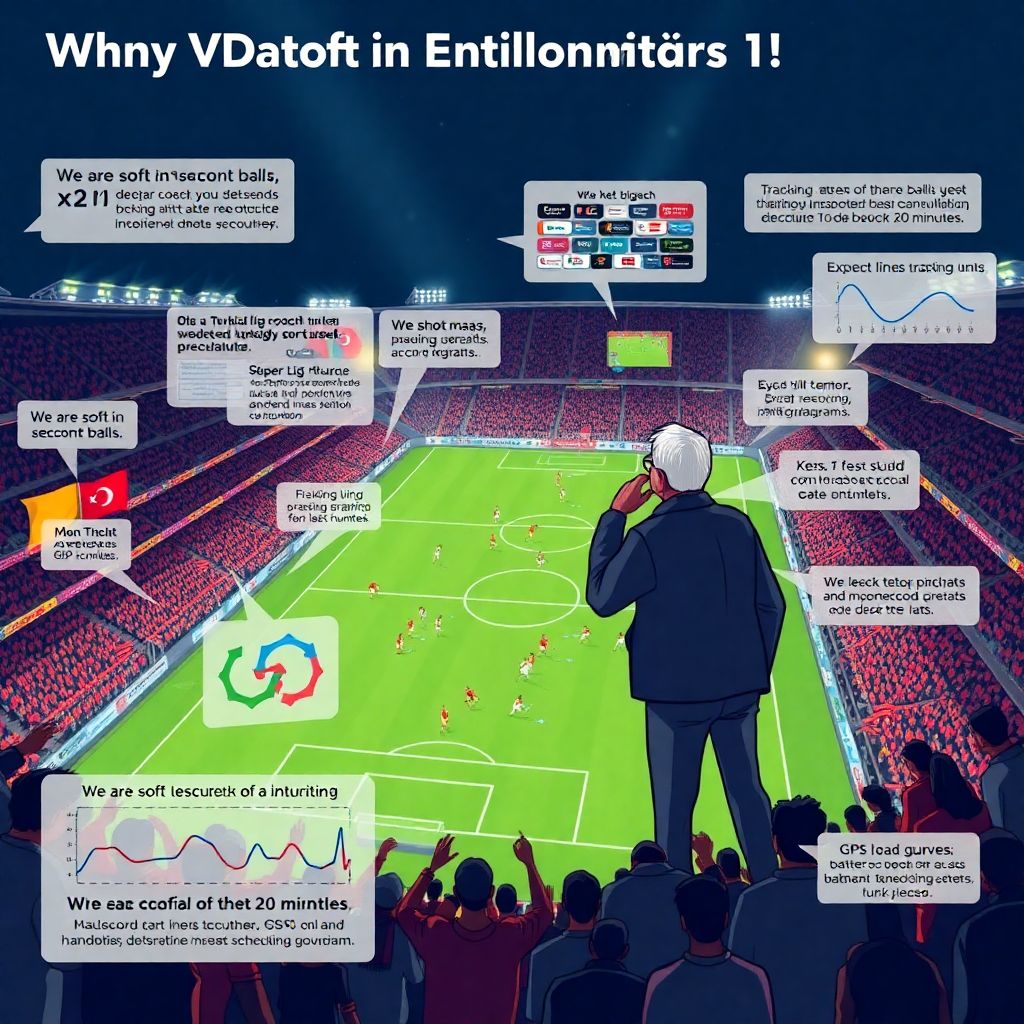
Why Data Analytics Matters in Modern Turkish Football
Turkish football has always thrived on atmosphere, passion and individual flair. But in the last decade, clubs from the Süper Lig down to the academies have quietly added a new ingredient: structured, quantitative decision‑making. Instead of relying purely on “hocanın gözü” (the coach’s eye), technical staffs now mix video, numbers and modelling to decide who to sign, how to train and what to change on match day. This shift is not about killing creativity; it is about reducing guesswork in an industry where a single bad transfer or tactical mistake can cost millions of euros and derail a whole season.
At the same time, adoption is uneven. Some Istanbul giants already use detailed tracking data and bespoke models, while many mid‑table teams still operate with Excel sheets and scouting gossip. That contrast makes Turkey an ideal laboratory to compare different approaches to analytics: from low‑budget DIY setups to fully integrated data departments. Understanding these models, their strengths and their frequent failure points is crucial if you want to build a sustainable edge instead of just buying a fancy dashboard nobody trusts.
—
Step 1: Defining the Analytics Problem in Turkish Context
Clarifying the Core Questions
Before talking about tools or models, a club must define *what* it wants to improve. In Turkey, three recurring pain points dominate: chaotic transfer markets, unstable coaching tenures and huge performance swings between home and away games. If a club’s board simply says “we need data like in England”, analysts end up producing random reports that don’t impact line‑up decisions or recruitment meetings. The first structured step is to turn vague complaints into explicit questions: how to lower wage‑to‑points ratio, how to identify undervalued local talent, how to manage minutes for ageing stars to avoid injury spikes in congested fixture periods.
A common mistake is starting from available data instead of real football problems. For example, a team buys a tracking system, then forces the coaching staff to stare at heatmaps they never asked for. A cleaner approach is problem‑driven: decide that “we want to concede fewer transitions after our own corners”, then ask which datasets and metrics are necessary. That shift in thinking instantly filters out noise and makes the dialogue between coach, analyst and sporting director far more concrete.
Comparing Intuitive vs Data‑Driven Framing
Traditionally, Turkish coaches frame problems verbally: “We are soft in second balls”, “We lack tempo in the last 20 minutes”. This intuitive language is valuable, but hard to measure over time. A data‑driven framing translates the same worry into quantifiable variables: number of loose balls won per 90, sprint volume in the final phase, expected goals conceded after turnovers. The best clubs do not replace one with the other; they run both in parallel. The coach provides qualitative hypotheses, while the analyst validates or challenges them with numbers, clips and trends, creating a feedback loop instead of a one‑way lecture.
—
Step 2: Building the Data Infrastructure
Choosing Between In‑House and External Services
Once the questions are clear, the next step is deciding where the information will come from and who will manage it. Big clubs often combine in‑house analysts with external vendors that provide event data, tracking data and video. Smaller teams may rely almost fully on a single sports data analytics company that packages raw matches into usable dashboards. The trade‑off is straightforward: outsourcing is faster and cheaper at the start, but limits customisation; building internal capacity offers flexibility but requires long‑term investment in staff, hardware and education of the coaching team.
This is where *football data analytics services* come into play. Providers range from global brands to local specialists who know the realities of Turkish pitches, refereeing styles and fixture congestion. For a mid‑budget club, a hybrid model is often ideal: buy a baseline dataset and platform from a vendor, then assign one or two analysts to enrich it with training data, medical records and contextual notes (travel distance, climate, pitch condition). That way the club avoids the extreme of either fully generic solutions or fragile home‑made databases with no maintenance.
Warning: Data Without Governance Becomes Chaos
Many Turkish clubs rush into subscriptions, USB drives full of CSV files and shared folders with match videos but ignore basic data governance. Files are named inconsistently, versions are mixed up and staff change every season, so structures collapse. Before expanding data sources, set simple but strict standards: a central repository, consistent naming, clear access rights and basic documentation. Without that layer, no model will be reliable and any transfer of know‑how between head coaches becomes painfully slow.
—
Step 3: From Raw Numbers to Football Intelligence
Developing Metrics and Models That Coaches Actually Use

Collecting passes, shots and sprints is the easy part; converting them into intelligible, actionable concepts is harder. Effective data analytics in football clubs focuses on translating raw logs into metrics aligned with staff language: field tilt for territorial dominance, expected threat for progression, packing metrics for how many opponents are bypassed by a pass. In Turkey’s high‑intensity environment, models that quantify transition risk, press resistance and set‑piece efficiency tend to create immediate value, because these situations often decide derbies and relegation battles.
Here, *football performance analysis software* is crucial. Off‑the‑shelf platforms can already build shot maps, xG trends and passing networks, but they rarely capture club‑specific principles such as “we never cross without three players in the box” or “the 6 must always be behind the ball in possession.” The advanced clubs therefore add custom tagging layers, linking tactical rules with discrete events in the data. Over time, that enables precise feedback: not just “we ran less than the opponent”, but “our counter‑pressure intensity dropped 15% after minute 70 when we changed from 4‑2‑3‑1 to 4‑4‑2.”
Heuristic Coaching vs Algorithmic Support
One major tension is between heuristic coaching (“I’ve seen this pattern for 20 years”) and algorithmic output (models flagging hidden trends). Some Turkish coaches fear algorithms will judge them; some analysts treat models as infallible truth. In reality, the most robust approach is cooperative: algorithms scan large datasets and highlight anomalies, while the coach filters them with tactical insight. For example, a model may identify a full‑back as weak in aerial duels; the coach adds context, noting that this is acceptable if his build‑up contribution is elite and the centre‑back can cover wide crosses.
—
Step 4: Applying Analytics to Recruitment
Data‑Led Scouting vs Traditional Networks
Transfers are where numbers can create or destroy enormous value. Historically, Turkish clubs relied heavily on agent networks, personal connections and highlight videos. A more modern path integrates data‑driven shortlists, video scouting and live observation in a coherent pipeline. Quantitative filters screen thousands of players to find those whose age, financial cost, physical profile and style match predefined templates. Scouts then focus their limited travel and watching time on this curated pool instead of random tips.
Comparing the two approaches shows clear trade‑offs. Classic network‑based scouting can sometimes find unique characters and leaders that models ignore, but is vulnerable to bias and manipulation. A data‑first approach, especially when supported by external *sports analytics consulting services*, reduces emotional noise and allows benchmarking against both domestic and international markets. The sweet spot is again hybrid: use metrics to narrow the search, then rely on eyes, interviews and medical checks to validate fit, personality and adaptation risk.
Warning: Overfitting to Stats Leagues
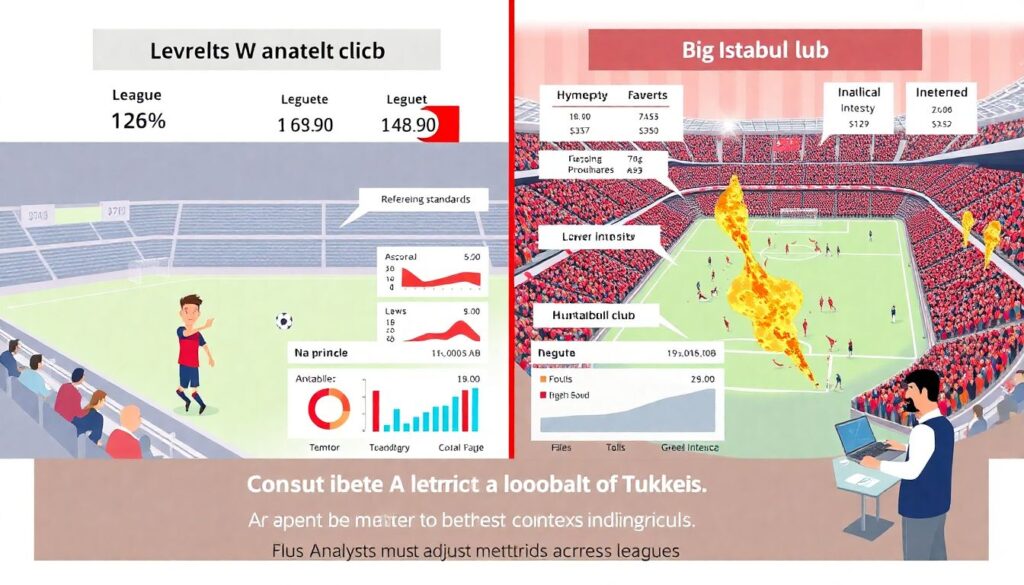
A frequent Turkish error is copy‑pasting xG or passing stats from leagues with completely different tempo, refereeing standards and tactical structures. A striker dominating in a low‑pressure league may collapse under the emotional and physical intensity of a big Istanbul club. Analysts must adjust for league strength, playing style and team effects: use possession‑adjusted metrics, model translation factors between competitions and always cross‑check with contextual video. Blind belief in “good numbers abroad” has created many expensive flops.
—
Step 5: Integrating Analytics into Daily Coaching
Micro‑Cycles, Load Management and Tactical Prep
On the training ground, analytics mainly supports two domains: physical load management and match preparation. GPS tracking, session tagging and wellness questionnaires create a dataset that can warn about overload before injuries appear, especially in seasons with European fixtures and long travel. On the tactical side, pre‑match reports synthesize opponent tendencies: how they build up, where they press, what set‑piece patterns they favour. The trick is to filter information ruthlessly so that coaching meetings do not drown players in charts.
Different clubs choose different integration strategies. Some big teams employ analysts who sit in the stands with live data feeds, sending real‑time observations to the bench; others keep analysts more in the background, focusing on post‑match reviews and long‑term trends. Neither model is universally superior. What matters is clarity of roles: the head coach should know exactly when to expect reports, in what format and how much influence they will have on drills and line‑ups. Consistency builds trust and prevents analytics from being blamed selectively after bad results.
Tips for New Analysts Entering Turkish Football
For newcomers, the first priority is learning the local football culture: how coaches communicate, which metrics they intuitively respect and which topics are politically sensitive (for example, questioning a foreign star’s minutes). Start small: one useful insight per week, illustrated with clear video examples and simple visuals. Request feedback explicitly: ask the coach which sections of your reports he actually used. Over time, adjust the content to match his decision cycle instead of trying to impress with complex models nobody reads.
—
Step 6: Choosing the Right External Partners
Evaluating Vendors and Consultants
Not every club can or should build a full analytics department. That’s where market options such as *football data analytics services* and local consultancies become relevant. When selecting a partner, Turkish clubs should look beyond polished marketing decks. The real evaluation criteria are data accuracy in the Süper Lig and 1. Lig, ability to customise reports, responsiveness on match days and support in Turkish or at least clear English. Ask for sample analyses on your own recent games and compare them with internal assessments to check alignment.
Working with a *sports data analytics company* changes the internal dynamic too. Staff must learn to phrase requests precisely, share tactical principles and not treat vendors as miracle workers. Consultants can build models, but only club insiders can label what “good pressing” or “compactness” means in their specific game model. The healthiest relationships resemble long‑term partnerships, not one‑off purchases. Regular review meetings, shared KPIs and joint experimentation (for example, piloting a new set‑piece model in pre‑season) ensure the external brain is integrated instead of floating in parallel.
Warning: Buying Tools Without Strategy
A recurring trap is investing in glossy platforms or sensors just to keep up with rivals. Without a roadmap, these systems become expensive ornaments. Before signing contracts, define concrete use‑cases: for example, reducing muscular injuries by 20%, or cutting set‑piece goals conceded by 30%. Then check whether the vendor’s technology and support truly address those objectives. If the offering cannot be tied to a measurable football outcome, reconsider or scale down.
—
Step 7: Measuring Impact and Iterating
KPIs and Continuous Improvement
To prevent analytics from turning into a fad, clubs must track its actual contribution. That doesn’t mean demanding instant trophies; it means defining intermediate KPIs such as net spend per point, minutes played by academy graduates, or proportion of shots conceded from high‑danger zones. Over multiple seasons, patterns emerge: you see whether data‑driven recruitment lowers churn, whether conditioning adjustments reduce soft‑tissue injuries, whether tactical tweaks improve expected goal difference even before the table reflects it.
Some clubs also quantify decision quality. For example, they log all major calls (signing, contract renewal, tactical shift), note which inputs were used (data, video, medical reports, intuition) and later assess outcomes. This meta‑analysis helps refine the decision pipeline instead of focusing only on isolated mistakes. In volatile Turkish environments where presidents and coaches change often, keeping such institutional memory is a powerful form of competitive advantage.
Comparing Low‑Tech and High‑Tech Pathways

Not every organisation needs cutting‑edge tracking or machine learning. A low‑tech pathway—simple event data, structured video sessions, Excel‑based dashboards—can already deliver significant gains for lower‑division or financially constrained clubs. A high‑tech pathway—advanced sensors, custom models, integrated medical‑tactical databases—offers marginal gains for teams regularly playing in Europe. The key is alignment: technology level should match budget, staff capacity and ambition. Overreaching leads to fragile systems that collapse with the first staff turnover.
—
Final Thoughts: Making Analytics Truly Turkish
Data analytics in modern Turkish football will only succeed if it respects the local game’s identity: noisy stadiums, emotional momentum shifts, creative individuals and intense media scrutiny. Numbers cannot predict every red card in a derby, but they can prepare squads better, de‑risk recruitment and stabilise performance across chaotic seasons. When used well, analytics acts less like a foreign import and more like a disciplined assistant coach who remembers everything, forgets nothing and speaks the same football language as the technical staff.
For clubs and federations just starting out, begin with clear questions, modest tools and a commitment to learning. Partner selectively with providers of *sports analytics consulting services*, ensure coaches feel ownership of the process and keep iterating. Over time, the blend of Turkish passion and analytical rigour can move the league from reactive short‑termism toward a more sustainable, evidence‑aware future.