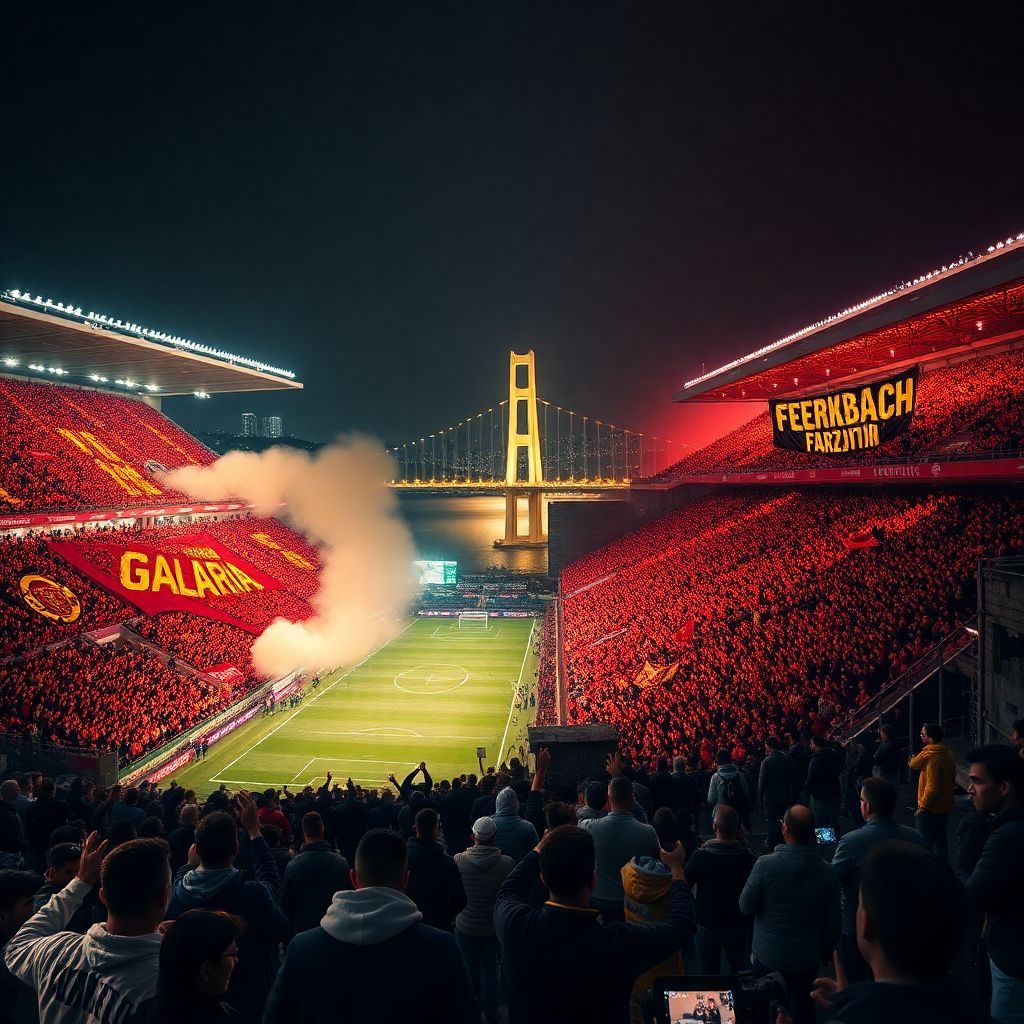
What makes a Süper Lig rivalry so intense?
In Turkish football, the word *derbi* (derby) means much more than “two clubs from the same city.” It’s a compact way to say: history, politics, class, religion, geography and everyday life colliding for 90 minutes. When we talk about the fiercest rivalries in the Süper Lig, we’re talking about emotional infrastructures that shape how millions of people think, dress, travel, argue, and even plan their weekends.
In simple terms:
– Rivalry – a long‑term competition between clubs, kept alive by repeated games, shared history and mutual dislike.
– Derby – a rivalry match, typically (but not always) between clubs from the same city.
– Ultras – hardcore, organized fan groups who create visual and acoustic atmospheres (chants, banners, pyrotechnics).
These aren’t just football terms. In Turkey they’re social categories, almost like “tribes” in a modern city.
Istanbul’s football triangle: not just three clubs
The “Big Three” as a social map
When people say “Big Three” in Turkey, they mean:
– Galatasaray – historically linked to the elite Galatasaray High School; associated with Europe‑facing, cosmopolitan identity.
– Fenerbahçe – rooted in Kadıköy on the Asian side of Istanbul; often read as rebellious, proudly local, “Kadıköy spirit.”
– Beşiktaş – from the older European shore district; seen as more bohemian, politically vocal, with a strong neighborhood feel.
An ultra‑simple “social diagram” of Istanbul rivalries looks like this:
Galatasaray (elite / European side)
⬌ overlaps / clashes with
Fenerbahçe (Kadıköy / Asian side)
⬌ overlaps / clashes with
Beşiktaş (central / neighborhood identity)
⬌ overlaps / clashes with
Galatasaray again…
This triangle means every match between any two of them is charged, not just the famous Galatasaray–Fenerbahçe clashes.
Why Galatasaray–Fenerbahçe is the “master rivalry”
If you had to pick the single game that defines Turkish football, it’s Galatasaray vs Fenerbahçe. It’s more than a match; it’s a ritual. Historically, the Bosphorus itself acts almost like a “border” between the two fan bases: Europe vs Asia, though in reality fans live everywhere.
A crude “mental map” fans carry around might look like this:
– Left bank (European side) → “Galatasaray territory”
– Right bank (Asian side) → “Fenerbahçe territory”
Of course, this isn’t literally true, but it shapes chants, jokes, and even how people talk about crossing the bridge on match day.
How derbies program the Turkish football calendar
The season as a psychological graph
Think of the Süper Lig calendar like a heartbeat monitor. Normal games are small waves. Derby days are the spikes.
If we drew excitement levels over a season, it’d look something like this:
`low ———— /// ———— ///// ———— /// ———— low`
regular game derby regular derby
– Peaks = derbies (Galatasaray–Fenerbahçe, Beşiktaş–Fenerbahçe, Galatasaray–Beşiktaş).
– Plateaus = “normal” league fixtures.
This rhythm programs how fans experience time. People remember seasons not by round numbers but by phrases like “the year we won in Kadıköy” or “that 3–0 in İnönü.”
Why tickets and travel become cultural rituals
Because these games are so central, Turkish Super Lig derby tickets Galatasaray Fenerbahce are not mere access passes; they are identity tokens. Getting one can involve:
– Loyalty point systems linked to season tickets.
– Friend networks and fan groups coordinating who buys what.
– Strategic timing: logging in the moment sales open, or traveling to away matches.
For visitors, the whole ecosystem around derbies created the idea of best Super Lig matches to attend Istanbul derby travel packages, where agencies bundle flights, hotel, stadium tour, and sometimes even a fan‑culture walk through key neighborhoods. That commercial layer exists only because the cultural layer is so strong.
Galatasaray vs Fenerbahçe: the heat source
Short definition, long consequences
Let’s define this matchup precisely:
> Galatasaray–Fenerbahçe derby – A recurring fixture between two Istanbul giants whose rivalry began in the early 20th century and became a symbol of Turkey’s broader social divisions: geography (Europe/Asia), class narratives, and political undertones.
In practical terms, this means:
– Every encounter has title‑race implications or emotional baggage.
– A win can “save” a bad season; a loss can ruin a good one.
– Neutral fans often pick a side just for that day.
In digital culture, millions flock to watch Turkish Super Lig live streaming Galatasaray vs Fenerbahce, not only for the football but to observe the choreography in the stands, the banners, and the noise.
Tactical identity: how playing styles mirror fan narratives
Over the decades, both fan bases have built myths about “how we play”:
– Galatasaray fans like the narrative of a European, tactically disciplined, technically skilled side.
– Fenerbahçe fans cherish the idea of a more emotional, combative, never‑say‑die team, especially at home in Kadıköy.
If we drew a silly but telling diagram of stereotypes:
Galatasaray → “strategy, Europe, trophies”
Fenerbahçe → “passion, Kadıköy cauldron, resistance”
These clichés influence how coaches talk in press conferences (“we must match their passion” vs “we must be smarter tactically”), and how kids imagine themselves when they kick a ball in the street.
Beşiktaş vs the world: the voice of the stands
Beşiktaş–Galatasaray and Beşiktaş–Fenerbahçe
Beşiktaş’s rivalries are slightly different. While Galatasaray–Fenerbahçe often feels like a battle for national supremacy, Beşiktaş derbies are about *attitude*.
Fans of Beşiktaş see themselves as:
– Loyal when times are tough.
– Politically vocal and streetwise.
– Emotionally attached to the neighborhood around the stadium.
When Beşiktaş faces Galatasaray, there’s a clash between “neighborhood spirit” and “institutional giant.” Against Fenerbahçe, it becomes a question of which side has the louder, more uncompromising support. Each game reaffirms or challenges those self‑images.
How ultras turn stadiums into laboratories
Beşiktaş’s hardcore fans have famously experimented with coordinated chants, giant banners, and even carefully timed silences. Think of the stands as a “sound lab,” where:
– Chants are tested, fine‑tuned, and then spread to other Turkish stadiums.
– Visuals (TIFOs) become viral images that reshape how younger fans imagine what “good support” looks like.
This is one way rivalries shape culture: ultras compete not just on scorelines but on *creativity*.
Beyond Istanbul: Trabzonspor and others refusing the script
Trabzonspor vs Istanbul: center vs periphery
Trabzonspor’s rivalry with the Istanbul clubs—especially Galatasaray and Fenerbahçe—is not exactly a derby, because it’s not same‑city. But culturally it behaves like one.
Quick definition:
> Trabzonspor–Istanbul rivalries – Regional pride from the Black Sea city of Trabzon squaring off against perceived “central” powers of Istanbul.
The basic emotional equation is:
Trabzon = “outsiders, underdogs, local pride”
Istanbul giants = “establishment, media darlings, privilege”
When Trabzonspor wins a title or a key game, it’s read as a symbolic victory of periphery over center, and that narrative bleeds into music, local politics, and everyday conversations in the region.
Other emerging tensions
As the Süper Lig evolves, smaller or newer rivalries start to form around:
– Cities with multiple teams (like İzmir in lower leagues, potentially future Süper Lig rivalries).
– Political or regional splits (Ankara vs Istanbul, Aegean vs Marmara, etc.).
These might not yet match the emotional scale of an Istanbul derby, but they represent future “fault lines” in Turkish football culture.
Money, odds and jerseys: how economies grow around hate
Betting markets as a mirror of collective belief
Rivalries don’t just drive emotions; they drive data. Bookmakers compute betting odds Turkish Super Lig derbies Galatasaray Fenerbahce Besiktas using form, injuries, and historical results, but they also react to betting volume—which itself reflects fan confidence, fear, and superstition.
Oddly enough, this produces a feedback loop:
1. Fans believe a certain storyline (“we always lose in Kadıköy”).
2. Money pours in on one side or the other.
3. Odds shift, which then become part of pre‑match discussions.
4. Media hype amplifies those perceived probabilities.
In effect, mathematics and mythology get woven together before every derby.
Shirts as wearable flags
Another economic layer: merchandise. When people buy Turkish football club jerseys Galatasaray Fenerbahce Besiktas, they are not only supporting a team; they’re visibly joining a camp. In some Istanbul neighborhoods, the color on your back is as legible a signal as the language you speak or the music you listen to.
You can think of a jersey as:
– A portable banner.
– A conversation starter (or argument starter).
– A ticket into certain social spaces, like fan cafés where other colors would feel out of place.
How rivalries shape everyday Turkish football culture
Language, jokes and family politics
Derbies rewrite language. Nicknames, chants, memes and insults bleed into everyday speech:
– Derogatory nicknames for rivals become shorthand for incompetence or arrogance at work.
– Kids inherit club loyalties like family heirlooms, and mixed‑club marriages become ongoing friendly wars.
– Office dynamics shift on Monday after a big derby—one side walks in loud, the other silent.
So the rivalry isn’t “out there” in the stadium; it’s baked into how people relate to each other.
Media ecosystems and second‑screen culture
Derby weeks transform Turkish media into a single‑topic channel:
– TV talk shows extend for hours, breaking down line‑ups and micro‑controversies.
– Social media turns into live commentary rooms, memes flying in real time.
– Many fans will turn on TV or watch Turkish Super Lig live streaming Galatasaray vs Fenerbahce while simultaneously scrolling through Twitter or messaging groups, creating a multilayered, collective viewing experience.
That second‑screen culture accelerates the spread of narratives, controversies and inside jokes, solidifying the cultural importance of each derby within hours.
Creative, non‑standard ways to experience these rivalries
1. Treat derbies as fieldwork, not just entertainment
Instead of going only as a “fan” or “tourist,” approach a derby as if you were doing a small research project. For example:
– Before the game, walk through rival neighborhoods and note differences in graffiti, banners, and café atmospheres.
– During the match, focus on *what* the crowd sings and *when*—after fouls, before corners, during substitutions.
– After the game, compare how victory and defeat are expressed on different sides of the city.
You’ll see how a rivalry functions like a temporary operating system for the whole urban space.
2. Build a “DIY derby lab” at home
Even if you’re far away, you can run a small, nerdy project around Turkish derbies:
– Track your own “emotional graph” during three consecutive derbies (heart rate with a smartwatch, or just a 1–10 rating every 10 minutes).
– Note how your perception of fairness, aggression, or noise changes with the scoreline.
– Rewatch key moments in silence, then with stadium sound only, then with commentary, to see how each layer changes your interpretation.
This kind of mini‑experiment helps strip rivalries down to their components: visuals, sound, narrative, bias.
3. Curate a neutral‑fan watch party with “rules”
Organize a watch party for a big game like Galatasaray–Fenerbahçe with some unconventional constraints:
– Nobody is allowed to support the team they usually support; everyone draws a side at random.
– Create simple scoring cards (atmosphere, tactics, fair play) and rate both teams independently of the result.
– Pause at half‑time and quickly sketch what you think the coaches’ tactical diagrams look like on a piece of paper.
This forces people to step out of their usual tribal roles and see the rivalry’s *structure*, not just their own side’s drama.
4. Micro‑travel instead of classic packages
Instead of classic best Super Lig matches to attend Istanbul derby travel packages, you can design your own low‑budget, culture‑first itinerary:
– Pick a derby day, but skip the stadium; watch in a fan bar of each team on different trips.
– Spend the morning walking old club areas: training grounds, historic stadiums, local markets where colors dominate.
– Talk to older fans, asking them about their top three memories rather than just the latest score.
You’ll often get stories that never make highlight reels—street celebrations in the 1980s, political demonstrations in stands, or legendary away trips by train.
Comparing Süper Lig rivalries with others around the world
How do they stack up against Europe’s big derbies?
If we compare Turkish rivalries to, say, Barcelona–Real Madrid (El Clásico) or Celtic–Rangers, a few points stand out:
– Multi‑directional tension: The Istanbul triangle (Galatasaray–Fenerbahçe–Beşiktaş) creates a three‑way rivalry, unlike most two‑club feuds.
– Stadium acoustics and choreography: Turkish fans are globally known for sustained noise and elaborate displays, often matching or surpassing South American atmospheres.
– Political and regional layering: Like Celtic–Rangers, there are ideological and societal dimensions, but they’re more diffuse and multi‑sided in Turkey.
In a text‑diagram:
Europe (El Clásico)
→ 2 clubs, national politics, global TV
Scotland (Old Firm)
→ 2 clubs, religion & politics, intense local history
Turkey (Süper Lig big three)
→ 3 clubs + regional powers, multi‑layered identities, city‑wide participation
What makes the Turkish case uniquely “total”?
The distinctive thing about Turkish derbies is how *total* they feel. They blend:
– Urban geography (bridges, districts, neighborhoods).
– Economic activity (tickets, jerseys, local cafés).
– Media narratives (talk shows, social networks).
– Family and social rituals (weddings, friendships, office politics).
It’s not only that a game is played; it’s that the game temporarily rewrites the rules of social interaction across the country.
Conclusion: Rivalries as cultural engines, not side effects
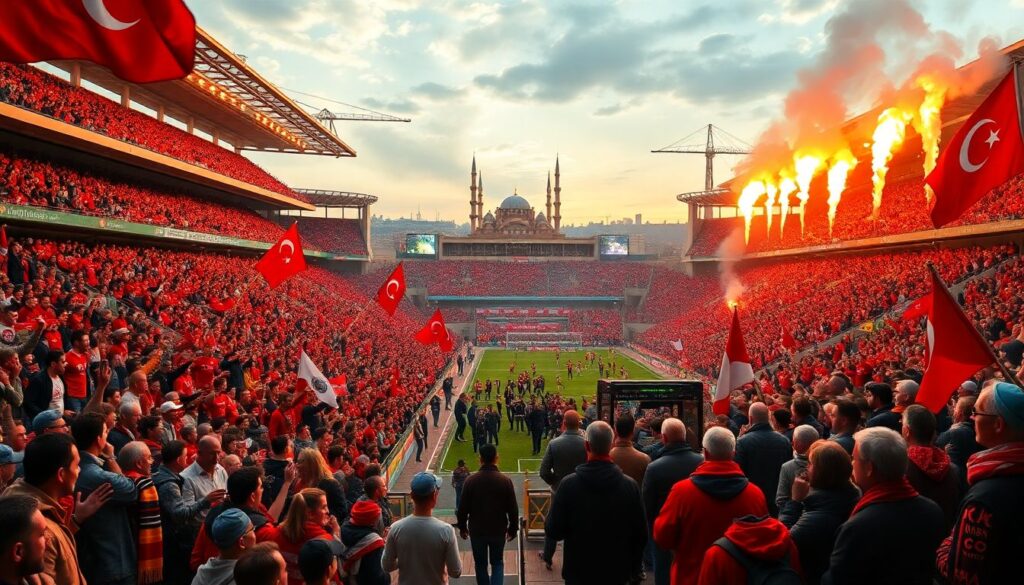
The fiercest rivalries in the Süper Lig are not side products of the league—they are engines driving it. They shape how people spend money, how they travel, how they talk, even how they argue about unrelated politics.
If you zoom out, every component we’ve talked about—Turkish Super Lig derby tickets Galatasaray Fenerbahce, fan choreography, media narratives, betting odds Turkish Super Lig derbies Galatasaray Fenerbahce Besiktas, even the choice to buy Turkish football club jerseys Galatasaray Fenerbahce Besiktas—is part of one big system: a cultural ecosystem powered by rivalry.
Understand that system, and you don’t just understand Turkish football. You understand a living, breathing slice of modern Turkish society.