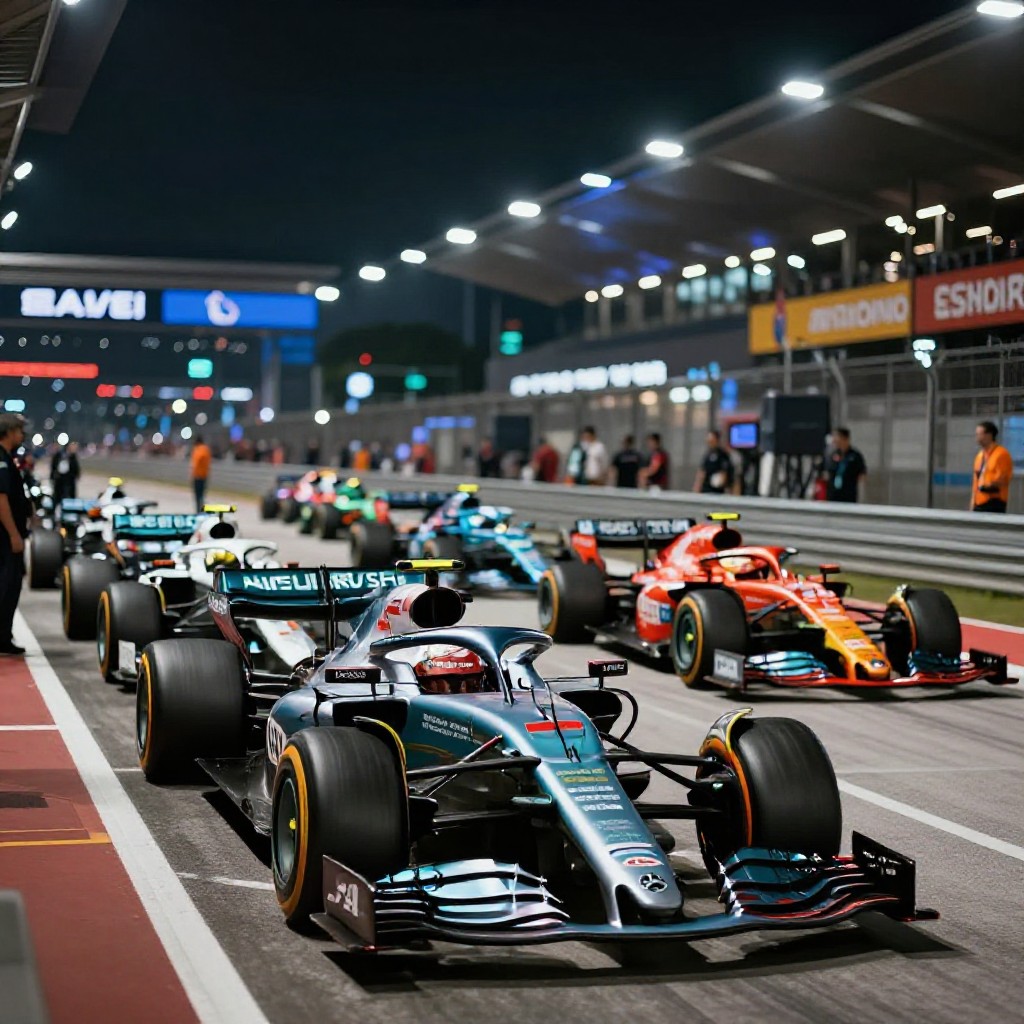
George Russell to Start Singapore Grand Prix from the Back of the Grid
George Russell will face a major setback at the Singapore Grand Prix after Mercedes decided to fit a new power unit to his car. Because the change takes him beyond the season’s permitted engine-use limit, the British driver is set to receive a grid penalty and start Sunday’s race from the back of the field.
The timing could hardly be worse for Russell’s title hopes. With seven rounds remaining, he is 84 points behind his closest championship rival, Mercedes teammate Kimi Antonelli. Starting last in Singapore will make it harder for Russell to close that gap, particularly at a circuit where overtaking is notoriously difficult.
Mercedes may be bringing forward its plans for an updated power unit. The team had previously expected to introduce the new unit at the United States Grand Prix, but fitting it to Russell’s car in Singapore is now under consideration. Taking the penalty earlier could help Mercedes avoid further grid drops later in the season if additional engine components are needed.
Marina Bay presents a very different challenge from circuits where drivers can recover places through straightforward passing opportunities. Its tight street layout and limited overtaking zones can leave a faster car stuck behind slower rivals, making track position especially valuable. Russell will therefore need more than strong pace to fight his way forward.
Antonelli’s recent result at Monza offers a reminder that a low starting position does not always decide a race. The Italian began the Grand Prix in 19th and went on to win. However, Singapore is unlikely to offer the same recovery route: Monza’s layout provides more chances to pass, while Marina Bay’s narrow streets make progress from the rear considerably tougher.
Russell’s penalty applies only to Sunday’s Grand Prix. He will not have to serve the grid drop in Saturday’s Sprint, giving him an opportunity to compete without that specific sanction. The Sprint could also offer the team useful information about the car’s pace and behaviour ahead of the main event.
Mercedes is also investigating a recent power-unit failure experienced by Russell. The team’s initial assessment points to a mechanical cause, though the inquiry is continuing. Understanding what went wrong will be important not only for reliability but also for decisions about which engine components Russell can use in the remaining races.
The strategic challenge begins before the lights go out. Mercedes will need to balance Russell’s need to make early progress against the risks of running in traffic, where contact, overheating or tyre wear can undermine a recovery drive. A clean opening lap and well-timed pit stop may be especially important on a circuit where overtaking opportunities are scarce.
Safety-car periods can also reshape a race around the Singapore streets. If one appears at a useful moment, teams may be able to change tyres with a smaller time loss than under green-flag conditions. That could give Russell a chance to gain positions, although such opportunities are unpredictable and cannot be treated as a guaranteed route through the field.
For Mercedes, the engine change is a calculated decision: accept a difficult starting position now in the hope of reducing the risk of further penalties later. For Russell, the immediate task is to limit the damage to his championship campaign. His prospects will depend on qualifying and Sprint performance, race strategy, reliability and whether circumstances create openings for a charge from the back.