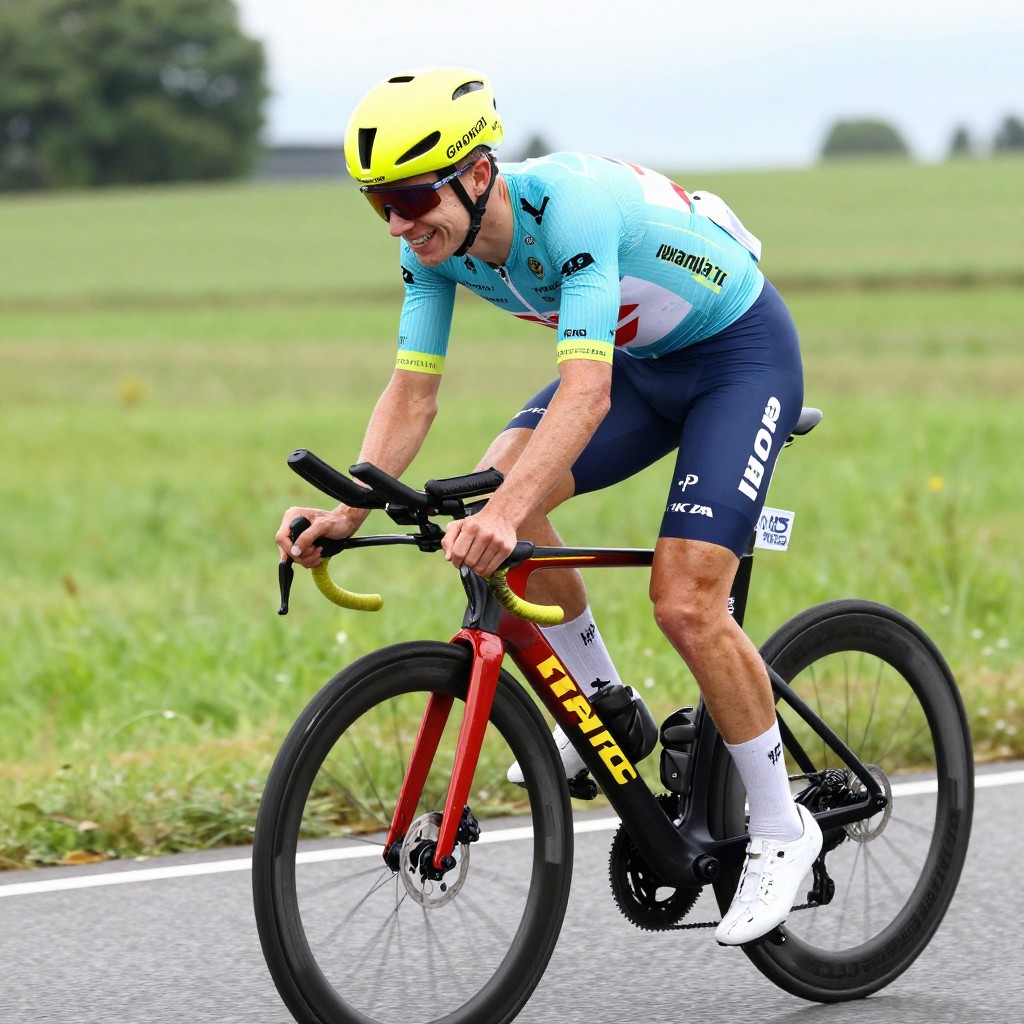
Tadej Pogačar Returns to Training After La Vuelta Crash
Tadej Pogačar has taken an important step in his recovery by getting back on a bicycle nearly three weeks after his serious crash at La Vuelta. The Slovenian rider completed his first training session at home under the supervision of members of his team.
Pogačar shared images from the session on social media, offering fans a glimpse of his rehabilitation process. In the video, he appeared pleased to be riding again and described the moment as an encouraging milestone.
“This is the first time I have been back on the bike. My collarbone feels strong, my head feels clear and my heart rate is high. I am very happy,” Pogačar said.
The accident occurred on August 29 during the eighth stage of La Vuelta. At the time, Pogačar was leading the general classification and had already won three stages. However, the crash forced him to abandon the Spanish Grand Tour.
Medical examinations revealed that the rider had suffered a concussion, a displaced fracture of his left collarbone and a stable fracture to the C7 vertebra. Because of the collarbone injury, he underwent surgery in Barcelona before being discharged from hospital and returning to his home in Monaco.
His return to light cycling does not mean that he is ready to resume competitive racing immediately. The first sessions are expected to focus on controlled movement, cardiovascular recovery and gradually rebuilding confidence on the bike. The priority will be to avoid excessive strain while the fractures continue to heal.
A collarbone fracture can be particularly challenging for a professional cyclist because the upper body plays an important role in bike control, climbing and sprinting. Even after surgery, athletes usually need time to restore strength, mobility and coordination before they can safely return to intense training.
The concussion is another factor that will require careful monitoring. Pogačar’s medical team will need to assess his response to exercise and watch for symptoms such as headaches, dizziness, fatigue or concentration problems. A gradual increase in workload is essential after a head injury.
His first ride is nevertheless a positive sign. Returning to the bicycle can help an athlete regain routine and motivation, while also providing a psychological boost after a serious accident. Pogačar’s statement suggested that he was encouraged by how his body responded to the session.
UAE Team Emirates announced on September 5 that Pogačar would not race again in 2026. The team also confirmed that his contract had been extended until 2032, demonstrating its long-term confidence in the Slovenian star and its commitment to supporting his recovery without imposing unnecessary pressure.
Pogačar also acknowledged the support he had received during the difficult period. “We did not expect to spend September this way. Thank you very much to our teams, families, friends and everyone for their tremendous support,” he wrote.
The 2026 season will therefore be focused on rehabilitation rather than results. For a rider who is accustomed to competing for victories in the biggest races, the process may demand patience. A full recovery will be more important than an early return, particularly after injuries involving the collarbone, spine and head.
Pogačar’s return to training is likely to attract close attention from cycling fans, but the timing of his comeback will ultimately depend on medical evaluations. His progress will be measured not only by the number of kilometres he can ride, but also by how his body responds in the hours and days after each session.
For now, getting back on the bike represents a meaningful victory. After abandoning La Vuelta because of multiple injuries, Pogačar has begun the long road toward full fitness. The next stage of his recovery will involve carefully increasing training intensity while ensuring that the healing process remains the central priority.