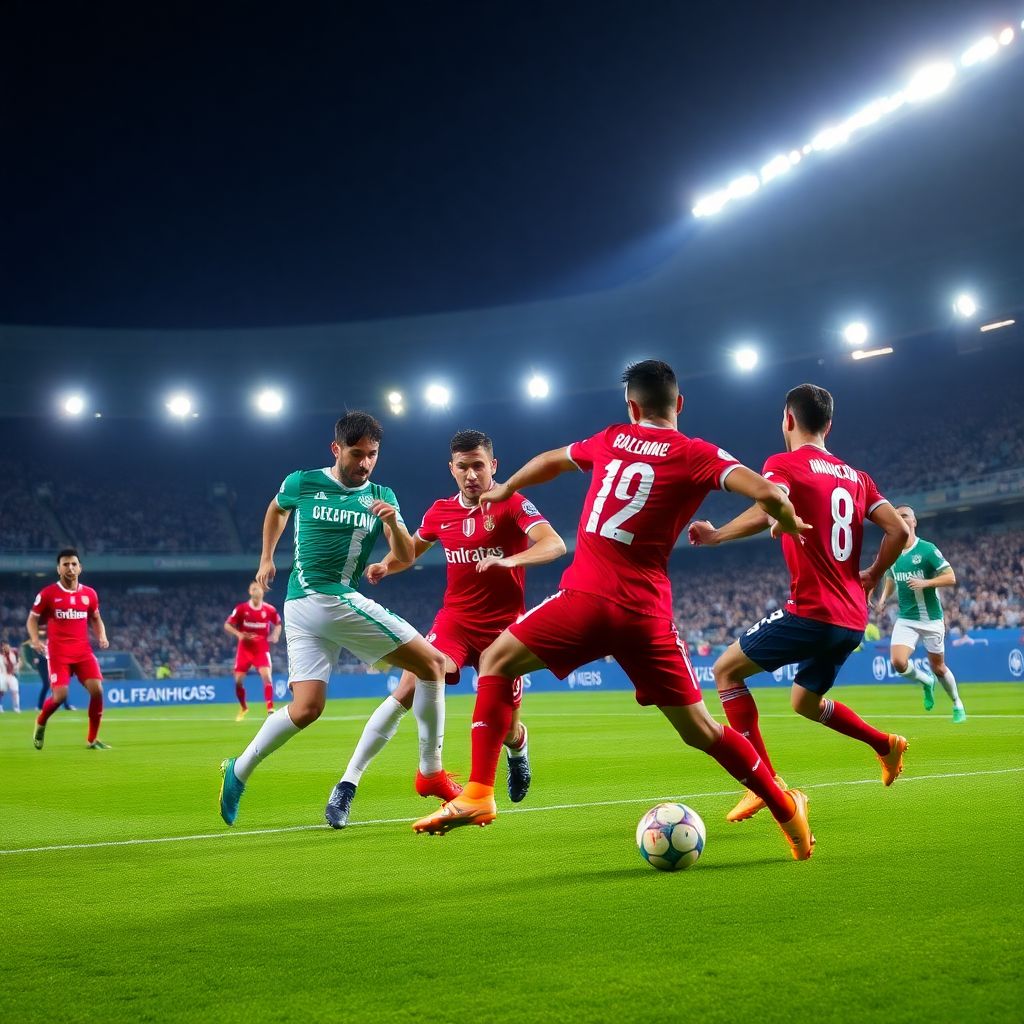
Galatasaray’s Sporting CP Defeat: What Sports Writers Highlighted
Galatasaray began its UEFA Champions League campaign with a 3-1 defeat away to Sporting CP. Although the Turkish side showed promising moments, especially during the first half, it struggled to maintain the same intensity after the break. Sports commentators focused on several decisive factors: defensive lapses, the decline in pressing intensity, delayed substitutions and the team’s inability to cope with Sporting’s fast counterattacks.
A defeat that was not as one-sided as the score suggested
Cem Dizdar argued that success in the Champions League cannot be achieved by performing well for only one half or a short period. At this level, teams need to establish a balanced game plan from the opening whistle until the end and remain consistent when searching for solutions.
According to this assessment, Galatasaray was not necessarily as inferior as the 3-1 score indicated. The team had important deficiencies, but the defeat should not be used as an excuse. Instead, the coaching staff must identify concrete solutions, particularly in defensive organization and game management.
The penalty awarded to Sporting was also discussed. Even if the referee’s decision appeared harsh, the attacking move that created the situation revealed a defensive weakness. Galatasaray allowed a relatively simple attack to develop too easily, just as it had done during Sporting’s opening goal.
Delayed changes from Okan Buruk
Levent Tüzemen criticized Okan Buruk’s timing during the match. He believed the coach made his substitutions only after Galatasaray had already fallen behind, leaving the team with too little time to change the course of the contest.
The late introduction of Nhaga, İlkay and Ugochukwu was viewed as particularly ineffective. Bringing on several players in the 85th minute was described as a decision with little practical value in a Champions League match, where every minute matters and mistakes are punished immediately.
Tüzemen also pointed to defensive negligence during Sporting’s first goal, claiming that Sane failed to track Zalazar adequately. Goalkeeper Uğurcan was another concern. While acknowledging his quality, the commentator noted that the goalkeeper had not started the season convincingly and once again took unnecessary risks in Lisbon.
Among Galatasaray’s players, Torreira was singled out as the clearest example of commitment. He continued to fight, cover ground and show a desire to recover from the difficult moments even when the rest of the team lost control.
Barış Alper’s effort and attacking limitations
Ömer Üründül viewed the overall effort positively, stating that most Galatasaray players tried to contribute. Barış Alper Yılmaz was praised for his running and work rate, alongside Torreira.
However, his lack of natural center-forward qualities limited his influence when he played through the middle. Once he moved toward the wing, he became more effective because he could use his pace and attack open spaces. This tactical adjustment allowed him to participate more actively in Galatasaray’s attacks.
Leão also made several attempts to create danger, but his passes and final actions often failed to find a teammate in the crowded penalty area. The performance suggested that Galatasaray needed more movement and better spacing around the box.
Üründül also expressed confidence that Batrakov could become more useful to the team in the future. Nevertheless, the player appears to need time to adapt to the pace, physical demands and tactical complexity of this level.
Sporting took control after the interval
Güntekin Onay highlighted the sharp difference between the two halves. In the opening period, Galatasaray’s high pressing caused Sporting problems and forced the Portuguese side into uncomfortable situations. Yet the same energy was not sustained after half-time.
The effectiveness of such an aggressive pressing plan away from home was also questioned. High pressure can produce chances, but it requires exceptional physical preparation and coordination. Once Galatasaray’s players began to tire, the spaces between the lines increased and Sporting found more opportunities to attack quickly.
After Sporting made it 3-1, Galatasaray’s presence in the opposition half was considered partly the result of the home side allowing it. The Turkish club appeared more active, but it did not consistently produce clear chances or exert genuine control.
Torreira was again praised for his first-half performance and overall intensity. Batrakov, on the other hand, was seen as a player who still needs both time and space to show his abilities. Against a fast and powerful Champions League opponent, he struggled to make a decisive impact.
Galatasaray collapsed physically in the second half
Halil Özer described the second half as a complete reversal of the match. Galatasaray appeared to run out of energy and lost the ability to control possession. The team struggled to string together even a few passes and could not build attacks with sufficient stability.
Sporting’s rapid counterattacks created serious problems. Galatasaray’s defensive structure became vulnerable, while several important players disappeared from the game. Sane, Barış Alper and Yunus were all criticized for failing to maintain their influence after the break.
The penalty further damaged Galatasaray’s morale. Once the score reached 3-1, the visitors seemed to lose their belief and organization. Özer nevertheless praised Sánchez, whose interventions prevented Sporting from extending the margin. Without his defensive contribution, the defeat could have become much heavier.
The main tactical lesson for Galatasaray
The most important lesson from the match is that intensity alone is not enough. Galatasaray produced a competitive first half, but the team lacked the physical and tactical resources to maintain that performance for 90 minutes.
The midfield must provide more control when the opponent increases the tempo. Torreira worked tirelessly, yet he could not cover every gap by himself. The team needs better support around him and more reliable possession during difficult periods.
Defensive communication is another area requiring attention. Sporting benefited from moments in which Galatasaray failed to track runners or close down attacks early. In European competition, even a brief lapse can lead directly to a goal.
The goalkeeper’s decision-making must also improve. Taking risks with the ball can help initiate attacks, but unnecessary complications near goal create avoidable danger. A more balanced approach would reduce pressure on the defense.
What should change in the next matches?
Galatasaray should focus on managing the rhythm of the game rather than pressing continuously at maximum intensity. Selective pressing, combined with compact defending in the middle third, could help the team conserve energy and limit counterattacking opportunities.
Okan Buruk must also use substitutions earlier when the team begins to lose control. Waiting until the final minutes makes it nearly impossible for substitutes to influence the result. Fresh legs in midfield and on the wings could have helped Galatasaray resist Sporting’s pressure.
The attacking plan needs greater flexibility as well. If Barış Alper starts centrally, the team must create situations that suit his strengths. When opponents defend deep, Galatasaray needs more movement between the lines, quicker passing and better support around the striker.
Despite the defeat, the performance does not suggest that Galatasaray is incapable of competing at Champions League level. The first half demonstrated that the team can pressure strong opponents and create uncomfortable moments. However, consistency, physical preparation and more decisive in-game management will be essential in the matches ahead.