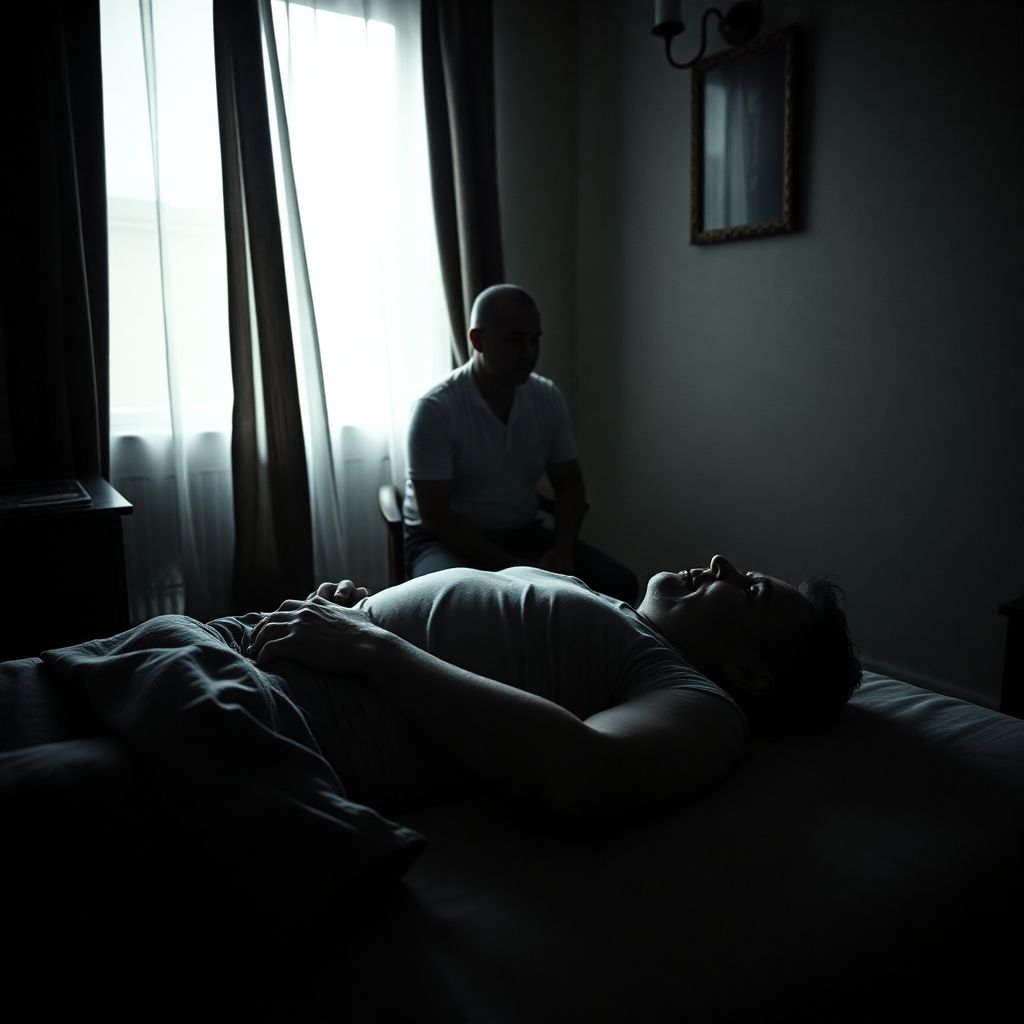
“I don’t want anything, that’s all.”
According to his long‑time masseur Nicolas Taffarel, these were the final words spoken by Diego Armando Maradona, one day before the Argentine legend died on 25 November 2020. Testifying in a Buenos Aires court, Taffarel offered a stark, intimate portrait of Maradona’s last days, marked by physical decline, emotional withdrawal and, as he describes it, a desperate lack of timely medical intervention.
The final days of a legend
Taffarel, who had worked closely with Maradona since 2018, stayed by his side during the last two weeks of the former footballer’s life. In court he recounted that Maradona’s body had “filled completely with fluid,” a sign of severe edema, and that the former star had stopped taking his prescribed diuretics shortly before his death.
When Taffarel visited him on 24 November, he found Maradona in a worrying state. The World Cup winner, once a symbol of exuberant movement and energy, had not left his bed “for days.” Taffarel said he tried to persuade him to get up, step outside his room and move around, but Maradona refused.
According to the masseur, Maradona no longer wanted to engage with basic daily activities. He did not want to eat, change his clothes, take a shower or even receive the massages that had long been part of his physical care. It was in this climate of apathy and deterioration that Maradona reportedly told him: “I don’t want anything, that’s all.” Taffarel insisted in court that these were the last words the star ever addressed to him.
“He didn’t want to leave his room”
Describing the home‑care period after Maradona’s brain surgery and discharge from hospital, Taffarel explained that he was only able to properly help during the first few days. Very soon, Maradona’s behavior changed dramatically.
“After a while, he did not want to leave his room,” Taffarel testified. “He would not get out of bed, he did not eat, he did not change his clothes, he did not bathe and he did not want to receive massages.” The picture painted is of a man both physically unwell and psychologically shut down, retreating from the world and from the routines that had sustained his health.
This withdrawal, in Taffarel’s view, was not merely a passing mood; it signaled profound distress that demanded urgent medical attention. He described the atmosphere in the house as increasingly tense and hopeless as Maradona’s condition worsened and visible swelling did not subside.
Repeated warnings to his personal doctor
The masseur stated that he repeatedly contacted Maradona’s personal physician, Leopoldo Luque, about the player’s deteriorating state. In a series of messages, Taffarel says he warned the doctor that Maradona was “completely edematous” and that he had been sleeping for 26 hours straight. He urged Luque to come to the house and examine his patient.
The reported replies from Luque, according to Taffarel, were brief and reassuring: “Stay calm,” “This is normal,” and “The swelling will go down.” These responses, the masseur argued, did not match what he was seeing in front of him: a man whose swelling did not decrease and whose overall condition, in his opinion, was steadily getting worse.
From Taffarel’s perspective, there was no “concrete intervention or quick response” as Maradona’s health visibly declined. He characterized the entire period as “hopeless,” suggesting that the necessary urgency simply never arrived, even as warning signs multiplied.
The controversy over diuretics
One of the central points in Taffarel’s testimony concerns Maradona’s diuretic medication, crucial for managing fluid retention in a patient with heart problems. The masseur said that, based on information he received from a nurse, Maradona’s diuretics were stopped shortly before his death.
Alarmed, Taffarel claims he asked Leopoldo Luque directly why such a decision had been taken. According to his account, Luque replied that the choice to discontinue the medication had been made by doctors from a private medical provider. However, court information presents a more complicated picture.
Evidence revealed during the hearing indicated that the consulting physician assigned from that medical provider, Dr. Pedro Di Spagna, visited Maradona only once. During that single visit, no decision was officially taken to halt any of Maradona’s medications. This discrepancy between what Taffarel says he was told and what the medical records show has become one of the key points under scrutiny.
Who is on trial?
The case has moved far beyond a private tragedy and into a high‑profile legal battle. Several members of Maradona’s medical and psychological team are facing charges of “homicide with eventual intent” – a serious accusation that implies they may not have actively wished for his death, but allegedly accepted the risk that their actions or inaction could lead to it.
Among those on trial are:
– Personal physician Leopoldo Luque
– Psychiatrist Agustina Cosachov
– Psychologist Carlos Díaz
– Home‑care coordinator for the medical provider, Nancy Forlini
– Consulting doctor Pedro Di Spagna
– Nursing coordinator Mariano Perroni
– Nurse Ricardo Almirón
Prosecutors are attempting to determine whether there was negligence or grave mismanagement in the treatment plan that led to the deterioration of Maradona’s condition at home.
What the autopsy revealed
The preliminary autopsy report concluded that Maradona died in his sleep from “acute pulmonary edema” caused by chronic heart failure. In simpler terms, his weakened heart could no longer pump blood effectively, leading to a buildup of fluid in his lungs and ultimately to his death.
For forensic experts, these findings are consistent with a long‑standing cardiac condition aggravated by other health problems. However, the central legal question is whether better monitoring, medication management and timely medical intervention could have prevented this fatal outcome.
Beyond the courtroom: questions about care and responsibility
The testimony of Nicolas Taffarel provides more than personal memories; it raises broader questions about how a world‑famous, seriously ill patient was managed in his final days. How could someone of Maradona’s stature, under the care of multiple professionals, end up in a scenario described by a close aide as “hopeless”?
His account suggests gaps in coordination between doctors, inconsistencies in communication and a possible underestimation of the severity of Maradona’s fluid retention and lethargy. For many observers, it is not only the medical decisions that are under examination, but also the system that allowed such a fragile patient to remain in a home environment without what some argue was appropriate intensive monitoring.
The psychological collapse behind “I don’t want anything”
Maradona’s last reported words also resonate on a psychological level. “I don’t want anything, that’s all,” can be read as a phrase of resignation, reflecting deep exhaustion and a loss of will. Taffarel’s description of Maradona refusing to eat, bathe or even change clothes underlines how far he had withdrawn from life’s basic routines.
Mental health specialists have pointed out that such behavior often indicates a severe depressive state or emotional collapse, particularly in patients dealing with chronic illness, lifelong addiction battles and the enormous pressure of global fame. In Maradona’s case, his fragile emotional state had been public knowledge for years, making the psychological aspect of his care just as crucial as the physical.
The trial is therefore not only about whether correct medicines were given on time; it is also implicitly about whether the care team fully recognized and addressed the mental and emotional dimension of Maradona’s suffering.
A painfully human ending to a larger‑than‑life story
For millions, Maradona remains the football genius who dribbled past half of England’s team in 1986 and lifted Argentina to World Cup glory. The image of him bedridden, swollen, refusing to eat or stand up, clashes violently with the memory of the electric number 10 in full flight.
Yet this contrast is precisely what makes the final chapter of his life so striking. Behind the legend, Taffarel’s testimony reveals a man fighting against his own body, his past excesses and perhaps his will to keep going. Instead of a carefully controlled, dignified medical environment, his last days, as described in court, were filled with confusion, unanswered warnings and a sense of abandonment.
What this case could change
Whatever verdict the court eventually reaches, the Maradona case is already prompting reflection on how elite athletes, retired stars and chronically ill public figures are cared for once they leave the stadiums and spotlight. It highlights the importance of:
– Integrated teams that communicate clearly across medical, psychological and nursing roles
– Transparent decision‑making about medication, especially for high‑risk treatments like diuretics
– Continuous monitoring of both physical and mental health, rather than treating them separately
– The courage of close aides, like Taffarel, to insist more forcefully when they see alarming changes
Maradona’s last reported words – “I don’t want anything, that’s all” – encapsulate a deep weariness. But they also, indirectly, raise a challenge to the living: to build systems of care that do not allow the most vulnerable, even when famous, to slip quietly into such a state of despair.
In the end, beyond statistics and trophies, this story reminds us that even the brightest stars can face a lonely and troubled final act, and that the true measure of a society’s respect for its heroes is often seen not at the peak of their glory, but in the way their final days are handled.