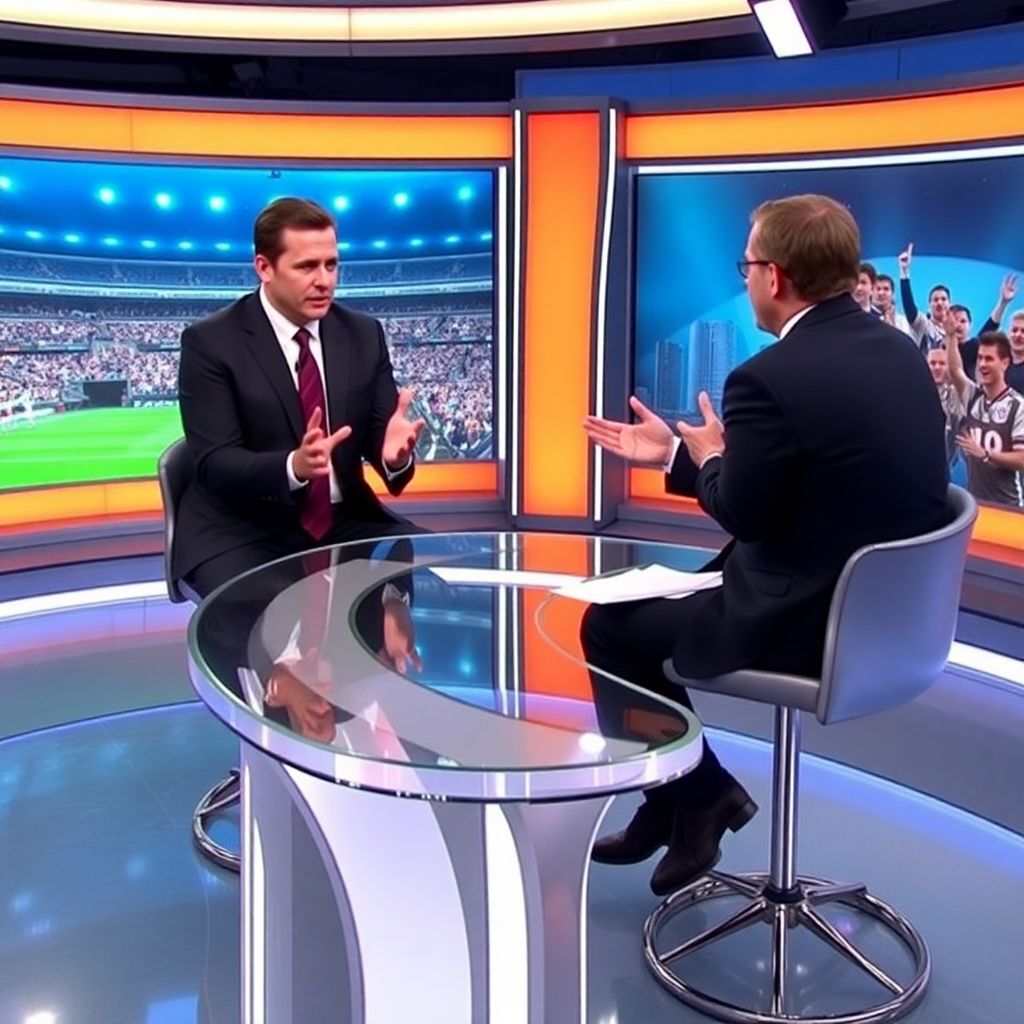
Gary Neville hits back at Christian Romero: “I stand by every word”
Former Manchester United defender Gary Neville has doubled down on his criticism of Argentina centre-back Christian Romero, insisting he has no regrets about his earlier comments and that his analysis was based on clear defensive weaknesses.
The tension between Neville and Romero has been simmering ever since Argentina’s World Cup campaign, where the South American side progressed despite conceding a worrying number of goals in the knockout rounds. Neville, now a high-profile pundit, had publicly labelled Romero and his defensive partner Lisandro Martínez as “the worst centre-back pairing in the world” ahead of Argentina’s World Cup semi-final clash with England.
Romero did not let that remark go unanswered. After the match, the Argentine defender fired back with a sharp response aimed directly at Neville, saying: “I hope I don’t become as stupid as he is when I retire from football.” The comment went viral and added fuel to an already heated debate about Neville’s punditry and Romero’s temperament.
Now, at 51, Neville has responded in detail and made it clear that he is not backing down. Speaking about the incident, he stated that his evaluation of Romero and Martínez remains unchanged:
“I still stand by what I said. Argentina conceded six goals in the knockout phase, and that was entirely down to defensive shortcomings. Without Lionel Messi, things would have been incredibly difficult for them. He carried that team in too many moments.”
Neville’s argument is that Argentina’s defensive structure simply was not at the same level as its attacking firepower. According to him, the back line, led by Romero and Martínez, made the kind of errors that top teams are usually punished for, and only the brilliance of Messi and Argentina’s offensive talent papered over those cracks.
At the same time, Neville was careful to stress that his criticism shouldn’t be confused with a denial of their raw ability. He underlined that Romero and Martínez have qualities he admires:
“Romero and Martínez are actually fantastic defenders. They have an extraordinary mentality and character. But in this tournament, they made far too many mistakes. You can be aggressive, brave, and passionate, but if you keep making basic errors at the back, you’re going to put your team under pressure again and again.”
By calling them “the worst centre-back pairing,” Neville was clearly using provocative language, but his broader point focused on consistency, decision-making, and concentration at the highest level. For Neville, international tournaments are not just about talent; they are about reliability in critical moments.
To further justify his view, Neville pointed to Romero’s club form in the previous Premier League season. He noted that Romero was a key part of a team that struggled badly in defence, conceding 65 goals over the course of the campaign and flirting with relegation.
“Romero played last season for a side that almost went down and shipped 65 goals in the league,” Neville said. “That’s the context behind my opinion of him. When your team is leaking that many goals, your defenders will come under scrutiny. I know exactly what I’m talking about, because I’ve played in title-winning and struggling sides. The difference at the back is enormous.”
From Neville’s perspective, individual quality cannot be separated from team outcomes. He argues that elite defenders are not only judged by tackles and interceptions, but by how solid their team is overall, how many chances they give away, and how they respond under sustained pressure.
The exchange between Romero and Neville also highlights a growing trend in modern football: players are more vocal and more willing to challenge pundits publicly. Where past generations might have chosen a more diplomatic answer, Romero went straight for a personal dig, questioning Neville’s intelligence rather than only debating the analysis itself.
This, in turn, opens up a broader discussion about the role and responsibility of pundits. Neville comes from an era in which harsh, outspoken criticism was common in dressing rooms and on training grounds, and he has carried that bluntness into his media career. His defenders claim this is precisely what makes him valuable: he is willing to say what others only hint at. His critics argue that such strong statements can cross the line into disrespect, especially when directed at current players who are still in the heat of competition.
For Romero, Neville’s words likely felt particularly unfair given the emotional weight of representing Argentina on the world stage. Argentine defenders traditionally carry a reputation for toughness and pride, and being labelled “the worst” before a crucial semi-final would naturally sting. In that context, his fiery response can be seen as an instinctive reaction from a player who feels underestimated and disrespected.
From a tactical standpoint, Neville’s remarks touch on a real dilemma that often comes with aggressive centre-backs like Romero and Martínez. Both like to step out of the back line, attack the ball early, and play on the front foot. When timed well, this can break up opposition attacks and spark counterattacks. When misjudged, it leaves space behind and forces the rest of the defence to scramble. Neville’s main contention is that, in that World Cup, those risks turned into mistakes too often.
However, defenders of Romero will point out that Argentina’s tactical approach also demands courage from its centre-backs. With the team frequently pushing numbers forward and relying on Messi and the front line to make the difference, the defence sometimes had to cope with open spaces and quick transitions. In such a setup, even top defenders can appear exposed, especially against elite opponents.
The narrative that “without Messi, Argentina would have struggled” is another central pillar of Neville’s argument. There is little doubt that Messi’s performances were decisive in countless matches, bailing the team out when it mattered most. But some would argue that focusing too heavily on Messi’s influence risks ignoring the defensive resilience Argentina showed at key stages, including last-ditch tackles, crucial blocks, and the mental strength to hold on to narrow leads.
Neville’s strict stance also reflects his own background as part of one of the most solid defensive lines in Premier League history at Manchester United. Having played alongside the likes of Rio Ferdinand, Nemanja Vidić and Jaap Stam, he is used to judging defenders by the highest possible standards. In that light, calling Romero and Martínez “fantastic defenders” while simultaneously labelling them as the “worst pairing” is his way of saying that talent alone is not enough; they must refine their decision-making and limit errors if they want to be considered truly elite.
The clash between Neville and Romero is unlikely to be the last of its kind. With players active on social media and pundits under constant pressure to deliver strong opinions, tensions between the pitch and the studio are bound to flare up regularly. What this episode shows most clearly is that modern football is not just played on the field but also fought over in the arena of public opinion, where words can sting almost as much as tackles.
In the end, Neville’s response underlines one key point: he is not merely provoking for attention; he believes his criticism is grounded in evidence from both international and club performances. Romero, on the other hand, has shown that he is not afraid to defend his reputation fiercely. How both men evolve in their respective roles-Neville as a leading voice in analysis and Romero as a central figure in Argentina’s back line-will likely shape how this war of words is remembered in the years to come.