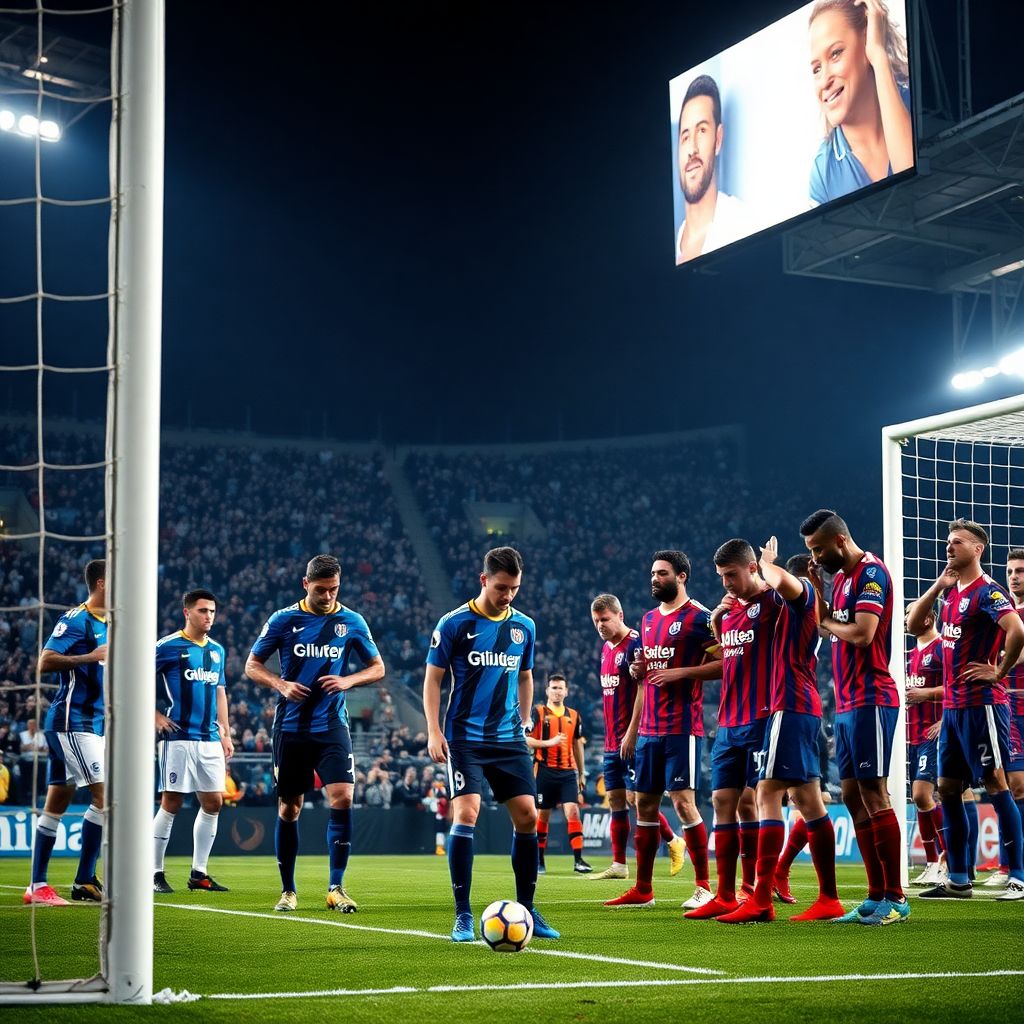
Genoa fail to extend unbeaten run after late Lazio blow
Genoa’s recent revival under Daniele De Rossi suffered a painful setback as the Serie A side saw their five‑match unbeaten run snapped by a dramatic defeat to Lazio. In a match that produced five goals and a flurry of twists, Genoa fought back from two down to level the score, only to concede a decisive penalty in the tenth minute of stoppage time and lose 3–2.
The result halted the momentum of a team that had finally begun to stabilize after a chaotic start to the season. Genoa began the campaign under Patrick Vieira, but the French coach was unable to deliver a single victory in the opening nine league fixtures. Those early weeks set a worrying tone: three draws, six defeats, and a side that appeared short of confidence, structure, and cutting edge in the final third.
The club hierarchy eventually decided that change was necessary. Vieira left his post after that winless run, and Daniele De Rossi was appointed as the new head coach, tasked with rescuing the season and restoring belief within the dressing room. The choice of De Rossi, a former midfield leader known for his intensity and tactical intelligence, signaled a shift toward a more aggressive and proactive style of play.
De Rossi’s debut on the Genoa bench came against Cagliari, and it immediately hinted at what was to come: a wild 3–3 draw in which Genoa showed both attacking ambition and defensive fragility. While the club still had to wait for its first win of the season, there was a noticeable increase in energy and drive, particularly going forward.
That breakthrough finally arrived on matchday 13. Hosting Hellas Verona, Genoa managed to edge out a tight contest 2–1, securing their first league victory of the campaign. The win did more than add three points to the table; it provided a psychological turning point for a squad that desperately needed positive reinforcement after weeks of frustration.
Momentum began to build. In the following round, Genoa defeated Udinese 2–1, once again demonstrating resilience and the ability to manage narrow scorelines. The team looked more compact and purposeful, with clearer attacking patterns and better coordination between the lines. However, the schedule soon turned brutal, and reality quickly reminded Genoa of the gap separating them from Italy’s elite.
In successive matches, De Rossi’s men fell to Inter, Atalanta and Roma. Those three straight defeats underlined the growing pains of a side still rebuilding its identity and adjusting to a new coach’s demands. Yet even in those losses, Genoa displayed more structure than in the early weeks under Vieira, competing for long stretches before being undone by lapses in concentration and superior individual quality on the opposing side.
After that harsh run, Genoa managed to steady the ship. They recorded back‑to‑back draws against Pisa and Milan, results that suggested greater defensive discipline and a more balanced approach between attack and protection of their own goal. The draw with Milan, especially, served as a confidence booster, as Genoa held their own against a title‑chasing opponent.
The turning point in the winter stretch came in the 20th round of fixtures, when Genoa finally returned to winning ways by defeating Cagliari. That victory not only ended a short winless spell but also marked a tangible confirmation that De Rossi’s influence was starting to take root. The team combined intensity without the ball with quick transitions in possession, a blend that suited several of the squad’s key players.
A draw with Parma followed, slightly slowing the pace of the resurgence but not derailing it. Genoa remained difficult to beat and gradually climbed away from the most dangerous positions in the table. Their form culminated in matchday 22, when they overcame Bologna and extended their unbeaten run in Serie A to five matches. That sequence – mixing wins and draws – suggested that Genoa might finally have found a sustainable rhythm.
Then came the trip to Lazio, a test of how far this Genoa side had really come. The match quickly turned into a roller‑coaster. Lazio seized control and raced into a 2–0 lead, exploiting gaps in Genoa’s defensive structure and punishing mistakes in transition. At that stage, it appeared the visitors were heading for a routine defeat.
Instead, Genoa produced a spirited reaction. De Rossi’s players refused to surrender, pushing higher up the pitch, pressuring Lazio’s buildup, and committing more bodies forward. Their persistence paid off as they clawed their way back to 2–2, showcasing the character and belief that had been largely absent at the start of the season. The comeback hinted at a maturity that goes beyond tactics: Genoa now looked like a group convinced they could compete even after a poor start to a match.
Yet football can be brutally unforgiving. Deep into added time, with the scoreboard still level and Genoa seconds away from stretching their unbeaten run to six games, the referee pointed to the spot. Lazio midfielder Danilo Cataldi stepped up in the 90+10th minute and converted the penalty, sealing a 3–2 victory for the hosts and shattering Genoa’s hopes of leaving with a hard‑earned point.
The late concession not only hurt emotionally but also came at a delicate moment of the season. Ending a five‑game unbeaten series in such dramatic fashion can shake confidence if not managed carefully, especially in a squad that has already lived through a prolonged early slump. For De Rossi, the immediate challenge is to transform this disappointment into fuel rather than frustration.
From a broader perspective, Genoa’s trajectory under De Rossi still shows more positives than negatives. The team now scores more regularly, has developed a clearer attacking identity, and generally competes more evenly against mid‑table rivals. Defensively, however, the match against Lazio again exposed familiar issues: lapses in marking, difficulty defending transitions, and an inability to fully close out matches when under sustained pressure.
The mental side of the game will be just as crucial as tactical adjustments. Coming back from 2–0 down away from home shows resilience; conceding at 90+10 highlights how thin the margin for error is in Serie A. De Rossi and his staff will need to work on game management in the final stages, decision‑making under fatigue, and greater composure in their own penalty area when protecting a result.
Next on the schedule is a demanding home test against Napoli. Hosting one of the league’s strongest squads will provide an immediate measure of Genoa’s response to the Lazio setback. A positive result would reinforce the idea that the defeat was a bump in the road, not the start of a new negative spiral. Conversely, another loss could reignite doubts and increase pressure in the run‑in.
Tactically, the match against Napoli may require a slightly more conservative approach, with particular attention to defensive spacing and support for the full‑backs against Napoli’s wide threats. At the same time, Genoa cannot simply retreat and hope to survive 90 minutes in their own half; the attacking progress made under De Rossi would be wasted if the team abandons its newfound courage on the ball.
The contrast between the Vieira and De Rossi eras this season is stark. Under Vieira, Genoa struggled to impose any clear identity, oscillating between systems and often appearing reactive rather than proactive. Under De Rossi, even with mixed results, there is a more coherent tactical framework: pressing triggers are clearer, midfield roles are better defined, and the team looks more synchronized in their movements, both offensively and defensively.
For Genoa’s supporters, the journey has been emotionally draining but not devoid of hope. The early nightmare of nine winless games has gradually been replaced by performances that show fight, personality, and at times, genuine quality. The loss to Lazio, painful as it is, does not erase the progress made in recent weeks. Instead, it underlines the next steps required if Genoa are to move from mere survival mode toward the stability of a solid mid‑table side.
In the coming rounds, consistency will be the key word. Converting draws into wins against direct rivals, limiting costly individual errors, and maintaining belief in De Rossi’s project will determine whether this season becomes a story of recovery or one of missed opportunities. The unbeaten run is over, but the transformation of Genoa under their new coach is still very much a work in progress.
Комментарии
У них на сайте есть подробности по залам и форматам мероприятий, удобно посмотреть заранее и прикинуть, что подойдёт по бюджету и количеству гостей.