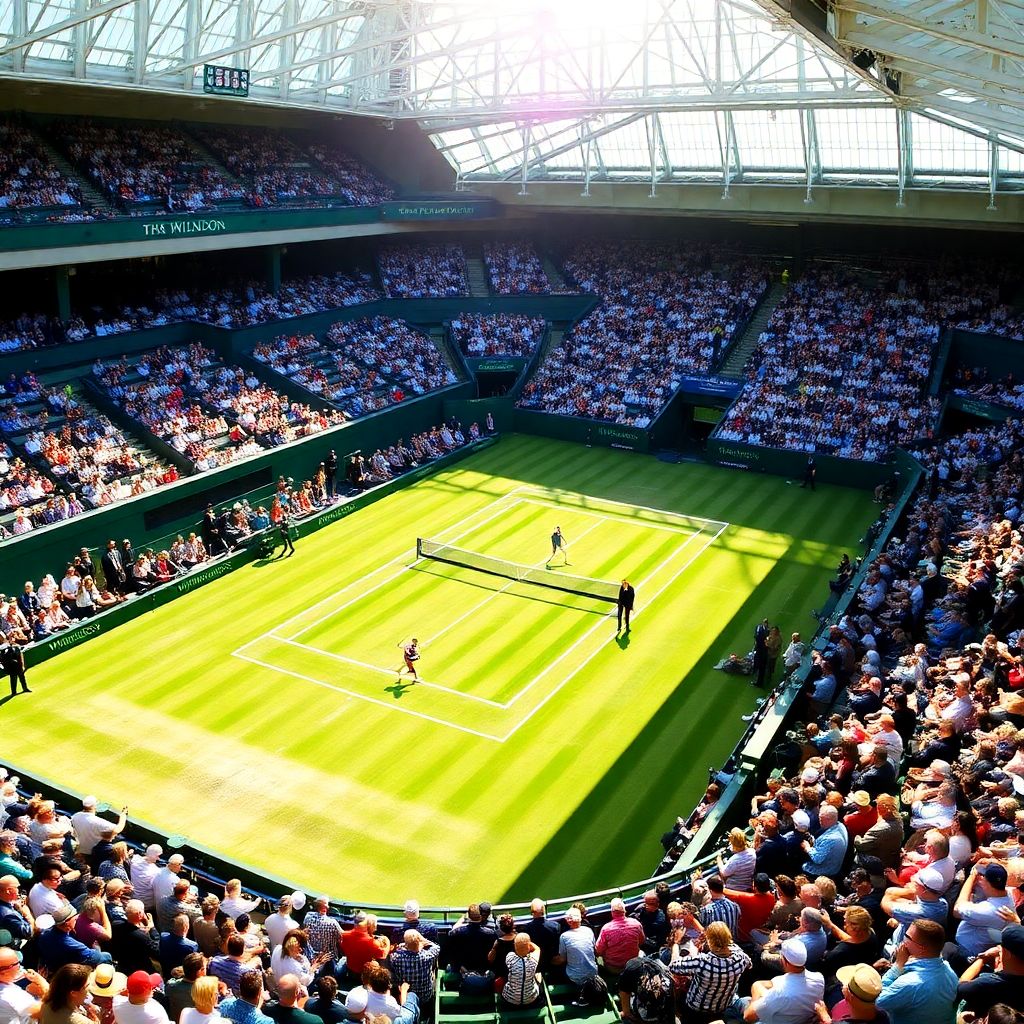
Wimbledon fever returns: main draw action set to begin
The most traditional stop on the tennis calendar is ready to take center stage again as the Wimbledon main draw gets underway. After last year’s historic run, Zeynep Sönmez is back on the lawns of London, once more among the elite in the main draw and carrying high expectations into the tournament.
This year’s schedule follows the classic format: the women’s singles final is set for Saturday, 11 July, while the men’s singles final will take place on Sunday, 12 July. Over those two days, the sport will crown new – or perhaps repeat – champions on the most prestigious court in tennis.
Last season, Jannik Sinner captured the men’s title, while Iga Swiatek finally lifted the Wimbledon trophy in the women’s event, adding grass-court glory to her already dominant resume on clay and hard courts. In 2026, Sinner returns as defending champion, aiming to hold on to his crown in the pressure-filled role of titleholder. Swiatek, meanwhile, arrives with the confidence of a reigning champion on these courts and will be trying to replicate last year’s breakthrough success on grass.
New era of technology at Wimbledon
One of the most striking changes for Wimbledon’s 2026 edition is the introduction of an expanded video review system. The tournament had already moved to an electronic line-calling setup last year, removing traditional line judges from most courts and relying on advanced tracking systems for in-or-out decisions.
This year, technology will go a step further. Players will now be able to request video reviews for situations that fall outside standard line calls. The system will be used to check whether the ball bounced twice before being hit, whether it made contact with a player’s body or equipment, or whether a stroke was executed in a way that violates the rules – scenarios that usually rest solely on the chair umpire’s judgment.
Video review will be implemented on the sport’s biggest stages at the tournament: Centre Court, No. 1 Court, No. 2 Court, No. 3 Court, as well as Courts 12 and 18. This expansion is designed to reduce controversy around close or unusual calls, add another layer of fairness, and give players a greater sense of control in critical moments.
Record-breaking prize money
Wimbledon 2026 will also be remembered for its unprecedented prize pool. The total purse has been set at 64.2 million pounds, representing a 20 percent increase compared with the previous year. It’s another clear sign of how quickly the financial scale of top-level tennis is rising.
Both the men’s and women’s singles champions will earn 3.6 million pounds each. Runners-up in singles will take home 1.8 million pounds, while semifinalists will receive 900,000 pounds and quarterfinalists 480,000 pounds. Even players who exit in the first round of the main draw will earn 80,000 pounds.
This steep rise rewards not only the champions but also helps support a broader group of professionals who often carry significant travel and coaching costs. The distribution reflects a continuing effort in tennis to improve earnings in earlier rounds and narrow the financial gap between the very top stars and the rest of the tour.
Zeynep Sönmez: returning to the scene of history
Turkey’s Zeynep Sönmez arrives at Wimbledon 2026 in one of the most impressive phases of her career. Last year, she made history by advancing to the third round at Wimbledon, becoming the first Turkish player in the Open Era to reach the third round of a Grand Slam tournament. That run placed her name firmly on the international tennis map and inspired a new wave of interest back home.
Now 24 years old, Sönmez has climbed to No. 54 in the WTA rankings – the highest position of her career so far. That ranking is not a coincidence; it reflects consistent progress across surfaces, especially during this season’s grass-court swing, where she has produced several eye-catching performances.
On the lawns of Nottingham, she upset second seed Leylah Fernandez with straight sets of 6-4, 7-6, a result that showed her ability to match and surpass top-30 level opposition on grass. In Eastbourne, Sönmez once again battled through qualifying to reach the main draw. There, she pulled off another gritty victory, rallying from a set down to defeat Harriet Dart 4-6, 6-2, 7-5 in the first round.
A withdrawal by Sara Bejlek due to injury sent Sönmez into the quarterfinals, where she faced former Grand Slam champion Jelena Ostapenko. That match ended 6-3, 6-0 in favor of the Latvian, a reminder of how punishing the very top of the women’s game can be, yet also proof that Sönmez is now regularly competing in the latter stages of major tournaments. Additionally, she reached the quarterfinals at the grass event in ‘s‑Hertogenbosch, further underlining her growing comfort and effectiveness on this surface.
First-round test: Sönmez vs. Ann Li
In the opening round at Wimbledon, Zeynep Sönmez will face world No. 29 Ann Li of the United States. On paper, Li comes in as the higher-ranked player and seeded favorite, but the head-to-head numbers tell a different story.
Sönmez and Li have met twice before, and on both occasions the Turkish player walked away with the victory. Their most significant clash came in Merida in 2024, where Sönmez defeated Li in the final to claim the biggest title of her career. The win not only gave her a major confidence boost but also showed she can perform at her best with a trophy on the line.
The pair met again in Merida later that same season. Li was looking for revenge, but once more Sönmez had the answers and prevented the American from turning the rivalry around. This psychological edge – combined with her strong form on grass this year – makes their first-round encounter one of the more intriguing early matches in the women’s draw.
From a tactical perspective, Sönmez’s ability to redirect pace and stay low through her groundstrokes suits grass well. Li’s aggressive baseline style can be very effective on fast courts, but it also leaves room for errors under pressure. If Sönmez maintains a high first-serve percentage and continues to return with depth, she has a realistic chance to extend her perfect record in this matchup.
A milestone moment for Turkish tennis
Beyond her own ambitions, Sönmez carries the hopes of an emerging tennis nation. Her results in the last two seasons have already shifted perceptions of what is possible for Turkish players at Grand Slams. A deep run at Wimbledon – even another third-round appearance or better – would further strengthen the foundation for future generations.
Young players in Turkey now have a concrete example of someone who has broken through the barriers and competed on the sport’s grandest courts. Sponsorship interest, media coverage, and grassroots participation are all likely to grow if Sönmez can continue to post big wins at major tournaments. Wimbledon, with its global visibility, is the ideal stage for such a breakthrough to resonate far beyond the tennis world.
Serena Williams’ remarkable return
One of the headline stories of Wimbledon 2026 is the unexpected return of Serena Williams to singles competition. The 44‑year‑old American legend, widely regarded as one of the greatest players in history, has received a special wildcard into the main draw.
Serena’s comeback marks her first appearance in a Grand Slam singles draw in nearly four years. For an entire generation of fans, she is synonymous with dominance: 23 Grand Slam singles titles, countless weeks at No. 1, and multiple championships on the very grass courts of Wimbledon. Her presence alone fundamentally alters the atmosphere at the All England Club.
In the first round, Williams will face 20‑year‑old Australian Maya Joint. The matchup symbolizes a striking generational contrast: a seasoned icon who has seen everything the sport can offer, against a young player just beginning to write her own story. While expectations around Serena’s physical level remain uncertain after such a long absence, her experience, serve, and competitive instincts will ensure that her matches are among the most watched of the tournament.
For younger players, facing Williams at Wimbledon is both a daunting challenge and an invaluable opportunity. For fans, it’s a rare chance to see one of the game’s most influential figures back in full battle mode on a Grand Slam stage.
Tradition meets change at the All England Club
As much as Wimbledon evolves with technology and prize money, it remains the most tradition-rich event in tennis. Players will still walk onto courts in predominantly white clothing, strawberries and cream will still be a fixture in the stands, and silence will fall before every first serve on Centre Court.
Yet beneath this elegant surface, change is accelerating. The introduction of fully electronic line-calling, the expansion of video review, and the growing prize pool reflect a modern, data-driven, and globalized sport. The tournament is carefully balancing its century-old heritage with the demands and expectations of 21st-century athletes and audiences.
The grass itself is also a factor. Compared with previous decades, today’s Wimbledon courts are slightly slower and offer higher bounces, giving more opportunities to baseline players like Swiatek and Sinner, without fully abandoning the classic serve‑and‑volley possibilities that made the event famous.
Key storylines to follow in 2026
Alongside the obvious question of whether Sinner and Swiatek can defend their titles, several subplots will shape the narrative of this year’s Championships:
– Can a new generation on both tours – players in their early twenties – break through and claim a first Grand Slam on grass?
– Will seasoned grass specialists use the surface to launch a late-career surge?
– How will players adapt tactically to the enhanced video review system? Will we see momentum swings sparked by successful challenges to chair umpire calls?
– For Sönmez and other rising names from non‑traditional tennis nations, can Wimbledon become the defining platform that elevates them into household names?
Each round will answer some of these questions and raise new ones, building towards what is often the most dramatic fortnight of the tennis year.
What to expect from the opening week
The first week tends to be the most unpredictable. Top seeds try to settle their nerves and adjust to the unique demands of grass, while lower‑ranked opponents swing freely in the hope of a famous upset. Rain delays, five‑set marathons, and late‑evening finishes under the lights are all part of the experience.
For Zeynep Sönmez, the priority will be to navigate her opening rounds with the same composure she displayed last year. A win over Ann Li would not only extend her personal winning streak in that rivalry but also send a strong signal that her previous Wimbledon success was no one‑off.
For Serena Williams, just stepping on court in the main draw again will be a moment of sporting history. Every point she plays will be scrutinized, every win celebrated, and even if her run is short, her return will likely be one of the enduring images of Wimbledon 2026.
As the main draw begins, Wimbledon once again promises a blend of nostalgia and novelty: legends returning, new stars emerging, technology reshaping the margins, and, at the center of it all, the timeless challenge of mastering grass-court tennis on the sport’s most hallowed stage.