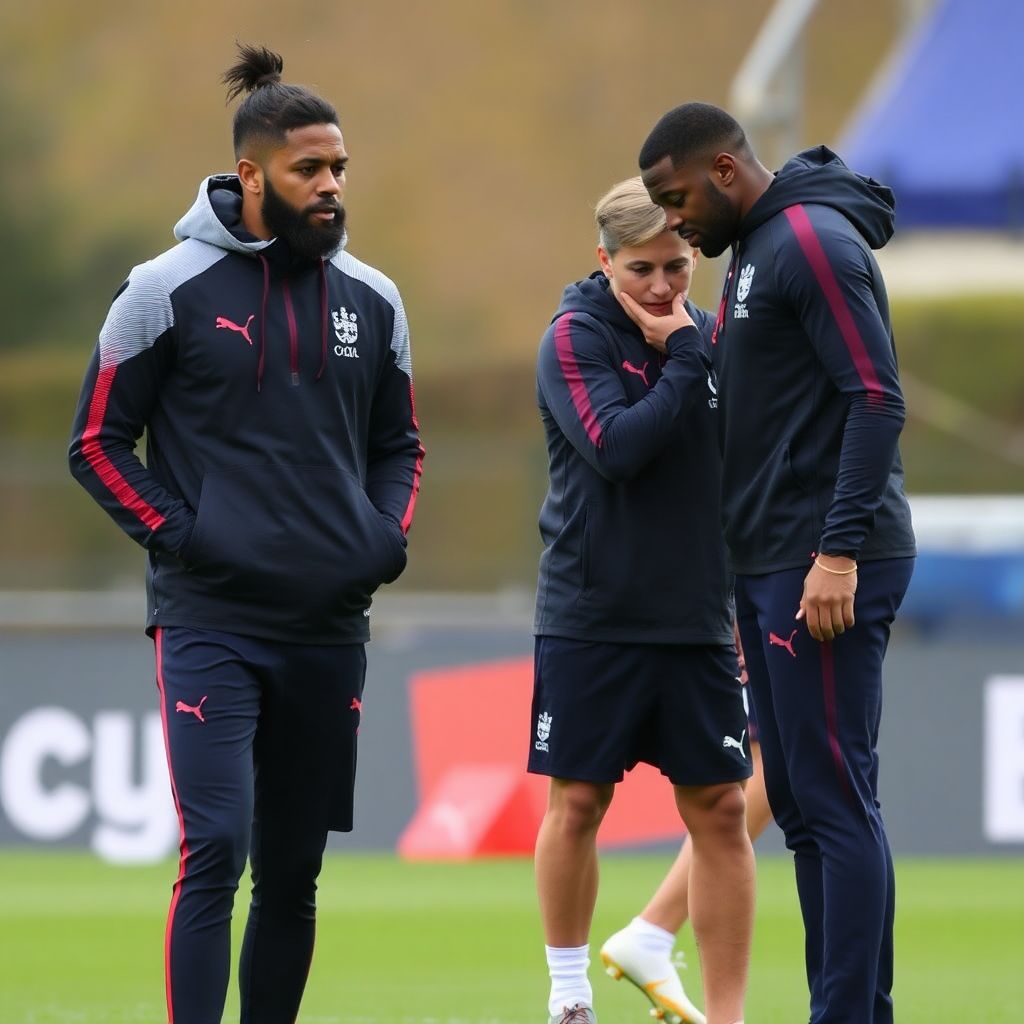
Thomas Tuchel: “We have to be careful with Saka”
England head coach Thomas Tuchel has urged caution over Bukayo Saka’s physical condition in the build‑up to the 2026 World Cup, stressing that the winger is being handled with a long‑term view rather than through short‑term risks.
Speaking ahead of the tournament, Tuchel underlined that Saka remains one of the pillars of his squad, but admitted that the medical and coaching staff are closely monitoring his workload after a demanding season with Arsenal and an Achilles issue that has trailed him for months.
“Step by step back to his best”
Tuchel revealed that Saka has been managing the same problem for a significant part of the campaign and that England are determined not to overload him in the final stretch before the World Cup.
“He picked up an injury in March and played through it for the rest of the season,” Tuchel said. “At the end of the campaign he came back into the team and did very well, but his minutes were managed very carefully between games. Right now we are bringing him back step by step to his highest level.”
Despite the concerns, Saka has been fully involved in England’s recent preparations. Tuchel confirmed that the entire squad, including the Arsenal star, took part in the latest training session, and that the program is unfolding exactly as the staff mapped it out weeks in advance.
“All the players trained, Bukayo included,” he explained. “The plan is being followed precisely. We are not rushing anyone, but we are also not holding them back unnecessarily. The idea is to arrive at the first match with everyone physically and mentally ready.”
Balancing risk and reward
Saka’s case illustrates one of the central dilemmas for any national coach before a major tournament: how to get the best players to peak in time without aggravating underlying issues. Tuchel acknowledged that Saka’s competitive nature and willingness to play through pain must sometimes be tempered by medical advice.
“With players like Bukayo, who are extremely ambitious and always want to be on the pitch, the responsibility lies with us,” he said. “We have to protect them when necessary. Our goal is not just to have him ready for one game, but to keep him at top intensity throughout a long tournament.”
According to Tuchel, the staff are using individual fitness plans, adjusted training intensity and detailed performance data to decide how many minutes Saka should receive in friendlies and in intra‑squad sessions. The focus is on quality rather than quantity of work.
England’s historical burden and Tuchel’s ambition
Beyond individual fitness concerns, Tuchel also addressed the wider context around England’s World Cup hopes. The national team has been chasing the trophy since their lone triumph in 1966, and every new generation has had to carry the weight of that history.
The German coach did not shy away from that narrative but framed it as a challenge that can be overcome with the right mentality.
“England have not lifted the World Cup since 1966, that is a fact,” he admitted. “But history does not decide the next tournament. With a bit of luck, very strong concentration and clear belief in ourselves, we can go far. We have to be brave enough to dream.”
Tuchel insisted that the squad should embrace high expectations instead of fearing them. In his view, the combination of experienced players, emerging talents like Saka, and a stable tactical identity gives England the right to consider themselves serious contenders.
Final friendly against Costa Rica to shape starting XI
Before the World Cup begins, England will play one last warm‑up match against Costa Rica. Tuchel sees this fixture as a crucial opportunity to refine his starting XI and test different variations, especially in positions where competition for places is intense.
He explained that no final decisions have been taken regarding the line‑up for the opening game, and that performances in training and in the Costa Rica match will heavily influence his choices.
“We will evaluate every player before deciding the first XI,” Tuchel said. “The friendly is not just a rehearsal; it’s another chance for the players to show they are ready. Everyone still has something to prove, and that is exactly how it should be before a major tournament.”
Saka’s involvement in that final test is expected to be carefully calibrated. The staff are looking to give him enough minutes to sharpen his rhythm without jeopardising his recovery curve. Tuchel hinted that the winger could either start and play limited minutes or come off the bench, depending on how he feels after the last training sessions.
Mass rotation, but clear priorities
Tuchel pointed to the recent friendly against New Zealand as an example of how he plans to use his squad. In that match he made 11 changes at half‑time, distributing playing time across the group to keep everyone engaged and physically ready.
“Everyone can play,” he reiterated. “All of our players are fit and ready. John [Stones] is one of them.”
The inclusion of John Stones among those expected to gain more minutes is particularly notable. The Manchester City defender had a season with limited playing time at club level, and Tuchel wants him to build rhythm, sharpness and confidence before the tournament kicks off.
The coach suggested that some players who were on the fringes during the club season could have very important roles for the national team, provided they show the right attitude and physical condition in the coming days.
Injury‑free squad the main objective before Croatia
One of Tuchel’s main sources of satisfaction is that England currently have no major injury concerns. As the first World Cup match against Croatia on 17 June approaches, his priority is to maintain that clean bill of health.
“There is no one who needs rest at the moment. Everyone is ready, and that is very good news,” he said. “We came through the first game without injuries. We’ve had strong training sessions, and now we will use the next match to give more minutes to some players.”
Tuchel stressed that avoiding last‑minute setbacks is almost as important as tactical preparation. Soft‑tissue problems or minor strains at this stage can disrupt the entire balance of the squad, forcing changes in partnerships and game plans that have been rehearsed for weeks.
“For me the biggest target before Croatia is simple: we want the whole squad available,” he added. “If we can reach the first game with 26 players fully healthy, we already give ourselves an advantage.”
Saka’s role in England’s attacking structure
Beyond his fitness, Saka’s tactical importance to England explains why Tuchel speaks so cautiously about him. The winger offers width on the right, the ability to isolate and beat defenders one‑on‑one, and a consistent end product in the final third.
Tuchel values Saka not only for his goals and assists, but also for his work rate without the ball, his pressing intelligence and his calm decision‑making under pressure.
“He gives us balance,” the coach has often said about similar wide forwards. “Players like him stretch the pitch, create space for the midfielders and force opponents to make hard choices. When he is at his best, the whole team benefits.”
In the current setup, Saka is expected to link closely with the right‑sided full‑back and the central striker, forming combinations that can break defensive lines. For that system to function, Saka needs to be at a physical level that allows him to repeat high‑intensity sprints for 90 minutes, match after match. This is another reason why Tuchel is reluctant to overuse him in friendlies.
Managing stars over a long tournament
Tuchel’s comments on Saka fit a broader philosophy: modern tournaments are marathons, not sprints. With group games, potential extra‑time knockouts and travel demands, even the fittest players can suffer if their minutes are not controlled.
The England staff are reportedly using recovery protocols such as ice baths, personalised gym programs and strict sleep routines to keep their stars fresh. Players like Saka, who have come off exhausting club seasons, are being given tailored regeneration sessions between matches.
The aim is to avoid the common pattern in which a key attacker starts the tournament explosively but fades physically in the later rounds. Tuchel wants his main weapons to be strongest precisely when the competition becomes most demanding – quarter‑finals, semi‑finals and beyond.
Psychological pressure and Saka’s resilience
Another often overlooked aspect is the psychological weight on a player like Saka. Having experienced both highs and painful lows on the international stage at a young age, he has learned to manage expectation and criticism. Tuchel views this mental resilience as an asset that can influence the whole dressing room.
By speaking openly about the need to “be brave enough to dream,” Tuchel is trying to build a culture in which players feel empowered rather than paralysed by pressure. Saka, with his calm personality and consistency, fits perfectly into that approach: he is seen as a role model for combining ambition with humility.
Protecting him physically, therefore, is not only a medical decision but a way of guarding one of the squad’s emotional leaders.
Looking ahead to Croatia
All eyes now turn to the opening match against Croatia on 17 June. Tuchel knows that a strong start can set the tone for the entire campaign, lifting confidence and reducing external noise. The likes of Saka, Stones and other key figures are being prepared to reach that date in optimal condition.
The plan is clear: use the Costa Rica friendly to fine‑tune details, rotate intelligently, and then lock in the XI that will face Croatia, with Saka ideally close to his peak level. If England can combine individual freshness, collective cohesion and the mental strength Tuchel keeps emphasising, they believe the long wait since 1966 might finally begin to feel a little shorter.
For now, though, caution remains the watchword. When it comes to Bukayo Saka, Tuchel’s message is firm: he is essential, but he will not be sacrificed to short‑term impatience.