
From cage pitches to club academies: what’s really changing in Turkey
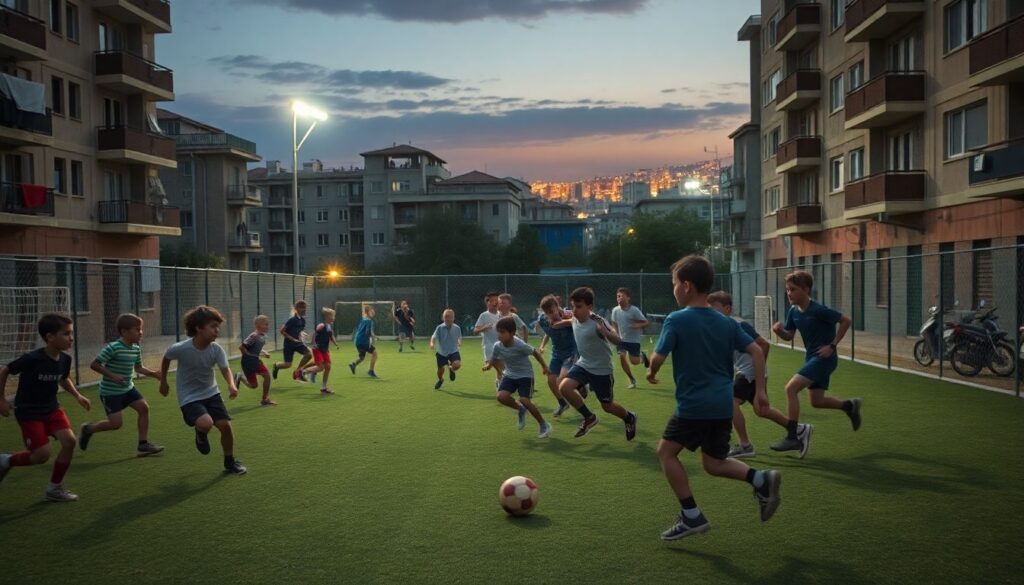
Walk through any Turkish city on a warm evening and you’ll still see the same picture: fenced “halı saha” pitches full of kids, plastic bottles as cones, one ball for twenty players, and endless arguments about whose goal counted. The street and small-sided game culture hasn’t disappeared; it has become the entry point to a more structured system. The big change is what happens *after* those cage‑pitch duels: many of these kids are now on the radar of Turkish club scouts long before they ever play an 11‑a‑side match. Clubs that once waited for players to appear at their gates now use data, regional networks and even social media to turn casual street football into a pipeline for professional development.
—
How scouting used to work – and why that model broke
If you talk to coaches who started in the 1990s, they’ll tell you scouting was basically three things: knowing the right PE teacher, watching school tournaments, and listening to taxi‑rank gossip about “the new Hakan Şükür in our district”. This informal system produced some stars, but it missed thousands of late bloomers, kids from migrant families, and players outside a few powerhouse cities. With more than 20 million people under 18 in Turkey today, relying on word of mouth is simply not enough. Clubs realised they were losing talent to smaller European sides that used structured networks and analytics, which pushed the Süper Lig teams to modernise their youth departments in a hurry.
—
Modern scouting networks: who actually watches the kids now
Today, the big Istanbul and Anatolian clubs run layered scouting systems that look more like corporate sales pipelines than romantic talent hunts. A typical Süper Lig club will have a head of youth recruitment, several regional scouts on modest salaries, and dozens of part‑time “spotters” who are paid per report. These scouts visit school tournaments, amateur league games, and endless weekend festivals on municipal pitches. The aim is to see potential players multiple times in different environments: chaos of street‑style play, more structured academy games, and even futsal. According to internal figures shared by one mid‑table Süper Lig club in 2023, their staff collectively watched over 4,000 youth matches in a season and filed around 6,500 individual reports; only about 150 kids were invited for a second look, and fewer than 30 joined the academy. The funnel is very wide at the top and brutally narrow at the bottom.
—
Case study 1: The centre-back found on a school rooftop
Let’s start with a story that sums up the new reality. In 2017, a scout linked to one of the Istanbul clubs was visiting a public school tournament in a working‑class district. The main game finished early, and he followed a teacher to a side pitch on the roof, where a group of 13‑year‑olds were playing 5‑a‑side with small goals and no bibs. One tall boy stood out—not just for his size but for how calmly he intercepted every ball. He wasn’t registered with any club, he had never played 11‑a‑side, and his family assumed football was just a hobby.
The scout filmed ten minutes on his phone, took notes on positioning and communication, and sent the clip to the club’s youth recruitment WhatsApp group. Within two weeks, the boy had an invitation to the U14 assessment weekend. He failed the first physical test; his sprint times were below average. Instead of rejecting him, the club used GPS and repeated drills to analyse his acceleration and turning. They saw that over 20–30 metres he was excellent, just poor over five metres. After a year of specific work in the academy, he became captain of the U15s and is now in the U19 squad, already training with the first team. The important part: he was discovered not in a formal match, but in a free, street‑style game that older scouting systems would never have watched.
—
Trials culture: why “open days” still matter
Despite all the new tools, the classic trial is still the main door into the system. Parents constantly ask how to join a football club academy in Turkey, and the honest answer is: most kids will still start with one of these mass trial events. Big clubs organise several open assessments each year, often split by age groups across different districts. Smaller professional sides cluster talent from surrounding towns into one or two big weekends. The problem is volume. A single trial day can attract 300–600 children, especially in Istanbul, Ankara, or Izmir. Coaches have only a few minutes of effective observation per kid. To deal with this, many academies now run multi‑stage trials: brief initial filters focused on coordination and basic technique, then a second round for decision‑making skills and game intelligence. It’s less romantic, more procedural, but gives quieter or nervous kids a second chance once the shock of the big event wears off.
—
Inside football academy trials in Turkey
If you step onto a modern trial day, it’s organised chaos. Registration desks, numbered bibs, short physical tests, mini‑games filmed from the touchline. These football academy trials in Turkey are no longer just a whistle and a coach with a notebook. Clubs use smartphone apps to track who played where, time spent on the ball, and in some cases very basic technical metrics taken from repeated skill drills. For younger age groups, scouts look at body coordination, how a child orients themselves when receiving the ball, and whether they scan the pitch before passing. The best Turkish football academies for kids also measure psychological traits in subtle ways: how a player reacts after a mistake, whether they encourage teammates, and if they stay involved when moved to a less “glamorous” position. Everything is built to simulate pressure, yet the most insightful moments are often in between drills, when players think nobody is watching.
—
Street football as a scouting laboratory
Ironically, the further academies move toward science and structure, the more they value the old, unstructured street game. Many scouts privately admit they prefer to see kids in cage pitches or casual evening games, because “you can’t hide personality there”. Clubs in Istanbul, Bursa, and Gaziantep have started informal partnerships with local “halı saha” operators, asking them to tip off staff when they see the same outstanding kid dominating older players week after week. Some scouts visit neighbourhood pitches at set times in the early evening, when school is done and the best informal games form. This is where they spot kids with unusual creativity or resilience—traits that don’t always shine during rigid academy drills. From the club’s perspective, these visits are cheap compared to running endless formal trials. One youth director calculated that a season of regular cage‑pitch scouting cost less than flying a single foreign trialist for the senior team, yet produced three players who now have professional contracts.
—
Case study 2: The winger who sent his own highlight reel

In 2020, a 15‑year‑old from a small Black Sea town started posting short clips of his street matches on Instagram and TikTok. He played on sloping asphalt, dodging parked cars and lamp posts more than defenders. His account grew slowly, but one video—where he dribbled through six players on a village pitch during a Ramadan tournament—went semi‑viral locally. A part‑time scout working for a mid‑table Süper Lig club saw the clip, noticed the boy’s acceleration and balance, and messaged him.
The kid didn’t belong to any formal team; his only structured football came from a weekly futsal session at school. The scout asked him to send longer, unedited footage, specifically requesting full matches to avoid being tricked by highlights. Impressed, the club paid for his travel to a three‑day assessment. He struggled initially with positional discipline on a full‑size pitch, but his 1‑v‑1 numbers in small‑sided games were off the chart. After six months in the academy, he signed his first youth contract. Coaches now use his story to show other teenagers that controlled use of social media can complement, not replace, traditional scouting.
—
Numbers behind the new youth system
Exact statistics are messy because not all clubs share data, but several trends are clear. Across the Süper Lig and TFF 1. Lig, there are now over 60 professional academies with licensed youth setups, and hundreds of semi‑professional satellite schools linked to bigger brands. In a typical big‑club academy, initial talent identification may touch 3,000–5,000 children per age cohort through school programs, open trials, and regional selections. Out of these, only 60–100 might be registered in the official U9–U12 squads, and perhaps 20–25 will reach U17. By the time players get near the senior team, the survival rate is below 1 percent of the original wider pool. Interestingly, the share of Süper Lig minutes played by under‑23, club‑trained players has grown steadily in the past decade, especially in clubs with financial troubles. When transfer budgets shrink, the incentive to promote homegrown talent increases, turning academy development from a “nice to have” into a financial necessity.
—
Economic drivers: why clubs take kids more seriously now
Money is the biggest reason this whole system is evolving so fast. Turkish clubs have struggled with debt, foreign currency risk, and transfer fees that outpace their revenues. Buying established players from abroad has become a financial gamble. By contrast, turning one academy graduate into a successful first‑team regular can save several million euros in transfer fees over a contract cycle. If that player is later sold to Europe, the transfer fee often covers several years of academy operating costs. The economics are blunt: one high‑value sale can justify investing in better pitches, full‑time scouts, and sports science staff. This is why the best professional football academies in Turkey now look for talent even earlier, sometimes scouting kids at under‑10 tournaments with GPS vests and video analysis. They are not just looking for the next local star; they are hunting for future export assets in a fiercely competitive global market.
—
How grassroots academies became a business
Alongside club youth departments, a parallel market has exploded: private academies that promise to connect families to professional clubs. Many operate in big cities, charging monthly fees for training, tournament exposure, and sometimes direct recommendations to top clubs. These Turkish football academies for kids occupy a grey zone between serious development and commercial dream‑selling. The better ones maintain real relationships with professional youth directors, invite scouts to their events, and track player workloads sensibly. The worst exploit parental ambitions without realistic pathways. From an economic viewpoint, this boom reflects high demand: in some districts, there are waiting lists for weekend sessions, and families treat football fees like language courses or extra tutoring. For clubs, these private academies are both a threat and a resource; they may over‑train kids, but they also act as free filters, sending the very best players further up the chain.
—
Case study 3: Regional hubs and the “shared” striker
A practical example of how this ecosystem works comes from Central Anatolia. A 12‑year‑old striker played for a local amateur team in a town of 50,000 people. His coach had a relationship with a well‑run private academy in the nearest city, two hours away. They arranged for the boy to attend weekend sessions there, where he faced stronger opposition and better coaching. After a year, the academy director invited scouts from two professional clubs to a small tournament. Both clubs wanted the player but knew that moving him full‑time to a big city at 13 would risk his schooling and family stability. Instead, they created an informal “shared pathway”: the boy stayed with his hometown club and the private academy but visited each pro club once a month for specific training and monitoring. At 15, when his family felt ready, he moved permanently to one of the clubs’ hostels. This flexible model—part local, part regional, part professional—is becoming more common as youth departments try to balance early talent capture with social responsibility.
—
Step by step: how a kid actually enters the system
Parents and young players often feel lost, because the process looks opaque from the outside. In reality, the path is messy but has recurring patterns. Stripped down to the basics, it usually looks like this:
1. Local exposure – The child plays at school, on the street, or for a small neighbourhood club, often in mixed‑age games.
2. First “filter” environment – A PE teacher, local coach, or private academy identifies above‑average ability and invites the kid to more structured training or tournaments.
3. Visibility to scouts – The player is seen during school leagues, festivals, or specific scouting days organised by professional clubs. Sometimes this comes through recommended football academy trials in Turkey, sometimes through word of mouth or even social media clips.
4. Short‑term assessment – If a scout is interested, the child is invited to 1–3 days of testing within the pro club’s environment, surrounded by existing academy players.
5. Trial period – Instead of immediate signing, many clubs now offer a 2–3 month “probation” where the kid attends training two or three times a week while still linked to the original local team.
6. Formal registration – After medical and educational checks, the player is registered to the club academy and enters a more regulated routine of training, school, and periodic evaluations.
This journey can take months or even years, and at any step there is both room for progress and risk of dropping out, especially if school performance or family logistics become a problem.
—
Data, video, and the changing eye of the scout
Old‑school scouts relied on intuition—“I know a player when I see one.” That instinct still matters, but it’s now supported by basic technology. Even smaller clubs film youth matches and store clips on cloud platforms, creating mini “databases” of potential talent. GPS vests and simple tracking apps measure total distance covered, sprint numbers, and sometimes heart‑rate trends. Scouts can compare a 14‑year‑old midfielder’s data to the academy’s benchmarks for that age, seeing whether he or she is physically ready to cope with a move. Some academies use simple scoring systems that combine subjective ratings (first touch, vision, bravery) with objective measures from fitness tests. This doesn’t replace human judgment; it guards against bias. A kid who doesn’t look impressive at first glance might have outstanding stats for defensive actions or off‑the‑ball movement, prompting a second look instead of an automatic “no”.
—
Predictions: where Turkish youth scouting is heading
Looking a few years ahead, several trajectories seem likely. First, clubs will push their scouting nets deeper into small towns and rural regions, using regional coordinators and more partnerships with schools and municipalities. Second, digital platforms will grow: expect more centralised databases where kids registered with amateur clubs can be viewed by multiple professional academies at once, including video and performance data. Third, the competition with European talent programs will intensify. As EU clubs recruit younger and younger, Turkish academies must demonstrate that staying in the domestic system until 17 or 18 can still lead to international careers. Analysts inside the federation already talk about minimum standards for youth departments—qualified coaches, education support, psychological services—which will likely become conditions for licensing. This could create a clearer distinction between truly professional pathways and more commercial “branding” academies trading on big club names.
—
Impact on the wider football industry
All this focus on kids is reshaping Turkish football beyond the academy fences. Transfer strategies shift as clubs view homegrown players as both sporting assets and financial instruments. Media coverage increasingly highlights U19 derbies and youth national teams, creating early reputations and expectations. Agents and intermediaries are entering the youth space earlier, sometimes too early, pushing 15‑ or 16‑year‑olds to consider moves abroad. At the same time, better‑structured academies raise coaching standards across the pyramid, because many trained youth coaches eventually move into senior football with modern ideas about pressing, build‑up, and player welfare. Turkish club youth scouting and trials for children are no longer side projects but central components of club identity: fans take pride in “one of our own” making the first team, especially when that player started on the same streets and cage pitches as they did.
—
Balancing dreams and reality
The romantic story—street kid spotted by a scout, rising to the Süper Lig—is still possible, but the odds remain brutally low. Most children who attend trials will never sign a professional contract. That’s why responsible academies talk openly about education, alternative careers, and the intrinsic value of structured sport: discipline, teamwork, health. The challenge for Turkish football is to expand its search for talent without exploiting the hopes of families who sacrifice time and money for a tiny chance at success. When scouting, trials, and development are run ethically, the path from street football to pro academy doesn’t just produce a few stars; it quietly improves thousands of young lives, even for those who never step onto a professional pitch. In that sense, the success of this new system will be measured not only in transfer fees and trophies, but in how fairly and transparently it treats the kids who chase their dreams across the country’s concrete yards and synthetic fields.
Комментарии