
Why this “golden generation” is different – and what’s at stake
Turkey finally has a true golden generation: elite talents in top-five leagues, a deep U21 pool, and a fan base ready to follow them anywhere, buying turkey national football team tickets months in advance.
But having a golden generation and actually winning with it are two very different tasks. You don’t “hope” your way to trophies; you design, test, and optimize your way there.
Below is a step‑by‑step, practical roadmap for how the Turkish National Team can actually maximize this group for upcoming tournaments – plus the beginner mistakes that usually waste such opportunities.
—
Step 1. Build a clear game model around your best players
Define the identity in cold, tactical terms
A “game model” is not a slogan like “attacking football.” It’s a detailed set of principles for every phase of play:
– In possession: build-up patterns, preferred zones (half‑spaces vs wide overloads), tempo, risk profile.
– Out of possession: pressing height, pressing triggers, rest defence structure.
– Transitions: how many players attack the box, who stays behind the ball, what the first pass target is after winning/losing possession.
Turkey’s best players tend to be technically strong, creative between the lines, and comfortable in modern positional play. The model must protect them defensively and free them offensively.
Short paragraph:
Start from the ball, not from the formation. Shape (4‑2‑3‑1, 4‑3‑3, 3‑4‑2‑1) is just the skeleton; principles are the brain.
Match roles to player archetypes, not names
Instead of “fit everyone into the XI,” assign functional roles:
– Progressor (deep playmaker or ball‑carrying CB)
– Connector (interior 8 or 10 between lines)
– Final-third specialist (winger/forward with high xG/shot quality)
– Defensive stabilizer (6 or hybrid full-back for rest defence)
Then map current players onto these archetypes based on data + video, not reputation.
Common rookie error:
Novice selectors cram “the best 11 individuals” onto the pitch without complementary profiles. You get three No.10s stepping on each other’s toes, full-backs exposed in transition, and a broken pressing structure. Start with functions, then pick names.
—
Step 2. Optimize selection with data, not sentiment
Use objective metrics as the first filter
For a golden generation, the selection dilemma is abundance, not scarcity. Use a data-driven depth chart:
1. League quality adjustment – A starter in a top‑5 league may trump a star in a weaker competition when metrics are equal.
2. Role-specific KPIs –
– CBs: defensive duels won, aerial duels, progressive passes, “pressed passes” success rate.
– 6/8s: pressures, interceptions, progressive carries, line-breaking passes.
– Attackers: xG/90, xA/90, touches in box, presses in final third.
3. Durability – availability, injury history, minutes overload flags.
Then verify with video scouting to see context: is a midfielder’s passing inflated by a very possession-dominant club? Does a winger’s xG come from transition systems Turkey won’t use?
Blend experience with peak age windows
International tournaments reward squads where peak-age players (24–29) form the spine, supported by 2–3 older leaders and 3–5 high-upside youngsters.
Short reminder:
If too young, you get volatility; if too old, you get physical decline and slow transitions.
Typical newbie mistake:
Over-romanticizing “experience” and blocking minutes for younger stars already outperforming veterans in their clubs. Golden generations die on the bench when national coaches chase short-term comfort.
—
Step 3. Design tactical flexibility, not chaos
Two primary structures, rehearsed to automation
Top nations usually have:
– Plan A: Standard structure (e.g., 4‑3‑3) optimized for 70% of scenarios.
– Plan B: Alternative shape (3‑4‑2‑1 or 4‑2‑3‑1) to solve specific opponent problems (back three, deep low-block, or world-class transition sides).
The key: same principles, different shapes. For example:
– Principle: overload half-spaces
– In 4‑3‑3: advanced 8 + inside winger
– In 3‑4‑2‑1: double 10s behind striker
– Principle: strong rest defence
– In 4‑3‑3: inverted full-back + 6
– In 3‑4‑2‑1: back three + one pivot staying home
You don’t want a completely new philosophy every match; you want modular adjustments.
Rehearse scenario-specific game plans
Use training microcycles and match preparation to drill:
1. Leading after 60 minutes – lower block height by 10–15 meters, adjust pressing triggers, prioritize ball retention and foul management.
2. Chasing the game – switch to higher risk positional play, add extra runner into box, accept higher xGA in exchange for more xG.
3. Playing with 10 men – pre-defined shape and roles (which forward sacrifices, who doubles in wide areas).
Beginner error to avoid:
Coaches sometimes throw random attacking players on the pitch when losing: 4 strikers, no structure, zero rest defence. It looks “offensive” but kills stability and usually drops chance quality (low xG pot-shots).
—
Step 4. Professionalize load management and periodization
Centralize data on player workload

With stars scattered across Europe, Turkey needs a centralized performance unit. Collect:
– GPS data (high-speed runs, sprint counts)
– Match minutes & travel load
– Injury history & red-flag zones
Then coordinate with clubs to build a national-team-friendly periodization leading into tournaments:
– Pre‑camp tapering for overloaded players
– Extra conditioning blocks for less-used subs
– Individualized limits in friendlies
Short point:
Treat friendlies as controlled labs, not emotional cup finals.
Periodize the tournament itself
International tournaments are sprints, but they still need micro-planning:
– Matchday -3: tactical load, big spaces, match-realistic drills.
– Matchday -2: reduced volume, tactical fine-tuning, small-sided games.
– Matchday -1: low intensity, set pieces, psychological readiness.
Common rookie mistake:
Overtraining during tournament weeks because of “we must show intensity in training.” Players then hit the quarter-finals with heavy legs and increased soft-tissue injuries, exactly when the golden generation should be peaking.
—
Step 5. Structure high-level turkey football training camps
Use camps as R&D, not PR shows
Well-run turkey football training camps should follow three goals:
1. System installation – implement core game model principles.
2. Chemistry building – rehearsed on-pitch links (e.g., left CB–LB–LW triangle).
3. Testing new profiles – not only “who scores,” but who fits the pressing triggers and positional structure.
Avoid the temptation to turn camps into over-commercialized exhibitions. Sponsors matter, but performance-first must be the guiding constraint.
Short tactical mini-blocks, not random drills
Organize sessions as themed blocks:
– Build-up under high press (target: back line + 6, goalkeeper distribution)
– Chance creation vs low blocks (positional rotations, half-space combinations, third-man runs)
– Defensive transition (5-second counterpress rules, rest defence positioning)
Beginner-level error:
Novice staff build training around “fun” unconnected exercises. Players enjoy it, but tactical retention stays low. Camps need *deliberate practice* that directly maps to match scenarios.
—
Step 6. Mental performance and pressure management
Normalize the pressure before it explodes
A golden generation carries national expectation, amplified by sold-out stadiums and soaring demand for turkey euro 2024 packages. Without preparation, this becomes paralysis under pressure.
Build mental conditioning into the program:
– Scenario-based pressure drills – simulate penalty shootouts with physical fatigue and crowd noise.
– Collective rituals – consistent pre-match routines, leadership group meetings.
– Access to sports psychologists – 1:1 sessions, group workshops on coping strategies.
Short idea:
Treat mindset like hamstring strength: train it, test it, maintain it.
Define leadership structures early
Pick a leadership group of 4–5 players, not just the captain:
– Captain: link to referees, rituals, communication on pitch.
– Vice-captains: in-charge of unit cohesion (defence, midfield, attack).
– Younger “bridge” leaders: connect older core with the new wave.
Rookie mistake:
Leaving hierarchy vague and hoping “leaders will emerge.” In tough games, uncertainty spreads: who speaks up, who calms, who takes penalties? Clear roles reduce cognitive load under stress.
—
Step 7. Build an ecosystem around the team, not just a matchday XI
Align federation, clubs, and youth pathways
To fully exploit a golden generation, the ecosystem must support it:
1. Shared tactical vocabulary between national team and top academies (pressing cues, positional profiles).
2. Coordinated youth call-ups for U17–U21 that reflect the future senior game model.
3. Continuous monitoring of diaspora players in European academies.
This transforms the national team from a “collection of individuals” into the pinnacle of a coherent football system.
Leverage fan culture smartly
Massive fan energy can be a force multiplier – or a distraction. Use it strategically:
– Encourage early stadium arrivals with controlled open sessions.
– Integrate fan-driven initiatives (chants, tifos) into pre-match atmosphere planning.
– Offer structured experiences like turkey national team hospitality tickets that keep key supporters engaged but not invasive around the squad.
Short warning:
Do not let commercial events flood the players’ schedule during camp weeks. Protect focus.
—
Step 8. Professionalize logistics, kit, and environment
Details around the players must be elite
High-performance environments are built on seemingly small details:
– Travel logistics – minimal time-zone stress, synchronized meal times, optimized charter flights.
– Recovery infrastructure – cryotherapy, massage, sleep optimization, nutrition protocols.
– Equipment & kit – consistent, functional gear, no last-minute shortages or sizing issues.
If fans can easily buy gear from a turkey national team jersey shop in perfect condition, the players should never experience worse standards internally.
Create a “club-like” environment in short windows
The best national teams make camps feel like short-term high-performance clubs:
– Stable staff and routines.
– Clear roles and expectations from day one.
– Data feedback loops after every game (video review, individual clips, unit meetings).
Beginner-level oversight:
Treating each camp as a new project with different rules and messaging. Players then spend half the time figuring out procedures instead of focusing on football.
—
Step 9. Tactical and analytical staff: from add-ons to core unit
Elevate analytics from “nice-to-have” to decision engine
Analytics must inform:
– Opponent analysis (pressing patterns, build-up schemes, set-piece behaviours).
– In-game decision support (live xG flows, wing overloads, zones of repeated loss).
– Post-game debriefs (expected threat, progressive pass maps, pressing efficiency).
Have clear, pre-agreed communication protocols from analysts to the bench so information is concise and usable.
Smart set-piece design
Golden generations often win or lose tournaments on details like corners and free-kicks. Use:
– Data-driven routines targeting opponent weaknesses.
– Variations to prevent pattern recognition.
– Specialist coaches for both attacking and defensive set pieces.
Newbie mistake:
Treating set pieces as afterthoughts, giving them one short block at the end of training. In tight knockout games, they can represent 30–40% of your realistic scoring chances.
—
Step 10. Learn in cycles: every tournament as a feedback loop
Post-tournament audit: ruthless but constructive
After every major tournament, run a structured review:
1. Game model efficacy – did the principles hold under elite pressure?
2. Selection validity – which profiles fit, which didn’t?
3. Physical performance – any decline in final games? Injury patterns?
4. Mental robustness – how did the team react to conceding first, going to extra time, penalties?
Make concrete, dated action points: staff changes, training redesigns, scouting focus adjustments.
Use qualifiers and friendlies as controlled experiments
Qualifiers and friendlies are your live lab:
– Try one new tactical idea at a time (new pressing trigger, different rest defence shape).
– Rotate 2–3 positions in less critical matches to test depth.
– Track impact with data and video, not vibes.
Common amateur mistake:
Overreacting to one bad game by ripping up the whole model. Elite programs are iterative, not impulsive.
—
Frequent beginner mistakes – and how to sidestep them
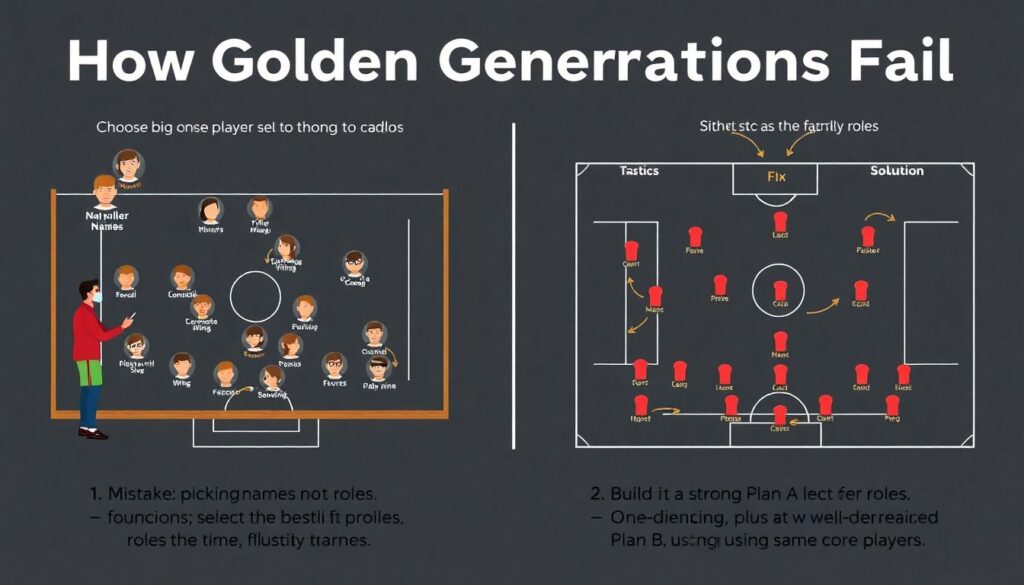
To close, here’s a consolidated list of errors that typically sink golden generations, plus quick fixes:
1. Picking names, not roles
– Fix: Start from tactical functions; select the best profiles per role.
2. One-dimensional tactics
– Fix: Develop a robust Plan A plus rehearsed Plan B using the same core principles.
3. Ignoring load management
– Fix: Centralize workload data, adjust training volume, protect overloaded stars.
4. Underestimating mental pressure
– Fix: Integrate sports psychology, pressure simulations, and clear leadership structures.
5. Treating camps as marketing tours
– Fix: Keep turkey national team hospitality tickets and sponsor activations away from core training blocks.
6. Poor integration of analytics
– Fix: Make analysts part of pre‑match, in‑match, and post‑match decision cycles.
7. Short-term panic after setbacks
– Fix: Use structured post‑tournament audits and incremental adjustments.
—
For new coaches and staff: how to start on the right foot
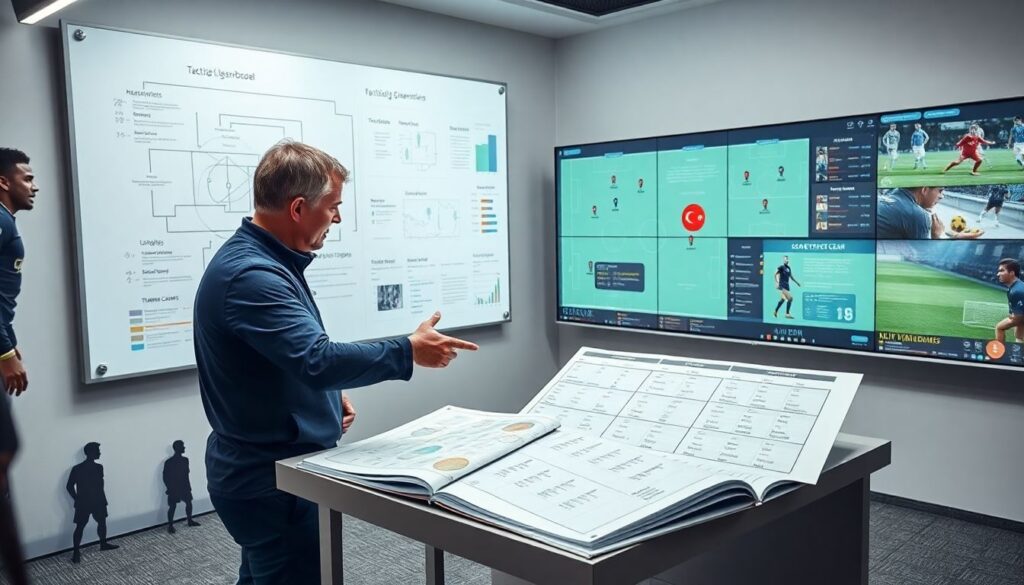
If you’re new to high-level international work with a golden generation, think in this simple order:
1. Define your game model in 1–2 pages of clear principles.
2. Map your player pool to roles using data plus video.
3. Plan your year: turkey football training camps, qualifiers, and friendlies as deliberate steps toward the next big tournament.
4. Build a multidisciplinary staff (fitness, analytics, psychology, set pieces) and trust them.
5. Control the noise: media, commercial, and political pressures will exist; ring-fence football time.
And remember: fans chasing turkey national football team tickets or curated turkey euro 2024 packages don’t just want entertainment, they want a coherent, competitive project.
The golden generation is the raw material. What turns it into trophies is structure, clarity, and the discipline to avoid beginner mistakes when the spotlight is brightest.