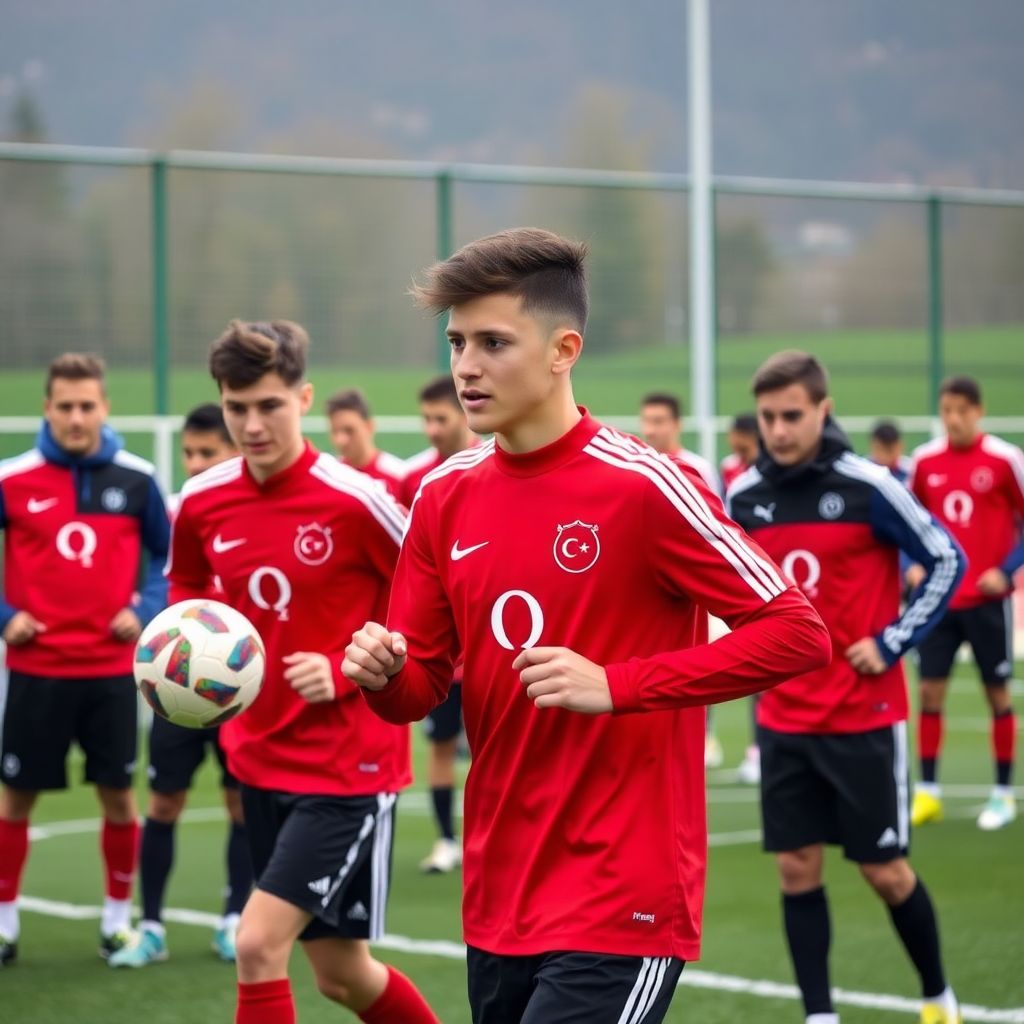
Turkish youth academies trail Europe’s elite in system depth, sports science and international pathways, but increasingly match them in raw talent, intensity and passion. For most families in Turkey, a strong Süper Lig club academy offers the best cost‑benefit. For consistent export to top‑five leagues, leading European academies still provide the clearest route.
Top Comparative Insights on Talent Development
- In the debate of football youth academies Turkey vs Europe, the biggest gap is not talent, but structure: long‑term planning, sports science and data.
- Big-city Süper Lig academies can approach European standards; many provincial setups still depend on a few enthusiastic coaches.
- European elite systems offer clearer transitions to pro contracts and loans; Turkish pathways remain more volatile and result‑driven.
- Short european style youth football training camps in Turkey can add European methodology, but cannot replace a full academy system.
- For late developers, mid‑tier European clubs and serious Turkish academies with patient loan policies usually provide better opportunities.
- Clubs lacking internal networks should prioritise professional football trials in turkey for youth run by trusted partners and verified scouts.
Historical evolution and policy context of Turkish academies
When comparing how Turkish youth academies stack up against Europe’s elite development systems, use clear, practical criteria rather than brand names or social media hype.
- Governance and regulations – How strictly does the federation enforce academy licensing, coaching qualifications, minimum training hours and competition formats? Compare Turkish Football Federation rules with those applied in nations whose players consistently reach top European leagues.
- Club strategy and stability – Does the club treat the academy as a core asset or a budget item to cut when results are bad? Big-city Süper Lig clubs usually have written academy strategies; provincial clubs often change direction every new president.
- Integration with first team – Is there a clear, documented pathway from U14 to U21 to professional squad? In Europe’s elite development systems, academy and first team share one game model; in Turkey many clubs still switch coaches and playing styles too frequently.
- Coach education culture – Beyond licenses on paper, do coaches get ongoing workshops, video analysis support and mentoring? The best turkish football academies for young players tend to send staff regularly to UEFA seminars and visits at European clubs.
- Competition structure and minutes – Are youth leagues competitive but not chaotic? Is there enough meaningful game time for both top talents and late bloomers, or only a few “star” players playing every minute?
- Talent export and re‑investment – When a player is sold abroad, is part of the fee transparently reinvested in the academy (facilities, staff, data)? European elite clubs usually have automatic reinvestment rules; Turkish practice varies widely.
- School-academy integration – Are schooling and training coordinated to protect mental health and academic outcomes? Many European academies have in‑house education units; in Turkey, cooperation often depends on informal agreements with local schools.
- Regional inclusion – Does the system reach smaller cities and underserved regions, or only focus on Istanbul, Ankara, Izmir and a few football‑crazy provinces? This affects both fairness and the total talent pool.
- Transparency for families – Are progression criteria, evaluation reports and release decisions explained clearly to parents and players, or handled informally? European systems are gradually becoming more transparent; Turkish academies are still catching up.
Scouting and talent ID: regional networks versus continental pipelines
Scouting is where football youth academies Turkey vs Europe differ most in structure. Europe’s elite rely on wide, data‑supported pipelines; Turkish academies usually combine strong local eyes with limited international reach.
| Variant | Suitable for | Pros | Cons | When to choose |
|---|---|---|---|---|
| Big-city Süper Lig academy (Istanbul/Ankara/Izmir) | Top talents in or near major cities; families wanting strong local brand and competitive training | Dense regional scouting, high training volume, better coaches, strong national exposure, some links to Europe through agents | Highly competitive, risk of early selection bias, pressure to prioritise short‑term results, inconsistent long‑term planning | Choose if player is already standout at regional level and family can handle pressure and travel demands. |
| Provincial Turkish academy with regional network | Talents outside big cities; players needing more minutes, closer environment and patient development | More playing time, closer coach-family communication, lower costs, easier daily logistics, stronger community support | Limited exposure to top competition, weaker sports science, fewer direct links to Europe, vulnerable to club politics | Choose when consistent minutes and stable school-life balance matter more than immediate national fame. |
| European elite club academy (top 5 leagues) | Exceptional talents ready for relocation; families comfortable with early international move | World‑class facilities, multi‑country scouting pipelines, clear pathway to pro, strong sports science and education support | Very few scholarships, cultural adaptation stress, high competition for places, early releases can be brutal | Choose only if a serious offer exists and independent advisors confirm that the role and plan are realistic. |
| Mid‑tier European national system academy | Solid talents with good discipline; families seeking a calmer environment and structured development | Good coaching, clear methodology, more patient with late developers, often simpler access to first‑team football | Less global spotlight, lower salaries at first contracts, language barriers, complex visa/residence rules | Choose when long‑term growth and minutes in adult football are more important than early “big name” branding. |
| European style youth football training camps in Turkey | Players needing short intensive exposure to European methods without moving abroad | Access to foreign coaches for a limited time, test of player’s level, networking with visiting scouts and trainers | Short duration, variable quality, cannot replace an academy, risk of overpaying for weak scouting presence | Choose as an add‑on during holidays, not as the main development pathway or evaluation of true potential. |
For club directors and local organisers, professional football trials in turkey for youth can support scouting only when they are integrated into your own evaluation model and followed by objective feedback. When comparing football scouting and recruitment services in turkey, look for:
- Named, verifiable scouts or ex‑professionals involved.
- Clear criteria and measurement tools (physical, technical, tactical, psychological).
- Written reports and video footage you can reuse, not only “event hype”.
- Real links with clubs or agents, confirmed by those clubs directly.
Coaching education, training cycles and methodological differences
Methodology is where Europe’s elite development systems most clearly differ from many Turkish setups. Use simple “if… then…” scenarios to choose the right context for a player or a club.
- If you are a club director and your academy changes head coach and playing style every season, then:
- Prioritise creating a written game model and training syllabus first.
- Send 1-2 lead coaches to observe in a European academy with similar style.
- Adopt their planning logic (microcycles, mesocycles) before copying drills.
- If you are a youth coach working in a provincial Turkish academy with limited resources, then:
- Use free online UEFA/FA resources to structure weekly training blocks (technical, tactical, physical, mental).
- Focus on individual ball mastery and decision‑making, not just set‑piece routines and results.
- Film one session per week and self‑review like European coaches do with analysts.
- If you are a parent choosing between a heavy‑load Turkish academy and a more balanced European one, then:
- Ask how many training days per week, and how recovery is planned.
- Prefer programmes with clear periodisation over “train every day, no rest” promises.
- Check whether match minutes are distributed logically or only to physically early‑matured kids.
- If you are a player already technically strong but tactically raw, then:
- Prioritise academies (Turkish or European) where every session includes decision‑making under pressure.
- Look for coaches who show video clips and correct positioning, not only shout from the touchline.
- Use camps or short stays abroad to experience different tactical cultures and compare with your base academy.
- If your goal is a coaching career after playing, then:
- Target academies engaged in coach exchanges with Europe; the best turkish football academies for young players often run parallel education tracks for staff.
- Collect your session plans and reflections; these will be your practical portfolio for UEFA courses.
Facilities, sports science support and financing models
Use this quick checklist to judge whether a Turkish academy (or European alternative) is structurally competitive, not just visually impressive.
- Count functional pitches, not just pictures – At least one quality full‑size pitch per 2-3 age groups is reasonable; ask how they schedule training so all teams get proper space and time.
- Evaluate medical and rehab access – Check for on‑site or clearly contracted physiotherapists, basic screening, return‑to‑play protocols and communication with families after injuries.
- Ask about sports science integration – Even without a big lab, serious academies track workload, growth, and basic performance metrics using simple tools and consistent data, as European elite systems do.
- Clarify analyst and video support – Is there at least one person responsible for filming games, cutting clips and supporting coaches and players with feedback?
- Understand the budget logic – Ask how much of the club’s budget is ring‑fenced for the academy and how stable it is when first‑team results dip; in Europe, academy budgets are usually protected by long‑term planning.
- Check external funding and partnerships – Sponsorships, municipal support or school partnerships can stabilise finances, especially for provincial Turkish academies competing with better‑financed European peers.
- Review player cost and scholarship policy – Clarify monthly fees, scholarships, equipment contributions and bonuses so that the pathway is financially realistic for the family.
Career pathways: youth-to-pro transitions, loans and international moves
Many Turkish and European systems develop good players; the real difference often lies in how well they manage the last jump to professional football. Avoid these frequent mistakes when choosing a pathway.
- Choosing by badge instead of pathway – Selecting a big name in Turkey or Europe without checking real numbers of academy graduates in the first team and how long that usually takes.
- Ignoring fit of playing style – Joining a club whose game model does not match the player’s strengths (for example, a creative 10 in a direct long‑ball team), making the final step to pro much harder.
- Underestimating school and language impact – Moving to Europe too early without school and language support, which can cause stress, lower performance and early returns.
- Overvaluing short trials and showcase events – Assuming that one week in a famous camp or trial equals a contract; use these mainly for feedback and benchmarking, not as guaranteed gateways.
- Rushing or misusing loans – Accepting any loan offer without checking the receiving club’s track record of playing loanees; a badly chosen loan can stall or reverse development.
- Not planning a “Plan B” country or level – Focusing only on top‑five leagues instead of considering mid‑tier European clubs where first‑team minutes may come earlier and more consistently.
- Trusting unverified intermediaries – Working with agents or “consultants” who cannot show valid licenses or previous successful transfers, both within Turkey and to Europe.
- Delaying adult football exposure – Staying too long in U19/U21 competitions, especially in systems with weak B‑teams, instead of seeking controlled exposure to senior football.
- Failing to re‑evaluate annually – Not conducting a yearly honest review: Is the player progressing faster, similar to, or slower than peers in equivalent European age groups?
Outcomes assessment: metrics, export rates and competitive impact
Before the final comparison, use this simple decision‑oriented checklist to narrow your options.
- If you are a club director in Turkey:
- Stay in‑country but benchmark your academy against 1-2 concrete European models.
- Invest in coaching education and data collection before building more buildings.
- If you are a youth coach:
- Choose environments (Turkish or European) where you get mentoring, video feedback and stability.
- Avoid places that change philosophy every season.
- If you are a parent in a big city:
- Prioritise a strong Süper Lig or solid private academy with clear school partnership.
- Use reputable football scouting and recruitment services in turkey only as support, not as the main plan.
- If you are a parent in a smaller town:
- Pick the most stable local academy that guarantees minutes and has some link to bigger clubs.
- Supplement with well‑reviewed european style youth football training camps in turkey during holidays.
- If you are a top‑end talent with concrete European interest:
- Compare contract terms, schooling, language support and clear playing‑time plans between Turkish and European offers.
- Get independent advice before signing.
Comparing outcomes is not only about trophies or social media posts. Focus on measurable, practical indicators.
- Number and percentage of academy graduates in the current first‑team squad.
- Average age of debut in top‑flight or second‑division football.
- Consistency of player export to stronger leagues or stable mid‑tier European clubs.
- Injury history and continuity of development for players across U15-U21.
- Feedback from released players: did they land in other clubs or disappear from competitive football?
In summary, Turkish big‑club academies are usually best for players who want top local competition and realistic chances in the Süper Lig if they are among the best in their age group. Elite European academies still suit only exceptional talents ready for early relocation, while mid‑tier European and stable provincial Turkish academies often provide better long‑term value for steady, late‑developing or academically focused players.
Practical questions from clubs, players and parents
How can I compare a Turkish academy with a European one in a concrete way?
List both clubs’ track records in minutes for academy graduates, coaching qualifications, injury history and recent transfers to higher levels. Visit both if possible, watching training intensity, coach behaviour and how they communicate with families about expectations and evaluation.
Are professional football trials in Turkey for youth worth the money?
They can be useful if run by verifiable scouts linked to real clubs and if they provide clear feedback and video. Avoid events that promise contracts, highlight “European scouts” without names, or focus more on merchandising than on objective assessment.
What makes the best Turkish football academies for young players stand out?
They combine qualified, stable coaching staff, integration with the first team, realistic school plans and transparent communication about selection and release. Many also maintain cooperative links with European clubs and organise outbound or inbound exchange camps.
Is it better to move early to Europe or to develop in Turkey first?
For most players, staying in a strong Turkish academy until at least 16-17, then evaluating serious European interest, is more sustainable. Early moves are appropriate only for exceptional talents with strong family and educational support structures in the destination country.
How often should we re‑evaluate our academy or club choice?
Once a year is a good rhythm. Review playing time, role in the team, physical and technical progress versus peers, and school balance. If two consecutive seasons show stagnation despite honest effort, consider a change of club or even country level.
Do short European style youth football training camps in Turkey really help development?

They can refresh motivation, expose players to different coaching styles and offer benchmarking against wider competition. Their impact depends on quality: look for camps where your coaches receive feedback too, and where follow‑up recommendations are concrete.
How should a small provincial club build a scouting network?
Start by mapping local schools and amateur clubs, then nominate one contact coach in each. Use low‑cost video, simple standard evaluation forms and cooperate with larger clubs for occasional joint talent days, sharing both knowledge and visibility.