Roots of Turkish football passion
From late Ottoman days to a football‑mad republic
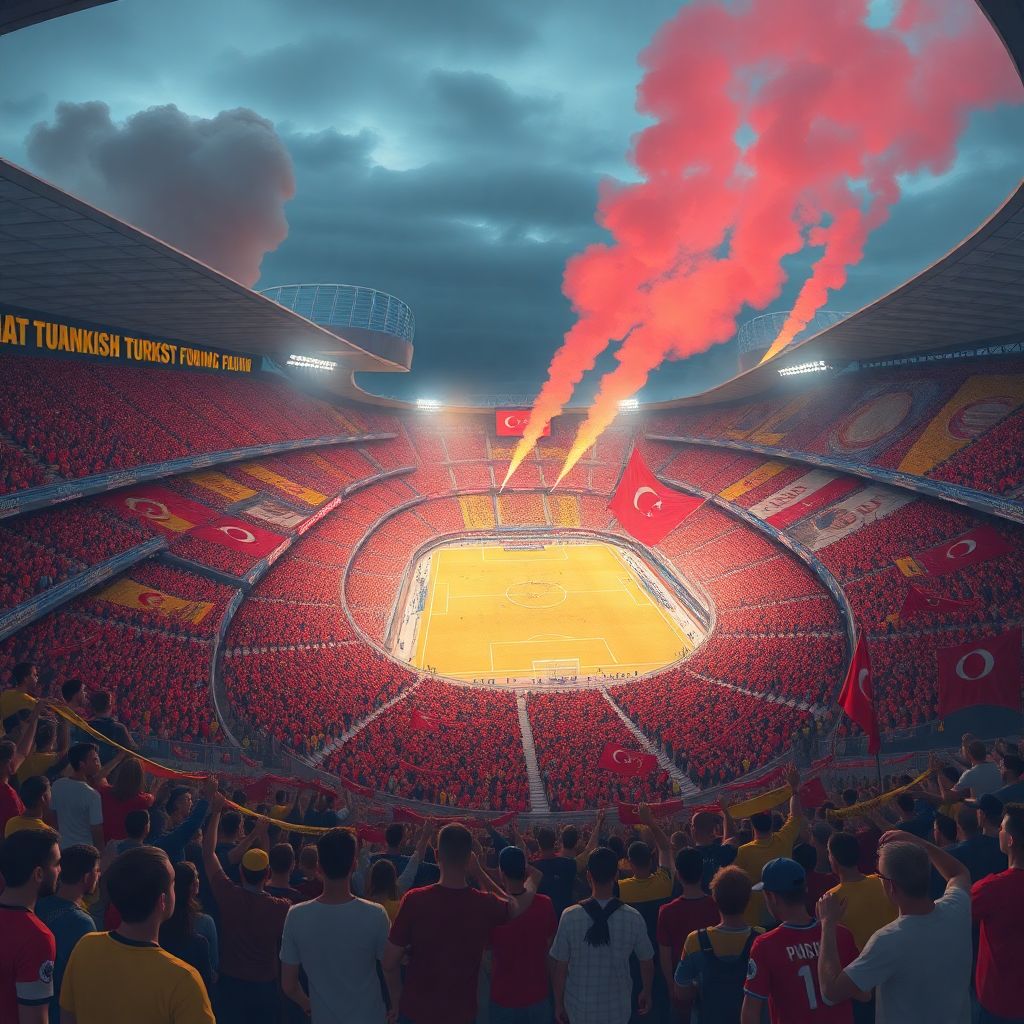
To understand why Turkish fans are among the most passionate in the world, you have to roll the clock back more than a century, to when Istanbul was still Constantinople in most foreign newspapers and the Ottoman Empire was limping toward its final decade. Football arrived with British sailors and merchants in the late 19th century, but it really took off once local students and young officers began forming their own clubs. Galatasaray (1905), Fenerbahçe (1907) and Beşiktaş (officially 1903, football section a little later) were not just sports teams; they were informal hubs for a new, more modern identity at a time when the empire was collapsing. Supporting a club became a way to signal that you were part of this new world – urban, modern, but still deeply local and fiercely proud. That emotional inheritance never really went away; it simply evolved with the Republic after 1923, and today you can still feel that old “us against the world” vibe every time the big clubs walk out at home.
As the young Turkish Republic tried to define itself, football gave people a shared language when politics and class pulled them apart. The 1950s and 1960s brought professional leagues, radio coverage, and the first huge crowds pouring into improvised stands. In many cities, the stadium was the only mass entertainment space, so matchday became a weekly ritual like a village fair turned up to 11. When you look at black‑and‑white photos from that era, you already see massive banners, homemade drums, and dense crowds crammed into terraces well beyond what modern safety rules would allow. The key point is that football fandom grew in parallel with the country’s modernization; the bigger the cities became, the more people needed a tribe inside that chaos, and the club scarf turned into a kind of urban passport you always carried with you.
Football as politics, protest and pressure valve
From the 1970s onward, Turkish stadiums became loud political arenas in disguise. When public protest was dangerous, chanting about your club – and occasionally about the government, the economy or social injustice – was one of the few semi‑safe ways to vent. Ultras groups learned to communicate in coded slogans that shifted from pure football to politics without ever writing anything down. During turbulent periods, like the coups in 1980 or political crises in the 1990s, you could hear terraces turning into huge, rhythmic opinion polls. This is one reason fan culture in Turkey feels so intense: for decades, it was never just about 90 minutes; it was also about what you couldn’t comfortably say in the street or in the office.
That tradition carried into the 21st century. When you talk to older fans in Istanbul or Ankara, they’ll often describe the stadium as the one place where they felt truly free. Of course, this had a flip side – clashes with police, crackdowns on certain groups, and strict controls on tickets and away travel. But the emotional memory stuck: the idea that your club was there for you when the state, your boss, or your landlord weren’t. This blurred line between football and public life still fuels the atmosphere today; when the referee makes a bad call or a politician mentions a club in a speech, it taps into much deeper feelings than simple sporting frustration, which is why the emotional temperature in Turkish stadiums can jump from warm to boiling in about five seconds.
Culture of belonging: why it feels different
Family, neighborhood and “inheritance” clubs
Turkish fanhood is rarely a solitary hobby; it is social glue. In many families, your club is decided for you, almost like a surname. Grandparents tell stories about traveling on overcrowded ferries to early derbies, parents remember saving lunch money to stand on old terraces, and kids grow up wrapped in miniature scarves even before they understand offside. In working‑class Istanbul neighborhoods like Kadıköy, Beşiktaş or around Ali Sami Yen’s old home, you’ll still see entire streets turn into club‑colored corridors on matchday. Cafés, barbershops and even tiny corner bakeries hang flags and paint their shutters in club colors, and strangers strike up conversations just because they notice the same emblem on each other’s jackets.
This sense of inherited loyalty explains why it’s almost impossible for a local to “change” clubs; switching teams would feel as extreme as changing your last name and ignoring your own parents. For the same reason, arguments over football at family gatherings can sound more heated than debates about politics, but there is also a strange safety in that. Football loyalty becomes a strong, shared language: when you move to another city for university or work, the quickest way to find your people is to search for your club’s fan group, and suddenly you have friends, a bar, a bus to away games and even help with housing. In that context, it is no surprise that people scream, chant and cry like their lives depend on the score; in a small way, they do.
Religion, rituals and emotional intensity
Although Turkish football is officially secular, its passion borrows a lot from religious rhythm. Matchdays follow a familiar ritual: pre‑game meetups at the same café, the same walk to the ground, the same food and drinks along the way. Many fans talk about going to the stadium with the same seriousness that their grandparents used for Friday prayers. You’ll hear people say they “owe a vow” to their team after a big win and promise another choreo or away trip as repayment. Chants spread like hymns; a new song, if it catches on, can echo from Istanbul to eastern Anatolia within a month via social media and fan videos.
Emotionally, this produces something foreign visitors often struggle to process. There is little emotional distance; fans don’t try to be ironic or “too cool to care.” When a last‑minute goal goes in, you see adults sobbing, total strangers hugging each other, and even security staff struggling to keep a straight face. A neutral spectator might call it over the top, but for locals, it’s a completely natural way to live football. That’s also why away fans who make the trip to Turkey often come back slightly stunned, saying that the noise, the smoke, and the sheer collective energy put most European atmospheres to shame – even in ordinary league matches that don’t look special on the fixture list.
Ultras, choreography and controlled chaos
Birth and evolution of Turkish ultras
Turkish ultras as we know them today took shape in the late 1980s and 1990s, heavily inspired by Italian and Balkan scene traditions, but soon developed a flavor that is impossible to copy. Groups like Çarşı (Beşiktaş), ultrAslan (Galatasaray) and Genç Fenerbahçeliler (Fenerbahçe) turned previously chaotic terraces into disciplined, singing machines. What started as loosely organized gangs with homemade banners gradually transformed into well‑structured communities with leaders, treasurers, choreo teams, drummers and social media crews. By the 2000s, they were producing giant tifos that took weeks to paint and required military‑style coordination to deploy on matchday.
Yet the core remained street‑level: most ultra groups recruit locally, often from tough neighborhoods where the stadium acts as a second school. A lot of practical skills – from graphic design to event management – are learned inside these groups. It’s not just about noise; there’s serious behind‑the‑scenes work to organize bus convoys for away games, negotiate with club management over ticket allocations, and keep relations with rival groups from crossing a line. The result is a very particular mix of romantic idealism (“we are the club, not the millionaire players”) and hard‑headed realism (“if we don’t coordinate, the choreography will collapse and we’ll look ridiculous on TV”).
How choreography and sound are engineered
“`text
Technical details: choreography and noise
– Large tifos are usually designed digitally, then projected onto fabric in segments; a big Istanbul derby tifo can easily exceed 5,000–6,000 square meters of material.
– Painting sessions often run for several nights in warehouses or school gyms; a mid‑size choreo may consume 200–300 liters of paint and involve 40–80 volunteers.
– Capos (chant leaders) use megaphones and hand signals to time songs with game phases; in loud matches, they rely on pre‑agreed gestures because their voice will never reach the back rows.
– Coordinated clapping patterns are tuned to the stadium’s natural echo; trial runs during smaller games help determine rhythm so that the entire stand can sync without delay.
“`
From the outside, the stands on a big night look like chaos – flares, banners, flags, jumping bodies. But if you stand next to the capos, you see an almost conductor‑level focus. Drums start a fraction of a second early to compensate for sound travel time; banners rise on cue when the teams come out; sometimes even the silence is planned, like those eerie seconds right before a huge chant drops. Some groups rehearse call‑and‑response songs in nearby parks or fan clubs in the days before major fixtures, sending lyrics over WhatsApp and Telegram so that thousands arrive already knowing every line. That is why TV microphones often struggle to capture the full effect: what you hear in the ground isn’t random shouting, but a mass choir running through a carefully curated setlist of songs built up over decades.
Stadium atmospheres and the Istanbul derbies
What makes the Istanbul derby feel like a different sport
The rivalry between Galatasaray and Fenerbahçe is one of those fixtures that even neutral fans around the world recognize, but watching on TV doesn’t quite prepare you for the sensory overload of the real thing. In the days leading up, the whole city changes color: bridges, ferries, taxis and shop windows become accidental canvases for stickers, scarves and flags. When matchday arrives, streets around Kadıköy or the European side start filling up hours before kickoff; chants roll out of every café and fans coordinate meetups by neighborhood, not by seat number. Visiting fans who manage to secure turkish football tickets istanbul derby often describe it as more intense than a Champions League semi‑final elsewhere, simply because the rivalry goes back over a century and has soaked into every corner of daily life.
Inside the stadium, tension is physically tangible. You hear a continuous low rumble that spikes every time the teams come out to warm up, with both sets of ultras trying to out‑sing each other even during drills. Pyro, though officially restricted, still finds ways to appear: red and yellow walls of smoke at the Rams Park, or deep blue and yellow pockets of fire at Fenerbahçe’s Şükrü Saracoğlu. There’s a reason anecdotal reports and early‑2010s measurements claimed noise levels near or above 130 decibels in some Galatasaray games – essentially aircraft‑engine territory, though modern regulations try to keep things safer. Combine that with choreos covering entire stands, and you get a visual‑audio storm that feels much bigger than a domestic league match.
Tickets, logistics and modern constraints
“`text
Technical details: attendance and ticketing
– Big Istanbul stadiums operate mostly with digital-only passes and ID-linked tickets after the introduction of the Passolig system in the mid-2010s.
– Typical league derbies draw 45,000–52,000 spectators, depending on the venue and safety allocations, with away fans often restricted or even banned in specific high-risk fixtures.
– Dynamic pricing means seats near ultra sections are often cheaper but require club membership or loyalty points, while central, neutral blocks can cost several times more, especially for foreign visitors.
“`
Securing a seat at a major Istanbul derby has become a bit of an art form. Locals battle online queues and club membership systems, while foreign visitors often turn to verified agencies or club hospitality to avoid scams. Demand for galatasaray vs fenerbahce tickets online spikes weeks in advance, and resale prices can multiply the original face value, particularly if the title race is tight. Safety rules also changed the derby experience: away allocations have been reduced, ID checks tightened, and some of the most notorious away‑end images from the 2000s would be impossible to recreate today. Yet the emotion has survived these constraints; it simply compresses into the home end and spills out in more organized ways – huge flags, more complex tifos, and relentless chanting that tries to compensate for the missing traditional back‑and‑forth between rival curves.
The best stadiums in Turkey for football fans
Istanbul giants: arenas built for noise
When people talk about the best stadiums in turkey for football fans, they naturally start with the big three in Istanbul. Galatasaray’s modern Rams Park was designed with a steep bowl that traps sound, and when ultrAslan go full throttle on a big European night, you understand why so many visiting players admit to being shaken. Across the Bosporus, Fenerbahçe’s Şükrü Saracoğlu has a different feel: less enclosed but incredibly vibrant, with the Kadıköy crowd famous for riding the referee and opponents nonstop. Beşiktaş’s Vodafone Park, carved partly into the old İnönü site near the Bosporus, may not be the largest, but the Çarşı group turn its compact structure into an echo chamber; neutral visitors often point to a Beşiktaş home game as the single loudest match they’ve attended.
Each of these venues has its own traditions. At Rams Park, you often see choreos that stretch across multiple tiers, with huge, politically tinged banners referencing history or pop culture. At Şükrü Saracoğlu, the pre‑game build‑up can feel like a continuous chant marathon; the crowd rarely sits and often keeps singing even at half‑time. At Vodafone Park, black‑and‑white color contrasts are used creatively in two‑phase tifos that “flip” with a single command, and the proximity to the pitch makes even routine league fixtures feel personal. Crucially, these grounds are not just containers for noise; they are emotional landmarks of their districts, and when they fill up, you sense that the entire neighborhood is pulsing in rhythm with the crowd inside.
Beyond Istanbul: Anatolian strongholds
It would be a mistake to think passion stops at Istanbul’s city limits. Trabzonspor’s Papara Park, perched near the Black Sea, hosts arguably the most intense non‑Istanbul support in the country, with the local community treating the club as a direct extension of regional pride. In cities like Sivas, Konya, Adana or Gaziantep, modern multipurpose stadiums have replaced older, Soviet‑style bowls, and while some fans miss the crumbling terraces, the new grounds offer better acoustics, safer standing areas and more options for choreography. The result is that away trips outside Istanbul can be surprisingly intimidating for big clubs, especially in night games under floodlights where the entire town seems to show up.
Anatolian ultras often work with smaller budgets and less media exposure, but that doesn’t stop them from producing creative tifos or traveling long distances for cup ties. If you catch a mid‑table clash on a cold winter evening and still see thousands bouncing and chanting for a side that has no realistic title hopes, you start to grasp that passion here is not purely results‑driven. Survival battles, local derbies and even second‑tier promotion games can produce atmospheres that visiting foreigners remember just as vividly as a big Istanbul showdown, largely because the whole matchday feels rawer and more connected to everyday struggles of the community around the ground.
Matchday logistics, tours and the fan economy
Organized “football pilgrimages” and local hosts
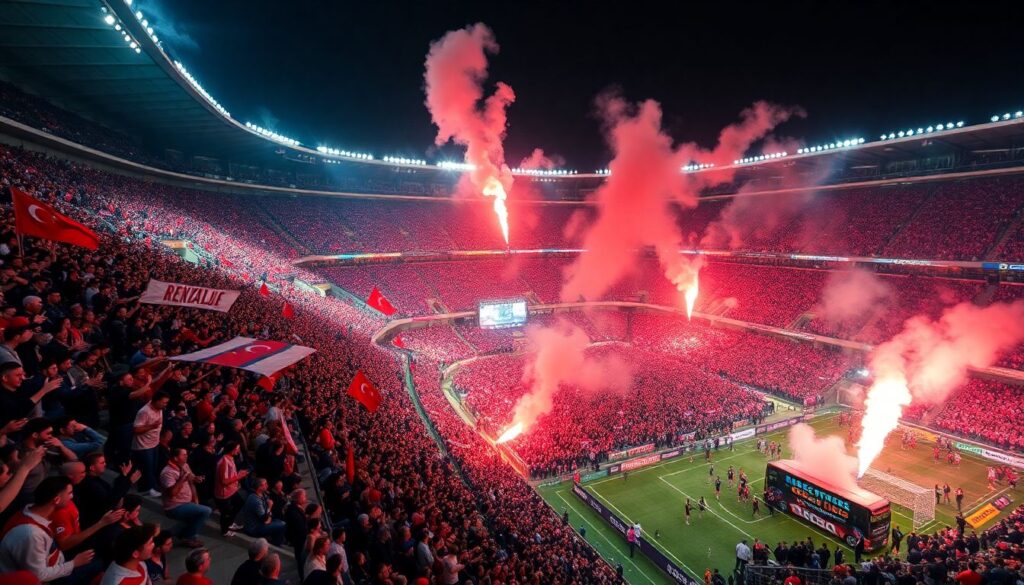
Over the last decade, Turkey has quietly become a pilgrimage site for international supporters who want to feel a truly wild stadium atmosphere at least once in their life. Agencies and local fixers now build whole packages around football fan tours turkey matchday experience, bundling hotel stays in central Istanbul with guided walks through fan neighborhoods, pre‑game drinks in traditional meyhanes, and safe introductions to local ultras culture. Instead of just dropping you at the turnstile, some organizers arrange meet‑ups with fan club leaders, visits to tiny fan bars plastered in stickers, and even participation in pre‑match marches to the stadium, so visitors don’t just observe the atmosphere but briefly become part of it.
These tours also act as informal cultural exchanges. Foreign guests bring their own club scarves, trade them with locals, and sometimes return home with entirely new sympathies. It’s not rare to find a bar in Hamburg or Manchester where a well‑placed Galatasaray or Beşiktaş flag hangs, gifted by an ultra who hosted a foreign guest in Istanbul. While safety and logistics can be more complex compared to a sanitized Western European matchday – with early meetups, tight security checks and occasionally intense police presence – most visitors describe the experience as worth the effort. And because local fans understand they are partly hosting the world, there’s often a genuine desire to show the best side of their passion without diluting it.
Merch, brands and the business side of ultras
“`text
Technical details: fan economy
– Official club shops and licensed online stores generate tens of millions of euros per season across the big three Istanbul clubs, with match shirts, scarves and hoodies as core products.
– Unofficial ultra-branded gear (caps, shirts, stickers) circulates via small shops and online platforms, often produced in limited runs to preserve group identity and exclusivity.
– On big-match weekends, street vendors around stadiums can sell several thousand scarves and flags in just a few hours, especially when tourists are in town.
“`
Alongside tickets and tours, merchandising plays a huge role in sustaining fan culture. Beyond official jerseys and scarves, a whole sub‑economy exists around group‑branded apparel, stickers and banners. Hardcore supporters know which street stalls carry the authentic designs, and which ones are simply mass‑produced knock‑offs. With e‑commerce growing, even foreign fans can tap into this scene; you can see more and more people searching for ultras turkish football merchandise buy online, whether they want an ultrAslan hoodie, a Çarşı beanie or a limited‑edition T‑shirt from a smaller provincial group. In many cases, proceeds help cover costs for away trips, choreo supplies and social projects in local neighborhoods, so buying gear is also a way of supporting the ecosystem.
Clubs themselves have learned to lean into this passion, sometimes collaborating with ultra artists for special‑edition shirts or anniversary collections. The line between official brand and terrace style can get blurry: designs that start as underground graffiti end up on club‑approved merch a year later. This creates occasional tensions – some ultras fear being “domesticated” – but it also ensures that the raw visual energy of the stands keeps feeding back into the club’s public image. Compared to many European leagues where fan culture feels heavily corporatized, Turkish football still allows a lot of grass‑roots creativity to influence what you see in shops, on posters, and across social media.
Why this passion will probably outlive all of us
Looking ahead, regulation, security technology and changing media habits will continue to reshape Turkish stadium life. Digital tickets and ID cards make spontaneous away trips harder, TV deals schedule games at strange hours, and younger fans consume football via clips and memes rather than sitting through entire matches. Yet the core reasons for Turkish passion – football as family heritage, as outlet for social tension, and as shared weekly ritual – are deeply rooted and hard to erase. Even during periods when stadium capacities are reduced or certain sections are closed, you hear the same old songs echoing from bars, living rooms and street screenings, passed on to new generations almost subconsciously.
In that sense, this culture is bigger than any single derby, player or title race. Whether you’re squeezing into a packed terrace for your first Istanbul showdown, taking photos of a mid‑week game in a smaller Anatolian town, or just clicking through options for turkish football tickets istanbul derby from your laptop abroad, you’re tapping into a living tradition that has grown alongside the country itself. The stadiums may modernize, ultras may shift tactics, and TV graphics may become flashier by 2026 and beyond, but the sight of tens of thousands of people losing and finding themselves in ninety minutes of football will remain one of the most powerful, and uniquely Turkish, spectacles in the global game.