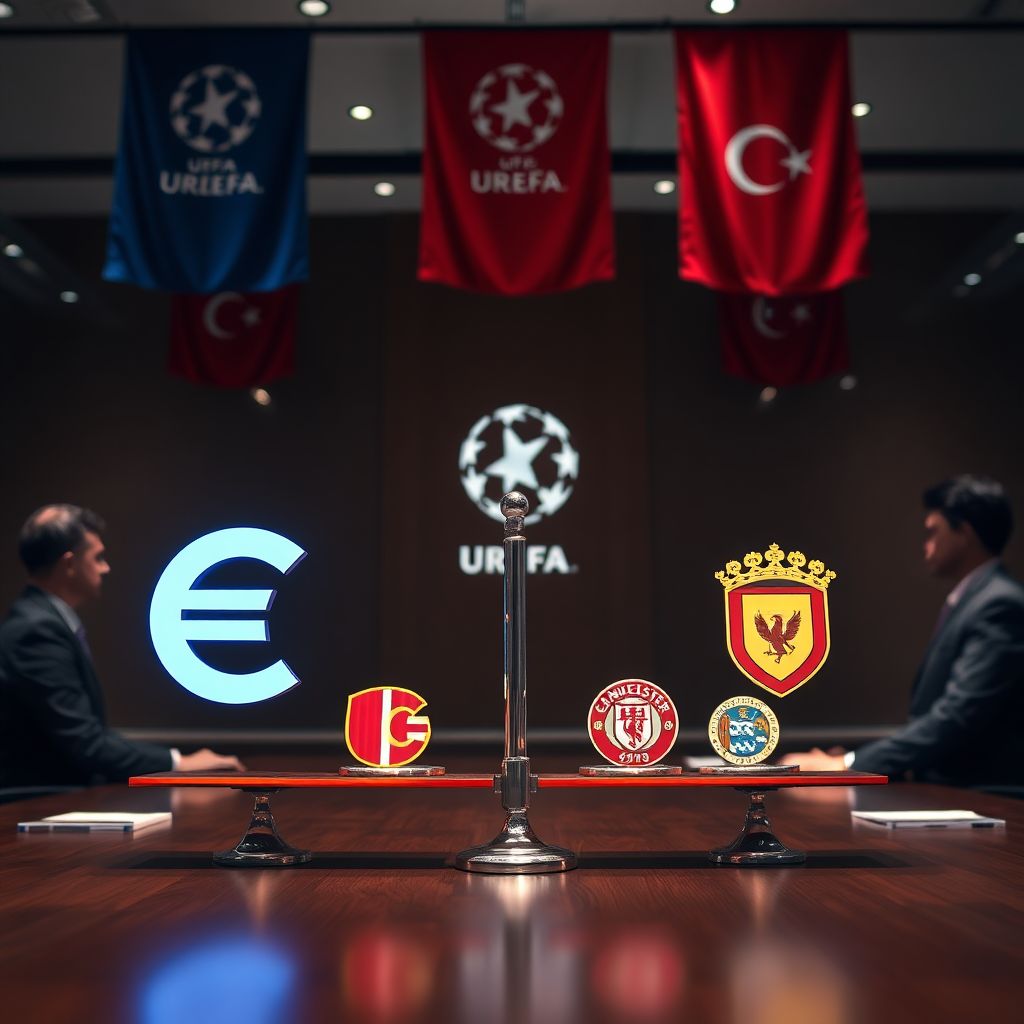
Financial Fair Play (FFP) is UEFA’s system to stop clubs spending far beyond what they earn, especially when playing in European competitions. For Turkish clubs, it mainly affects squad building, transfer strategy and whether they can enter or stay in the Champions League or Europa-level tournaments without restrictions or bans.
Executive summary: FFP essentials for Turkish clubs
- FFP does not ban investment; it forces clubs to match spending with sustainable football income over a multi‑year period.
- For Turkish clubs, the biggest risk is breaching break‑even rules and then facing squad limits, wage caps or exclusion from Europe.
- Monitoring cash flow, wage‑to‑income ratios and transfer amortisation monthly is more useful than reading regulations once a year.
- Every medium and big Süper Lig club should have an internal “FFP file” with projections for at least the next three seasons.
- Contracts, bonuses and agent fees often break FFP plans more than headline transfer fees.
- Early dialogue with UEFA and specialised legal advice for clubs on UEFA financial fair play regulations usually leads to softer, negotiated outcomes.
Common misconceptions about Financial Fair Play and why they persist
A common myth is that FFP stops “rich owners” from investing in Turkish football. In reality, FFP allows investment but demands a clear path to cover losses with real revenues, not endless subsidies. Owners can still inject money, but within limits and with strict reporting.
Another misconception is that FFP only matters for giants regularly in the Champions League. Any Turkish club that qualifies for UEFA competitions, or aims to, falls under the same framework. Preparation must start seasons before qualification, otherwise past decisions block future European participation.
Many think FFP punishments are only extreme bans. In practice, Turkish football clubs FFP compliance and penalties usually start with settlement agreements, squad size limits, restrictions on registering new players or requirements to break even by a set date. Full exclusion comes when clubs ignore or repeatedly breach conditions.
Confusion also comes from vague communication. Fans rarely see technical documents where financial fair play rules UEFA explained in detail; they only see headlines about “sanctions”. Clubs should simplify these rules internally: what they mean for transfer budgets, salaries and how much room is left before a red line is crossed.
Financial Fair Play explained: objectives, rules and enforcement mechanisms
- Core objective – sustainability: UEFA wants clubs to pay their bills on time and avoid chronic losses that endanger creditors, staff and players. FFP rules push clubs to fund spending with football income and sensible investment, not permanent debt escalation.
- Break‑even rule: Over a defined multi‑year period, relevant football expenses (wages, amortisation of transfer fees, agent fees, some financial costs) must not exceed relevant income (matchday, broadcasting, sponsorship, commercial). Certain “good costs” like youth and infrastructure can be excluded.
- No overdue payables: Clubs must prove they have no overdue debts to other clubs, staff, tax authorities or social security. Failure here is often the fastest way to disciplinary action, regardless of long‑term profitability.
- Squad cost control: Newer regulations add limits linking total squad costs (wages plus transfer amortisation) to club revenue. For spending Turkish clubs, this is often more important day‑to‑day than the classic break‑even test.
- Licensing and monitoring: To enter UEFA competitions, clubs must obtain a licence via the Turkish FA and then pass UEFA monitoring. That is where how financial fair play affects Champions League qualification becomes concrete: without a licence or if serious breaches appear, entry can be refused.
- Gradual enforcement: UEFA usually starts with investigations, requested information and settlements. If clubs do not cooperate or keep breaching, sanctions escalate from fines and restrictions to partial or full exclusion from UEFA tournaments.
How UEFA’s regulations specifically affect Turkish clubs’ European eligibility
UEFA financial fair play impact on Turkish clubs is most visible around eligibility for the Champions League and Europa/Conference League. Typical scenarios show how regulations bite in practice.
- Licensing refusal before the season starts: A Turkish club finishes in a qualifying position, but the Turkish FA licensing body refuses or withdraws the UEFA licence because of overdue payables or missing documents. The club never enters the draw, and the next team in the league ranking can replace it.
- Conditional participation with squad restrictions: A club passes licensing but, after UEFA review, must sign a settlement agreement. It can play in Europe but with limits such as a maximum squad list size, a cap on net transfer spending, or a requirement to balance ins and outs.
- Rejection of new player registrations: In some cases, UEFA can block the registration of new players for UEFA competitions if FFP targets are missed. The club can still sign players domestically, but they cannot be used in Europe for that season.
- Post‑qualification exclusion: A team qualifies on the pitch, but serious or repeated FFP breaches from previous seasons lead to a ban. The sporting success remains, but the access spot passes to another club from the same or another association.
- Financial settlements affecting budgets: Even when not excluded, Turkish clubs may have to accept strict, multi‑season budgets as part of settlements. This directly shapes transfer strategy, wage offers and even the structure of performance bonuses.
- Reputational and sponsorship effects: Persistent FFP trouble can make sponsors and lenders cautious. That indirectly hits income, making future FFP compliance harder, creating a loop that must be broken with transparent, disciplined financial planning.
Key financial metrics and reporting requirements Turkish clubs must monitor

Clubs that treat FFP as a quarterly or monthly dashboard manage risk better than those who only react when UEFA asks for documents.
Operational metrics to track internally
- Wage to football income ratio: Total player and staff wages compared with football income. If this ratio drifts too high, the club’s flexibility under FFP shrinks quickly.
- Transfer amortisation load: For each signed player, divide transfer fee by contract length to get annual amortisation. Sum across the squad to see the future annual burden locked in.
- Net transfer position per window: Track both cash flow and accounting impact of transfers. Even “free” transfers carry wage and agent cost that matter for FFP.
- Recurring vs. one‑off income: Separate stable revenue (season tickets, long‑term sponsors, domestic TV) from volatile items (player sales, European bonuses). Build FFP compliance mainly on recurring income.
- Currency exposure: Many Turkish contracts or debts are FX‑linked. Exchange‑rate movements can suddenly make wage bills and repayments higher in local currency, squeezing FFP margins.
Reporting and documentation clubs must prepare
- Audited annual financial statements: Must be ready on time and reflect true obligations, including contingent bonuses and agent commissions.
- Detailed squad list with contract terms: Central file showing salary, bonuses, length, options and agent fees for every player, updated after each transfer window.
- Transfer and agent fee breakdowns: Clear separation of transfer fees, signing bonuses, image rights and intermediary payments for each deal.
- Cash flow and budget forecasts: Forward‑looking projections for at least three seasons, including best‑ and worst‑case scenarios for European qualification.
- Evidence of no overdue payables: Payment schedules and bank confirmations for transfers, taxes and social contributions to show that nothing is overdue at key UEFA assessment dates.
- Board minutes on financial decisions: Internal governance records demonstrating that directors considered FFP impact before approving major transfers or wage packages.
Historic and recent cases: Turkish clubs’ interactions with FFP rulings
While each case is different, several patterns keep repeating when Turkish clubs face UEFA.
- Late reaction to problems: Clubs ignore early warning letters and only act when a formal investigation opens. By then, options are fewer, and UEFA is less flexible in negotiations.
- Over‑optimistic income projections: Budgets sometimes assume Champions League qualification or big player sales as guaranteed. When results or markets disappoint, the gap pushes clubs over FFP limits.
- Hidden or underestimated agent and signing fees: Even when transfer fees look reasonable, large commissions or signing‑on bonuses can turn a “cheap” deal into an expensive FFP liability.
- Short‑term fixes that create long‑term pain: Selling key players late in the window to meet break‑even can damage sporting performance, which then reduces future broadcast and prize money.
- Weak internal documentation: Clubs struggle to provide consistent, complete data to UEFA. Missing or contradictory documents create distrust and sometimes more severe sanctions.
- Relying only on external advisors: Some clubs outsource all FFP thinking. Without internal understanding, daily decisions (like small wage increases) slowly move the club away from compliance, even if the big plan looks fine.
Actionable compliance roadmap: budgeting, transfers and governance for Turkish clubs
Instead of trying to memorise every article of UEFA rules, clubs should embed simple, repeatable processes that keep them within limits and ready for checks.
- Set clear financial guardrails before the season: The board defines maximum wage budget, maximum net transfer loss and minimum cash cushion, all consistent with realistic revenue (domestic TV, ticketing, current sponsors). These guardrails are written and shared with the sporting director and head coach.
- Evaluate every transfer through an FFP lens: For each target player, finance staff calculate annual cost (wage + bonuses + amortisation + agent fees). If this pushes the club above internal guardrails, the deal is adjusted (longer contract, lower wage, structured bonuses) or rejected.
- Integrate academy and resale strategy: Promote at least a few academy players into the first team every season to reduce external transfer needs. When buying, focus on players with potential resale value, not just immediate impact, so future transfers can repair the balance sheet.
- Run quarterly FFP “mini‑audits”: Every three months, update projections for the next three seasons, including different scenarios (no Europe, Conference League, Champions League). Adjust wage offers and transfer plans accordingly before UEFA flags a problem.
- Strengthen governance and legal review: No major contract or transfer should be signed without finance and legal teams checking FFP impact and regulatory clauses. When risk is high, seek specialist legal advice for clubs on UEFA financial fair play regulations to negotiate better settlements or clarify grey areas.
- Maintain proactive communication with UEFA and the Turkish FA: When difficulties are visible early, approach regulators with a realistic correction plan. Cooperation and transparency usually lead to more flexible timelines and less damaging sanctions than waiting for a formal complaint.
As a practical mini‑case, imagine a mid‑table Turkish club unexpectedly qualifying for European competition. Instead of immediately raising wages and signing several expensive players, it first locks in existing debts, caps squad cost growth at a modest level, uses loan deals with options instead of big permanent fees, and reserves a part of UEFA income for future seasons. This disciplined approach keeps the door to Europe open longer and reduces the chance of sudden FFP‑driven exclusion.
Targeted clarifications and practical answers on FFP for Turkish teams
Does FFP stop Turkish clubs from being bought by rich investors?
No. Investors can still buy clubs and inject money, but FFP limits how much of that money can be turned into losses. Investment must help build sustainable income, not just cover uncontrolled spending every year.
How does FFP influence who reaches the Champions League from Turkey?

Sporting results decide league positions, but licensing and FFP decide who is allowed to use their spot. If a qualified club fails FFP checks, it can lose the place, and another club can move into European competition instead.
Are youth academy and stadium investments counted as FFP expenses?
Generally, spending on youth development and infrastructure is treated more favourably and may be excluded from break‑even calculations. Clubs should still document these projects carefully to show they are genuine long‑term investments.
Can a single expensive transfer cause an FFP breach?
One deal rarely breaks FFP alone because transfer fees are amortised over the contract. Problems come when several big deals combine with high wages and weaker‑than‑expected income. Monitoring total annual cost is more important than focusing on one headline fee.
What happens if a Turkish club has overdue transfer payments?
Overdue payables are a serious red flag. UEFA can refuse a licence, impose sanctions or demand immediate correction. Clubs should maintain clear payment calendars and renegotiate terms early if cash flow becomes tight.
Is it possible to negotiate with UEFA after an FFP breach?
Yes. Many cases end with settlement agreements that set future targets and restrictions instead of immediate bans. The earlier and more transparently a club cooperates, the better its chances of obtaining manageable conditions.
Do domestic TFF rules replace UEFA FFP rules?
No. Domestic regulations interact with but do not replace UEFA rules. Turkish clubs must satisfy both the Turkish FA’s criteria and UEFA’s FFP framework if they want to participate in European competitions.