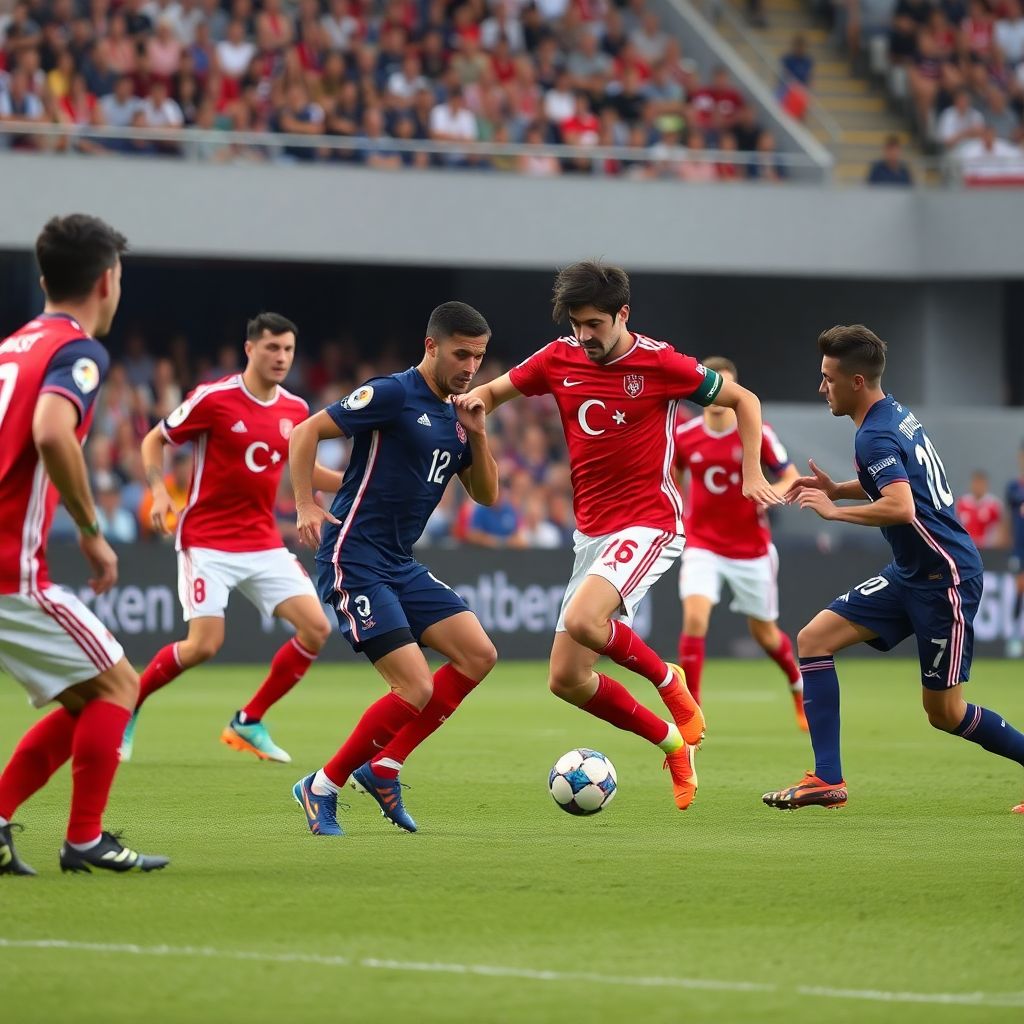
Turkey national football team tactics have shifted from reactive, deep‑block defending with long balls to a more structured, proactive game: higher pressing in selected phases, cleaner build‑up with inverted full‑backs, and clearer roles for creators between the lines. Understanding these changes makes it easier to read matches and judge coaching decisions realistically.
Debunking common myths about Turkey’s tactical shifts
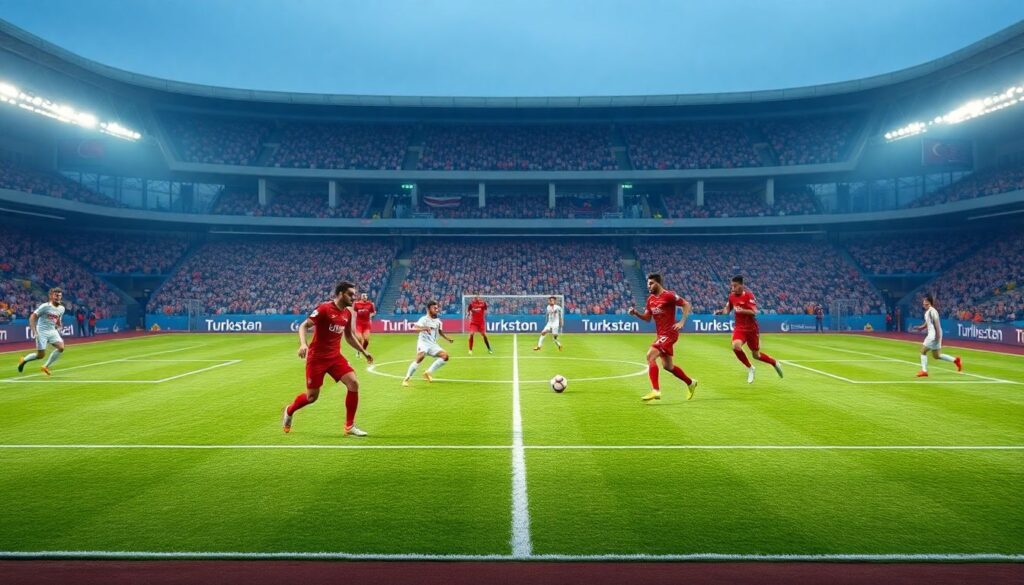
- Myth: Turkey always parks the bus. Reality: Blocks have ranged from low and passive in World Cup qualifying to mid‑block and situational high press at recent Euros.
- Myth: Systems change every game. Reality: Shape tweaks are frequent, but core principles in pressing and build‑up have been consistent across recent major tournaments.
- Myth: Turkey only relies on individual talent. Reality: Wing overloads, inverted full‑backs and set‑piece routines show clear, repeatable patterns in Turkey football tactical analysis.
- Myth: Back four vs back three decides everything. Reality: Line height, distances between units and pressing triggers influence performance far more than the basic formation label.
- Myth: There is no plan B. Reality: Substitutions frequently switch the pressing reference, adjust the block height and re‑balance central vs wide control.
2018 World Cup qualifying era: baseline formations and limitations
In the 2018 World Cup qualifying era, the Turkish national team analysis Euro and World Cup observers often pointed to a basic 4‑2‑3‑1 or 4‑3‑3 as the default. The team defended quite deep, with the midfield line close to the defenders and clear priority on protecting central spaces.
On the ball, Turkey often built from a flat back four with full‑backs high and wide, double pivot in front, and a number 10 linking to the striker. Progression was heavily dependent on the wide players: full‑back overlaps and early crosses, or long diagonal balls from centre‑backs into the channels.
This baseline created several limitations that shaped Turkey national team performance in recent major tournaments. When the first pass out of defence was pressed, the team lacked rehearsed third‑man combinations to escape pressure. The distance between attack and defence often became too big, leaving the striker isolated and the second line unable to counter‑press.
Defensively, the low block reduced space behind but conceded initiative. Opponents could circulate the ball freely in front of the block and look for cut‑backs or switches to the far side. Without coordinated pressing triggers, Turkey’s attempts to step up were sporadic and easily bypassed, which fed the myth that Turkey could not press at all.
UEFA Euro 2020 (played 2021): pressing intensity and transitional patterns
At UEFA Euro 2020 (played 2021), Turkey national football team tactics tried to evolve, especially in pressing and transitions. The intent was clearer even if the execution was inconsistent. The main mechanical ideas can be broken down into a few simple on‑field actions.
- Higher starting block out of possession: Instead of waiting around their own box, the team set up a mid‑block around the middle third. The striker used curved runs to show the ball outside, while wingers tried to trap full‑backs toward the touchline.
- Pressing triggers on backward and square passes: Once the ball was played back to a centre‑back or across the defensive line, the nearest winger jumped to press, the full‑back pushed up to cover, and the near central midfielder shifted across to close the inside lane.
- Vertical transitions after recoveries: On winning the ball, the first look was forward. The number 10 tried to receive on the half‑turn, and the far winger attacked the blind side of the defence. This directness aimed to convert pressing wins into quick shots before the opponent could reset.
- Wing‑focused possession: In settled attacks, possession moved from centre‑backs to full‑backs, then into wide overloads: winger + full‑back + nearest central midfielder. The intention was to draw the opponent to the flank and open space for cut‑backs or late runs from midfield.
- Compactness issues between lines: The main tactical flaw was the gap between defence and midfield. As the front line pressed higher, the back four often stayed deep, leaving pockets for opponents to receive and turn. This mismatch between idea and spacing explains why the team looked both aggressive and fragile.
UE2 2022 Nations League to 2023 Euro build-up: defensive compactness and wing dynamics
From the 2022 Nations League into the Euro 2024 qualifying period, Turkey football tactical analysis shows a move toward more compact defensive structures and clearer wing patterns. Coaches aimed to bring the lines closer, reduce gaps and make pressing more selective and coordinated.
These ideas appeared in several typical match scenarios.
- Mid‑block with narrow front three: Against stronger build‑up teams, the front three stayed narrow to cover passes into the pivot. The ball was allowed to go wide, where the full‑back and winger pressed together while a midfielder slid across to close the half‑space.
- Stepped‑up line against weaker opposition: Versus lower‑ranked teams, the defensive line moved higher, which shortened the team vertically. This made counter‑pressing easier, because the nearest three or four players were close enough to immediately attack the ball carrier after losing possession.
- Wing inversion in possession: One or both full‑backs started to invert inside next to the pivot, giving the wingers more freedom to stay high and wide. This created central overloads in build‑up and helped protect against counter‑attacks through the middle.
- Asymmetric wide play: Often one side was used for controlled combinations (full‑back inverting, midfielder dropping, winger coming short), while the opposite side stayed higher to threaten in behind. This asymmetry was a key element in Turkish national team latest tactics and formations.
- Controlled tempo instead of pure direct play: Ball circulation became more patient. Instead of forcing the first vertical pass, the team recycled from side to side to move the opponent’s block, then attacked once a winger or number 8 found a favourable 1v1 or 2v1.
2024 European Championship: evolution in player roles and ball progression
At the 2024 European Championship, Turkey national team performance in recent major tournaments took another step, especially in how players interpreted their roles with the ball. The structure still shifted between a back three and back four, but the principles underneath were more stable.
Benefits of the newer role distribution and build-up ideas
- Clearer first phase of build‑up: Centre‑backs and a dropping pivot created a stable three‑player base, making it easier to play out even when pressed.
- Inverted full‑backs for central overloads: When a full‑back moved inside, Turkey could form temporary double‑pivots or a box midfield, offering more short options and safer progression.
- Better use of half‑spaces: Attacking midfielders and inside‑moving wingers received more between the lines, linking midfield to attack with quick combinations rather than long hopeful passes.
- More flexible pressing references: The team switched smoothly between man‑oriented pressing and zonal blocking of passing lanes, depending on opponent and game state.
- Improved rest defence: With one full‑back tucked in and at least two midfielders behind the ball, Turkey were better positioned to defend counters immediately after losing possession.
Current tactical constraints and recurring weaknesses
- Reliance on specific profiles: Inversions and central overloads depend on full‑backs comfortable inside and midfielders able to receive under pressure. Absences or dips in form reduce the effectiveness of these patterns.
- Oscillation between caution and risk: At times the team hesitates between playing through pressure and going long, which can produce turnovers in dangerous zones or lose territorial control.
- Defending wide switches: When one side steps out aggressively, the far side can be slow to shift, leaving room for diagonal balls to the weak side full‑back or winger.
- Set‑piece inconsistency: Both attacking and defending set pieces still fluctuate in quality, with marking assignments and delivery depth not always aligned.
- Late‑game game‑state management: Protecting a narrow lead remains challenging; the block sometimes drops too deep, inviting pressure and reducing counter‑attacking threat.
Set pieces, substitutions and data-driven adjustments across tournaments
Beyond formations, Turkey national football team tactics across tournaments are heavily shaped by dead balls and bench decisions. Many myths around these areas can be corrected with simple, visible patterns you can watch for in any match.
- Myth: Set pieces are improvised. In reality, corner and free‑kick routines repeat across games: near‑post flicks, far‑post overloads, decoy runs from the penalty spot. The key action to watch is who blocks, who screens the keeper, and who attacks the second ball zone.
- Myth: Substitutions are only about fresh legs. Coaches often use changes to alter pressing structure (for example, moving from a 4‑2‑3‑1 press to a narrower 4‑4‑2), or to flip the main attacking side. Track whether a new winger stays wide or comes inside; that tells you the new plan.
- Myth: Turkey never adapts during games. Especially in recent years, in‑game tweaks are visible: full‑backs dropping deeper to form a back five late on, or pivots staggering their positions to disrupt man‑marking. These are small, practical adjustments rather than radical system changes.
- Myth: Data is ignored. While detailed metrics are not public, you can see data‑inspired habits: quick short corners when the opponent switches off, targeted pressing on weaker‑footed centre‑backs, or using throw‑ins to trap teams near their own corner flag. All of this feeds into modern Turkey football tactical analysis.
- Myth: Only big tournaments matter. Patterns tested in Nations League and qualifiers often re‑appear at Euros. Watching them gives you a head‑start when evaluating Turkish national team latest tactics and formations at major finals.
Comparative table: formation, pressing, build-up, and personnel changes
The table below condenses how Turkey national football team tactics have shifted from the 2018 World Cup qualifying era through Euro 2020 to the most recent European Championship. Use it as a quick reference when doing your own Turkish national team analysis Euro and World Cup style.
| Phase / Aspect | 2018 World Cup qualifying era | Euro 2020 (played 2021) | Euro 2024 cycle |
|---|---|---|---|
| Typical base formation | 4‑2‑3‑1 / 4‑3‑3 with classic full‑backs wide | 4‑1‑4‑1 / 4‑2‑3‑1, occasional back three in possession | Flexible 4‑3‑3 / 3‑2‑4‑1 with frequent full‑back inversion |
| Pressing approach | Mostly low block, rare high pressing, big gaps between lines | Ambitious mid‑to‑high press, but inconsistent spacing | More selective high press, compact mid‑block, clearer triggers |
| Build‑up structure | Flat back four, long diagonals, wing‑led attacks | More use of pivots, but still reliant on wide areas and fast breaks | Three‑player build‑up base, central overloads, half‑space combinations |
| Key wide dynamics | Full‑backs overlapping; wingers driving inside or crossing early | Wing overloads for crosses; limited inversion or underlaps | Asymmetric flanks: one side combining short, other attacking in behind |
| Substitution logic | Mainly like‑for‑like changes to refresh energy | Introduced more pressing forwards and pacey wingers from bench | Regular structural tweaks (back three vs four, new playmaker zones) |
| Set‑piece tendencies | Basic zonal marking, mixed corner delivery without clear patterns | Simple near‑post and far‑post routines, still inconsistent execution | More rehearsed blocks, screens and second‑ball targeting at both ends |
Practical clarifications and recurring tactical misconceptions
Is Turkey fundamentally a defensive or attacking national team?
Turkey are neither purely defensive nor purely attacking. The approach has shifted by opponent and tournament cycle. Recent teams look to press higher in chosen moments and keep more controlled possession, but game state, injuries and opponent quality still heavily influence how adventurous they appear.
Why does the team sometimes look lost when building from the back?
This usually happens when the spacing between centre‑backs, pivot and full‑backs is wrong. If options do not appear at the right angles, the goalkeeper or defenders are forced into long clearances. It is more about timing and distances than about the decision to build short.
Does changing between a back three and back four mean a complete new system?
Not necessarily. Often the structure only shifts in possession: a full‑back tucks inside or a midfielder drops into the last line. The core ideas in pressing, block height and attacking patterns can stay almost identical despite the nominal formation change.
Why are Turkey’s wingers so important tactically?
Wingers decide whether Turkey can stretch the pitch or not. When they hold width, the team can find half‑spaces for midfield runners. When they come inside, they create overloads but demand overlapping or underlapping runs from full‑backs to keep the defence pinned back.
How should I evaluate Turkey national team performance in recent major tournaments?
Look beyond results: check block height, compactness between lines, and how often Turkey win the ball in good zones. Then notice whether transitions lead to controlled attacks or chaotic long balls. This gives a clearer view than simply counting shots or possession percentages.
What is the easiest thing to watch live to understand Turkey football tactical analysis?
Track the pivot and full‑backs when Turkey have the ball. If one full‑back inverts and the pivot stays free, the plan is to progress through central overloads. If both full‑backs go wide early, expect more crossing and direct entries to the box.
How do substitutions usually change Turkish national team latest tactics and formations?
Common effects are: extra runner from midfield, wider wingers to stretch tired defences, or a second striker to press centre‑backs. When substitutions happen, immediately check whether the first line of pressure or the width of the attack has changed.
Комментарии