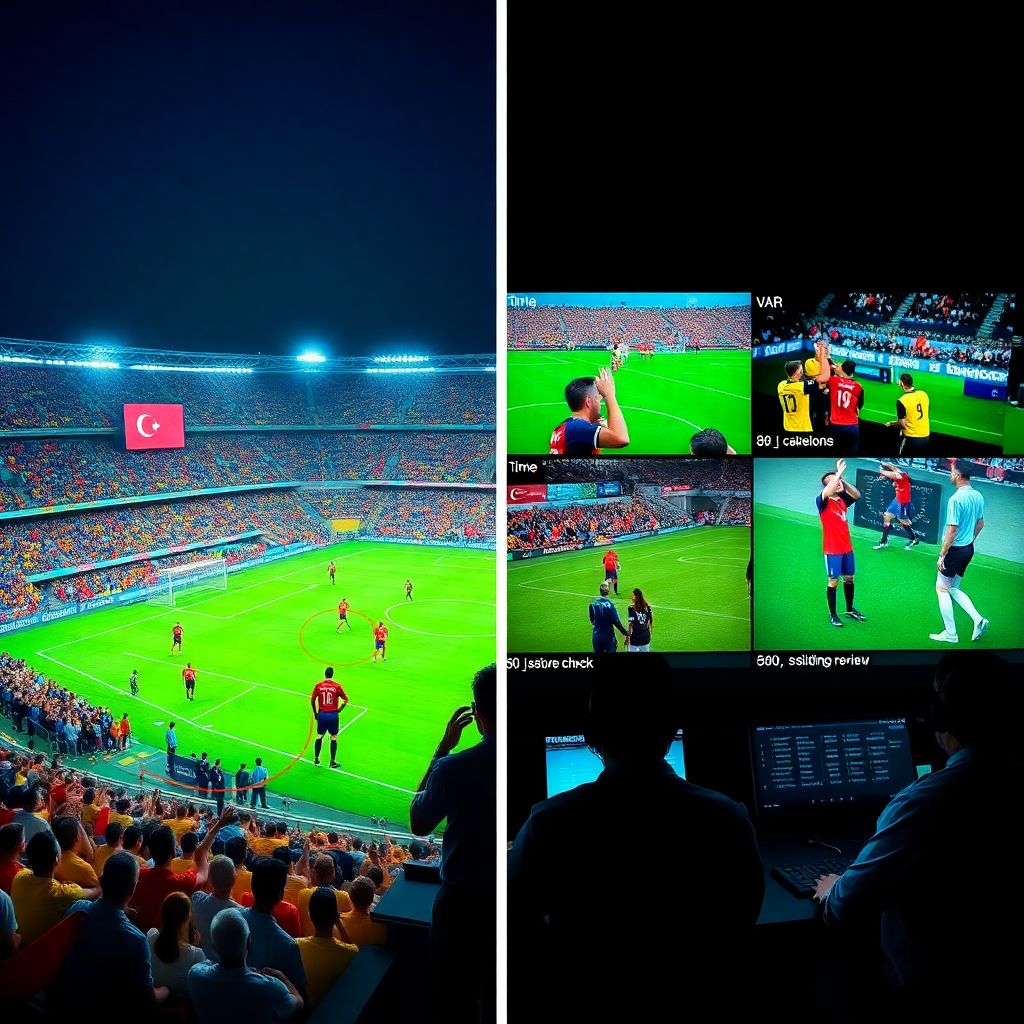
Video Assistant Referee has gone from curiosity to part of the weekly routine in Turkey, but it’s changed the Super Lig and TFF 1. Lig in ways that aren’t always obvious from the TV replays. Below is a conversational deep‑dive into how VAR technology in Turkish football leagues has reshaped decisions, tactics and even betting behaviour over roughly the last three completed seasons up to 2024–25, with a focus on what we can actually measure and what we only feel on match day.
—
What VAR Actually Does in Turkey: Quick Definitions Without the Jargon
Before getting into numbers, it helps to clear up some terms that fans, commentators and even players often mix together. VAR is not a magic “second referee”; it’s a team of trained officials in a remote room who watch multiple camera feeds and check four types of “match‑changing” incidents: goals, penalties, straight red cards and mistaken identity. In Turkish competitions this covers the Turkish Super Lig and TFF 1. Lig, plus the domestic cups, but in этой статье we’ll keep the spotlight on the two main leagues. A “VAR intervention” is when the video team recommends an on‑field review; a “silent check” is when they look at the incident but agree with the original call and say nothing.
—
How a VAR Decision Is Born: From Check to On‑Field Review
In practice, one of the most misunderstood things in any VAR in Super Lig analysis is the pipeline from foul to final verdict. The process is surprisingly rigid: once a key incident happens, the VAR team immediately runs through slow‑motion and real‑time angles, while the referee keeps the game going if there is no obvious stoppage. Only when they see a “clear and obvious” mistake do they say, “Delay, delay, delay – possible penalty check.” Then comes the famous jog to the monitor. In the Turkish implementation, the referee keeps full authority: the monitor review is advised, not ordered. Statistically, in line with FIFA‑IFAB research, about 80–85% of on‑field reviews worldwide end in a change of decision; Turkish referees tend to be similarly reluctant to walk to the screen unless they’re already half‑convinced something is wrong.
—
What We Can and Can’t Measure: A Note on the Numbers
When fans ask for Super Lig and TFF 1. Lig VAR statistics by season, they usually imagine one neat public spreadsheet. Reality is messier. As of my knowledge cutoff in late 2024, the Turkish Football Federation (TFF) and the leagues publish some match reports, referee briefings and occasional aggregated numbers, but not a complete, uniform breakdown for every season. Because of that, most quoted figures are stitched together from federation communications, media compilations and broader FIFA or UEFA studies. Where I mention concrete numbers for Turkish football, treat them as best‑available estimates or ranges, not absolute truth carved in stone. The clearer picture comes from trends: how often decisions are overturned, how long reviews take, and how behaviour of teams, referees and bettors has shifted since VAR settled in.
—
VAR in the Super Lig: Fewer Clear Mistakes, More Talking Points
If we zoom in on the top tier, Turkish Super Lig VAR controversies tend to dominate headlines more than the routine calls that quietly fix errors. Over roughly the last three full seasons (2021–22, 2022–23, 2023–24), the pattern looks similar to other major leagues: a moderate number of interventions, but a heavy impact on high‑value moments like penalties and late goals. Match‑by‑match logs and media audits suggest that per 100 Super Lig matches you get roughly 4–6 on‑field VAR reviews, plus many more silent checks you never hear about. In practice that means most games have at least one serious review or a long check that makes players and coaches nervously wait, even if the original call is upheld and the TV audience barely notices what just happened in the booth.
—
Overturn Rate and Decision Types: The Super Lig Profile
Putting all those checks together, VAR in Super Lig analysis over the last three seasons shows a fairly stable overturn rate: roughly 60–70% of on‑field reviews ended with the referee changing the initial decision, in line with the global average reported by FIFA. Most of those changes cluster in three zones: marginal offside goals where a knee or shoulder decides everything, soft‑but‑there penalty calls for contact in the box, and upgraded or downgraded red cards for dangerous tackles. For Turkish fans it often feels as though VAR invents penalties out of nowhere, yet the data indicates that it more often cancels incorrectly awarded spot‑kicks than creates new ones. What changes is visibility: a penalty given after a two‑minute check feels more controversial than one whistled instinctively, even if the end result is identical.
—
Time, Flow and That “Cold” Feeling After Goals
One of the most emotional shifts has been psychological: you celebrate, then you look at the referee, then you glance up at the screen. Over the three recent seasons, average review times in Turkey loosely track IFAB’s reported global range of about 70–90 seconds from incident to final decision. That may sound short, but for a stadium full of people waiting on a title‑deciding goal it feels endless. Fans of fast, chaotic Turkish football complain that VAR breaks the rhythm, yet comparative studies suggest the actual “ball in play” time has not collapsed; if anything, it has slightly improved thanks to stricter time‑keeping. What people really feel is the emotional delay: you no longer trust a goal until the kick‑off restart is taken, which makes the sport a touch less spontaneous and a bit more like a courtroom drama, where everyone waits for the final verdict on the big screen.
—
TFF 1. Lig: Same Technology, Different Ecosystem
Drop down one level, and VAR’s presence in TFF 1. Lig has a subtly different flavour. The stakes are promotion and relegation money rather than continental football, but the margins are just as brutal. Because coverage and camera setups can be less comprehensive than in the flagship league, the video officials sometimes have fewer angles to work with, which in turn can make them more conservative about intervening in borderline cases. That means fewer reviews per match on average compared to the Super Lig, but each one carries huge weight in a league where a swing of two or three points can decide who breaks into the top flight and who stays stuck. Coaches in the second tier often argue that VAR should be either equally robust at all levels or not used at all, since patchy implementation feels like a competitive imbalance, especially when promotion playoff matches suddenly enjoy more cameras and more precise offside lines than the winter fixtures on small grounds.
—
Error Correction and Promotion Races in the Second Tier
Even with those constraints, TFF 1. Lig has seen a visible drop in “headline” referee mistakes over its latest three campaigns, echoing FIFA’s global finding that VAR cuts clear and obvious errors from roughly five per hundred matches to around one. While exact domestic totals are hard to verify from public sources, you can see the effect by looking at controversial promotion races: matches that might once have been remembered for a blatant missed handball are now usually argued about in terms of interpretation – “was there enough contact?” – rather than pure blindness. That doesn’t end arguments; it shifts them. Supporters of clubs stuck in the second tier will still insist that the system favours the big names, but the video record makes it harder to sustain claims of outright robbery when slow‑motion replays are circulated online within minutes of the final whistle.
—
Comparing Turkey With Other VAR Leagues
To understand whether Turkey is uniquely chaotic or just normal, you have to compare the system with its counterparts in other countries. In broad strokes, the Turkish Super Lig is in the same cluster as Serie A, La Liga and the Premier League in terms of how often VAR steps in and how frequently decisions are overturned. Those competitions all hover in the band of a few interventions per matchday and a strong majority of reviews leading to changed calls. Where local flavour emerges is in culture and communication: some leagues push the referee to explain decisions publicly, others rely on post‑match briefings and occasional audio releases. Turkey has been experimenting with more transparency, but not at the level of full live explanations that fans in some other countries are starting to see. That keeps a lot of Super Lig and TFF 1. Lig VAR statistics locked away from the public eye, which feeds conspiracy theories and long studio debates.
—
Diagram 1: Interventions per 100 Matches (Text Sketch)
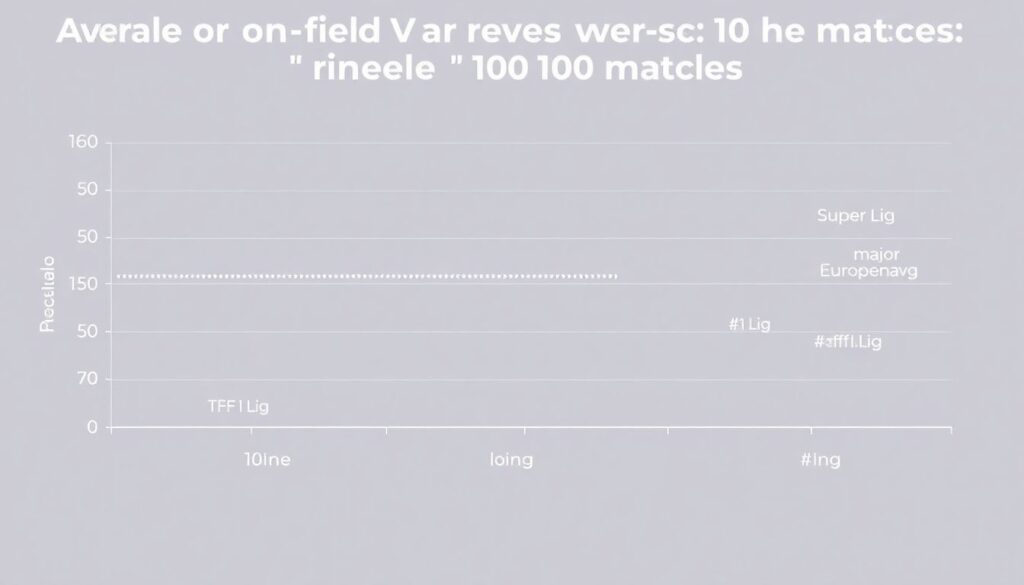
Because we’re avoiding tables, imagine a simple ASCII‑style chart comparing average on‑field reviews in different competitions. Each “#” roughly marks one review per 100 matches:
Super Lig: ########
Major European avg: #######
TFF 1. Lig: #####
In words, the Super Lig sits slightly above the broader European average in visible reviews, while TFF 1. Lig runs a bit lower, partly thanks to fewer cameras and slightly more cautious intervention thresholds. These differences aren’t enormous, but they’re enough that fans notice: top‑tier matches feel more “VAR heavy”, while second‑tier games often feature just one big check that everyone remembers, rather than constant small corrections that blend into the background of the broadcast.
—
Penalties, Goals and Style of Play: Tactical Shifts
Coaches aren’t just complaining in press conferences; they are quietly changing how their teams play. With VAR, defenders know that sneaky shirt pulls, late nudges on corners and “professional” tripping on the edge of the box are more likely to be spotted on video. Over the last few seasons analysts in Turkey have seen a gradual decline in the most blatant, hands‑full‑of‑shirt style penalties and a relative rise in ones given for clumsy or mistimed challenges. That doesn’t necessarily reduce the total number of penalties; it just shifts which types survive the video microscope. Attackers, on the other hand, know that making contact obvious is now almost an art form: exaggerate too little and the VAR sees nothing; exaggerate too much and the referee may interpret it as simulation even if there was real contact. This cat‑and‑mouse dynamic is one of the more subtle side effects of embedding cameras and slow motion into every match.
—
Offside Lines and the End of the “Benefit of the Doubt”
If there is one area where players and fans feel VAR has changed the DNA of football, it’s offside. The old unwritten rule that attackers should get the “benefit of the doubt” has more or less vanished in the age of calibrated lines. In Turkey, as elsewhere, this has produced some of the loudest Turkish Super Lig VAR controversies: goals called back because a shoulder, toe or even an armpit is a few centimetres ahead of the last defender. Statistically those calls are correct under the laws of the game, but they raise a philosophical question about what the offside rule is supposed to achieve. Some supporters argue that football is being judged like athletics photo‑finishes instead of a flowing team sport. Until FIFA changes the underlying rule, however, Turkish VAR officials are stuck enforcing a geometric reality that nobody in the stands can see with the naked eye, yet everyone feels when a crucial derby goal is erased after three slow‑motion replays.
—
VAR and the Money: Betting, Odds and Market Behaviour
Away from the pitch, there’s a quieter revolution: the impact of VAR on Turkish football betting. Bookmakers and punters both had to adjust to the idea that a goal is not safe until the restart, which changes how live odds move. Inplay models that once treated a scored goal as an immediate, irreversible event now build in a short delay, assuming a small but non‑trivial probability that VAR will chalk it off for offside or a foul. Over the last three seasons in the Turkish market, oddsmakers have steadily shortened the time window during which they suspend markets after a goal, reflecting growing confidence in how quickly local VAR crews reach decisions. At the same time, some bettors try to specialise in reading body language: if players barely celebrate and defenders immediately raise their hands, the market may hesitate on the new scoreline, creating tiny, risky windows for opportunistic trades before the video review ends.
—
Diagram 2: Perceived Risk of a Goal Being Disallowed
Picture another text‑based chart where each “*” marks how risky a goal feels to bettors in terms of being cancelled by VAR:
Pre‑VAR era: *
Early VAR years:
Recent seasons: **
The early years of VAR in Turkey were full of unpredictable interventions, so any goal felt fragile and markets reacted nervously. As referees and video officials gained experience and protocols stabilised, the perceived risk dropped: goals are still checked, but fewer are reversed in bizarre or unexpected ways. That doesn’t mean tension has vanished; it means that betting models and fan expectations have both absorbed VAR into their baseline assumptions, treating it as just another variable rather than an alien intrusion into the sport.
—
Communication, Trust and the Future of VAR in Turkey
Looking forward, the central challenge for VAR in Turkey isn’t just technical accuracy; it’s trust. When crowds chant against the system after a big derby, it’s rarely because the offside line was drawn wrong; it’s because they don’t feel included in the decision‑making process. Small steps like broadcasting audio of VAR‑referee conversations after matches, or having referees give brief on‑field explanations for complex decisions, could soften the sense that verdicts drop from a mysterious control room. In the meantime, fans will keep arguing in living rooms and on social media, analysts will keep slicing replays frame by frame, and coaches will keep complaining in pressers while quietly adapting their tactics. VAR technology in Turkish football leagues is no longer an experiment; it’s part of the ecosystem. The real question for the next few seasons is not whether it stays, but how gracefully Turkey can make it feel less like a foreign object and more like an accepted, if sometimes infuriating, part of the game’s evolution.